
Reviewed · BERLIN COLD WAR TOURS
Hitler to Stalin – WWII & Cold War Tour (Small Group)
Berlin’s past is not tucked away in a museum here. It is written into the city’s streets, memorials and former border crossings, and this 2.5-hour walk links sites tied to Nazi rule, the Holocaust, the Soviet occupation and the Cold War. You start at the Brandenburg Gate and finish at Checkpoint Charlie.
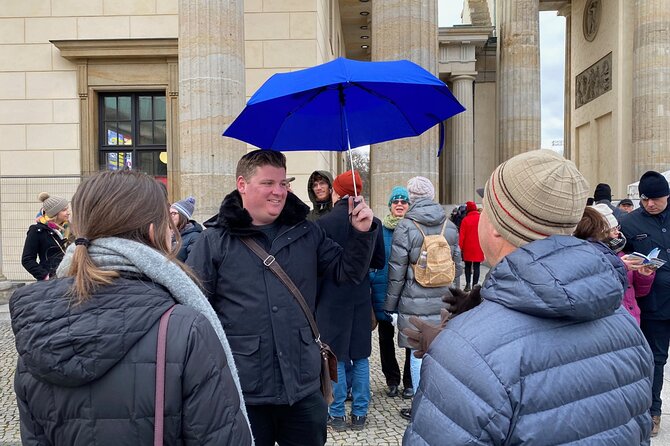
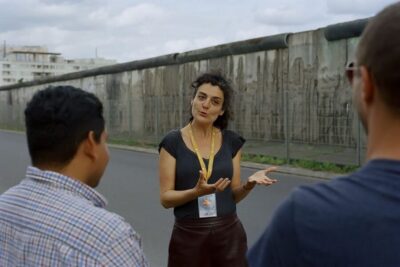
I like two things in particular: the route joins major landmarks into one clear story, and the group is capped at 15, small enough for questions. Mark, a guide named in several guest accounts, is praised for bringing wartime locations to life with historical pictures and detailed answers.
The trade-off is pace. Nine stops in about two and a half hours means you should expect a brisk walk and relatively short visits, not long time at each site. It is also an outdoor experience, so Berlin weather matters.
- Start at the Brandenburg Gate and end at Checkpoint Charlie, tracing a route through central Berlin.
- See nine historical stops, including the Reichstag, the Holocaust Memorial, the former Führerbunker site and the Berlin Wall Memorial.
- Join a group of no more than 15, with a guide focused on the city’s World War II and Cold War history.
- Expect a walking tour of about 2.5 hours, with individual stops generally lasting 10 to 20 minutes.
- Pay $23 for a guided introduction to several major sites, rather than booking separate visits to each location.
A route through Berlin’s hardest chapters
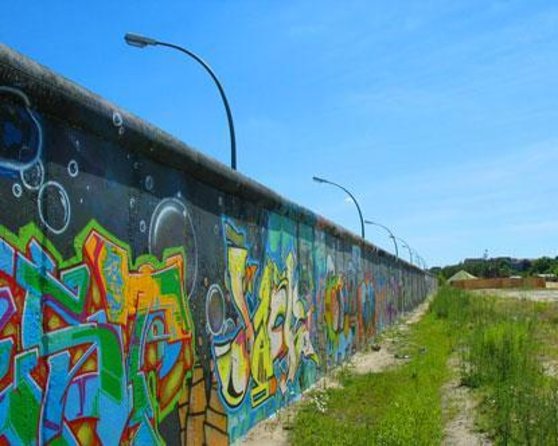
This tour is built around a striking contrast: Berlin was the center of Nazi power, then a city split between opposing political systems. Its landmarks show how those eras overlap in the same streets. The route gives you a framework for understanding both, rather than treating the Brandenburg Gate, the Wall and the war memorials as unrelated photo stops.
You will visit nine locations, with a listed stop time ranging from 10 to 20 minutes. That leaves little room for extended time at any one place, but it can be a useful way to get your bearings and learn what to notice if you return on your own.
The group limit of 15 is a practical advantage. It gives the guide a better chance to hear questions and keep the group together at busy central sites. The experience is led by a historian, and Mark is the guide named in several accounts. His use of pictures showing how places looked during the war is a useful way to connect the present-day streets with their earlier appearance.
Brandenburg Gate: a symbol with changing meanings
The walk begins at the Brandenburg Gate, built in the 18th century under Frederick William II on the site of an earlier city gate. Its location near Pariser Platz and Unter den Linden makes it an easy place to start a tour of central Berlin.
The gate has served as a backdrop to major events and is now regarded as a symbol of European unity and peace. That change in meaning is a good opening theme for a tour that follows the city through dictatorship, war, division and reunification. The stop is listed for 10 minutes, so expect an introduction and context rather than a long visit.
More Cold War tours in Berlin:
- Berlin: Third Reich and Cold War 2 Hour Walking Tour
★ 4.9 · 6,830 reviews - Berlin’s Best: 2 Hour Walking Tour Third Reich and the Cold War
★ 5.0 · 5,486 reviews - Berlin: DDR Museum Tickets
★ 4.3 · 3,443 reviews
The Reichstag and the Soviet War Memorial
The Reichstag is a short walk from the gate and gives the tour a direct connection to Germany’s political history. Built for the Imperial Diet and opened in 1894, it was badly damaged after the 1933 fire and again during the Second World War. It was restored in 1999 and now houses the Bundestag, Germany’s lower house of parliament.
The 15-minute stop focuses on the building’s history and its changing role. The tour information does not include entry to the Reichstag, so think of this as an outside visit and historical explanation, not a parliamentary tour.
The Soviet War Memorial in the Tiergarten shifts attention from government to the Battle of Berlin. Erected by the Soviet Union in 1945, it commemorates Soviet Armed Forces soldiers who died in that battle. It is one of several war memorials in Berlin, and its setting in the Tiergarten offers a pause between the Reichstag and the memorial sites that follow. The visit is listed for 15 minutes.
The Holocaust Memorial and the former Führerbunker site
The Memorial to the Murdered Jews of Europe is a central stop, and it asks for a different kind of attention. Architect Peter Eisenman designed the site, which covers 19,000 square metres and contains 2,711 concrete slabs. Its uneven ground and changing levels can make the experience feel disorienting, rather than presenting a single fixed viewpoint.
The tour allocates 15 minutes here. That is enough to enter the memorial and begin to take in its design, but you may want to return separately if you would like more time. The memorial is abstract and open to personal reflection, while the guide can place it within the broader history of Nazi rule and the murder of Europe’s Jews.
Next comes the former Führerbunker site. Hitler took over the bunker on January 16, 1945, and married Eva Braun there on April 29, less than 40 hours before their suicides. The old Chancellery buildings were levelled by the Soviets, while new buildings were later built; the underground complex remained mostly undisturbed until 1988.
This stop helps make the final days of the Nazi regime more tangible, but it is not a preserved bunker visit. The listed stop is 15 minutes, and the value lies in understanding the site and its history rather than expecting an underground attraction.
The embassy stop and the June 17 uprising memorial
One stop is listed as the Embassy of the Republic of Korea, while its accompanying description identifies the Embassy of the Democratic People’s Republic of Korea on Glinkastraße. Those names refer to different Korean states, so the information is inconsistent. It is worth checking the exact stop with the tour provider if this particular landmark matters to you.
The stop is allocated 10 minutes. Its place on a tour about the Cold War points to the wider political divisions that shaped postwar Berlin, though the tour details do not explain what the guide will cover at the embassy itself.
The memorial to the June 17, 1953 uprising marks an early challenge to communist rule after the war. The uprising was suppressed by Soviet tanks, and about 15,000 people were arrested afterward. The 15-minute visit adds a local story of resistance to the larger account of Berlin’s division. It is a reminder that the Cold War was not only a conflict between governments; it also affected people living under the regimes involved.
More Third Reich tours in Berlin:
- Berlin: Berlin Story Bunker Entry Ticket
★ 4.6 · 6,759 reviews - Third Reich Berlin: Hitler and WWII Walking Tour
★ 5.0 · 3,301 reviews - Berlin: Third Reich, Hitler, and WWII Walking Tour
★ 4.9 · 1,133 reviews - Berlin Third Reich Sites: Half-Day Walking Tour
★ 5.0 · 835 reviews
The Berlin Wall Memorial and Checkpoint Charlie
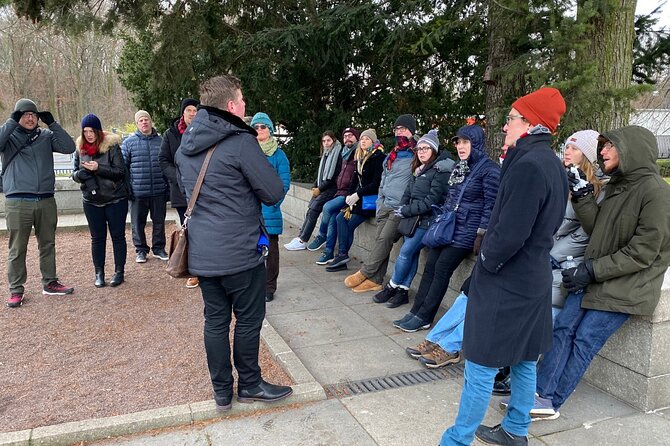
The Berlin Wall Memorial commemorates the division of the city and the deaths that occurred at the Wall. This stop matters because it points beyond the familiar images of the border to the human cost of separating Berlin. The schedule allows 15 minutes, so listen closely to the guide’s explanation and note any details you may want to revisit later.
Checkpoint Charlie is the final stop, with 20 minutes set aside. It was the best-known crossing point where the Berlin Wall divided East and West Berlin, and the Western Allies called it Checkpoint C. The crossing became one of the Cold War’s most recognizable symbols.
Ending here gives the route a natural conclusion: you have followed Berlin from its 18th-century gate through wartime destruction and postwar division to a landmark associated with the boundary between East and West. Checkpoint Charlie is a popular site, so the guide’s historical context helps keep the stop from becoming only a quick photograph.
What the price and group size mean
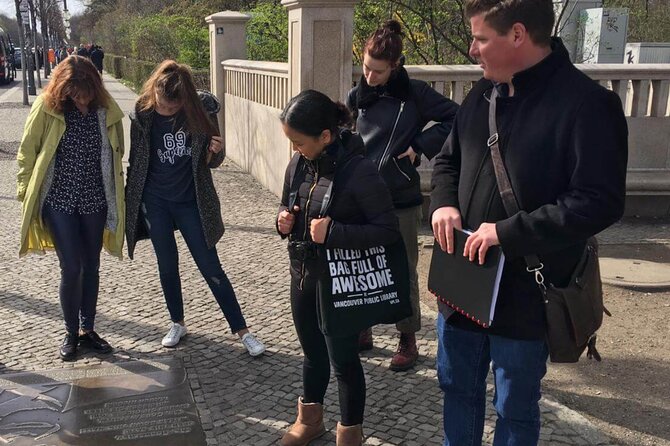
At $23, this tour is an affordable way to connect several major historical locations in one outing. You are paying for a guide and a structured route, not admission to paid attractions. The listed stops have free admission, and the tour description does not include entry to buildings or museums.
The value depends on what you want from the experience. If you are new to Berlin, a guide can help you understand why these places matter and how the events fit together. If you already know the history well, you may prefer to visit a few sites at your own pace.
A group maximum of 15 is a reasonable middle ground: small enough to make asking questions practical, but still a group walk rather than a private tour. The accounts of Mark’s guiding are especially positive, noting his enthusiasm, his use of historical photographs and his willingness to answer questions. Guide assignments can vary, so treat his name as a useful detail, not a guarantee.
Plan for the walk, not a museum visit
The tour lasts about two hours and 30 minutes and begins at Pariser Platz by the Brandenburg Gate. It ends at Friedrichstraße 43-45, near Checkpoint Charlie. Since the start and finish are in different locations, plan your onward journey from the end point rather than assuming you will return to where you began.
The stop timings range from 10 to 20 minutes, with many lasting 15. You will be moving between sites and listening outdoors, so wear shoes suited to walking and dress for the forecast. The experience requires good weather; if poor conditions cancel it, you are offered another date or a full refund.
The tour is open to most participants, and service animals are allowed. It is near public transportation. Confirmation is provided at booking, and free cancellation is available up to 24 hours before the start time. Cancellations made later are not refunded; the activity can also be canceled if the minimum number of participants is not met.
Who should book this tour?
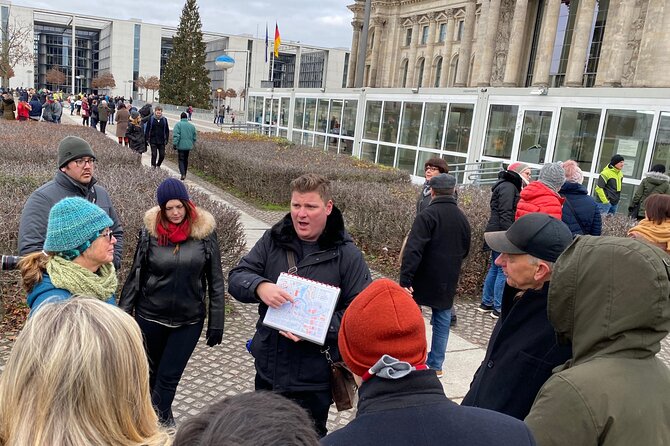
Book it if you want a compact, guided overview of Berlin’s Nazi and Cold War history, with the city itself as the classroom. The route covers major landmarks, the small-group cap is appealing, and the guide’s historical explanations can give you context that is hard to get from photographs alone.
It is a less suitable choice if you want to spend a long time at each memorial or go inside historic buildings. At this pace, you will get an introduction, not an exhaustive study. If that sounds right, $23 buys a useful first walk through some of Berlin’s most consequential places. If you prefer to linger, use the tour to choose which sites deserve a longer return visit.
FAQ
How long is the tour?
It lasts approximately two hours and 30 minutes.
Where does the tour start and end?
It starts at the Brandenburg Gate at Pariser Platz and ends at Checkpoint Charlie, at Friedrichstraße 43-45.
How many people can join?
The maximum group size is 15 travelers.
What sites are included?
Stops include the Brandenburg Gate, Reichstag, Soviet War Memorial in the Tiergarten, Holocaust Memorial, former Führerbunker site, an embassy stop, the June 17 uprising memorial, the Berlin Wall Memorial and Checkpoint Charlie.
Is admission included?
The listed stops have free admission. The tour information does not describe entry to buildings or museums.
Can I cancel for a refund?
You can cancel at least 24 hours before the experience for a full refund. Cancellations made less than 24 hours before the start time are not refunded.
Newest tours in Berlin
- Berlin: guided canoe | kayaktour★ 4.1 · 7 reviews
- Understanding Kreuzberg: The roots of local (sub)culture★ 4.9 · 11 reviews
- Where It All Began: Berlin’s Queer & Trans History Tour★ 4.9 · 6 reviews
- Warnemünde Shore Excursion: Private Sachsenhausen and Berlin Tour★ 5.0 · 12 reviews
- Ultimate E-Bike Tour of Berlin with Beer Garden Stop★ 5.0 · 4 reviews
- Potsdam Highlights – Private sightseeing tour by minibus★ 5.0 · 3 reviews
- Private Potsdam City Tour in an authentic vintage van★ 5.0 · 14 reviews
- Transfer from Berlin Schönefeld Airport (SXF) to Berlin city Hotels – ROUND TRIP★ 4.0 · 3 reviews
Berlin Cold War Tours, compared.


Cold War, Berlin Wall, Spies and the East Side Gallery
Read our review →


Private Walking Tour: World War 2 and Cold War Sites in Berlin
Read our review →Browse the lists this tour appears in