
Reviewed · BERLIN COLD WAR TOURS
Private Walking Tour: World War 2 and Cold War Sites in Berlin
Berlin’s past is not tucked away in one museum. It is written across the city: at the site of Hitler’s bunker, along the old Berlin Wall, and in the streets where a divided capital became the front line of the Cold War. This private walking tour links those places with a guide who can explain what happened there and why it still matters.
I like two things in particular: you can set the balance between Nazi-era and Cold War history, and a private guide can answer your questions and adjust the pace. One consideration: the route is long on foot, and the many possible stops cannot all fit into three or four hours, so agree on priorities before you start.
Key points to know before you book
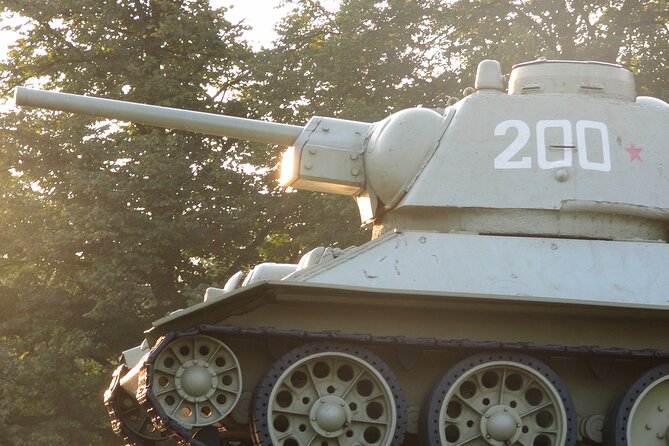
- Choose your history: Focus on World War II, the Cold War, or a mix of both.
- Expect a walking-heavy half-day: The tour lasts about three to four hours, with stops across central Berlin and beyond.
- Set priorities in advance: The listed sites form a menu of possibilities, not a promise that every location fits one tour.
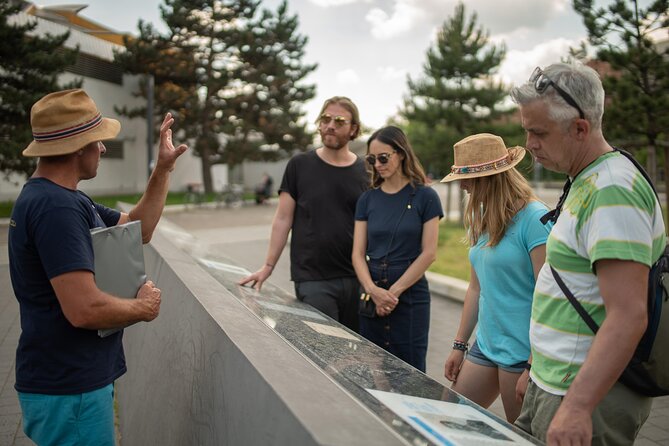
- Private means personal: Only your group joins, so you can ask questions and request a pace or focus that suits you.
- Hotel pickup and drop-off are included: The tour begins with a meet-and-greet in a central Berlin hotel lobby.
- Budget for a specialist guide: The listed price is $192.97 per person, with food and drinks not included.
A city walk that connects two eras
This tour is less a march through a checklist than a chance to make sense of Berlin’s complicated story. A guide can connect the Nazi dictatorship, the destruction of the war, the city’s division, and the everyday lives shaped by the Wall. Those links are easy to miss when you visit each site alone.
The private format matters here. The subject can raise big questions, and the itinerary can be tailored to what you most want to understand. If you have already visited Checkpoint Charlie, for example, you can ask to spend more time at Bernauer Strasse or on Nazi-era sites instead. Travelers have described guides including Hannah, Daniel, Glen, Jamie, Ariel and Maria as able to adjust the tour to a group’s interests. Guide assignments vary, so request a particular focus rather than counting on a named guide.
The tour is offered in English, with morning and afternoon departure choices. You meet your guide in a central hotel lobby, then set out on foot. Hotel pickup and drop-off are included, but this is still a walking tour, not a vehicle-based survey of Berlin.
More walking tours in Berlin:
- Discover Berlin Half-Day Walking Tour
★ 5.0 · 9,624 reviews - Berlin: Third Reich and Cold War 2 Hour Walking Tour
★ 4.9 · 6,830 reviews - Berlin: Discover Berlin Walking Tour
★ 4.9 · 5,998 reviews
What three or four hours can cover
The route lists a dozen possible stops, from the Reichstag and Brandenburg Gate to Tempelhofer Feld and the East Side Gallery. In practice, you should not expect to see every one in a single half-day. Several are far apart, and a stop of 10 or 15 minutes gives time for a guide’s explanation, not a full museum visit.
Think of the itinerary as a set of options. Before the tour, tell the company which sites matter most and whether you want a World War II route, a Cold War route, or a blend. Mention any places you have already seen, too. A clear plan helps your guide use the limited time well.
Some groups have found the walk demanding, especially without a rest or drink break. Others have appreciated guides who adjusted the pace for older participants or tired visitors. If you need regular pauses, say so at the outset. Comfortable walking shoes are a sensible choice, and Berlin weather can make a long outdoor walk feel longer.
Reichstag, Brandenburg Gate and the Nazi capital
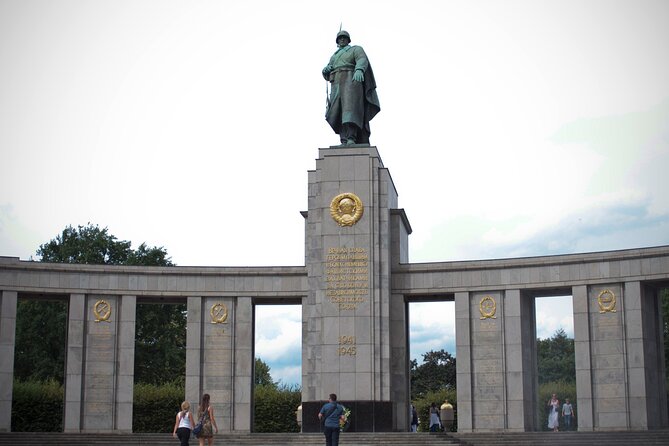
The Reichstag is a useful place to begin a discussion of Germany’s political past and present. Today it is the meeting place of the German Parliament, but a World War II-focused route can also use the area to explore resistance to the Nazi regime, including Claus von Stauffenberg, and the Battle of Berlin. The guide may discuss Albert Speer’s plans for Germania and Soviet monumental architecture, placing Berlin’s grand buildings in the context of power and conflict.
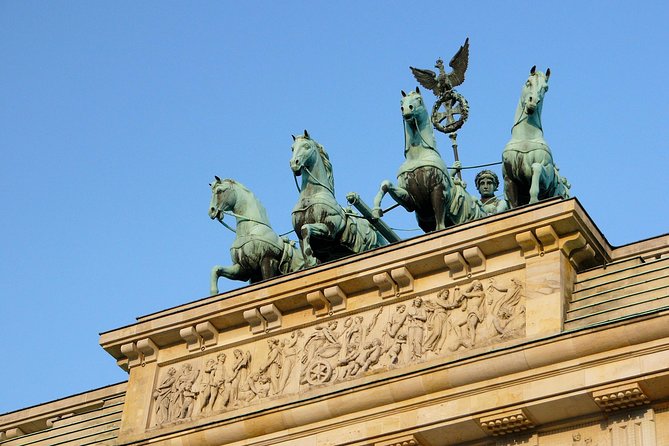
The Brandenburg Gate offers another compact lesson in changing meanings. It was a symbol of a divided city during the Cold War; today, it represents peace and unity. Your guide can explain the shifts while you stand beneath one of Berlin’s best-known monuments. The scheduled stop is brief, so use it to listen and ask questions rather than expecting a long visit.
Nearby, the Memorial to the Murdered Jews of Europe is a solemn place for reflection. Its 2,711 concrete slabs form an open field with paths that rise and dip between them. The changing heights and narrow passages can make the memorial feel disorienting, an effect that invites visitors to pause and consider the enormity of the Holocaust.
An underground information center provides historical context and personal accounts, but a 15-minute stop is not enough to explore it properly. If the center is important to you, tell your guide and ask how best to plan your time. The memorial itself merits a respectful visit, not a hurried photo stop.
Hitler’s bunker site and Nazi-era buildings
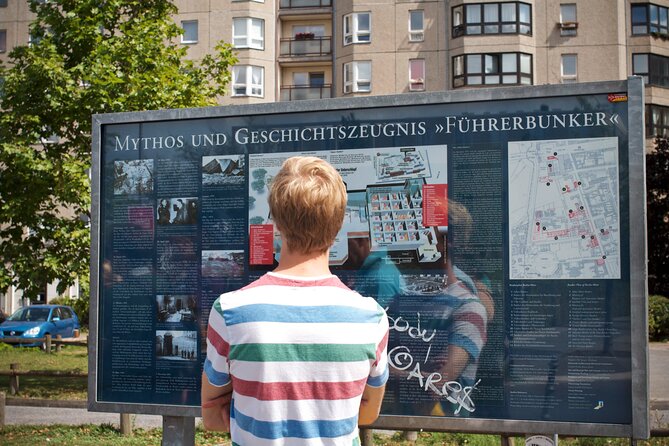
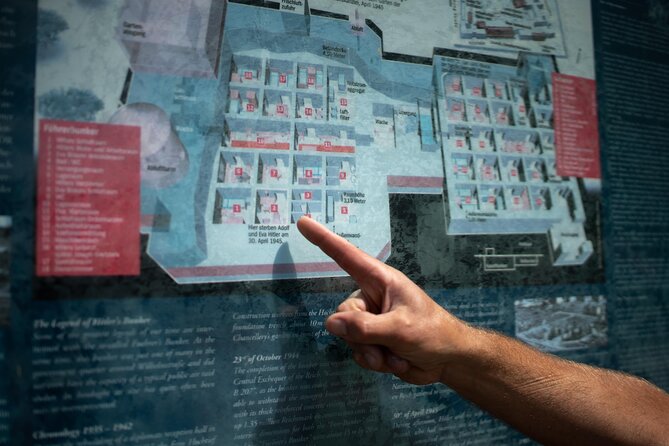
The site of Hitler’s bunker is a reminder that a place can be historically crucial without looking like a grand monument. The tour takes you to the location and explains its role as the center of the Nazi regime. The emphasis is on understanding what happened, not on expecting an intact bunker to visit.
The former Reich Air Ministry offers a different kind of evidence. Completed in 1936, the imposing building housed Hermann Göring’s Luftwaffe headquarters. It survived the war and later served East Germany as its Ministry of Transport. Its continued presence helps show how Berlin reused buildings from one political period to the next.
At the Topography of Terror, the focus shifts from architecture to the institutions and people who carried out Nazi persecution. The site was once the headquarters of the SS, Gestapo and SD. Today, an exhibition documents the perpetrators and their crimes. The listed stop is 15 minutes, so consider returning on your own if you want more time with the exhibits.
Taken together, these sites make the Nazi period more concrete. They help you see how dictatorship occupied ordinary streets and official buildings, not just the settings of dramatic historical events.
More Cold War tours in Berlin:
- Berlin’s Best: 2 Hour Walking Tour Third Reich and the Cold War
★ 5.0 · 5,486 reviews - Berlin: DDR Museum Tickets
★ 4.3 · 3,443 reviews - Cold War, Berlin Wall, Spies and the East Side Gallery
★ 5.0 · 1,024 reviews - Berlin: Cold War Walking Tour on Berlin Wall Route
★ 4.8 · 437 reviews
Checkpoint Charlie and the human cost of division
Checkpoint Charlie was the best-known crossing between East and West Berlin. The 1961 standoff between American and Soviet tanks brought the Cold War’s danger into sharp focus. At the site, your guide can explain the confrontation, border controls, escape attempts and the ways division separated families and friends.
The checkpoint itself is a popular stop, and its fame can make it feel more like a landmark than a place of real fear. The guide’s context is what gives it weight. Ask about the people who tried to cross and the daily restrictions imposed by the Wall.
For a more personal account of division, the Palace of Tears at Friedrichstrasse Station tells the story of East Germans leaving for the West. From 1961 to 1989, this departure hall was the setting for painful farewells. Its museum covers the Berlin Wall and the people affected by it. With a 20-minute stop, you may need to choose between a quick look and a fuller visit later.
Bernauer Strasse and the Wall’s physical remains
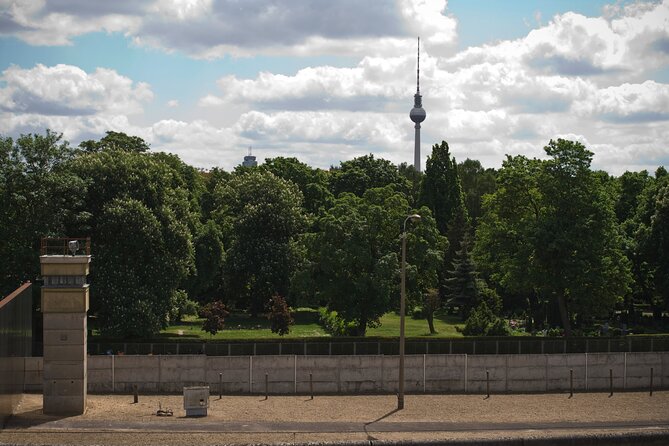
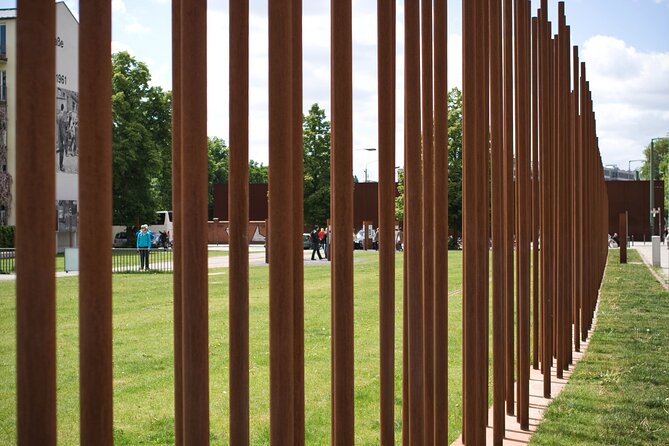
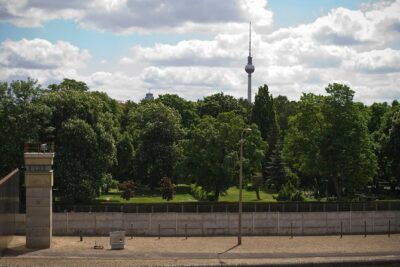
The Berlin Wall Memorial on Bernauer Strasse preserves sections of the border, a watchtower and a documentation center. When the Wall went up in 1961, it split the street, separating residents from neighbors and trapping people on the eastern side. The area became the scene of escape attempts, including the underground Tunnel 29 and Tunnel 57.
This is one of the strongest places to grasp the Wall as more than a line on a map. You can see preserved structures and hear about the risks people took to get across. The planned stop is 25 minutes, longer than at most sites, but the documentation center may call for extra time if you want to study its material.
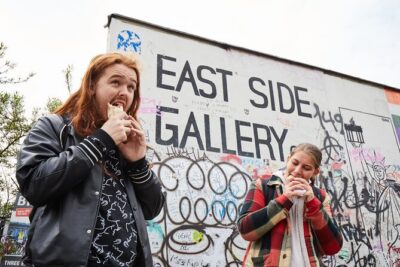
The East Side Gallery provides a striking contrast. It is the longest remaining stretch of the Berlin Wall and an open-air gallery covered with murals promoting freedom and justice. The art gives the former barrier a new public role, though the stop is scheduled for just 15 minutes. It is a good place to see the Wall’s scale and hear how its meaning changed after division ended.
The two Wall sites serve different purposes: Bernauer Strasse preserves the border and its human history, while the East Side Gallery shows how the Wall became a canvas for public expression. If both matter to you, say so before the tour begins.
Tempelhofer Feld and the wider Berlin story
Tempelhofer Feld brings the city’s history into a much larger open space. The former Nazi airport was later used by Allied forces during the Berlin Airlift of 1948 and 1949. The airport no longer operates, and the grounds are now a public recreation area.
This stop can broaden the tour beyond monuments and border structures. It connects the Nazi era to the postwar crisis that kept West Berlin supplied, then shows how a former airport became part of everyday city life. The listed 20-minute visit offers an introduction, not time to roam the vast grounds.
Another possible stop is an old NKVD prison in Prenzlauer Berg, later used by East Germany’s Stasi. The guide can discuss interrogation methods, the site’s present use and how Germany confronts its destructive past. Since the tour is customizable, this is a useful choice if you want to focus on political repression under both Nazi and East German rule.
Price, pace and who gets the most from it
At $192.97 per person, this is a significant expense, especially for a couple. The value comes from having a guide dedicated to your group, the freedom to ask questions, and the ability to focus on the history you care about. People who want to understand the connections between sites may find that more useful than a cheaper route that simply points out landmarks.
The guide can also help with practical orientation. Some participants have found the tour a useful first-day overview, with recommendations for what to see next and help understanding Berlin’s U-Bahn and S-Bahn. That benefit is strongest when you arrive with questions and tell your guide what you have already visited.
Do not expect a complete account of Berlin in four hours. You will need to choose between sites, and some museums or exhibitions deserve a separate visit. Food and drinks are not included. The tour is private, mobile-ticketed and offered in English; service animals are allowed, and most participants can take part.
The tour is booked an average of 56 days ahead, so it is worth planning early if your dates are fixed. Free cancellation is available up to 24 hours before the start time. Berlin events can also affect access to sites: a major marathon, for example, can lead to barriers or restricted views. Check what is happening in the city around your visit.
Should you book this Berlin history walk?
Book it if you want a personal, question-friendly introduction to Berlin’s Nazi and Cold War history, and you value a guide’s context more than ticking off every sight. It is especially useful early in a visit, when a good route and clear explanations can help you decide where to spend the rest of your time.
Think twice if you prefer a slow museum visit, want to cover every listed stop, or find several hours of walking tiring. Before you book, identify your top three priorities, ask for a realistic route, and request breaks if you need them. With those expectations in place, this private walk can make Berlin’s difficult history easier to read, one street and memorial at a time.
FAQ
How long does the tour last?
The tour lasts approximately three to four hours. The actual route depends on your chosen focus and the sites you prioritize.
Is this a private tour?
Yes. Only your group participates, so you can tailor the walk to your interests and ask questions along the way.
Can I choose between World War II and Cold War history?
Yes. You can focus on World War II, the Cold War, or a combination of both. You can also make specific requests when booking.
Is hotel pickup included?
Yes. The guide meets you in a central Berlin hotel lobby, and hotel pickup and drop-off are included.
What language is the tour offered in?
The tour is offered in English.
Are all the listed sites visited on every tour?
No. The route is customizable, and the listed stops are options. There is not enough time to cover every site in a three-to-four-hour walk.
Are food and drinks included?
No. Food and drinks are not included.
What is the cancellation policy?
You can cancel up to 24 hours before the tour’s start time for a full refund. Cancellations made less than 24 hours before the start time are not refunded.
More Third Reich tours in Berlin
- Berlin: Berlin Story Bunker Entry Ticket
★ 4.6 · 6,759 reviews - Third Reich Berlin: Hitler and WWII Walking Tour
★ 5.0 · 3,301 reviews - Berlin: Third Reich, Hitler, and WWII Walking Tour
★ 4.9 · 1,133 reviews - Berlin Third Reich Sites: Half-Day Walking Tour
★ 5.0 · 835 reviews
Newest tours in Berlin
- Berlin: guided canoe | kayaktour★ 4.1 · 7 reviews
- Understanding Kreuzberg: The roots of local (sub)culture★ 4.9 · 11 reviews
- Where It All Began: Berlin’s Queer & Trans History Tour★ 4.9 · 6 reviews
- Warnemünde Shore Excursion: Private Sachsenhausen and Berlin Tour★ 5.0 · 12 reviews
- Ultimate E-Bike Tour of Berlin with Beer Garden Stop★ 5.0 · 4 reviews
- Potsdam Highlights – Private sightseeing tour by minibus★ 5.0 · 3 reviews
- Private Potsdam City Tour in an authentic vintage van★ 5.0 · 14 reviews
- Transfer from Berlin Schönefeld Airport (SXF) to Berlin city Hotels – ROUND TRIP★ 4.0 · 3 reviews
Berlin Cold War Tours, compared.

Cold War, Berlin Wall, Spies and the East Side Gallery
Read our review →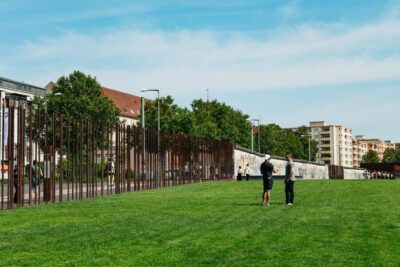


East Berlin Food & History Tour with Eating Europe
Read our review →Browse the lists this tour appears in