
Reviewed · BERLIN THIRD REICH TOURS
Berlin Third Reich Sites: Half-Day Walking Tour
Berlin’s Third Reich story is written into ordinary streets, former government offices and memorials scattered across the city center. This four-hour walk connects those places into a clear account of how Nazi rule took hold, whom it persecuted and how the war ended in Berlin.
I like two things in particular: the guide adds the context that can be hard to assemble on your own, and the route brings together sites devoted to Jewish, Roma, LGBT and Soviet history. At $21.77, it is also a practical way to use a half-day well, with time left afterward for your own plans.
The trade-off is the subject itself: this is a serious, often painful tour, not a light sightseeing stroll. You will also be on your feet for four hours, and the AB Zone transport ticket, about €3.80, is not included.
- A citywide story on foot: The route links major memorials and former Nazi institutions in one organized walk.
- A guide-led history: Expect an English-speaking guide to set the political context and take questions along the way.
- More than one community’s history: Stops include Jewish, Roma and LGBT memorials, as well as a Soviet memorial.
- A focused half-day: The tour starts at 10:00 am and ends outside the Reichstag, leaving the rest of the day open.
- A small-group limit: The maximum group size is 25, and you should plan for a substantial walk in any weather.
Why these sites make more sense together
Berlin’s Third Reich sites are spread across the city center, and many are easy to pass without understanding what happened there. This route gives you a framework: it begins with the Nazi Party’s rise and dictatorship, then connects that story to persecution, deportation, state institutions, resistance and the end of the war.
That structure matters. You are not simply ticking off buildings and monuments. A guide can explain how a site fits into the machinery of the regime, and how the consequences reached Jewish people, Sinti and Roma communities, and other groups persecuted by the Nazis.
The walk is also a useful first stop for your own Berlin history days. Once you know the broad chronology and have seen several key locations, you can return to the sites that warrant more time, including the Topography of Terror. The tour’s brief explanations are an introduction, not a substitute for a full museum visit.
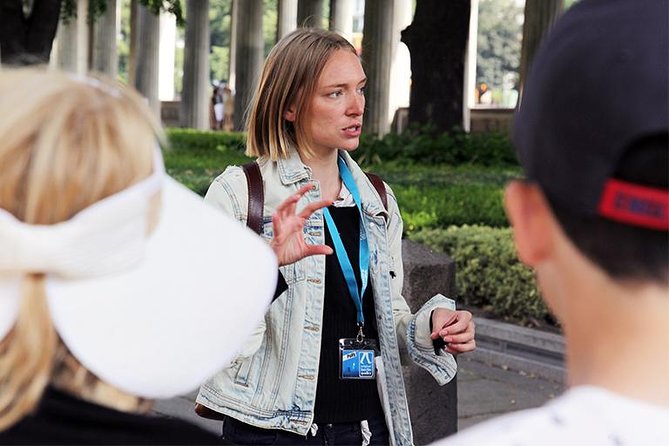
Guides vary by departure. Names associated with this walk include Hannah, Tom, Jonathan N., James, and others. The qualities I would look for are clear delivery, care with a difficult subject and an openness to questions. The tour is praised for those traits, and for guides who make room for different ages and levels of prior knowledge.
Starting near Hackescher Markt
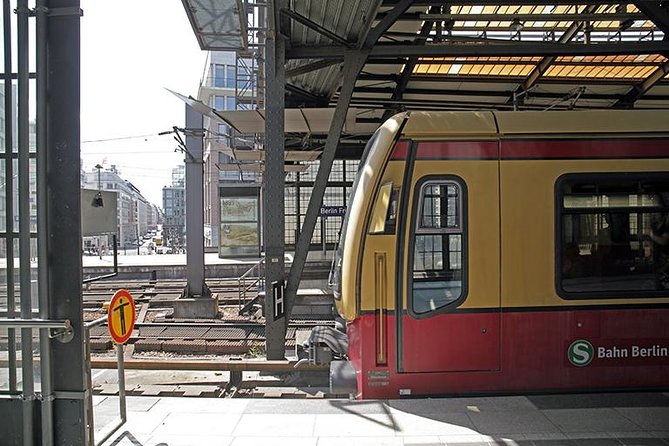
The meeting point is Neue Promenade 3, beside Hackescher Markt S-Bahn station. The tour begins at 10:00 am, so check your confirmation for the exact meeting instructions and arrive with a little time to spare.
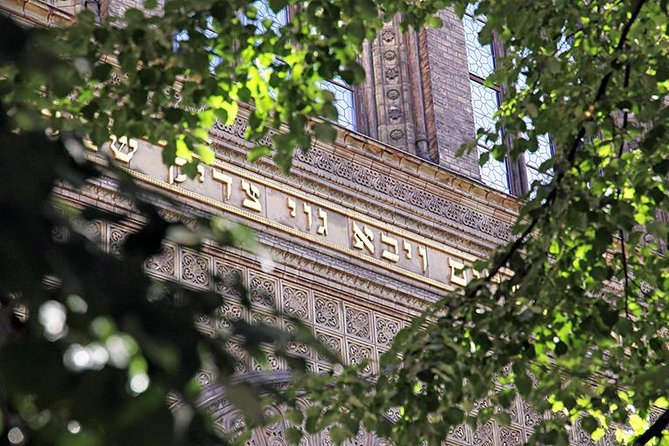
The first stops are the Museum Blindenwerkstatt Otto Weidt and the New Synagogue’s Centrum Judaicum. The guide explains the history of each site, with about five minutes listed at each stop. These brief introductions help place Berlin’s Jewish community and the experience of people living under Nazi persecution within the larger story.
The short timing is worth keeping in mind. You should expect an explanation at these locations, not an extended visit inside the museum or synagogue. If one of them especially interests you, note it for a return visit.
More walking tours in Berlin:
- Discover Berlin Half-Day Walking Tour
★ 5.0 · 9,624 reviews - Berlin: Third Reich and Cold War 2 Hour Walking Tour
★ 4.9 · 6,830 reviews - Berlin: Discover Berlin Walking Tour
★ 4.9 · 5,998 reviews
Anhalter Bahnhof and the machinery of persecution
At the ruins of Anhalter Bahnhof, the guide discusses the deportation of many of Berlin’s Jewish residents to concentration camps. The remains make a stark point: a railway station, part of the city’s everyday infrastructure, became connected to forced removal and mass violence.
This is one of the most important stops for understanding that persecution was not distant from ordinary life. The tour gives you a place and a historical frame for the deportations, rather than leaving the subject as a general account of Nazi crimes.
The route then reaches the former SS and Gestapo headquarters, now the site of the Topography of Terror. The guide explains how these institutions operated and what role they played in the regime. There is about 15 minutes listed here, longer than at most stops, but the site merits more time if you plan to explore the museum displays independently.
This stop is particularly valuable because it shifts the focus from victims and memorials to the institutions that carried out state terror. You can see how the tour links the Nazi leadership’s political power to the agencies that enforced it.
The former Aviation Ministry and resistance
At the former Ministry of Aviation, the guide discusses the Luftwaffe, the German air force, and the effects of Nazi rule on Jewish and Sinti and Roma communities. The building’s former government role gives the conversation a physical setting, while the subject broadens beyond the best-known history of Jewish persecution.
The itinerary allows about 10 minutes here. As with other stops, that is enough for a guided explanation, but not a long interior visit. If you want to investigate the building or surrounding history in depth, treat the walk as an orientation.
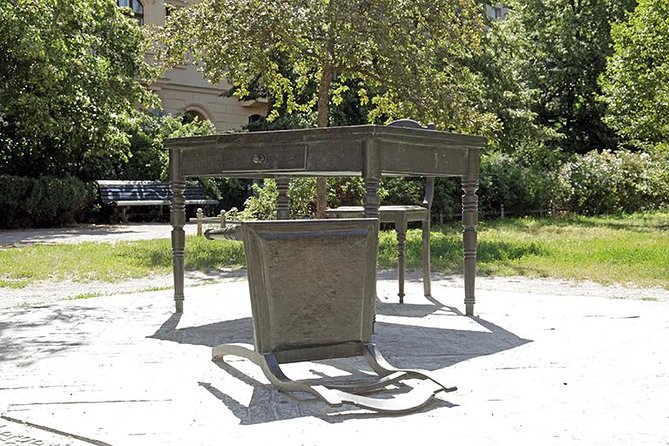
A stop at the Johann Georg Elser sculpture turns to resistance. Elser attempted to kill Hitler, and the guide explains the history behind that attempt. It is a short stop, about five minutes, but it adds an important distinction: opposition existed, even as the regime imposed severe risks on those who resisted.
This portion of the walk helps keep the story from becoming a simple account of leaders and institutions. You are also asked to consider how individuals acted, and what resistance meant under a dictatorship.
Memorials to murdered and persecuted people
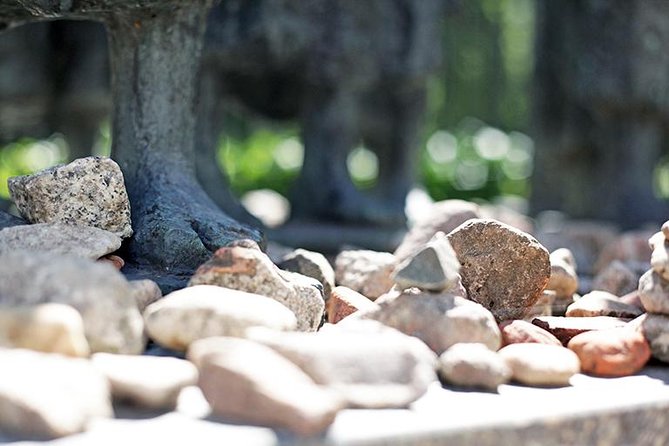
The route includes the Memorial to the Murdered Jews of Europe, the Monument to the Homosexuals Persecuted Under National Socialist Regime, and a Soviet memorial in the Tiergarten. Each site points to a different part of the history and its aftermath.
At the Holocaust Memorial, the guide gives a short introduction to the site and its meaning. The allotted 10 minutes is enough to understand why the memorial is here, but you may want to return later to spend more time walking among its concrete stelae and considering the design for yourself.
The monument to homosexual victims brings another group targeted by the Nazi state into the tour’s account. It is a brief stop, also listed at 10 minutes, but a meaningful one. The route’s inclusion of this memorial, along with the Jewish and Roma history discussed elsewhere, gives you a broader view of Nazi persecution than a tour focused only on military events would.
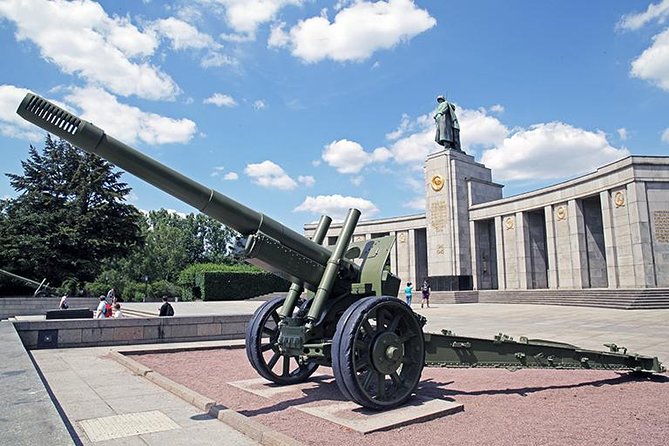
The Soviet Memorial in the Tiergarten turns attention to the war’s end and the Soviet losses connected to the battle for Berlin. The guide explains the site’s history during a 10-minute stop. Together, these memorial visits show how different communities and wartime experiences are marked in the city, while also reminding you that each memorial has its own purpose and context.
More Third Reich tours in Berlin:
- Berlin: Berlin Story Bunker Entry Ticket
★ 4.6 · 6,759 reviews - Berlin’s Best: 2 Hour Walking Tour Third Reich and the Cold War
★ 5.0 · 5,486 reviews - Third Reich Berlin: Hitler and WWII Walking Tour
★ 5.0 · 3,301 reviews - Berlin: Third Reich, Hitler, and WWII Walking Tour
★ 4.9 · 1,133 reviews
Finishing at the Reichstag
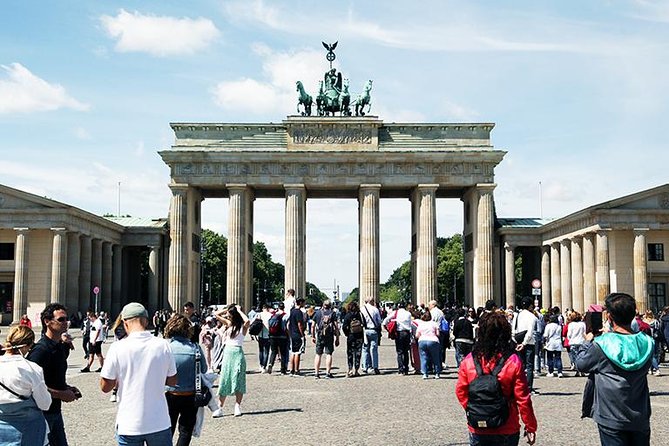
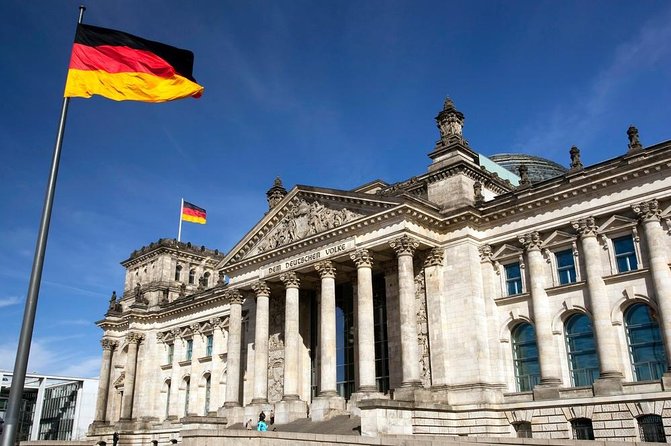
The walk ends outside the Reichstag, Germany’s parliament building. The guide discusses the building’s place in the Nazi rise to power in 1933 and the final days of World War II in 1945. The endpoint gives the tour a fitting close: Berlin’s political center, linked both to the destruction of democratic government and to the end of the Nazi regime.
The tour does not include a visit inside the Reichstag. Its endpoint is Platz der Republik 1, and you can plan a separate visit if you want to see the building’s interior. That makes the finish convenient for continuing your own sightseeing, but keep any separate arrangements distinct from the walking tour.
What four hours and $21.77 buy you
At $21.77 per person, the main value is the guide’s ability to connect sites that might otherwise feel scattered or self-explanatory. The price covers a professional English-speaking guide and the four-hour walking tour. Admission tickets at the listed stops are free, and an AB Zone transport ticket, about €3.80, is not included.
The route also saves planning time. You do not have to work out how the former Nazi offices relate to the memorials or how to connect the deportation site to the story of the war’s end. A well-paced guide can provide that through-line, answer questions and keep the group moving.
The group is capped at 25 people. That is not a promise of an intimate private tour, but it offers a more manageable setting than a very large group. The ability to ask questions is one of the tour’s strengths, so it is worth speaking up if a site or historical point needs clarification.
Expect to walk for most of the four hours. The tour operates in all weather, so dress for the conditions and wear comfortable shoes. The exact walking distance is not specified, but the number of sites and the duration make sturdy footwear a sensible choice.
Who should book this walk
I would recommend this tour if you want a structured introduction to Nazi-era Berlin and prefer an expert explanation to a self-guided route. It suits first-time visitors, history-minded travelers and anyone who wants to understand the connections among persecution, government power, resistance and the war’s closing days.
It can also work well for families with older children or teenagers who are ready for difficult history. Guides have been praised for keeping different generations engaged, but the subject remains grave. Consider your group’s readiness before booking, and give yourself some breathing room afterward rather than scheduling another demanding activity immediately.
If you already know the period well, the walk may still add useful local context and sites you might not have found alone. But if your main goal is a long museum visit or detailed study of a single memorial, you may prefer to spend those four hours independently at one or two locations.
The strongest reason to book is the combination of route and explanation. You get a broad view of central Berlin’s Third Reich sites, while the guide helps turn a sequence of stops into a coherent story. The main caveat is the pace: several locations receive only a short explanation, so plan to revisit the places that hold your attention.
Practical details
The tour starts at 10:00 am at Neue Promenade 3 and finishes at the Reichstag, Platz der Republik 1. It lasts about four hours, is offered in English, and has a maximum group size of 25.
Your confirmation is provided at booking. The activity runs in all weather, service animals are allowed, and the tour is near public transportation. Free cancellation is available up to 24 hours before the start time; cancellations or changes within 24 hours are not accepted, and the amount paid is not refunded for a late cancellation.
Should you book it?
Book this walk if you want a well-organized, guide-led account of Nazi Berlin that covers more than the most familiar sites. Its broad route, sensitive subject matter and question-friendly format make it a strong-value half-day introduction.
Skip it if you want a slow, mostly indoor experience or prefer to spend the entire morning inside one museum. For most visitors interested in Berlin’s 1933 to 1945 history, I would make this an early tour, then use the rest of the day to return to the places that deserve a closer look.
FAQ
How long is the tour?
It lasts approximately four hours.
Where does the tour start and finish?
It starts at Neue Promenade 3 near Hackescher Markt S-Bahn station and finishes outside the Reichstag at Platz der Republik 1.
What time does the tour start?
The stated start time is 10:00 am.
Is public transport included?
No. An AB Zone transport ticket is not included and costs approximately €3.80 per person.
What language is the tour offered in?
The tour is offered in English and includes a professional English-speaking guide.
What is the cancellation policy?
You can cancel for a full refund up to 24 hours before the experience begins. Cancellations or changes made less than 24 hours before the start time are not accepted, and the amount paid is not refunded.
More half-day trips in Berlin
- Potsdam Half-Day Walking Tour from Berlin
★ 4.5 · 398 reviews - Berlin Private Half-Day Walking Tour: Discover the German Capital’s History
★ 5.0 · 244 reviews - From Berlin: Potsdam Half-Day Guided Tour
★ 4.6 · 167 reviews - From Berlin: Potsdam Half-Day Tour in Spanish
★ 4.6 · 135 reviews
Newest tours in Berlin
- Berlin: guided canoe | kayaktour★ 4.1 · 7 reviews
- Understanding Kreuzberg: The roots of local (sub)culture★ 4.9 · 11 reviews
- Where It All Began: Berlin’s Queer & Trans History Tour★ 4.9 · 6 reviews
- Warnemünde Shore Excursion: Private Sachsenhausen and Berlin Tour★ 5.0 · 12 reviews
- Ultimate E-Bike Tour of Berlin with Beer Garden Stop★ 5.0 · 4 reviews
- Private Potsdam City Tour in an authentic vintage van★ 5.0 · 14 reviews
- Transfer from Berlin Schönefeld Airport (SXF) to Berlin city Hotels – ROUND TRIP★ 4.0 · 3 reviews
- Potsdam Highlights – Private sightseeing tour by minibus★ 5.0 · 3 reviews
Berlin Third Reich Tours, compared.

Third Reich Berlin: Hitler and WWII Walking Tour
Read our review →
Guided Bike Tour of the Berlin Wall and Third Reich
Read our review →
Hitler’s Germany: Berlin During the Third Reich & WWII
Read our review →
Private Walking Tour Berlin Third Reich Hitler and World War II
Read our review →
Private Walking Tour: World War 2 and Cold War Sites in Berlin
Read our review →
The History of Berlin: WWII PRIVATE Walking Tour With Locals
Read our review →Browse the lists this tour appears in