

Reviewed · BERLIN COLD WAR TOURS
Berlin: Third Reich and Cold War 2 Hour Walking Tour
At the Brandenburg Gate, Berlin’s grand ceremonial gateway becomes a starting point for a harder story: Nazi rule, a divided city, and the long road to reunification. In two hours, this walk links major sites that can feel scattered and abstract when you visit them on your own.
I like two things in particular: the route brings Third Reich and Cold War history together, and the guide can make familiar landmarks easier to understand through stories and questions. Guides named in tour feedback include Hannah, Jimmy, Ru, Mikhail, and Marie, with praise especially focused on clear storytelling, good pacing, and lively answers.
The main consideration is the pace and subject matter. You cover about 2 kilometers in two hours, with several serious memorial sites along the way. It is a useful introduction, but not a substitute for taking extra time at places such as the Holocaust Memorial or Topography of Terror.
Key points before you book
- Start at the Brandenburg Gate: See a landmark associated with Nazi pageantry, Cold War division, and reunification.
- Follow a connected history: The walk moves from the Reichstag and Soviet War Memorial to Nazi-era sites, the Wall, and Checkpoint Charlie.
- Walk along 200 meters of the Berlin Wall: A physical remnant gives the city’s division a scale that maps alone cannot.
- Expect strong guiding, not just a list of dates: The most praised qualities are engaging storytelling, clear explanations, and thoughtful answers to questions.
- Allow two hours for roughly 2 kilometers: Wear comfortable shoes, and bring water and an umbrella.
- Pay $23 for a guided introduction: It is good value if you want context at several landmarks without planning the route yourself.
Starting at the Brandenburg Gate
The meeting point is in front of the tourist information point at Pariser Platz 1. Look for a guide with a pink umbrella. Brandenburger Tor station is close by, served by S-Bahn lines S1, S2, S25, and S26, as well as U-Bahn line U5. Buses 100 and 245 also stop nearby.
The gate is more than a convenient place to gather. It has stood at the center of Berlin’s political story, from Nazi rallies to Cold War tensions and the celebrations surrounding reunification in 1989. Starting here gives your guide a natural way to explain how one city landmark can carry several layers of history.
You’ll want to arrive ready to listen and keep moving. The tour is designed to connect sites across central Berlin, so stops are brief rather than long visits inside museums. That works well if you’re new to the city and want a clear framework. If you already know the broad history, use the walk to ask specific questions and notice how the locations relate to one another.
More walking tours in Berlin:
- Discover Berlin Half-Day Walking Tour
★ 5.0 · 9,624 reviews - Berlin: Discover Berlin Walking Tour
★ 4.9 · 5,998 reviews - Berlin’s Best: 2 Hour Walking Tour Third Reich and the Cold War
★ 5.0 · 5,486 reviews
The Reichstag and the question of power
The first stop is the Reichstag, Germany’s parliament building. Here, the guide discusses the 1933 Reichstag Fire, a major turning point in Hitler’s rise to power. The building’s history also spans war, damage, division, and its later role as the seat of German democracy.
The value of this stop is the chance to place a complicated event at the location where it mattered. The tour does not promise an inside visit, so expect to consider the building from outside and hear its story there. The fire itself remains a subject of historical debate, and the guide’s explanation can help you understand why it mattered without reducing the story to a simple answer.
A good guide makes this kind of stop more than a quick photo pause. People often praise the tour’s clear delivery and story-led approach. Names that come up in connection with engaging explanations include Jimmy, Scott, James, and Thomas. Guide assignments can vary, of course, but the format gives you time to hear the context and ask questions as the group walks on.
Soviet tanks and the cost of the Battle of Berlin
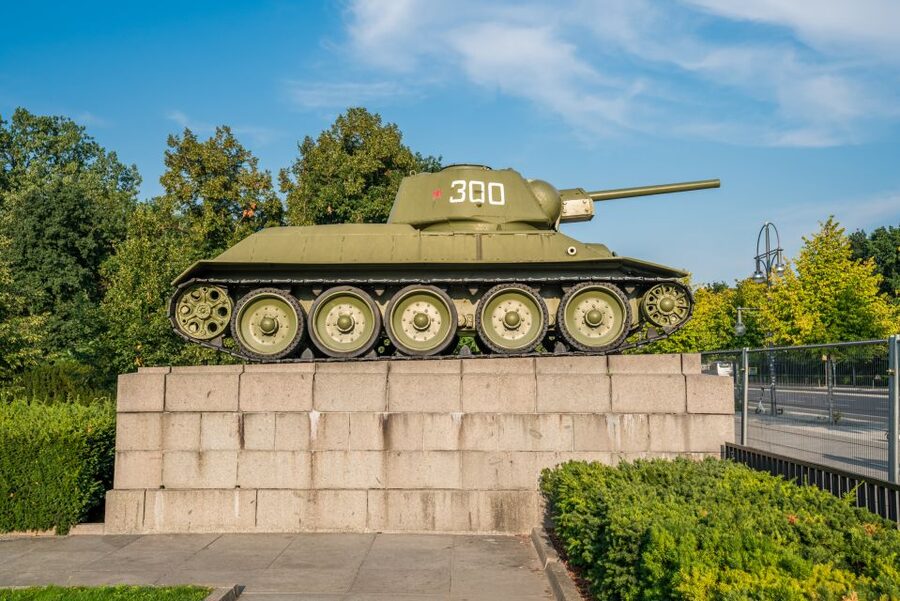
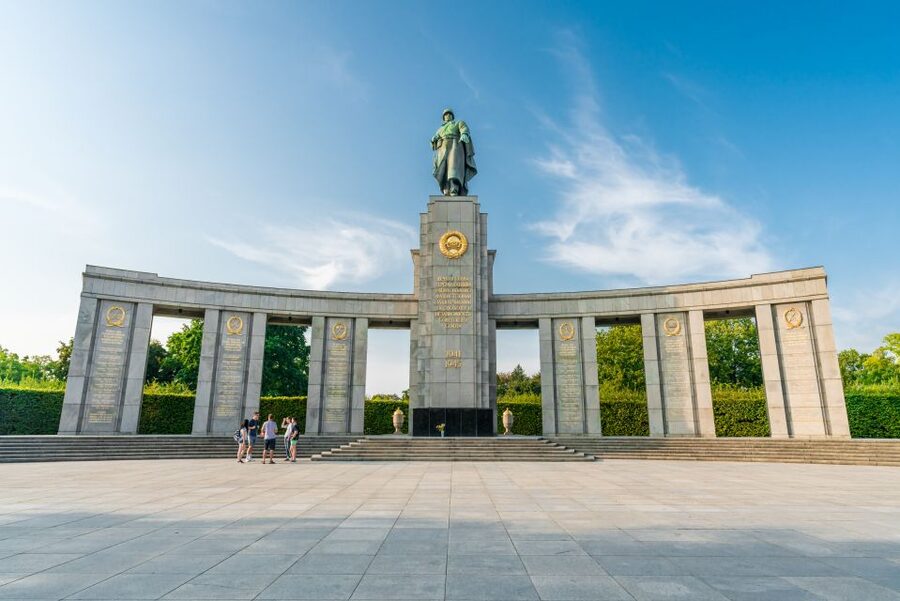
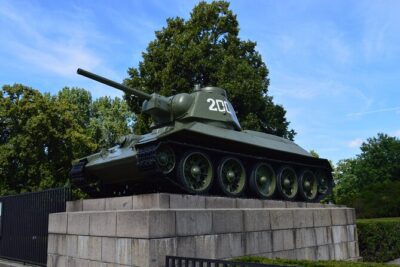
At the Soviet War Memorial in Tiergarten, preserved Red Army tanks provide a striking physical reminder of the final battle for Berlin. The memorial honors the 80,000 Soviet soldiers who fell during the Battle of Berlin.
This stop adds an important perspective to a tour that could otherwise focus only on German politics and the Wall. The tanks are not just military objects; they anchor a story of enormous loss in a place you can stand and look around. Your guide can help connect the memorial to the city’s final days under Nazi rule and the changes that followed.
It is also a solemn stop, so the tone may shift. That is appropriate. The tour covers violent and painful history, and the memorial asks you to pause rather than treat the route as a checklist. If you want time to study the site in detail, you may wish to return after the tour.
A quiet pause at the Holocaust Memorial
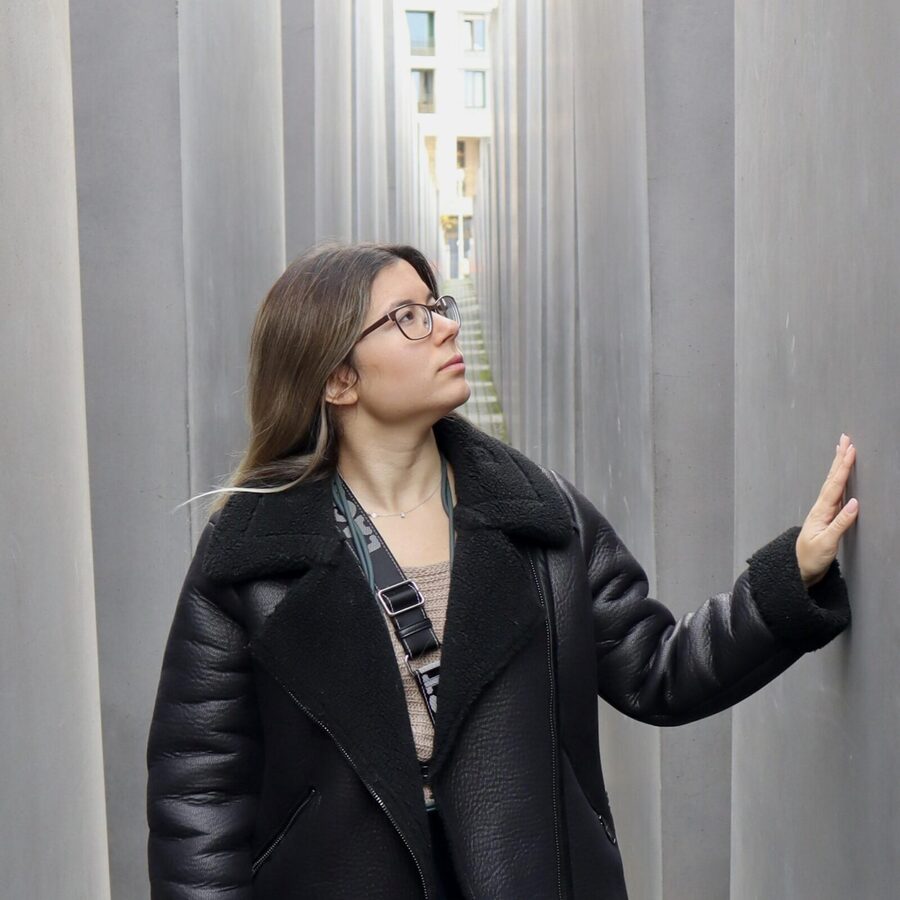
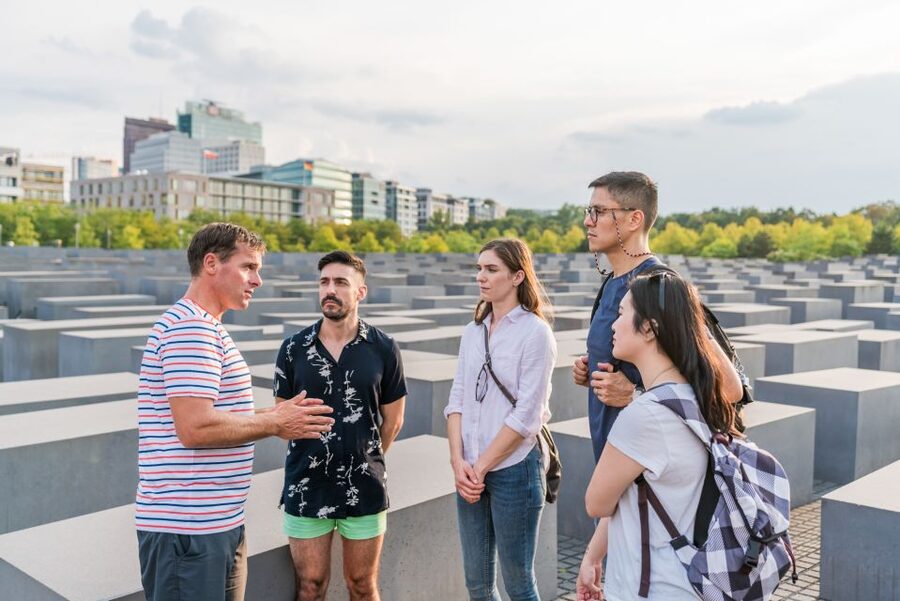
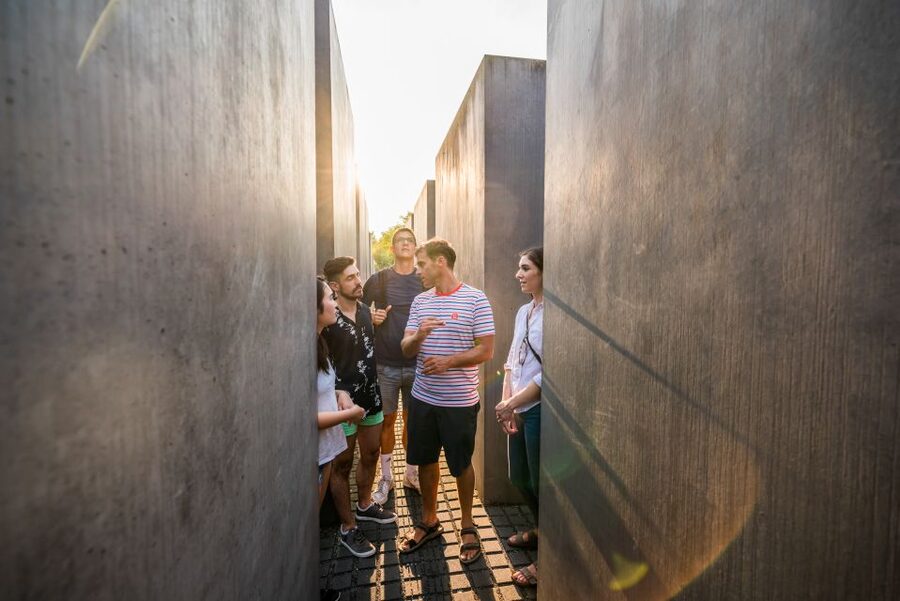
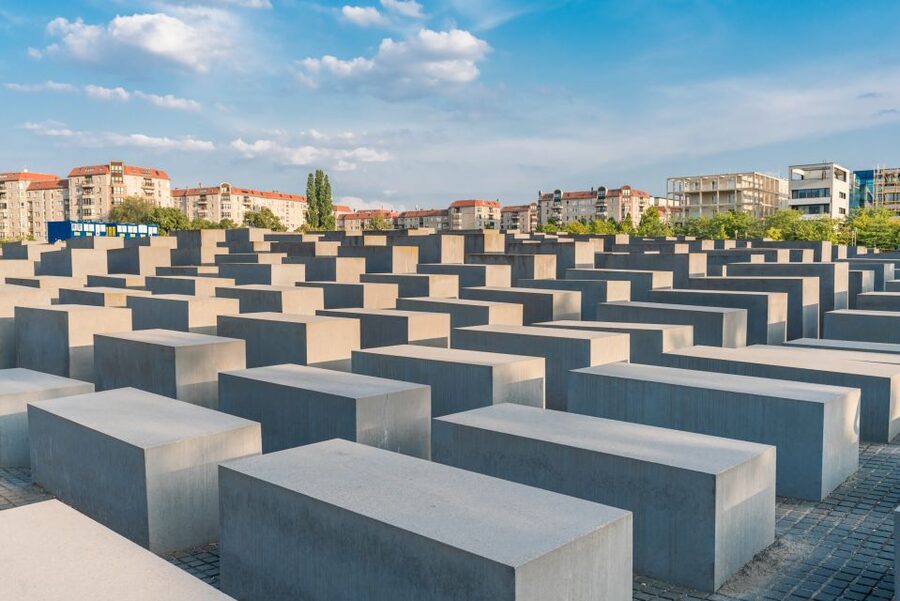
The Memorial to the Murdered Jews of Europe honors the six million Jewish victims of the Holocaust. Its field of concrete stelae creates an uneasy, shifting space that is experienced by walking through it, not just viewing it from the edge.
The tour’s visit offers a chance to hear the memorial’s purpose in the context of Nazi persecution. It can help make the scale of the Holocaust harder to treat as an abstract number. At the same time, a guided walk has limits here: two hours for the whole route cannot provide the quiet, unhurried visit this place may deserve.
I’d treat this as an introduction, then consider returning on your own if you want time to move through the memorial at your own pace. The guide’s role is to provide context, not to tell you exactly what to feel. That balance matters at a site where reflection should have room.
More Cold War tours in Berlin:
- Berlin: DDR Museum Tickets
★ 4.3 · 3,443 reviews - Cold War, Berlin Wall, Spies and the East Side Gallery
★ 5.0 · 1,024 reviews - Berlin: Cold War Walking Tour on Berlin Wall Route
★ 4.8 · 437 reviews - Berlin: Cold War Era History Guided Bike Tour
★ 4.8 · 413 reviews
Hitler’s bunker site and the former aviation ministry
The route continues to the site of Hitler’s Bunker, where he spent his final days before the fall of the Third Reich. This is a place where context matters more than appearance. The stop is about what happened there and what it means in the history of the Nazi regime, not a grand surviving structure.
Nearby, the tour points out Detlev-Rohwedder-Haus, formerly Hermann Göring’s Ministry of Aviation. The building later became the birthplace of East Germany in 1949. That change in use makes the site especially useful for understanding how Berlin’s political landscape shifted from Nazi rule into the divided postwar era.
The proximity of these locations helps the tour draw a line between regimes without suggesting that the history was simple or inevitable. You move from the last days of the Third Reich to the formation of East Germany, with the city itself as the connecting thread. This is one of the route’s strongest features: Berlin’s past is not presented as separate chapters in separate neighborhoods.
Topography of Terror and the machinery of repression
At the former headquarters of the SS and Gestapo, the guide explains how the Nazi regime organized its reign of terror. The site brings the subject down from national events to the institutions that carried out persecution and repression.
This stop is a useful counterweight to the tour’s grand landmarks. Buildings such as the Reichstag and Brandenburg Gate can make history feel ceremonial; the former SS and Gestapo headquarters point to the machinery behind state violence. The walk names that role and helps you see how power was organized in the city.
You should expect serious subject matter throughout this part of the tour. The route is not designed as a light overview of Berlin’s attractions. If you want a history walk that helps you understand how dictatorship worked in practice, this stop is central to the experience.
Walking a section of the Berlin Wall
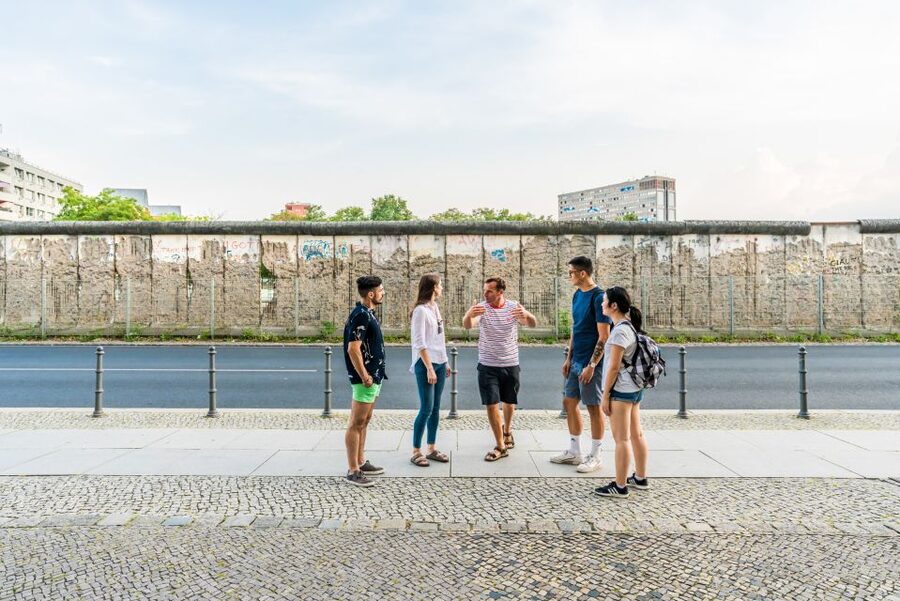
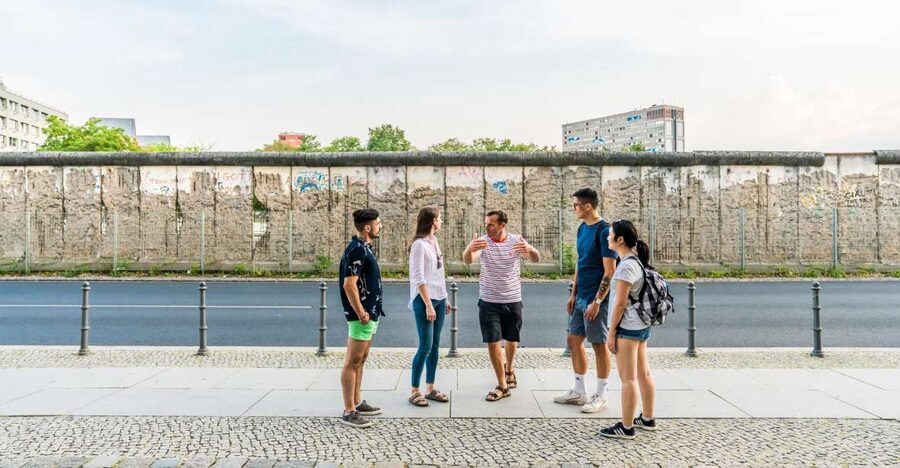
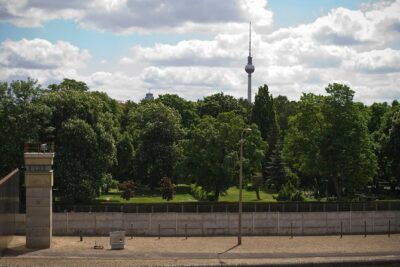
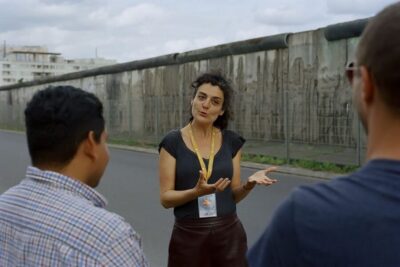
The tour includes a 200-meter stretch of the Berlin Wall, a tangible reminder of the decades when East and West Berlin were divided. Here, stories of attempted escapes and the consequences of the Wall’s fall give human scale to a political boundary.
The Wall can be difficult to grasp when you encounter it only in photographs or brief descriptions. Walking beside a surviving section makes the barrier feel physical: a line that shaped where people could go and the risks they faced trying to cross it. The guide’s stories are especially valuable here, connecting the structure to individual lives.
This is one of the clearest reasons to take the tour rather than simply travel between landmarks independently. The walk links the Wall to the political events and sites that came before and after it. You get a short, focused encounter rather than an extended visit, but it is enough to give the division a more concrete place in your understanding of Berlin.
Ending at Checkpoint Charlie
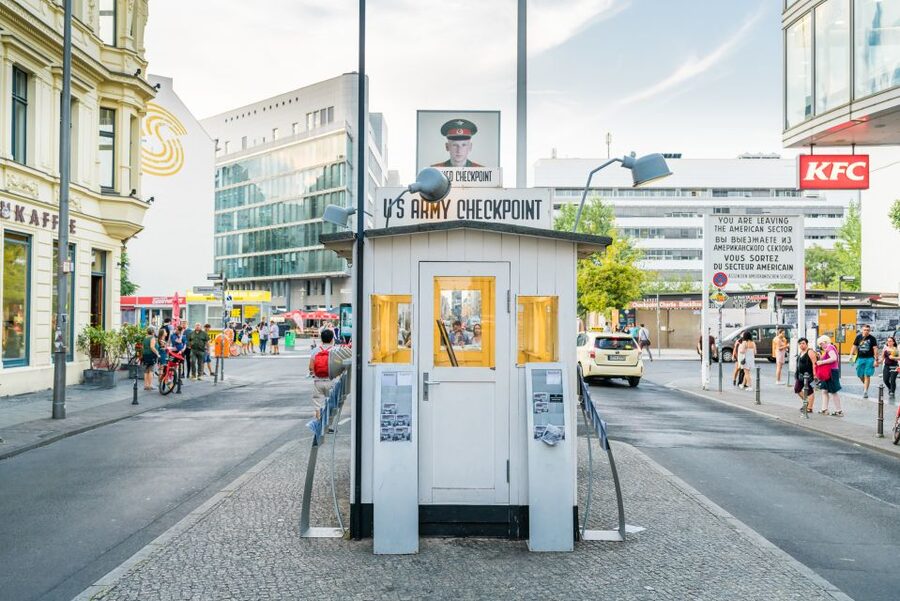
Checkpoint Charlie was a major Cold War crossing point, and American and Soviet tanks once faced off there in a tense standoff. The tour closes its historical arc here with stories of escape attempts and the final hours before the Wall came down and Germany was reunited.
The site is famous, but its value depends on the context you bring to it. On your own, it can be hard to distinguish the real history from the commercial activity around a well-known landmark. A guide can focus your attention on the standoff, the border, and the human stakes behind attempts to escape.
There is a small practical detail to check before you set out: the route description places the finish at Checkpoint Charlie, while the meeting information also says the activity ends back at the meeting point. Confirm the exact ending arrangement with the operator so you know where to plan your next stop.
What the two-hour format gives you
The walk covers about 2 kilometers in two hours. That is a manageable distance for most people who are comfortable walking, but the experience includes frequent stops and a lot of information. Comfortable shoes are a sensible choice, and water is worth bringing, especially if you are walking in warm weather.
Tours run in all weather and on public holidays, so pack an umbrella if rain is possible. The guide may need to speak outdoors in changing conditions; one account of a guide moving the group under cover during rain shows the practical value of a flexible leader, though you should not count on shelter at every stop.
English and German tours are available. Shared group and private options do not always offer the same languages, so check the language and format you want before booking. Private groups are offered, but no group size is specified.
Is $23 good value?
At $23 per person, this tour is a reasonably priced way to get an organized introduction to several major sites in central Berlin. You are paying for a guide and a walking route, not admission to museums or a long visit at each landmark. The value lies in the connections: a guide links Nazi rule, the postwar division, the Wall, and reunification while you move through the places where those stories took shape.
The tour also saves you the work of building a route and deciding what each location means. Many of the strongest comments about the experience focus on guides who explain clearly, keep a comfortable pace, answer questions, and make the history easier to follow. Hannah, Ru, Mikhail, Peter, Marie, and others are named as guides who brought energy, insight, or a strong story arc to the walk.
There is a trade-off. You see many sites in a short time, so you will not have the same freedom to linger as you would on a self-guided visit. If you want a slow, contemplative experience at every memorial, plan extra time before or after the tour. If you want a clear first map of Berlin’s hardest history, the price makes sense.
Who should book this walk?
I’d recommend it for a first visit to Berlin, especially if the Third Reich and Cold War are central to your interests. It is also a good choice if you want to orient yourself early in your stay, then return to the sites that matter most to you. Several guides are praised for making complex history easy to follow, and the question-friendly format can help you connect what you already know to the city in front of you.
It may be less suitable if you want long periods of quiet reflection, detailed museum time, or a slow pace. The subject matter is weighty, and the route moves steadily through several locations. Wheelchair accessibility is stated, but the walk still covers roughly 2 kilometers, so consider what distance and outdoor conditions will be comfortable for you.
Free cancellation is available up to 24 hours before the tour, and you can reserve now and pay later. Those options are useful if your plans are still shifting, but the main decision is simpler: book if you want expert context and a brisk, connected introduction; skip it if you would rather explore each site alone and at length.
FAQ
How long is the tour?
The tour lasts two hours and covers approximately 2 kilometers.
Where does the tour start?
Meet in front of the tourist information point at Brandenburg Gate, Pariser Platz 1. Look for a guide with a pink umbrella.
Where does the tour end?
The route description ends at Checkpoint Charlie, while the meeting details also say the activity ends back at the meeting point. Confirm the exact ending arrangement with the operator before the tour.
What languages are available?
Tours are offered in English and German. Shared group and private options may not offer the same languages, so check the option you plan to book.
Is the tour wheelchair accessible?
Yes, the activity is listed as wheelchair accessible. It covers approximately 2 kilometers on foot.
What should I bring?
Wear comfortable shoes and bring water, an umbrella, and a camera. Tours run in all weather conditions.
Can I cancel or pay later?
You can cancel up to 24 hours in advance for a full refund. Reserve-now, pay-later booking is also available.
More two-hour outings in Berlin
- Berlin: 2-Hour Lake Oberhavel Cruise from Tegel
★ 4.4 · 577 reviews - Berlin 2-Hour Segway Tour
★ 4.6 · 238 reviews - East Berlin and the Berlin Wall 2-Hour Walking Tour
★ 5.0 · 228 reviews - Berlin: Backyards of Berlin 2-Hour Tour
★ 4.7 · 163 reviews
More Third Reich tours in Berlin
- Berlin: Berlin Story Bunker Entry Ticket
★ 4.6 · 6,759 reviews - Third Reich Berlin: Hitler and WWII Walking Tour
★ 5.0 · 3,301 reviews - Berlin: Third Reich, Hitler, and WWII Walking Tour
★ 4.9 · 1,133 reviews - Berlin Third Reich Sites: Half-Day Walking Tour
★ 5.0 · 835 reviews
Newest tours in Berlin
- Berlin: guided canoe | kayaktour★ 4.1 · 7 reviews
- Understanding Kreuzberg: The roots of local (sub)culture★ 4.9 · 11 reviews
- Where It All Began: Berlin’s Queer & Trans History Tour★ 4.9 · 6 reviews
- Warnemünde Shore Excursion: Private Sachsenhausen and Berlin Tour★ 5.0 · 12 reviews
- Ultimate E-Bike Tour of Berlin with Beer Garden Stop★ 5.0 · 4 reviews
- Potsdam Highlights – Private sightseeing tour by minibus★ 5.0 · 3 reviews
- Private Potsdam City Tour in an authentic vintage van★ 5.0 · 14 reviews
- Transfer from Berlin Schönefeld Airport (SXF) to Berlin city Hotels – ROUND TRIP★ 4.0 · 3 reviews
Berlin Cold War Tours, compared.
Berlin’s Best: 2 Hour Walking Tour Third Reich and the Cold War
Read our review →
Cold War, Berlin Wall, Spies and the East Side Gallery
Read our review →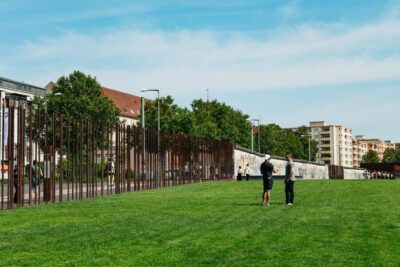


Private Walking Tour: World War 2 and Cold War Sites in Berlin
Read our review →Browse the lists this tour appears in