
Reviewed · BERLIN THIRD REICH TOURS
Private Walking Tour in Berlin: Hitler’s Germany & WWII
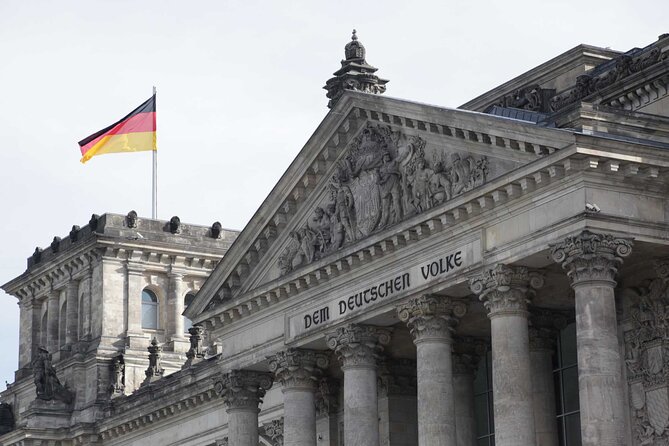
Berlin’s Nazi past is not tucked away in one museum. It is part of the city’s streets, monuments and surviving buildings, and this private walk connects those places into a sobering account of the Third Reich, the Holocaust and the people who resisted. The route also includes the site of Hitler’s bunker and ends outside the Reichstag.
I like two things in particular: a historian guide can give context that a quick look at a building cannot, and a private group can spend more time on the stops that matter most to you. Guides named on this tour include Jasper, Stefan, Rohan, Lewis and Xavier, with a range of praise for clear explanations and an engaging, interactive style.
The main consideration is that this is a long walk, and you see the sights from outside rather than entering them. Public transport tickets are also extra, and the route can take close to four hours, so bring comfortable shoes and plan your energy accordingly.
- Anhalter Bahnhof puts deportation history in a real place: Your guide explains the station’s role in sending prisoners to concentration camps.
- The former Gestapo and SS headquarters sharpen the story: At the Topography of Terror, the tour examines the institutions behind Nazi terror.
- The memorials broaden the focus: Stops include the memorial to murdered Jews, the monument to persecuted homosexuals and a Soviet memorial.
- The private format gives your group room to ask questions: Your guide can adjust the time spent at attractions to your interests.
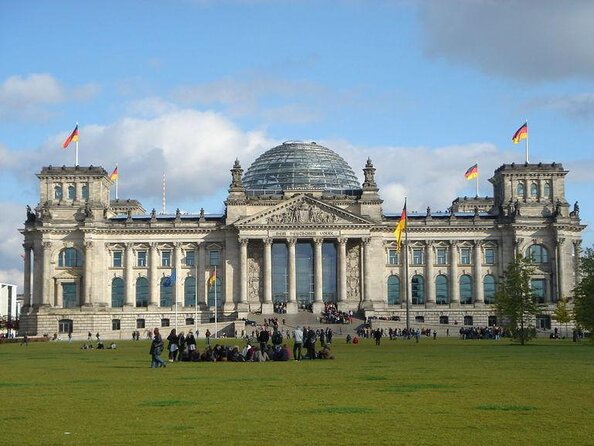
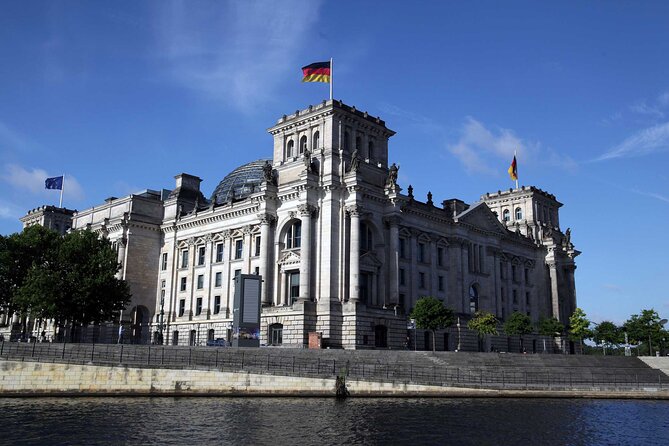
- The walk ends at the Reichstag: It is a useful final landmark, though the visit is from outside and does not include entry.
Berlin’s Nazi past, read through its streets
This half-day walk is built around places where the history happened, or where Berlin now remembers it. Instead of giving you a fast string of dates, a historian guide explains what each location represents and how it fits into the larger story of Hitler’s Germany and World War II.
That setting matters. A station, government building or memorial can seem like just another stop on a city walk until you understand the role it played. The guide’s job is to link the physical surroundings to the system of power, persecution and resistance that shaped them.
The route takes about four hours, although accounts of the walk put its length at roughly three and a half to four hours. The scheduled explanations at each named stop are short, often ten minutes, with fifteen minutes at the Holocaust Memorial. Those times are best understood as planned stops, not a promise that the whole tour takes only the sum of those minutes. Walking between sites and the guide’s explanations make up the rest.
From Otto Weidt’s workshop to the New Synagogue
The walk begins at Neue Promenade 3 and includes the Museum Blindenwerkstatt Otto Weidt. Your guide explains the history of the site, a focused opening to a tour that examines both persecution and efforts to resist the Nazi system. You do not go inside as part of this experience, so the value lies in the guide’s account and the place itself.
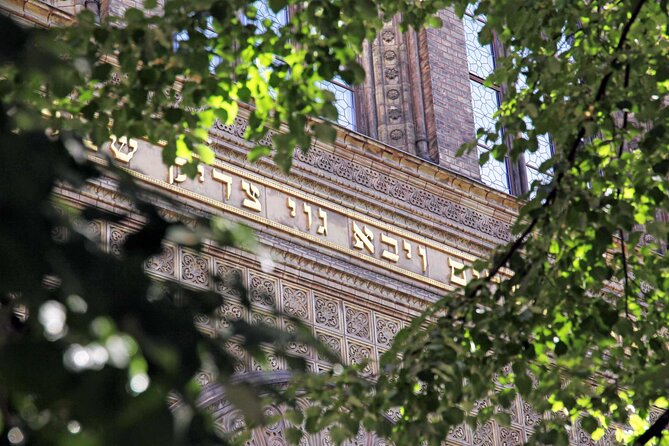
Next is the New Synagogue, home to the Centrum Judaicum. Here, too, the guide explains the site’s history from outside. This stop helps frame the scale of what was targeted by the Nazi regime before the route moves to places linked more directly to its machinery of terror.
These are brief introductions, not extended museum visits. If you want time to explore the synagogue or the Otto Weidt site indoors, plan a separate visit; the tour does not include admission or entry.
More walking tours in Berlin:
- Discover Berlin Half-Day Walking Tour
★ 5.0 · 9,624 reviews - Berlin: Third Reich and Cold War 2 Hour Walking Tour
★ 4.9 · 6,830 reviews - Berlin: Discover Berlin Walking Tour
★ 4.9 · 5,998 reviews
Anhalter Bahnhof and the machinery of deportation
Anhalter Bahnhof is one of the route’s most affecting stops because the history is tied to a transport site. Your guide explains how the station was used to deport prisoners to concentration camps. The remains of a major railway station can make the practical mechanics of persecution feel less abstract: people were taken from a city, through a place built for travel, into a system of imprisonment and murder.
The stop is listed for about ten minutes. That may feel short for such a serious subject, but the private format gives you a chance to ask questions and, depending on the group’s interests, spend longer at an attraction. If this part of the history is especially important to you, say so early in the walk.
The Topography of Terror and the former Aviation Ministry
At the Topography of Terror, the guide explains the former Gestapo and SS headquarters. The site shifts the focus from the victims of Nazi policy to the agencies that enforced it. That connection is central to understanding how terror was organized, rather than treating it as a series of isolated crimes.
The route also stops at Berlin’s Aviation Ministry. The guide explains the history of this site, adding another government location to the picture of Nazi rule. The itinerary does not include an interior visit, so expect explanation from outside rather than a museum tour.
Together, these stops give the walk a useful rhythm: first, the human consequences of state violence; then, the offices and institutions through which that violence was carried out. The guide’s ability to make those connections is one of the main reasons to book a guided walk instead of simply following a map.
Resistance, Hitler’s bunker and the city’s memorials
The Johann Georg Elser sculpture adds a stop focused on resistance. Your guide explains the site and its history. The tour’s overview also includes the location of Hitler’s bunker, giving you a chance to consider the setting associated with the end of the Nazi regime. The experience remains an outdoor walk, not an entrance to a bunker or a preserved interior.
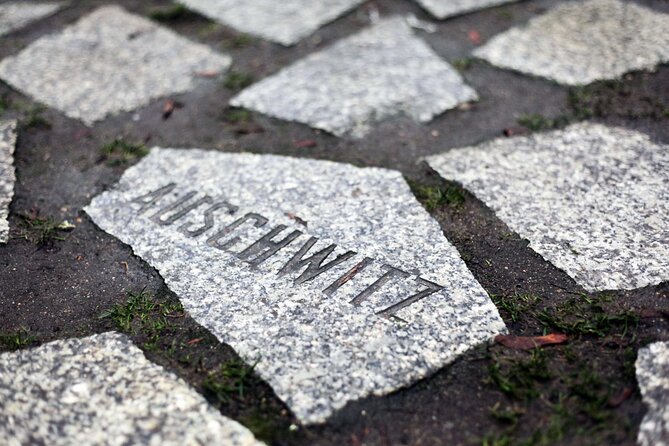
The Holocaust Memorial, formally the Memorial to the Murdered Jews of Europe, receives the longest scheduled stop at fifteen minutes. Your guide explains the memorial and the history it marks. The tour then visits the Monument to Homosexuals Persecuted Under National Socialist Regime, extending the account of Nazi persecution beyond one group.
These memorials deserve more than a quick photo stop. Your guide can help explain what each commemorates and why the city has placed it in the public realm. You may want to allow yourself quiet time after the tour, especially if you prefer to reflect without moving straight on to another attraction.
The Soviet Memorial in Tiergarten adds a further point of remembrance. The guide explains the site, but the tour information does not give a longer account of its history, so use the stop to ask questions if you want more detail. The itinerary’s varied memorials make clear that this is not only a tour of Nazi institutions. It also asks you to think about how Berlin marks the people and groups harmed by the period.
More Third Reich tours in Berlin:
- Berlin: Berlin Story Bunker Entry Ticket
★ 4.6 · 6,759 reviews - Berlin’s Best: 2 Hour Walking Tour Third Reich and the Cold War
★ 5.0 · 5,486 reviews - Third Reich Berlin: Hitler and WWII Walking Tour
★ 5.0 · 3,301 reviews - Berlin: Third Reich, Hitler, and WWII Walking Tour
★ 4.9 · 1,133 reviews
Finishing outside the Reichstag

The walk usually ends at the Reichstag, the German parliament building. Your guide explains its history from outside, and the endpoint gives the route a clear finish at one of Berlin’s best-known political landmarks.
Do not confuse this with a Reichstag visit. Entry is not included, and the tour does not go inside. If you want to see the building’s interior, arrange that separately; this walk is focused on the exterior and the history explained along the way.
What a private guide adds to the walk
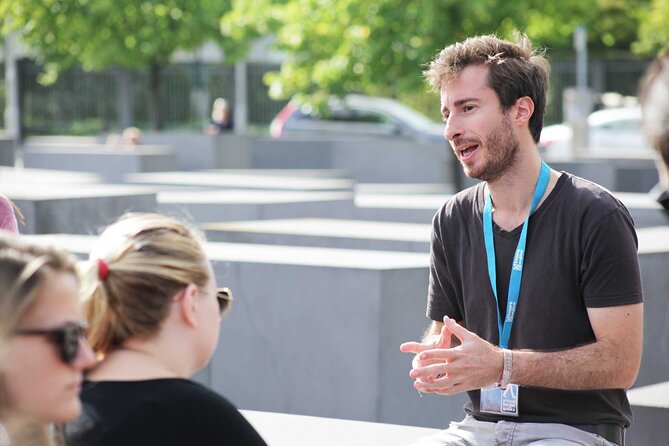
This is a private activity, so only your group takes part. That is useful on a subject where questions may come naturally and where different ages or levels of background knowledge can shape what you want to discuss. The guide can stay longer at an attraction depending on your group’s interests, although the tour still has a half-day frame.
The guides named in accounts of this tour include Jasper, Stefan, Rohan, Lewis and Xavier. Their strongest common feature is the way they explain the subject: the tour has been praised for thorough historical accounts, friendly interaction and an ability to answer questions. One account also describes a 15-year-old studying history who enjoyed the walk, which suggests the material can work for a keen teenager as well as an adult. That is not a guarantee of fit for every child, but it is a useful sign for families with older students.
If you have a preferred guide, you can ask about availability when booking, but do not assume a specific person is guaranteed. The listed rating is 5 from 7 ratings, a positive sign but a small sample. I would put more weight on the consistent praise for clear explanations and an engaging guide than on the score alone.
Is $173.06 a fair price?
At $173.06 per person, this is not a budget walking tour. Its value depends on how much you want a private historian guide to connect the sites and respond to your questions. You are paying for a tailored explanation over about four hours, not for museum admissions or access to the interiors.
Group discounts are available, which may improve the per-person value if you are travelling with others. All fees and taxes are included, but tips are not. You also need to budget for public transport: a single AB ticket is about €4 per person and is not included.
For a solo visitor, the price may feel steep compared with a group tour or an independent walk. For a family or small group that values private attention, it can be easier to justify. The best comparison is not simply the number of stops, but whether you want a guide to explain how those stops fit together.
Practical details before you set out
The meeting point is Neue Promenade 3, and the tour usually ends at the Reichstag, Platz der Republik 1. Pickup is offered, but the listed start point is the meeting address, so confirm the pickup arrangements before you go if you plan to use that option.
Wear comfortable shoes and be ready for several hours on foot. The route is described as a walking tour, with public transport tickets required separately; the exact transport arrangements are not detailed. One group completed the walk on a very hot day, so check the forecast and bring water or weather protection appropriate to the conditions.
The tour is private, service animals are allowed, and most people can participate. Confirmation is provided within 48 hours of booking, subject to availability. Free cancellation is available until 24 hours before the start time; cancellations or changes made later are not accepted.
Should you book this Berlin history walk?
Book it if you want a serious, guided introduction to Berlin’s Nazi past, value the chance to ask questions, and prefer a private group over a large public tour. The route covers a thoughtful range of locations, from Anhalter Bahnhof and the former Gestapo and SS headquarters to memorials for murdered Jews and persecuted homosexuals.
Look elsewhere if you want to enter museums or historic buildings during the tour, or if you need a shorter and cheaper overview. For a group ready to spend half a day walking and listening, this is a strong way to connect Berlin’s scattered sites into a clearer account of the Third Reich, its victims and the people who opposed it.
FAQ
How long does the tour last?
The tour is approximately four hours. The walk may last about three and a half to four hours, depending on the group and time spent at stops.
Is this a private tour?
Yes. Only your group participates.
Where does the tour start and end?
It starts at Neue Promenade 3 in Berlin. It usually ends outside the Reichstag at Platz der Republik 1.
Do you enter the attractions?
No. The attractions are seen from outside, and the tour does not include entry to the buildings.
Is public transport included in the price?
No. A single AB public transport ticket costs about €4 per person and is not included.
Are fees and taxes included?
Yes. All fees and taxes are included. Tips for the guide are not included.
Does the tour include pickup?
Pickup is offered. The listed meeting point is Neue Promenade 3, so confirm the pickup details when arranging the tour.
Can the guide spend longer at a particular stop?
The tour can stay longer at an attraction depending on your group’s interests, within the half-day tour.
What is the cancellation policy?
You can cancel for a full refund up to 24 hours before the experience starts. Cancellations or changes made less than 24 hours before the start time are not accepted.
Newest tours in Berlin
- Berlin: guided canoe | kayaktour★ 4.1 · 7 reviews
- Understanding Kreuzberg: The roots of local (sub)culture★ 4.9 · 11 reviews
- Where It All Began: Berlin’s Queer & Trans History Tour★ 4.9 · 6 reviews
- Warnemünde Shore Excursion: Private Sachsenhausen and Berlin Tour★ 5.0 · 12 reviews
- Ultimate E-Bike Tour of Berlin with Beer Garden Stop★ 5.0 · 4 reviews
- Potsdam Highlights – Private sightseeing tour by minibus★ 5.0 · 3 reviews
- Private Potsdam City Tour in an authentic vintage van★ 5.0 · 14 reviews
- Transfer from Berlin Schönefeld Airport (SXF) to Berlin city Hotels – ROUND TRIP★ 4.0 · 3 reviews
Berlin Third Reich Tours, compared.

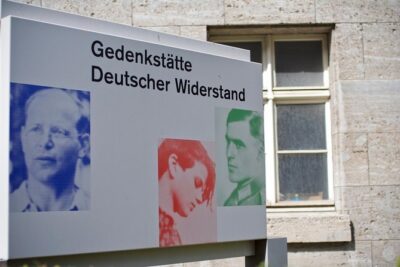
Third Reich Berlin: Hitler and WWII Walking Tour
Read our review →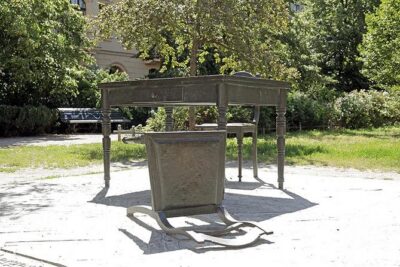
Berlin Third Reich Sites: Half-Day Walking Tour
Read our review →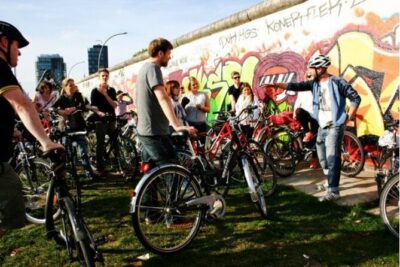
Guided Bike Tour of the Berlin Wall and Third Reich
Read our review →
Hitler’s Germany: Berlin During the Third Reich & WWII
Read our review →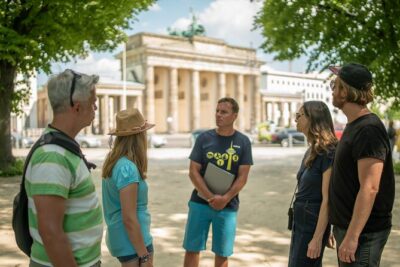
Private Walking Tour Berlin Third Reich Hitler and World War II
Read our review →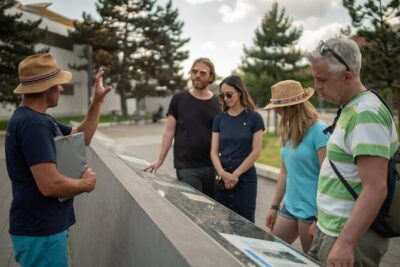
Private Walking Tour: World War 2 and Cold War Sites in Berlin
Read our review →Browse the lists this tour appears in