
Reviewed · SACHSENHAUSEN MEMORIAL TOURS
Private Sachsenhausen Concentration Camp Memorial Tour
Sachsenhausen is a place where the history of Nazi rule becomes painfully concrete. On this private tour, a licensed guide helps you connect the camp’s buildings and exhibits to the system that created it, from the prewar dictatorship to the Second World War.
I like two things here: the guide is trained by the memorial foundation, and a private format lets you ask questions, set the pace, and spend time on the subjects that matter to your group. The main trade-off is practical: transport and public transit tickets are not included, and this is a long, emotionally demanding day.
Key points to know
- Three hours at the memorial: The site visit covers Tower A, Station Z, former barracks, the infirmary and pathology building, the camp kitchen exhibition, and the SS and Gestapo prison.
- A private guide, not a group script: Your group alone takes part, so you can ask questions and adjust the focus as you go.
- A broader historical frame: The guide explains how the camp developed and how its prisoner groups, numbers, and nationalities changed over time.
- Meet at Pariser Platz: The stated starting point is the Academy of Arts, near public transportation. You arrange and pay for transit yourself.
- About six hours in all: The memorial visit is listed as three hours, while the full experience lasts about six hours.
- $390.50 for up to five people: The price is per group, so the cost per person falls when you fill the group.
Starting at Pariser Platz, then heading to Sachsenhausen
The day begins at the Academy of Arts at Pariser Platz 4, in central Berlin. This is the stated meeting point and the tour ends back there. Because private transportation and transit fares are not included, plan for the journey to Sachsenhausen as part of your day rather than assuming a vehicle is waiting for you.
The total outing lasts about six hours, but the scheduled visit inside the memorial grounds is three hours. That distinction matters: you have a substantial amount of time at the site, but it is not an all-day walk through every exhibit. The guide focuses on key places and the history that connects them.
Several guide names appear in the experience’s history, including Aaron, Paul, and Julian. The central value is the guide’s training: your guide is licensed and trained by the Camp’s Memorial Foundation. That qualification matters at a site where plain facts need careful context, and where questions can move quickly from a building’s purpose to the larger machinery of Nazi rule.
More Sachsenhausen visits in Berlin:
- Berlin: Sachsenhausen Concentration Camp Tour in English
★ 5.0 · 5,711 reviews - Berlin: Sachsenhausen Concentration Camp Memorial Tour
★ 4.7 · 3,716 reviews - Sachsenhausen Concentration Camp Bus Tour in English from Berlin
★ 5.0 · 1,962 reviews
Tower A and the camp’s design
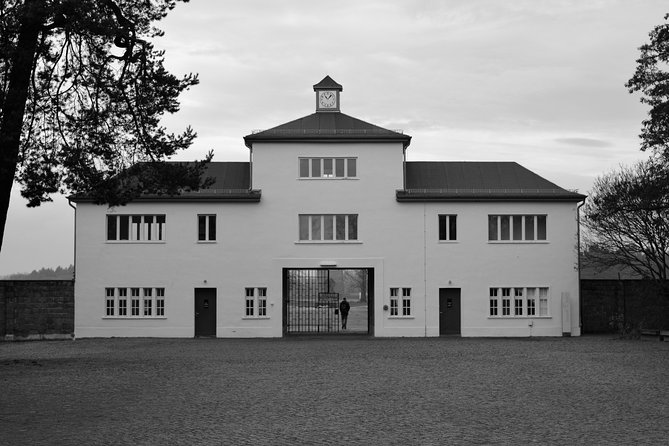
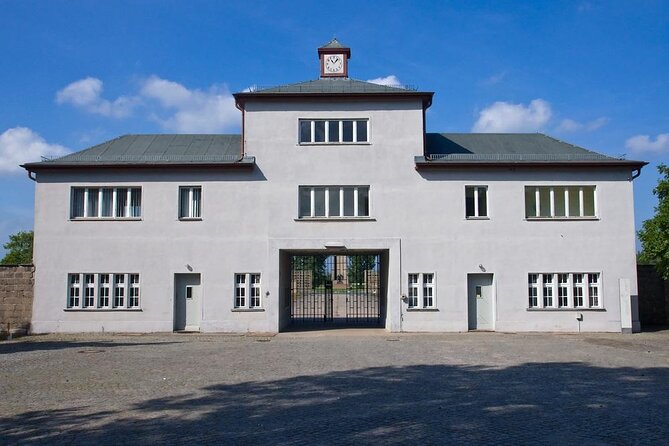
The tour begins its Sachsenhausen visit at Tower A, the main entrance. It is a useful place to start because it gives the guide a way to explain the site’s layout and the camp’s role within the Nazi system. Rather than treating the grounds as a set of disconnected stops, your guide can establish how the camp came into being and how its function changed.
Sachsenhausen was the first purpose-built concentration camp within Nazi Germany. That makes the site important not only for what happened there, but also for what it reveals about the formation and development of the camp system. The guide connects that history to the strengthening dictatorship of the 1930s and, later, to the effects of the war.
A private tour is especially useful at this opening stage. You can ask for a clearer timeline, pause over a point that is new to you, or check how one part of the site relates to what you already know. The guide’s job is not simply to recite dates. It is to help you understand how the structures and policies fit together.
Barracks, infirmary, and the lived reality of imprisonment
Former prisoner barrack blocks are among the places where the scale of the camp can feel most immediate. The tour also visits the camp infirmary and pathology building, bringing attention to the role these spaces played within the camp. The stops add human and institutional detail to the wider history, rather than leaving you with only a broad account of Nazi policy.
The guide explains how the types of prisoners, their numbers, and their nationalities changed over time. That context is essential. Sachsenhausen was not static: its population and circumstances shifted as the dictatorship grew stronger and the Second World War reshaped the camp. Understanding those changes helps you see the site as part of a developing system, not as an isolated place with one fixed story.
The subject matter is difficult, and a visit can be emotionally heavy. The private format gives you room to ask questions or take a little time on your own. One visitor described being given time alone to explore parts of the camp, and other accounts point to guides adjusting the walk to suit a group’s interests. That flexibility can be valuable, but the tone remains serious; this is a memorial, not a casual sightseeing stop.
Station Z and the camp kitchen exhibition
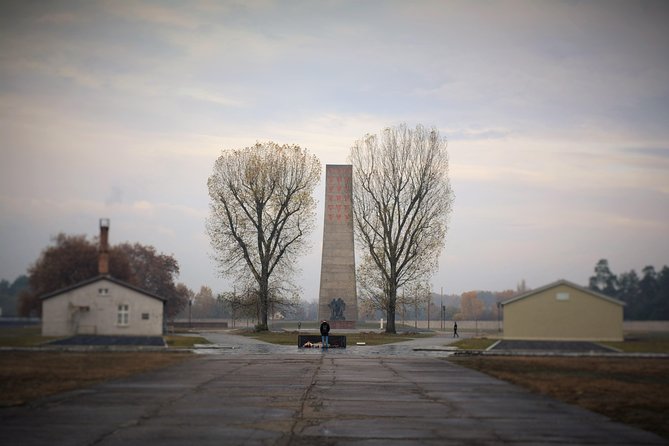
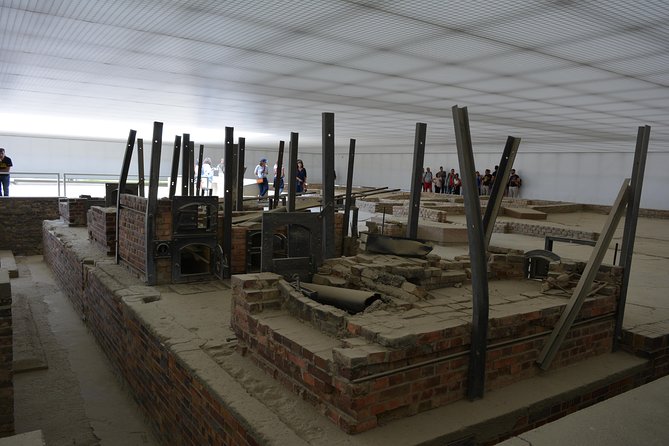
Station Z was the purpose-built execution facility. It is one of the most starkly named and sobering stops on the route. Your guide can explain its place within the camp’s history and the wider system, while the building itself gives that history a specific location. Expect a serious discussion, not a softened version of events.
The former camp kitchen houses an exhibition. This stop shifts the experience from the grounds and buildings to the material presented inside. It also offers a chance to gather details that can make the broader timeline more legible. The itinerary does not specify the exhibition’s exact content or the amount of time spent there, so the guide’s explanation and your own questions will shape how much you focus on it.
A real strength of this tour is the connection between these stops. Station Z, the kitchen exhibition, the barracks, and the infirmary are not treated as unrelated attractions. The guide sets them within a historical account of how the camp operated and changed. Several guide accounts also describe a broader discussion of German history before the war and into the present, which can help place Sachsenhausen in context without losing sight of the site itself.
More private tours in Berlin:
- Berlin: Private Reichstag and Glass Dome Tour
★ 4.8 · 2,226 reviews - Berlin Private Complete History All Day Walking Tour
★ 5.0 · 474 reviews - Private Walking Tour Berlin Third Reich Hitler and World War II
★ 5.0 · 360 reviews - Private Berlin: Iconic Sights and Hidden Gems Walking Tour
★ 5.0 · 292 reviews
The SS and Gestapo prison
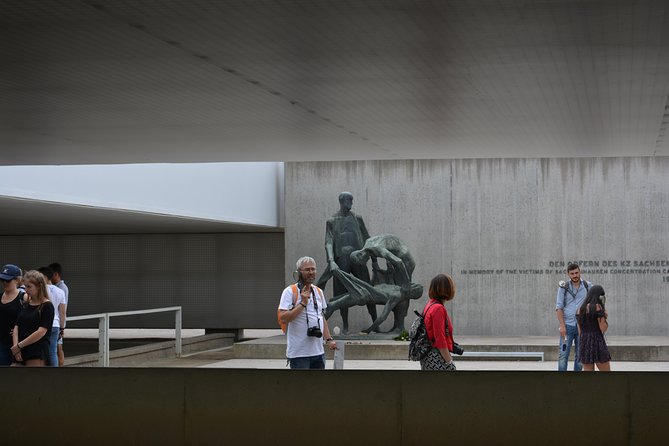
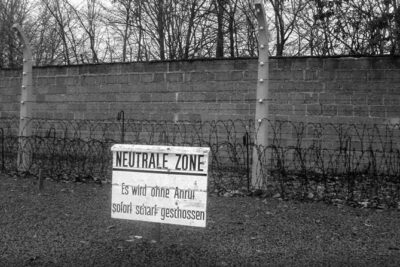
The SS and Gestapo prison is another key stop. Its inclusion broadens the visit beyond the main entrance and prisoner barracks, giving you a chance to learn about a distinct part of the camp complex. The tour does not provide a detailed description of the prison’s exhibits or interior, so avoid expecting a specific presentation beyond the guided visit and historical explanation.
This is where the private format can earn its keep. You can ask how the prison relates to the camp as a whole, or ask your guide to clarify terms and institutions that can blur together in a quick overview. Past guide experiences have included discussion of politics, military history, and the camp’s place in the broader war. If you want a focused account rather than a fast walk past buildings, tell your guide what you most want to understand.
Why the private format matters
Only your group takes part. With a group of up to five, you do not need to match the pace or interests of a larger party. Families can ask questions that suit their children’s ages, and adults with a strong interest in German or military history can request more context. Guides have been described as flexible, personable, and able to adapt the route to a group’s needs.
That flexibility also leaves room for quiet. A memorial visit does not need a constant stream of explanation. You may want to listen closely in one place, then walk in silence or look around on your own at another. The guide can help you balance those modes, though the exact pacing depends on your group and the guide.
Families with teenagers may find the guided format particularly helpful. One guide was praised for explaining the history to two teenage children, and other families valued having difficult subjects discussed clearly. Still, this is not a light family outing. You know your children best, and the camp’s history calls for preparation and an honest conversation before the visit.
Is $390.50 good value?
The price is $390.50 per group of up to five, not per person. If all five places are used, that works out to about $78 per person; for two people, it is about $195 each. The price includes a professional guide licensed and trained by the memorial foundation, but it does not include public transit tickets or private transportation.
The value rests mainly on the guide and the private attention. Sachsenhausen is a large subject as well as a physical site: its history spans the creation of the camp, changes in prisoner populations, and the effects of war. A guide who can build a timeline and answer your questions may make the visit much more coherent than trying to piece the story together alone. The private arrangement also means your group can choose where to linger and what to discuss.
If you are traveling solo or as a pair, the total may feel steep. If you are a group of four or five, the per-person price becomes more attractive. You should also budget for getting to the meeting point and onward to Sachsenhausen, since those costs are separate. People who place a high value on expert interpretation and a tailored pace are the best fit.
Who should book this tour?
Book it if you want a guided, historically grounded visit and prefer to ask questions in a private setting. It is a strong choice for families with older children, history-minded groups, or anyone who wants to understand how Sachsenhausen fit into the wider Nazi camp system rather than simply walk the grounds.
It may not suit you if you want a short, easy excursion, prefer to explore entirely on your own, or would rather avoid confronting material about persecution and mass violence. The site is solemn, and the subject is demanding. Give yourself space afterward rather than scheduling the day too tightly.
The tour has a perfect five-star rating across 16 reviews, with all recommending it. The most consistent praise centers on the guides’ depth of historical explanation, their ability to make a complex timeline understandable, and their flexibility with questions and pace. Aaron, Paul, and Julian are named by people who appreciated their approach. The quality of a private experience depends on the guide you get, but the training requirement gives this tour a solid foundation.
Practical details before you go
The tour is offered in English and uses a mobile ticket. Confirmation is received at booking, service animals are allowed, and the meeting point is near public transportation. Most people can participate, but the information does not provide detailed accessibility specifics, so contact the operator if you have a particular access need.
The tour is booked on average 32 days ahead, a useful planning signal if your dates are fixed. Free cancellation is available up to 24 hours before the start time. Changes or cancellations made less than 24 hours in advance are not accepted for a refund.
Should you book it?
I would choose this tour if your priority is careful explanation, room for questions, and a guide who can connect the buildings to the history around them. The strongest reasons are the memorial foundation training and the private format, especially if your group wants a flexible pace or has teenagers who would benefit from a clear guide.
Think twice if the group price stretches your budget or if you expect transport to be included. Plan your own transit, leave room in the day for the emotional weight of the visit, and go in ready to listen. For a small group that wants more than a self-guided walk, this is a thoughtful way to visit Sachsenhausen.
FAQ
How long is the tour?
The full experience lasts about six hours. The visit at the Sachsenhausen memorial is listed as three hours.
Where does the tour begin and end?
It starts and ends at the Academy of Arts, Pariser Platz 4, 10117 Berlin.
Is transportation included?
No. Private transportation and public transit tickets are not included.
How much does the tour cost?
The price is $390.50 per group of up to five people.
Is the tour private?
Yes. Only your group takes part.
What language is the tour offered in?
The tour is offered in English.
Which parts of Sachsenhausen does the tour visit?
Stops include Tower A, the camp infirmary and pathology building, Station Z, an exhibition in the former camp kitchen, the SS and Gestapo prison, and former prisoner barrack blocks.
Can I cancel for a refund?
Yes, if you cancel at least 24 hours before the experience’s start time. Cancellations made less than 24 hours in advance are not refunded.
Newest tours in Berlin
- Berlin: guided canoe | kayaktour★ 4.1 · 7 reviews
- Understanding Kreuzberg: The roots of local (sub)culture★ 4.9 · 11 reviews
- Where It All Began: Berlin’s Queer & Trans History Tour★ 4.9 · 6 reviews
- Warnemünde Shore Excursion: Private Sachsenhausen and Berlin Tour★ 5.0 · 12 reviews
- Ultimate E-Bike Tour of Berlin with Beer Garden Stop★ 5.0 · 4 reviews
- Potsdam Highlights – Private sightseeing tour by minibus★ 5.0 · 3 reviews
- Private Potsdam City Tour in an authentic vintage van★ 5.0 · 14 reviews
- Transfer from Berlin Schönefeld Airport (SXF) to Berlin city Hotels – ROUND TRIP★ 4.0 · 3 reviews
Sachsenhausen Memorial Tours, compared.
Sachsenhausen Concentration Camp Tour in English
Read our review →
Sachsenhausen Concentration Camp Memorial Tour
Read our review →
Sachsenhausen Concentration Camp Bus Tour in English from Berlin
Read our review →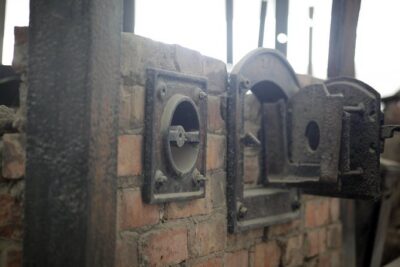
Sachsenhausen Concentration Camp Memorial Tour (Max. 15 Guests)
Read our review →
Sachsenhausen Concentration Camp and Potsdam Tour
Read our review →
Visita en español al campo de concentración Sachsenhausen
Read our review →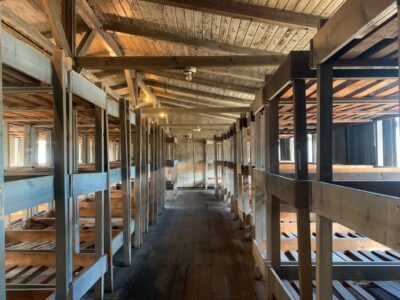
Browse the lists this tour appears in