
Reviewed · BERLIN WALKING TOURS
Berlin Private Complete History All Day Walking Tour
Berlin’s history is written across its streets: in a memorial set among office buildings, a former Nazi headquarters, the route of the Wall and grand squares reshaped by war and division. This private walk connects those places in one long day, ending at Alexanderplatz, once a showcase of East Germany.
I like two things about the plan: you get a guide’s attention for your own questions, and the route joins major landmarks to less obvious sites, such as the Johann Georg Elser sculpture and the Soviet memorial in Tiergarten. The main consideration is stamina: six hours on foot is a serious walk, and one participant estimated covering about 5.5 miles.
- A broad sweep of Berlin: See 22 stops, from the Brandenburg Gate to Alexanderplatz.
- History with place attached: Visit the former SS and Gestapo headquarters, the Wall memorial and the site of Hitler’s bunker.
- A private format: Only your group takes part, and the guide can adapt the pace and discussion.
- More than wartime history: Prussian-era buildings, churches, Museum Island and East German planning all enter the story.
- Bring comfortable shoes: There is no private transport, and walking links the stops.
A six-hour walk through Berlin’s turning points
At $253.95 per person, this tour is a substantial purchase, particularly if you are traveling alone. Its value depends on how much you want a guide to connect Berlin’s landmarks into a single story, and on whether your group will make use of the private format. For a couple or small party, a private guide can make a full-day overview more personal than a large group walk. You can ask follow-up questions, pause on topics that interest you and move along when you have had enough.
The route covers an unusually wide range of history. The Brandenburg Gate and Reichstag introduce Prussian power, the Nazi seizure of control and the Battle of Berlin. Later stops bring in the Cold War, religious and civic landmarks, and the city’s postwar division. The point is not to spend hours inside museums. Much of the experience takes place outdoors, where the guide can show you how buildings, memorials and public spaces carry different meanings.
The listed stop times add up to only a portion of the six hours. The rest is taken up by walking between places and the natural flow of a private tour. The walk is paced to the group, according to the tour information, but that does not make it short. If you have mobility concerns or need frequent rest stops, ask about the route before booking.
Start at the Brandenburg Gate and Reichstag
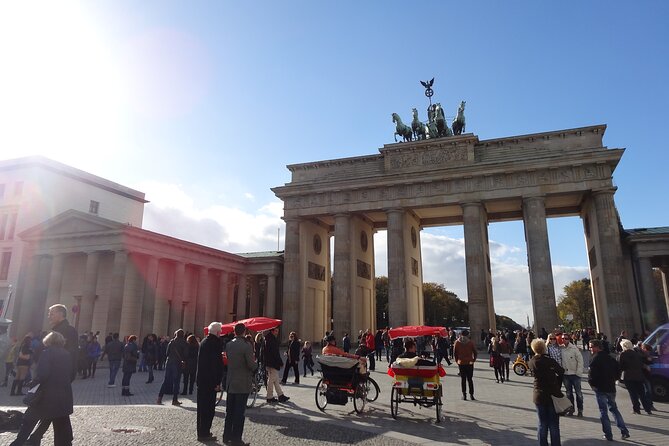
The tour begins at Ebertstraße 24, close to the Brandenburg Gate. The gate is more than a photogenic opening in a grand stone structure. Its story runs from its construction through the changes in Germany’s political fortunes, and it became one of the best-known symbols of a divided Berlin during the Cold War. You have about 15 minutes here, enough for an introduction and a photo.
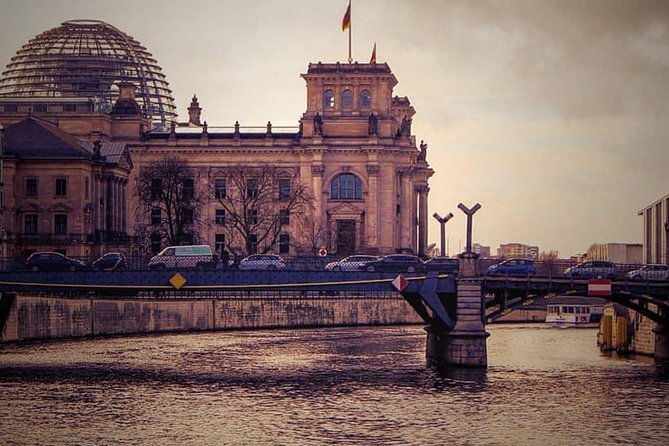
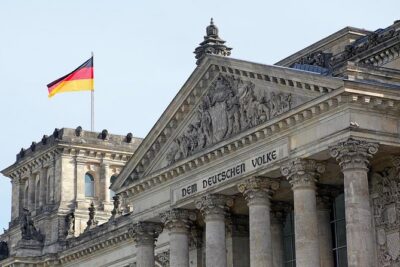
The nearby Reichstag is another short stop, but its history is anything but simple. Your guide can explain its construction under the Hohenzollerns, its role in the consolidation of Nazi dictatorship in 1933, the fierce fighting there at the end of the Second World War and its place in reunited Germany. You see the building from outside on this tour. The experience is about understanding what happened here, rather than touring the interior.
These opening stops give you a useful frame for the day: Berlin’s monumental buildings have repeatedly been repurposed as political symbols. I like starting here because it helps make later sites feel connected rather than like a checklist.
More walking tours in Berlin:
- Discover Berlin Half-Day Walking Tour
★ 5.0 · 9,624 reviews - Berlin: Third Reich and Cold War 2 Hour Walking Tour
★ 4.9 · 6,830 reviews - Berlin: Discover Berlin Walking Tour
★ 4.9 · 5,998 reviews
Tiergarten memorials and the weight of Nazi history
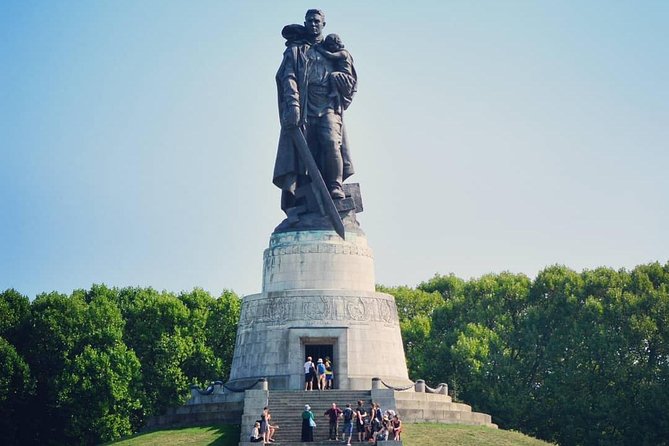
The walk enters Tiergarten, Berlin’s large central park, for a look at the Soviet Memorial. It was built in what became West Berlin, and the guide discusses the origin of its building materials, its symbolism and the controversies around it. The nearby park walk adds a longer view of the city, tracing the area’s development from medieval times and showing how political events affected the grounds.
You will also see the Victory Column from a distance. The brief stop covers why it was built and where it once stood. This is a quick look, not a climb or an extended visit, so treat it as one piece of a larger story about Berlin’s public monuments.
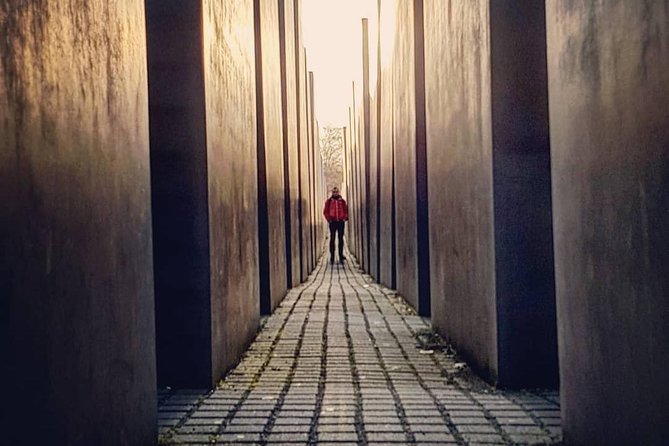
The Holocaust Memorial is a more emotionally demanding stop. Its field of concrete stelae is one of Berlin’s most important memorial sites, and the tour gives you time to experience it and consider its purpose. The nearby site of Hitler’s bunker is more understated: today, the location is marked by an ordinary parking area, a stark contrast with its place in the final days of the Nazi regime. The guide also introduces Johann Georg Elser, whose attempted assassination of Hitler came close to changing the course of history.
At the former Aviation Ministry, you hear about an imposing building that has remained in continuous use since 1936. Then comes the Topography of Terror, the former headquarters of the SS, Gestapo and SD. The tour enters the site, where the focus turns to the institutions of Nazi rule and the site’s postwar history. Together, these stops move beyond Hitler as an individual and show how the machinery of dictatorship operated.
The Wall, Checkpoint Charlie and Friedrichstrasse
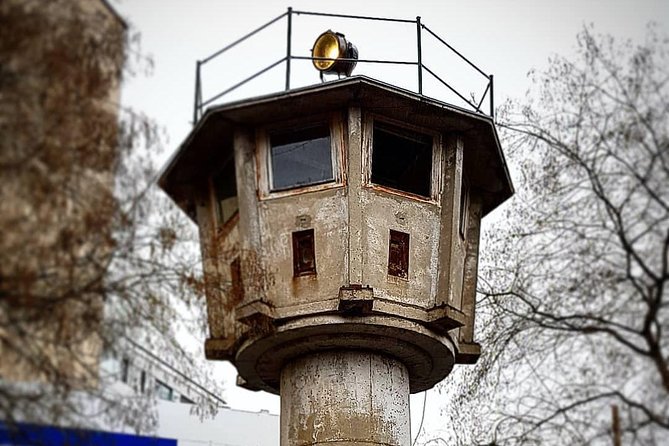
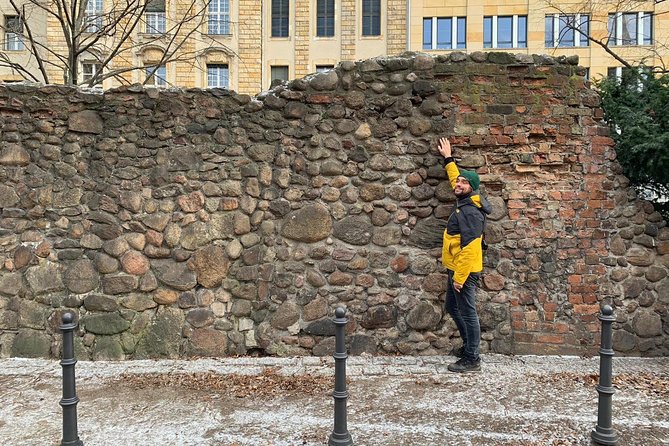
The Berlin Wall Memorial stop brings you to a section of the Wall and the stories of escape attempts and deaths connected to it. The tour’s focus is on why and when the barrier was built, and what it meant for people living in a divided city. A guide’s context matters here: the surviving sections and memorials are easier to understand when you know what stood around them and how Berlin was cut apart.
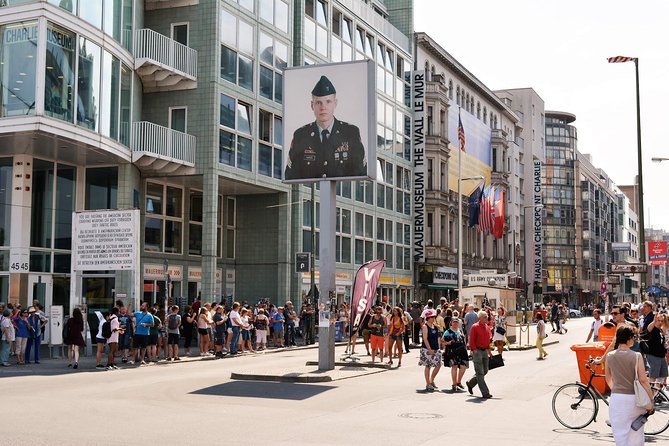
Checkpoint Charlie is the best-known crossing point between East and West Berlin. It is an essential stop for understanding the Cold War, but its fame can also make it feel more like a landmark than a place of lived history. Your guide helps put the checkpoint back into the larger story of a divided city, rather than treating it as a photo opportunity alone.
The stroll down Friedrichstrasse adds another layer. Once known as the Cabaret Mile, it brings a cultural note to a day weighted toward political history. The contrast is useful: Berlin’s story is not only about regimes and borders, but also about the city’s social life and changing character.
Squares, book burning and a moving memorial
Gendarmenmarkt is one of the route’s most beautiful settings, with the guide explaining how the square developed and what gives it its architectural character. This is a welcome change of pace after the Wall and Nazi-era sites. The stop lasts around 15 minutes, enough to look around and hear how the square fits into Berlin’s urban story.
At Bebelplatz, grand 18th-century buildings frame a square associated with one of the most infamous Nazi book burnings. The tour discusses St. Hedwig’s Cathedral, the Humboldt University faculty of law and the City Opera House, as well as the memorial to the book burning. Allowing 20 minutes here gives the guide time to connect the buildings with the event and its meaning.
Nearby, Humboldt University provides another view of Berlin’s intellectual life and architectural history. The tour then enters Neue Wache, a building that has served different political purposes and now functions as a memorial. Its current role makes this one of the day’s most affecting indoor stops.
The German History Museum is discussed from outside, so you should not expect time to tour its galleries. Instead, the guide points out the building as the oldest surviving structure on Unter den Linden and places it within the street’s wider history.
More history tours in Berlin:
- Berlin: Natural History Museum Entrance Ticket
★ 4.6 · 3,382 reviews - Berlin: World Heritage Cruise to Potsdam
★ 4.5 · 1,435 reviews - Berlin Historical Highlights Walking Tour
★ 4.9 · 657 reviews - Berlin: Historic Boat Sightseeing City Center Tour
★ 4.5 · 415 reviews
Museum Island to Alexanderplatz
Museum Island is a UNESCO World Heritage site, and this stop introduces the island’s development, its museums, the cathedral and the architects behind the complex. You do not visit every museum as part of this walking tour. Think of the stop as a useful orientation, especially if you plan to return later for a longer museum visit.
The Humboldt Forum brings a more recent and complicated chapter. Here, the guide explains the site’s history and the story behind its present form. St. Mary’s Church follows, with a possible visit inside if conditions allow. It is described as Berlin’s oldest continuously used church and a survivor of the city’s upheavals, though the interior visit is not guaranteed.
The route ends at Alexanderplatz, rebuilt after the war as a central showcase of the German Democratic Republic. Finishing here gives you a final look at a very different version of Berlin from the Prussian buildings and West Berlin landmarks seen earlier. It is also a practical point to continue exploring independently.
What the private format adds, and what it cannot
The guide is the main reason to choose this tour. The route includes plenty of places you can visit on your own, but it takes knowledge and storytelling to explain why the Soviet Memorial’s location mattered, how the Reichstag’s role changed, or what the Wall meant to people separated from family and home. Guides who have led the tour have included Ciaran, Rhys, Paul, Beth, Darren, Eugen, Ken and Francisco. Your assigned guide may differ.
A private tour also gives you room to steer the conversation. The format suits mixed-age groups and varied interests: one guide has been able to adapt for a group spanning ages 14 to 82, while other guides have adjusted the pacing and discussion to suit their group. That flexibility is a real advantage, though it depends on speaking up about what you want.
There are limits. You are not driven between sights, food and drinks are not included, and some visits are exterior-only or depend on what is possible on the day. The full route is ambitious, so you may not want to add another fixed activity immediately afterward. If you want a slower, museum-heavy day, this is not the right fit.
Price, preparation and who should book
At $253.95 per person, the tour is best judged as a private guide service, not a ticket bundle. Admission is free at the listed stops, and the price does not include meals or transport. You are paying for a guide to shape a long route, explain the sites and respond to your questions. That can be good value if Berlin is new to you and you want a strong overview early in your stay.
The tour is offered in English and has an approximate duration of six hours. Pickup is on foot, so confirm the meeting point and arrive ready to walk. Comfortable shoes are essential. Bring water and plan how you will handle food, since meals and drinks are not included. Some groups have stopped for lunch, but you should not assume a meal is part of the tour.
The experience is particularly suited to first-time visitors with a keen interest in Berlin’s political history, couples or families who value a private guide, and anyone with limited time who wants to see many central landmarks in one day. The tour is booked, on average, 74 days in advance, so planning early may help if your dates are fixed. Free cancellation is available up to 24 hours before the start time; later cancellations are not refunded.
Should you book this Berlin history walk?
Book it if you want a full-day orientation, value direct access to a guide and can comfortably handle several miles on foot. The strongest reason to go is the range: few single walks link the Reichstag, Nazi-era sites, Wall landmarks, historic squares and Museum Island in one route.
Skip it if you prefer short walks, long museum visits or a day with transport between stops. If you do book, take it near the start of your stay. You will leave with a clearer map of Berlin’s past and a good list of places to revisit at your own pace.
FAQ
How long is the tour?
It lasts about six hours.
What is the price?
The listed price is $253.95 per person.
Is this a private tour?
Yes. Only your group participates.
What language is the tour offered in?
The tour is offered in English.
Does the tour use a vehicle?
No. It is a walking tour, and private transportation is not included.
Where does the tour start and end?
It starts at Ebertstraße 24, 10117 Berlin, and ends at Alexanderplatz, 10178 Berlin.
Are food and drinks included?
No. Food and drinks are not included.
Can I bring an animal?
Yes. Animals and pets are allowed, and service animals are allowed.
More full-day trips in Berlin
- Private Full-Day Tour to Meissen and Dresden from Berlin
★ 5.0 · 5 reviews
Newest tours in Berlin
- Berlin: guided canoe | kayaktour★ 4.1 · 7 reviews
- Understanding Kreuzberg: The roots of local (sub)culture★ 4.9 · 11 reviews
- Where It All Began: Berlin’s Queer & Trans History Tour★ 4.9 · 6 reviews
- Warnemünde Shore Excursion: Private Sachsenhausen and Berlin Tour★ 5.0 · 12 reviews
- Ultimate E-Bike Tour of Berlin with Beer Garden Stop★ 5.0 · 4 reviews
- Potsdam Highlights – Private sightseeing tour by minibus★ 5.0 · 3 reviews
- Private Potsdam City Tour in an authentic vintage van★ 5.0 · 14 reviews
- Transfer from Berlin Schönefeld Airport (SXF) to Berlin city Hotels – ROUND TRIP★ 4.0 · 3 reviews
Berlin Walking Tours, compared.


Third Reich Berlin: Hitler and WWII Walking Tour
Read our review →

Explore Berlin: Walking Tour of All The Iconic Sites
Read our review →Browse the lists this tour appears in