
Reviewed · SACHSENHAUSEN MEMORIAL TOURS
Visita en español al campo de concentración Sachsenhausen
Sachsenhausen is not a place for easy sightseeing. This Spanish-language visit takes you through the former camp’s entrance, barracks, kitchen, command area, and firing ground, with a guide to explain how the site was used under the Nazi regime. The subject is grave, but the guided context helps you understand more than the buildings alone can show.
I like two things in particular: the Spanish-language explanations, which let you follow complex history without translating as you go, and the three-hour guided visit, which gives the camp more than a rushed stop. One consideration: the outing lasts about five hours, and you must buy your own Berlin ABC transport ticket.
Key points before you book
- A Spanish-speaking guide leads the visit: The guide explains the camp and answers questions; past guides have included Alberto, Vicent, Ivan, Micaela, Francisco, Edu, Mika, Jorge, and Eduardo.
- Expect a serious, moving visit: The route includes the firing area and former barracks, as well as administrative buildings and the camp entrance.
- Plan for about five hours: The memorial visit itself is listed at three hours, with the full outing taking longer.
- Buy an ABC transport ticket separately: It is not included in the $34.58 price.
- The group is capped at 30: That keeps the visit to a manageable size, though it is not a private tour.
- Dress for the weather: The tour runs in all conditions, and much of the visit is outdoors.
Why a guide matters at Sachsenhausen
A former camp is difficult to read on your own. A building may look plain, a stretch of ground may seem empty, and the names of different areas can blur together. A guide connects the places you see with how the camp functioned and what daily life meant for prisoners.
The value here is not simply getting from one stop to another. It is having a Spanish-speaking guide explain the site in a language you can follow closely, then make room for questions. Several accounts of the tour describe guides who were clear, patient, and able to place the camp within the wider story of the Second World War. That broader frame matters: Sachsenhausen is not only a collection of structures, but a place that asks you to consider the choices and systems behind them.
Guides on past departures have included Alberto, Vicent, Ivan, Micaela, Francisco, Edu, Mika, Jorge, and Eduardo. Your guide may be someone else, but the names offer a sense of the tour’s Spanish-language team. The strongest praise has focused on clear explanations, a respectful tone, and guides who help the group stay together and make sense of the route.
This is a memorial visit, not a light excursion. You may find the subject emotionally difficult, and the physical setting can be stark. Go with enough time and attention to listen, take breaks if needed, and let the experience settle.
More Sachsenhausen visits in Berlin:
- Berlin: Sachsenhausen Concentration Camp Tour in English
★ 5.0 · 5,711 reviews - Berlin: Sachsenhausen Concentration Camp Memorial Tour
★ 4.7 · 3,716 reviews - Sachsenhausen Concentration Camp Bus Tour in English from Berlin
★ 5.0 · 1,962 reviews
From Pariser Platz to the memorial
The meeting point is Pariser Platz 4, near Berlin’s historic center, with a 9:00 am start. Arrive on time and make sure you have the required Berlin ABC transport ticket before setting off. The ticket is not included in the tour price, so factor it into your budget.
The experience is described as including round-trip travel from Berlin, but the stated end point is Sachsenhausen Memorial & Museum in Oranienburg. The transport method and exact return arrangements are not specified, so check the tour instructions before departure if you need to know how you will get back to Berlin. Do not assume that the guided portion ends where it began.
The full outing takes about five hours, while the guided visit inside and around the former camp is about three hours. That leaves time in the overall schedule for the journey and organization, but the exact division can vary. The group may be split into smaller groups once at the site, as happened on at least one departure. The maximum group size is 30.
Walking through the former camp
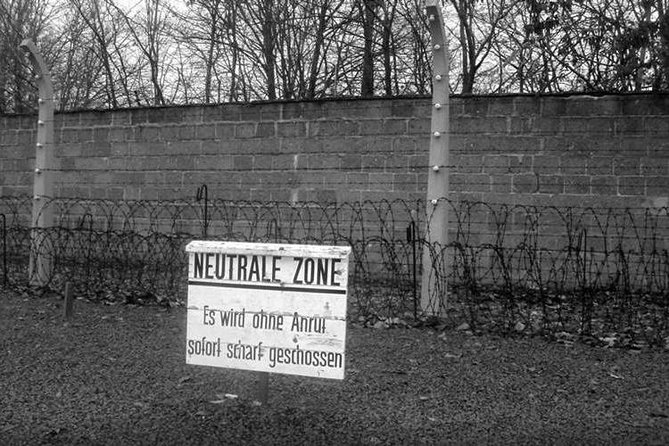
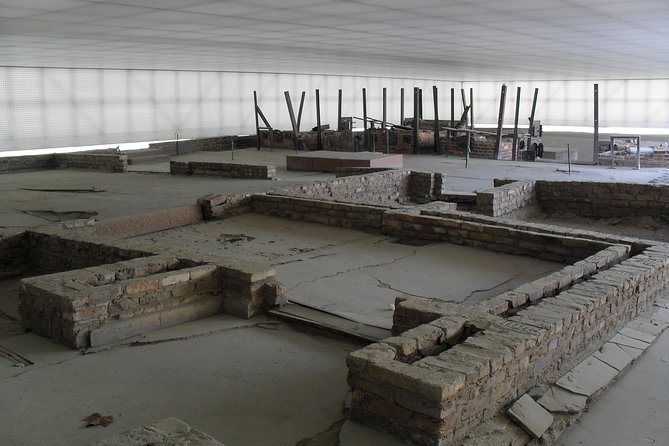
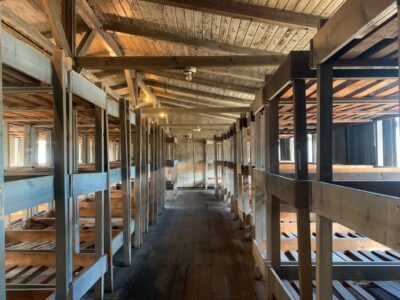
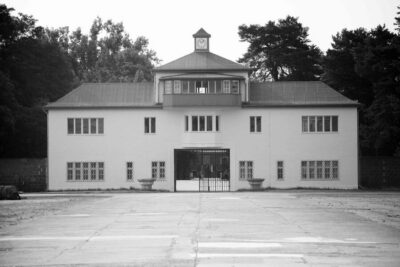
The visit covers both the interior and exterior of former camp facilities. The route includes the entrance, armory, casino, command headquarters, Tower A, firing area, barracks, and kitchen. These places each serve a different purpose in helping you understand how the camp was organized, from its threshold and administration to the spaces where prisoners lived and where violence took place.
The entrance and Tower A help establish the layout and structure of the site. From there, the guide can orient you to the wider grounds and explain how the different areas relate to one another. That framework is useful, especially if you arrive with the history in mind but little familiarity with the physical site.
The command headquarters and casino may seem less immediately legible than the barracks or firing area. A guide can explain why administrative and supporting spaces belonged in the visit and how they fit into the operation of the camp. The tour does not treat the place as a set of isolated exhibits; the point is to connect locations and function.
The barracks and kitchen bring the focus to prisoners’ daily lives. Seeing the facilities in person can make the conditions and routines easier to grasp than a documentary image alone. The firing area is among the most sobering stops. It is not a place to rush through, and the guide’s explanation can help you understand what happened there without reducing the visit to spectacle.
The route is broad, but three hours is still a fixed window. One person who took the tour wanted another 45 minutes to explore further. If you prefer to linger at every site, read every display, or take a lot of time for reflection, the guided pace may feel tight. This is a guided overview of the camp, not an open-ended day at the memorial.
What the pace feels like
A guided visit has a practical advantage: you do not have to work out the route alone or guess what you are looking at. Guides have been praised for keeping the group organized, explaining the history clearly, and answering questions. That support can be especially valuable at a large memorial, where it is easy to lose time or miss the relationship between one part of the camp and another.
There is a trade-off. A group visit follows a schedule, and you may not be able to spend as long as you like at each stop. One account of the tour described feeling rushed by tightly managed minutes, with concern about keeping up and about children moving at a slower pace. If you are visiting with children, or you know you prefer to explore at your own rhythm, consider whether a scheduled group visit is right for you.
The group limit of 30 is helpful, but it does not make the experience private. You will share the guide’s attention with others, and the pace has to work for the group as a whole. Ask questions when there is an opening, and listen closely during transitions, when guides often connect one place to the next.
Same city, a different kind of day:
- Berlin: Reichstag, Dome and Government District Guided Tour
★ 4.7 · 18,288 reviews - Berlin: 1-Hour City Tour by Boat with Guaranteed Seating
★ 4.3 · 16,993 reviews - Berlin: Boat Tour Along the River Spree
★ 4.4 · 11,252 reviews - Discover Berlin Half-Day Walking Tour
★ 5.0 · 9,624 reviews
A moving experience, not a conventional attraction
The tone of the visit is serious and educational. The most useful approach is to arrive ready to listen, rather than expecting an entertainment-style tour. The camp’s physical remains and memorial setting may feel sparse, but the fact of being there gives the history a weight that photographs and films cannot quite reproduce.
Several past departures have been described as emotionally powerful and respectful. That combination is important. A good guide does not make the horror feel like a performance; the role is to explain the place with care and help you understand why remembering it matters. The visit can extend beyond the camp itself, placing the site within the wider history of the Second World War and the Nazi regime.
You do not need to know every detail beforehand to benefit. Still, a little preparation can help you get more from the explanations. Think about what you want to understand, and bring questions that are specific and respectful. The guide’s ability to answer questions has been a recurring strength of the experience.
What to bring and how to prepare
This tour operates in all weather, and the visit includes outdoor areas. Dress for the forecast, with warm layers in winter; one past visitor specifically warned that cold weather can make the day uncomfortable if you are not well dressed. Comfortable footwear is sensible for a three-hour visit across the camp grounds, though no specific footwear requirement is stated.
Bring your ABC transport ticket, since it is not part of the price. Food and drinks are also not included, except for any value-added offers specifically stated in the guidebook. The tour information does not specify meal stops, so do not count on a scheduled lunch during the five-hour outing.
The activity uses a mobile ticket, and confirmation is provided at booking. Service animals are allowed, and the tour is described as suitable for most people. It operates in all weather, so check the forecast before you leave Berlin and pack accordingly.
Is $34.58 good value?
At $34.58 per person, the price buys a professional, local guide and a structured Spanish-language visit to a major memorial. Admission to the guided site visit is included. The separate ABC transport ticket is an extra cost, so the headline price is not the whole transport budget.
For a place where context makes such a difference, guided interpretation is a substantial part of the value. You are paying for more than a route through the grounds: you get explanations in Spanish, help following the site’s layout, and a chance to ask questions. If you are comfortable studying the memorial independently and want complete control over your time, a guided tour may be less appealing. If you want a clear, organized introduction, the price is reasonable for a half-day outing, with transport costs added.
The tour is commonly booked around 12 days in advance. That is useful planning guidance, not a guarantee of availability. Free cancellation is available up to 24 hours before the start time. If the minimum number of participants is not met and the tour is canceled, you are offered another date or experience, or a full refund.
Who should choose this visit?
I would choose this tour if you want to visit Sachsenhausen with Spanish-language interpretation and prefer a guide to help you understand the site as you move through it. It suits visitors who value context, can keep to a group schedule, and are prepared for a difficult subject.
It may not suit you if you want to spend as long as you like at each stop, avoid group pacing, or need a clearly specified transport plan before booking. Families should think about the three-hour site visit and the fixed group rhythm, particularly if children need extra time.
Book it if you want a guided, Spanish-language introduction to Sachsenhausen and accept that the visit will be both sobering and scheduled. Before you go, confirm the transport details, buy the ABC ticket, and dress for the weather. If those points fit your plans, this is a thoughtful way to approach a place that deserves both explanation and care.
FAQ
How long does the tour last?
The full experience lasts about five hours. The guided visit at Sachsenhausen itself is listed as three hours.
What time does the tour start?
The tour starts at 9:00 am.
Where is the meeting point?
Meet at Pariser Platz 4, 10117 Berlin.
Where does the tour end?
The stated end point is Sachsenhausen Memorial & Museum, Str. d. Nationen 22, 16515 Oranienburg.
Is the transport ticket included?
No. You must bring a Berlin ABC transport ticket, which is not included in the tour price.
What language is the tour in?
The tour is designed for Spanish speakers and is guided in Spanish.
What parts of the former camp are visited?
The route includes the armory, entrance, casino, command headquarters, Tower A, firing area, barracks, and kitchen.
How large is the group?
The tour has a maximum of 30 participants.
Can I cancel for a refund?
Yes. You can cancel up to 24 hours before the experience for a full refund. Cancellations or changes made less than 24 hours before the start time are not accepted for a refund or change.
Newest tours in Berlin
- Berlin: guided canoe | kayaktour★ 4.1 · 7 reviews
- Understanding Kreuzberg: The roots of local (sub)culture★ 4.9 · 11 reviews
- Where It All Began: Berlin’s Queer & Trans History Tour★ 4.9 · 6 reviews
- Warnemünde Shore Excursion: Private Sachsenhausen and Berlin Tour★ 5.0 · 12 reviews
- Ultimate E-Bike Tour of Berlin with Beer Garden Stop★ 5.0 · 4 reviews
- Potsdam Highlights – Private sightseeing tour by minibus★ 5.0 · 3 reviews
- Private Potsdam City Tour in an authentic vintage van★ 5.0 · 14 reviews
- Transfer from Berlin Schönefeld Airport (SXF) to Berlin city Hotels – ROUND TRIP★ 4.0 · 3 reviews
Sachsenhausen Memorial Tours, compared.
Sachsenhausen Concentration Camp Tour in English
Read our review →
Sachsenhausen Concentration Camp Memorial Tour
Read our review →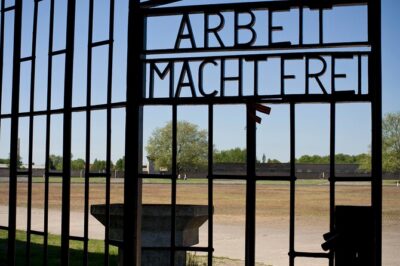
Sachsenhausen Concentration Camp Bus Tour in English from Berlin
Read our review →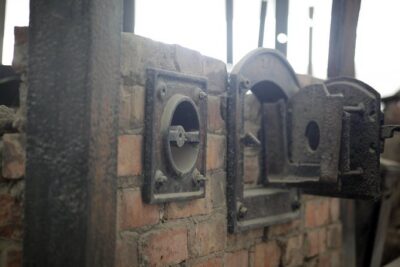
Sachsenhausen Concentration Camp Memorial Tour (Max. 15 Guests)
Read our review →
Sachsenhausen Concentration Camp and Potsdam Tour
Read our review →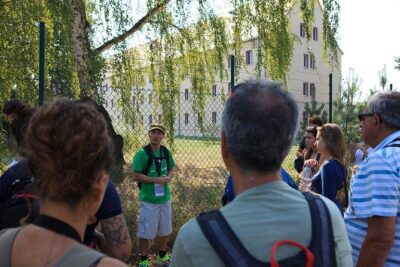
Licensed Sachsenhausen Tour with max. 15 people
Read our review →Browse the lists this tour appears in