
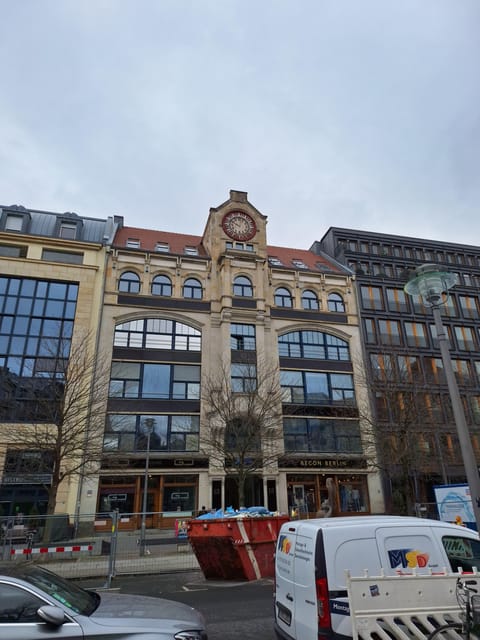
Reviewed · BERLIN JEWISH HISTORY TOURS
Berlin: Historic Jewish walking tour through the city center
The story here is not only about Berlin’s buildings. It is about the Jewish tailoring trade, once a major force in the city’s economy, and the people whose lives and work were reshaped by political extremism. This one-hour walk connects that history to three central locations, from Hausvogteiplatz to Jägerstraße and back.
I like two things in particular: the focus on a specific, often overlooked industry, and the chance to consider how the area changed from the Prussian era through the Roaring Twenties, the years before the Wall fell, and the present. One consideration: an hour is a tight window for a sweeping history, so this works best as a focused introduction, not a full account of Berlin’s Jewish past.
- Hausvogteiplatz anchors the route: Start and finish here, with about 30 minutes of guided time at the square.
- The tailoring trade is the central subject: Learn about the Konfektion industry and its role in Berlin before the Second World War.
- Two more stops add context: The route continues to Werderscher Markt and Jägerstraße for 15 minutes each.
- The history spans several eras: The guide connects the Prussian Empire, the Roaring Twenties, the period before the Wall fell, and today.
- It is a short, accessible walk: The tour lasts one hour, is wheelchair accessible, and is offered in English.
A city-center walk with a particular story to tell
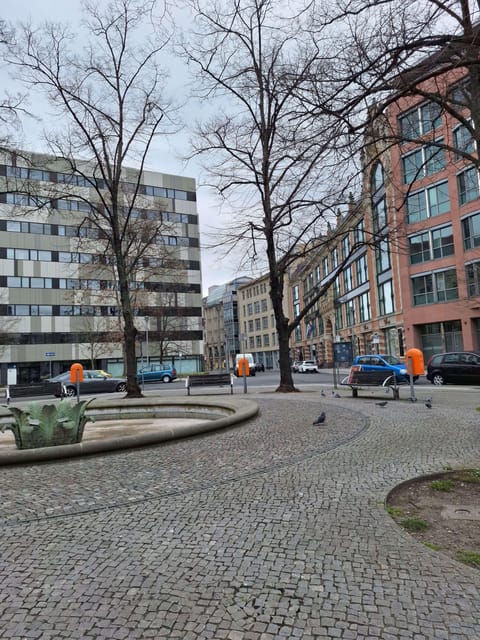
Berlin’s Jewish history is often approached through its best-known sites and memorials. This walk takes another route: it looks at the city through the rise and destruction of its Jewish tailoring industry. That focus gives you a way to think about Jewish life not only in terms of persecution, but also in terms of work, enterprise, and the part people played in Berlin’s economic life.
The tour centers on the Konfektion industry, described as a prewar economic powerhouse. The word refers here to the clothing and tailoring trade that shaped this part of the city. You’ll hear about the industry’s earlier success and the effect political extremism had on it. That makes the subject concrete: rather than treating history as a list of dates, the walk links political change to a trade, a district, and the people who depended on it.
The story reaches across several eras. The guide takes you from the Prussian Empire into the Roaring Twenties, then toward the years before the Wall fell and the area’s development since. This broad sweep helps you place the district’s changing fortunes in Berlin’s larger story, though the limited time means the guide will have to keep each period moving.
Starting at Hausvogteiplatz
Meet the guide in Hausvogteiplatz square, near the water fountain and the U2 station. Look for a guide carrying a white side bag. The tour begins and ends at the same square, which makes the meeting point easy to use as a reference before or after the walk.
The square is also the main stop, with about 30 minutes of guided time. That gives the guide room to introduce the tailoring industry and explain why this district mattered to Berlin’s economic life. It is the best place to listen closely and get the basic frame for the rest of the route: what the industry did, how the Jewish population developed and prospered, and how political upheaval changed the story.
I would come ready to think about the area as more than a collection of streets. The tour’s subject is an industry that once helped run the city, and the guide uses the central district to make that connection. If you already know Berlin mainly through its imperial sights or twentieth-century political landmarks, this economic angle can add a useful layer.
More walking tours in Berlin:
- Discover Berlin Half-Day Walking Tour
★ 5.0 · 9,624 reviews - Berlin: Third Reich and Cold War 2 Hour Walking Tour
★ 4.9 · 6,830 reviews - Berlin: Discover Berlin Walking Tour
★ 4.9 · 5,998 reviews
Werderscher Markt and the city’s changing fortunes
From Hausvogteiplatz, the walk continues to Werderscher Markt for a 15-minute visit. The tour includes historic buildings and areas in the city center, but the available details do not identify specific buildings or promise interior visits. Think of this stop as a chance to hear the guide place the district within Berlin’s broader development, rather than as a long architectural tour.
The value here is the change of setting. Moving through the city helps tie the industry’s story to actual places, rather than leaving it as an abstract account of economic life. You can use this part of the walk to listen for how the district’s role shifted across the different periods covered, especially as Berlin moved from the prewar years to the era after the Wall fell.
Because the stop lasts 15 minutes, expect a compact explanation. If you want more time to inspect buildings or follow every historical thread, you may want to return to the area independently after the tour. The walk gives you an orientation and a set of stories to carry with you, rather than an extended visit at each site.
Jägerstraße and the final stretch
Jägerstraße is the third named stop, also allotted 15 minutes. Like Werderscher Markt, it forms part of a guided route through the center, with attention to historic areas and the tailoring industry’s place in the city. The point is not simply to collect another address, but to keep tracing how the district and its economic life changed.
The tour’s story includes people who developed and prospered in Berlin, as well as those who survived the worst of the period. That balance matters. It presents Jewish history as a story of lives and livelihoods as well as catastrophe, without losing sight of the brutal effects of political extremism.
After Jägerstraße, you return to Hausvogteiplatz. Since the route ends where it starts, you do not need to plan for a separate finish point. The full hour is divided among the main square and two shorter stops, so the pace is likely to feel brisk. If you prefer long pauses or detailed discussion at every location, this may feel compressed; if you want a clear first look at the subject, the structure makes good use of limited time.
Why the tailoring industry changes the way you see Berlin
The tour’s strongest idea is its focus on a trade that is easy to overlook when you think about Berlin’s past. Clothing production and business are part of a city’s daily life, but their history can vanish from view when the people behind them are forced out or their businesses are destroyed. By following the Jewish tailoring industry, you get a more specific way to understand what was lost.
That approach also makes the story relevant beyond the district. The tour asks you to consider how political extremism can transform an industry, not just the public life of a city. You hear about Jewish residents as people who built businesses and helped shape Berlin’s economy, and about the abrupt harm done to those lives and institutions.
The guide also connects this earlier history to the city after the Wall fell. That helps you see the area not as a frozen historical set, but as a place that has continued to change. The details of that change depend on the guide’s account, but the tour’s time span gives you a framework for comparing Berlin across several very different periods.
More Jewish history tours in Berlin:
- Berlin: Jewish Museum Berlin Entrance Ticket
★ 4.5 · 8,393 reviews - Nazi Berlin and the Jewish Community Tour
★ 4.8 · 55 reviews - Path of Resistance: Berlin’s Hidden Holocaust Stories
★ 5.0 · 33 reviews - Private Tour: Jewish Heritage Walking Tour of Berlin
★ 5.0 · 29 reviews
What one hour can, and cannot, cover
An hour is a sensible length for a short walking introduction, especially if you have a full Berlin itinerary. The route is limited to three named locations, and its compact format lets you add an economic and Jewish-history perspective without setting aside half a day. The five-star comments describe gaining new insights and discovering the lost tailoring industry, which points to the tour’s main strength: it offers a subject you might not encounter in a general city walk.
Still, the short duration sets a clear limit. The subject is broad, touching on several eras and the experiences of a whole community. You should not expect a detailed account of every period, a full survey of Berlin’s Jewish history, or extensive time at each stop. Treat it as a focused lens on one district and one industry.
The guide provides a map and a list of activities in order. That is useful if you want to keep track of the route or revisit the places later. You can also use the walk as a starting point for further exploration, especially if the economic history or the district’s changes since the Wall fell catch your interest.
Price, booking, and practical fit
The stated price is $1.70 per person, while the tour description also says it is donation-based and invites you to contact the provider to book on that basis. Those details make it sensible to confirm the amount and payment arrangement directly before you go. At the stated price, the walk is inexpensive; its value comes from the specialized subject and a live English-language guide, rather than from a long itinerary or a large number of stops.
You can reserve now and pay later, and cancellation up to 24 hours in advance is allowed for a full refund. Availability determines the starting times, so check the schedule that fits your plans. The provider asks you to verify your arrival by email or phone, including calls, messages, or WhatsApp. That extra step is worth handling before the day, so the guide knows you are coming.
The activity is wheelchair accessible and is not suitable for children under six. Since the route is a walking tour, you should still consider whether a one-hour walk suits your own needs. The meeting point is close to the U2 station, and the white side bag is the stated way to identify the guide. No individual guide name is provided, so you should not expect to meet a named historian in advance.
This tour suits you if you enjoy city walks with a clear historical focus, want to learn about Jewish contributions to Berlin’s economy, or are curious about how political upheaval affected work and business. It is also a good fit if you have only an hour and want a subject beyond the city’s most familiar historical landmarks. If you need a detailed, extended account or want a tour built around major memorials, choose a longer or more specialized outing instead.
Should you book this Berlin walk?
I would book this if the story of Berlin’s Jewish tailoring trade interests you and you want a short, place-based introduction. Its most appealing feature is the link between individual lives, economic history, and the district’s changing fortunes. The main trade-off is simple: one hour cannot do justice to every era the tour touches.
Before booking, confirm the donation-based payment details and your arrival with the provider. Then come ready for a brisk walk, listen for the connections between the named stops, and treat the tour as a useful starting point for understanding a less familiar part of Berlin’s past.
FAQ
How long is the tour?
The walking tour lasts one hour.
Where does the tour start?
It starts at Hausvogteiplatz square, near the water fountain and the U2 train station.
How do I identify the guide?
The guide will have a white side bag.
Where does the tour end?
It ends back at Hausvogteiplatz, the starting point.
What language is the tour in?
The live tour guide speaks English.
Which places are included?
The named stops are Hausvogteiplatz, Werderscher Markt, and Jägerstraße. The tour returns to Hausvogteiplatz.
What historical subject does the tour cover?
It focuses on Berlin’s Jewish tailoring industry, also called the Konfektion industry, and the district’s development across several eras.
Is the tour wheelchair accessible?
Yes, the activity is described as wheelchair accessible.
Can I cancel after booking?
Yes. You can cancel up to 24 hours in advance for a full refund.
More history tours in Berlin
- Berlin: Natural History Museum Entrance Ticket
★ 4.6 · 3,382 reviews - Berlin: World Heritage Cruise to Potsdam
★ 4.5 · 1,435 reviews - Berlin Historical Highlights Walking Tour
★ 4.9 · 657 reviews - Berlin Private Complete History All Day Walking Tour
★ 5.0 · 474 reviews
Newest tours in Berlin
- Berlin: guided canoe | kayaktour★ 4.1 · 7 reviews
- Understanding Kreuzberg: The roots of local (sub)culture★ 4.9 · 11 reviews
- Where It All Began: Berlin’s Queer & Trans History Tour★ 4.9 · 6 reviews
- Warnemünde Shore Excursion: Private Sachsenhausen and Berlin Tour★ 5.0 · 12 reviews
- Ultimate E-Bike Tour of Berlin with Beer Garden Stop★ 5.0 · 4 reviews
- Potsdam Highlights – Private sightseeing tour by minibus★ 5.0 · 3 reviews
- Private Potsdam City Tour in an authentic vintage van★ 5.0 · 14 reviews
- Transfer from Berlin Schönefeld Airport (SXF) to Berlin city Hotels – ROUND TRIP★ 4.0 · 3 reviews
Berlin Jewish History Tours, compared.
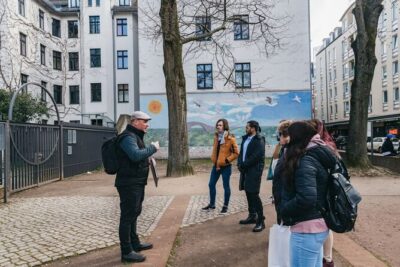
Path of Resistance: Berlin’s Hidden Holocaust Stories
Read our review →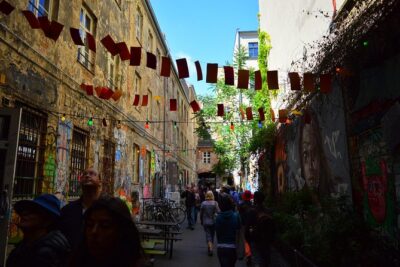
Private Tour: Jewish Heritage Walking Tour of Berlin
Read our review →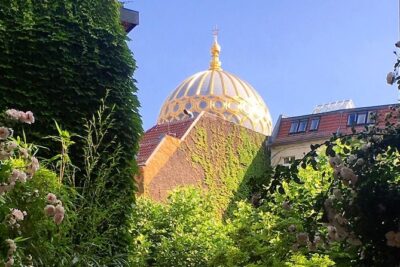
Jewish Berlin: Walking tour The Old Jewish Quarter (private 3 Hours tour)
Read our review →
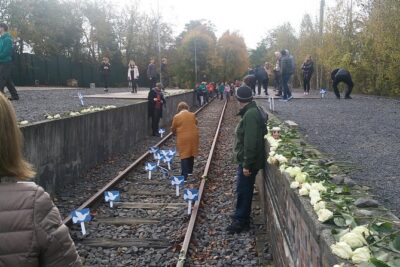
Browse the lists this tour appears in