
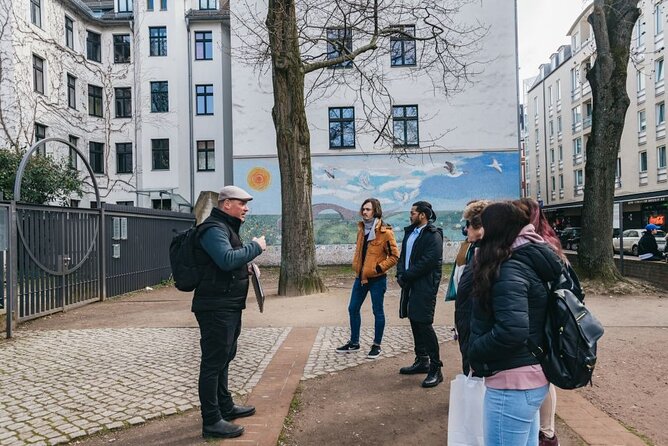
Reviewed · BERLIN JEWISH HISTORY TOURS
Path of Resistance: Berlin’s Hidden Holocaust Stories
Berlin’s quiet courtyards and memorial stones hold stories of people who resisted Nazi persecution, sometimes through public protest and sometimes by helping one person at a time. This walk links those acts to places where they happened, including Otto Weidt’s workshop and the Rosenstraße protest site.
I like two things in particular: the focus on ordinary people who took risks, and the route’s mix of major landmarks and less obvious memorials. Guides such as Tom and Hannah are praised for explaining difficult subjects with care, answering questions, and bringing lesser-known stories into view.
One consideration: this is a serious, emotionally demanding subject, and 2.5 hours means a steady walk with many stops. The stated group limit also differs across the tour information, so check the group size when booking if that matters to you.
- Otto Weidt’s workshop connects Holocaust history to the practical choices one person made to protect Jewish workers.
- Rosenstraße recalls a public protest by German women demanding the release of their Jewish husbands.
- Bebelplatz is the site of the 1933 Nazi book burning, a stark place to consider attacks on free thought.
- Stolpersteine and deportation memorials bring the scale of persecution back to individual names and homes.
- A historian-led walk includes maps, then-and-now photographs, and time for questions.
- The route covers 2.5 hours and is listed at $56 per person, with museum and memorial entry included.
A Walk Through Berlin’s Jewish Quarter
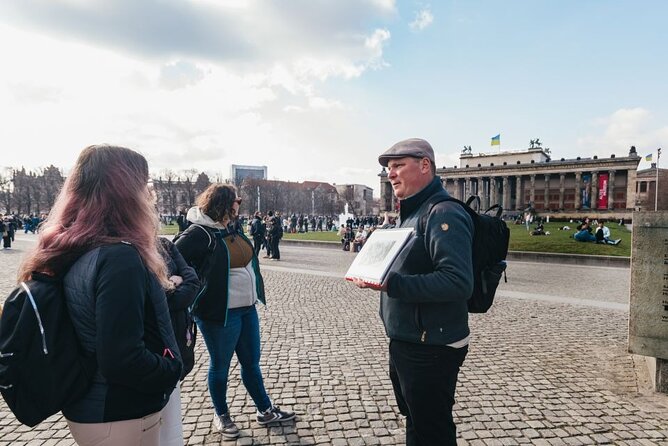
This tour is built around a useful idea: history becomes easier to grasp when you can connect it to streets, buildings, and people. Rather than treating Nazi persecution as a distant sequence of dates, the guide points out the places where Jewish life was rooted, where people were taken away, and where resistance took shape.
The route begins at the former Imperial Post Office and moves through Berlin’s old Jewish quarter before reaching central landmarks such as Museum Island, Neue Wache, and Bebelplatz. The stops vary in scale. Some are prominent sites with a clear public presence; others are plaques, courtyards, or memorials you could pass without noticing on your own.
The emphasis is not only on the machinery of Nazi oppression but also on choices made by individuals and groups. You’ll hear about people who helped others, those who protested, and the difficult question of why some Germans resisted while others did not. That wider frame can make the visit more thoughtful than a tour focused only on famous leaders and dates.
The experience is described as led by professional World War II historians, and the included historical maps and then-and-now photographs are practical tools for understanding how the area changed. The guide also invites questions, which matters on a subject where a short answer can easily leave out essential context.
From the New Synagogue to the Old Jewish Cemetery
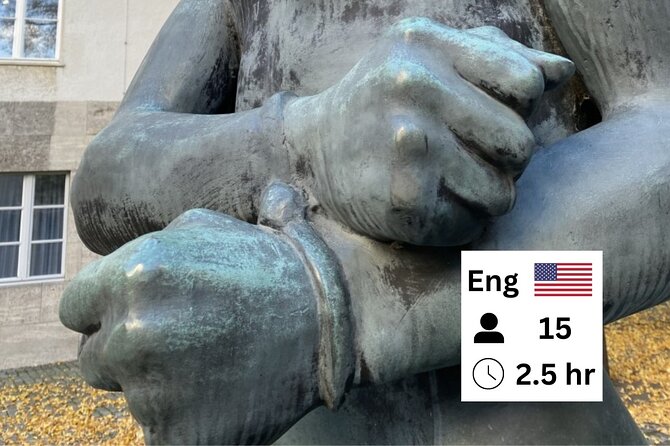
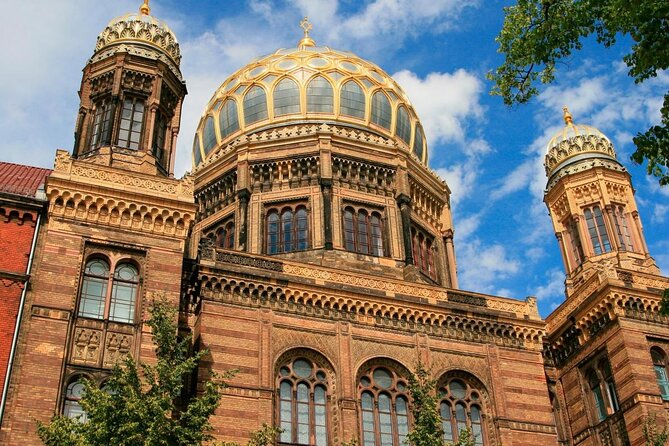
The New Synagogue is an early stop, with about 15 minutes set aside for a guided visit and a look around. It gives the walk a clear starting point in Berlin’s Jewish history, before the tour turns to persecution and resistance. The nearby Jewish centre also helps place the surrounding streets within the life of the community.
At Jüdisches Gymnasium Moses Mendelssohn, the group spends around 10 minutes. The school adds an important thread to the route: Jewish history here is not only a story of monuments and tragedy, but also of education and everyday community life. A short stop can feel brisk, but it helps build the local picture before the tour moves on.
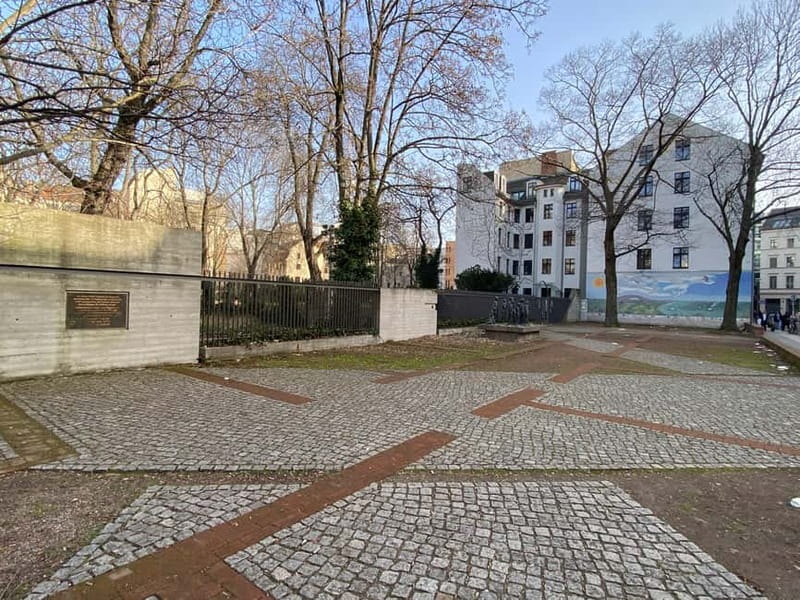
The Grosse Hamburger Strasse Cemetery, described as Berlin’s oldest Jewish cemetery, is a more reflective stop. With around 15 minutes there, you have time to hear about the site and consider how memorials preserve traces of people and communities. It is worth bringing your attention to the small details, since this is not a stop that relies on spectacle.
The tour also includes Stolpersteine memorials, the small plaques set into pavements to mark people who were deported or murdered. Their modest scale is part of their effect: they place a name and a life directly in the street where someone once lived. You may find these memorials especially affecting because they turn a city walk into a series of personal reminders.
More Jewish history tours in Berlin:
- Berlin: Jewish Museum Berlin Entrance Ticket
★ 4.5 · 8,393 reviews - Nazi Berlin and the Jewish Community Tour
★ 4.8 · 55 reviews - Private Tour: Jewish Heritage Walking Tour of Berlin
★ 5.0 · 29 reviews
Otto Weidt’s Workshop and the Rosenstraße Protest
Otto Weidt’s Workshop for the Blind is one of the route’s most distinctive stops. Weidt ran a workshop employing blind and deaf Jewish workers and worked to shield them from persecution. The tour spends about 15 minutes here, connecting the physical site to the choices and risks behind that act of protection.
This story gives the tour a grounded view of resistance. You are not asked to think of defiance only as a grand political movement; the workshop shows how it could involve using a workplace and personal effort to help people survive. The site is also a good example of why a guided visit can add value: a building alone cannot explain the moral choices that unfolded there.
The Rosenstraße stop, identified as the Block of Women, recalls the protest by German women who demanded the release of their Jewish husbands. The tour gives this site about 15 minutes, enough to explain the event and its place in the story of German resistance. It offers a different kind of courage from Weidt’s: collective and visible, rather than tied to the daily work of one person.
The guide also tells the story of Nicholas Winton, known as the British Schindler, who helped hundreds of Jewish children escape the Holocaust. His story broadens the tour beyond Berlin and shows how rescue could depend on people acting across borders. The details are part of the tour’s human focus, though the supplied route does not identify a separate Winton site.
Museum Island, Neue Wache, and Bebelplatz
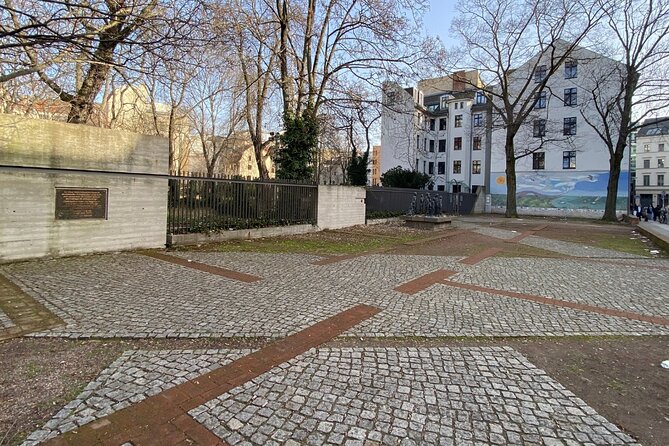
Museum Island is listed as a 20-minute guided stop, giving it the longest time allocation on the route. The tour’s focus here is the history and context the guide brings to the area, rather than a lengthy museum visit. Museum entry is included, but with the overall walk lasting 2.5 hours, it is sensible to treat this as a brief introduction, not time for an extended independent visit.
At Neue Wache, the group spends about 15 minutes. The stop adds a memorial perspective to the walk, giving the guide room to connect remembrance with the larger themes of persecution and resistance. If you want to linger in a quiet place after the tour, you may want to return on your own rather than expect a long pause here.
Bebelplatz is the site of the 1933 Nazi book burning. The tour sets aside about 10 minutes for the memorial to the May 10 event, when books were burned in a public attack on intellectual freedom and free thought. It is a compact stop, but its meaning is direct: the persecution of people was accompanied by efforts to suppress ideas.
I like the contrast between this public landmark and the less conspicuous memorials elsewhere on the route. Bebelplatz makes a clear statement about censorship, while a plaque or a Stolperstein asks you to notice an individual story. Together, they show that the city’s memory is carried both by grand civic spaces and by small markers underfoot.
Deportation, Children, and the Route’s Final Stops
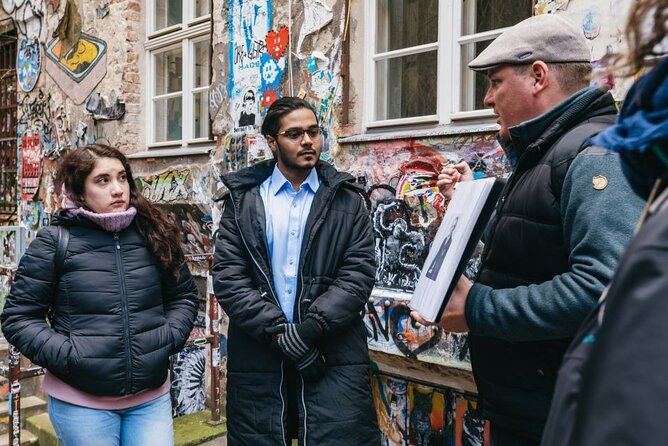
The route includes a former deportation centre, where the guide discusses the removal of Jewish families from their homes. The experience description emphasizes standing where families were torn from their lives and deported. This part of the walk can be difficult, but it helps explain how persecution moved from law and exclusion to the organized removal of people.
Trains to Life, Trains to Death is another listed stop, with around 10 minutes for a visit and explanation. Its title points to the sharply different fates represented by the railway journeys of Jewish children. The guide’s account of Nicholas Winton’s rescue work fits this theme, though the route information does not specify how the story is presented at this particular stop.
The route is designed to connect sites rather than leave you at one memorial for a long period. That pace allows the guide to build a wider story across the old quarter and central Berlin, but it also means you should not expect lengthy time inside every museum or memorial. If a particular site matters to you, note it down so you can revisit after the guided walk.
There is a practical point to confirm before you go: the route names Berlin Friedrichstraße station as its finish, while the meeting information says the activity ends back at the starting point. Since those details conflict, ask the operator which endpoint applies on your date. It will help you plan onward transport or a meal without guessing.
Same city, a different kind of day:
- Berlin: Reichstag, Dome and Government District Guided Tour
★ 4.7 · 18,288 reviews - Berlin: 1-Hour City Tour by Boat with Guaranteed Seating
★ 4.3 · 16,993 reviews - Berlin: Boat Tour Along the River Spree
★ 4.4 · 11,252 reviews - Discover Berlin Half-Day Walking Tour
★ 5.0 · 9,624 reviews
What the $56 Price Includes
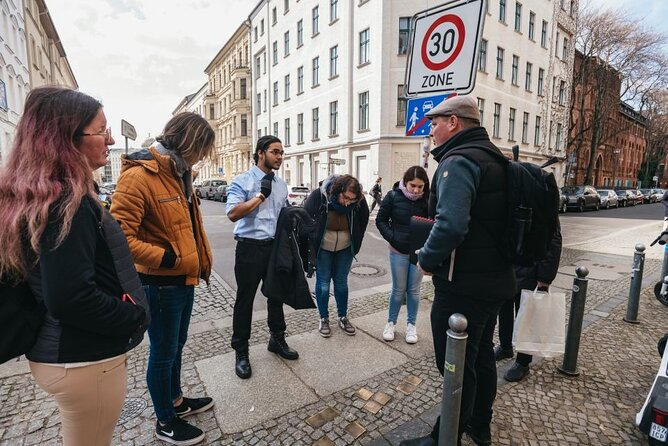
At $56 per person, this is a specialist walking tour rather than a broad orientation walk. The price includes an English-speaking local historian, entry to museums and memorials, historical maps and then-and-now photographs, and an opportunity for discussion and questions. Those inclusions can make the cost worthwhile if you want context, not just directions between sites.
The value depends on how you like to travel. If you’re comfortable reading memorials on your own and prefer to set your own pace, you could visit some of these places independently. But a guide can connect them into a story, explain the hard questions around resistance and complicity, and draw attention to details that may not be obvious during a self-guided stroll.
The 2.5-hour duration is a useful fit for a half-day in Berlin, though the subject matter may stay with you longer. There is no food or drink included, so bring water and plan a meal before or after. Public transport tickets are not required for the walking tour itself.
The group size is described in two different ways: one detail says a maximum of 15 people, while another says the group is limited to 10. Expect a small-group format, but check the current cap when booking if an intimate group is especially important to you. A smaller group generally gives you more room to hear the guide and ask questions.
Who Will Get the Most From This Walk
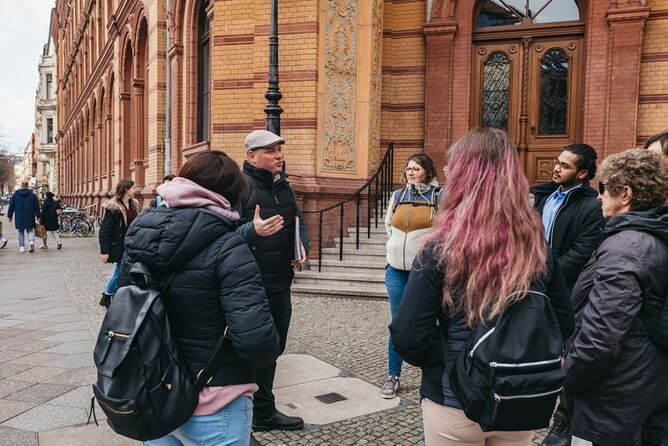
This tour suits you if you want to understand Berlin’s Holocaust history through local sites and personal stories, rather than through a single museum visit. It is also a good choice for anyone interested in forms of resistance that are easy to overlook, from protecting workers to organizing a public protest.
You do not need to be a specialist in World War II to follow the route. The guide’s role is to explain the background and make connections, and the interactive question time can help if you arrive with specific questions. The tour is listed as suitable for first-time visitors as well as history enthusiasts.
The subject is serious, and the walk includes deportation, antisemitism, and genocide. If you are travelling with children or anyone who may find these topics distressing, consider whether a sustained discussion of persecution is right for them. The tour runs in all weather, so comfortable shoes, water, and rain or sun protection will make the experience easier.
Guide reports are particularly strong on clear explanations, patience, and passion for the subject. Tom is singled out for being friendly and able to discuss sensitive history; Hannah is noted for her enthusiasm and for sharing stories of less widely known people. Those names are useful to know, though guide assignments can vary by date.
Should You Book It?
I would choose this walk if you want a careful, site-by-site account of Jewish life, Nazi persecution, and resistance in Berlin, and you value a guide who can handle difficult questions. The Otto Weidt workshop and Rosenstraße protest give the route a strong human focus, while Bebelplatz and the deportation memorials add a broader view of what was at stake.
Skip it if you want a light sightseeing stroll or a slow, extended visit inside museums. At $56, the strongest value is the historian’s interpretation and the links between places, not a long stop at every site. Check the group-size limit and confirm the endpoint before booking, then arrive 10 minutes early at the former Imperial Post Office. The guide will be at the main entrance with a blue umbrella.
FAQ
How long is the tour?
The walk lasts 2.5 hours. Starting times vary, so check availability for the date you want.
What language is the tour in?
The live guide speaks English.
Where does the tour start?
It meets at the former Imperial Post Office. Arrive 10 minutes early and look for the guide at the main entrance holding a blue umbrella.
Where does the tour end?
The route details name Berlin Friedrichstraße station as the finish, while the meeting information says the tour ends back at the starting point. Confirm the endpoint with the operator before you go.
How much does the tour cost?
The stated price is $56 per person.
What is included in the price?
The price includes an expert local historian as your guide, entry to museums and memorials, historical maps and then-and-now photographs, and time for discussion and questions.
Do I need a public transport ticket?
No public transport ticket is required for the walking tour.
What should I bring?
Wear comfortable shoes and bring water. The tour runs in all weather, so bring an umbrella, rain protection, or sun coverage as needed.
Is the tour wheelchair accessible?
Yes, the activity is listed as wheelchair accessible.
Newest tours in Berlin
- Berlin: guided canoe | kayaktour★ 4.1 · 7 reviews
- Understanding Kreuzberg: The roots of local (sub)culture★ 4.9 · 11 reviews
- Where It All Began: Berlin’s Queer & Trans History Tour★ 4.9 · 6 reviews
- Warnemünde Shore Excursion: Private Sachsenhausen and Berlin Tour★ 5.0 · 12 reviews
- Ultimate E-Bike Tour of Berlin with Beer Garden Stop★ 5.0 · 4 reviews
- Potsdam Highlights – Private sightseeing tour by minibus★ 5.0 · 3 reviews
- Private Potsdam City Tour in an authentic vintage van★ 5.0 · 14 reviews
- Transfer from Berlin Schönefeld Airport (SXF) to Berlin city Hotels – ROUND TRIP★ 4.0 · 3 reviews
Berlin Jewish History Tours, compared.
Private Tour: Jewish Heritage Walking Tour of Berlin
Read our review →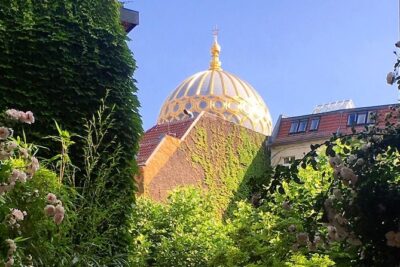
Jewish Berlin: Walking tour The Old Jewish Quarter (private 3 Hours tour)
Read our review →
Path of Resistance: Berlin’s Hidden Holocaust Stories
Read our review →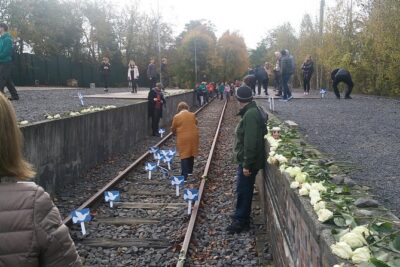
Browse the lists this tour appears in