
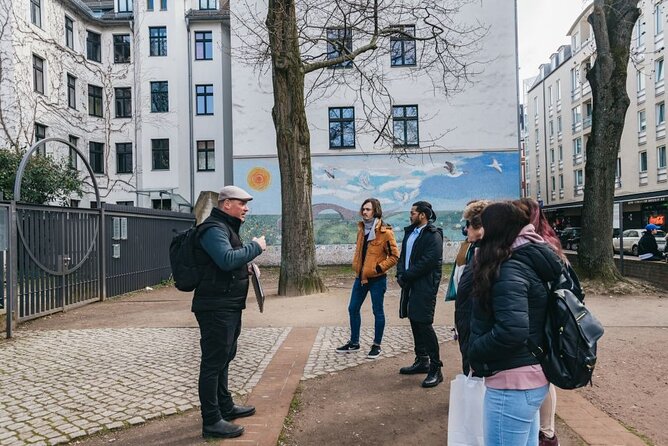
Reviewed · BERLIN JEWISH HISTORY TOURS
Path of Resistance: Berlin’s Hidden Holocaust Stories
Berlin’s resistance history is written into ordinary streets and courtyards, not just museums. This walk follows the people who tried to protect Jewish neighbors, defy Nazi rule, or save children from deportation, while also showing how the regime turned familiar public places into stages for control.
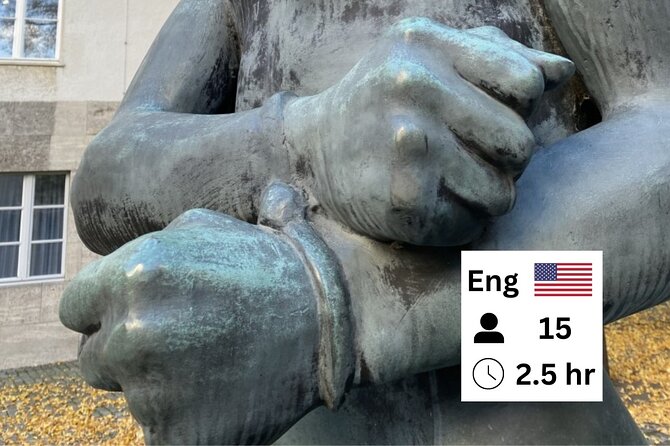
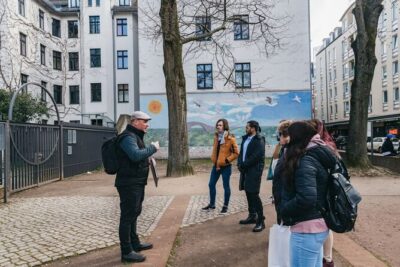
I like two things in particular: the route connects Jewish and German resistance rather than treating them as separate histories, and the small group size, capped at 15, gives you room to ask questions. The guide also uses then-and-now photographs and maps, a practical aid when the city’s present-day buildings look far removed from wartime scenes.
One consideration: this is a 2.5-hour walking tour with plenty of standing at the stops. One family found the pace tiring, even though the children enjoyed the history, so wear comfortable shoes and be ready to spend much of the time on your feet.
At a glance
- Ten stops, one connected story: From the Neue Synagogue to the sculpture at Friedrichstraße, the route covers Jewish life, protest, rescue, persecution, and remembrance.
- Small group: The maximum is 15, which keeps the walk personal without making it a private tour.
- A guide-led history lesson: Guides have included Scott, Benjamin, Johan, Jochen, and Jorg. Your guide will vary, but the route is built around explanation and questions.
- Photographs and maps included: These help you compare wartime Berlin with the streets you see today.
- About 2.5 hours on foot: Expect short stops at each site, with walking between them.
- $48.01 per person: A reasonable price if you want a focused, guided introduction to several significant sites in one outing.
A walking route through Berlin’s acts of resistance
The tour begins at Oranienburger Strasse 36 and ends at S+U Friedrichstraße, a major transport hub. That one-way route is useful: you finish with easy connections across the city rather than having to retrace your steps to the starting point.
The stops range from a few minutes to about 15, and many are outdoor memorials or street-side sites. That format keeps the history tied to its setting, but it also means the guide’s explanations do much of the work. You are not entering every building or spending long stretches inside museums.
The tour is offered in English, includes an expert guide, and is listed as accessible. It is also open to service animals, and most people can participate. Still, the amount of standing is worth weighing if you have limited stamina or need frequent rests.
More Jewish history tours in Berlin:
- Berlin: Jewish Museum Berlin Entrance Ticket
★ 4.5 · 8,393 reviews - Nazi Berlin and the Jewish Community Tour
★ 4.8 · 55 reviews - Path of Resistance: Berlin’s Hidden Holocaust Stories
★ 5.0 · 33 reviews
The Neue Synagogue and a community under threat
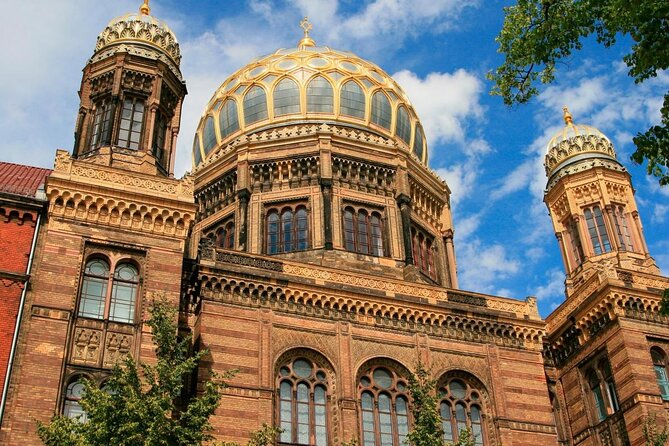
The Neue Synagogue is a striking place to start. Built in 1866, it was once Berlin’s largest and most elaborate synagogue, a public sign of the city’s thriving Jewish community, then numbering about 160,000 people. Its scale makes the history feel concrete: this was not a small or marginal community, but a central part of Berlin life.
The building survived the Kristallnacht pogrom, when it was saved from vandals, but its story did not end there. It remained in use until 1940, when the Army confiscated it for military storage. Allied bombing severely damaged it in 1943. The main hall was demolished in 1958, and the building was partly reconstructed in 1988 before reopening in 1995.
Today, the site houses the Centrum Judaicum, which works to preserve Jewish memory and tradition. The stop is brief, around 10 minutes, so think of it as an introduction rather than a full visit to the institution. If you want more time inside, you may want to return separately.
From a liberal school to a transit camp
The next stop, the Jewish Gymnasium Moses Mendelssohn, tells a sharp story of how quickly a place of learning could be seized for persecution. Founded in 1779, it was Germany’s first Jewish school without fees. Though Jewish in identity, it welcomed students of all faiths and promoted a liberal form of Judaism. Girls were admitted in 1931.
That openness makes the building’s later use especially grim. In 1941, as deportations to the newly occupied territories began, Jewish schools were banned. The following year, the SS security office turned this building into a transit camp. Its windows were barred, and Jewish people were held there before deportation.
The stop is only about five minutes. The brief pause is enough to mark the change in purpose, but not to explore the story at length. The guide’s context matters here: the contrast between a school’s educational mission and its forced use as a holding site is the heart of the stop.
The old cemetery and its layers of loss
At the Jewish cemetery and Holocaust memorial, the timeline stretches well beyond the Nazi period. About 12,000 members of Berlin’s Jewish community were buried here between 1672 and 1827. In 1943, the Gestapo ordered the SS to destroy the cemetery. Gravestones were smashed, remains discarded, and the site desecrated.
The grounds also hold the consequences of Berlin’s final battles. Burials began again in April 1945. Nearly 2,500 German soldiers and civilians killed during the fighting, or shot by the SS for displaying white flags, lie in mass graves.
This is one of the longer stops, at about 15 minutes, and it is a place to slow down. The cemetery’s history joins anti-Jewish violence with the violence inflicted on Berliners near the end of the war. That does not make the experiences equivalent; it shows how the regime’s brutality reached different groups in different ways.
Same city, a different kind of day:
- Berlin: Reichstag, Dome and Government District Guided Tour
★ 4.7 · 18,288 reviews - Berlin: 1-Hour City Tour by Boat with Guaranteed Seating
★ 4.3 · 16,993 reviews - Berlin: Boat Tour Along the River Spree
★ 4.4 · 11,252 reviews - Discover Berlin Half-Day Walking Tour
★ 5.0 · 9,624 reviews
Otto Weidt’s workshop in a hidden courtyard
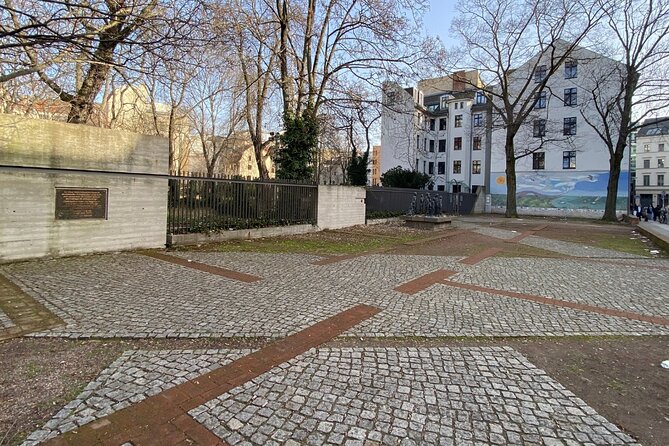
The Museum Blindenwerkstatt Otto Weidt sits in a courtyard, a tucked-away setting that suits the story of a small workshop trying to shield people from a vast machinery of persecution. From 1940 to 1945, Otto Weidt and his wife, Else, employed more than 30 blind and deaf Jewish workers.
As danger increased, Weidt tried to protect his employees by bribing Gestapo officers and falsifying documents. He even travelled to Auschwitz in an attempt to rescue one of his workers. The stop lasts about 10 minutes, and it gives the tour one of its most personal accounts of resistance: not a military plot, but repeated risks taken to keep individual people safe.
The workshop’s location and human scale are a welcome change from the grand public spaces elsewhere on the route. It reminds you that resistance could mean practical, dangerous acts carried out in workplaces and courtyards.
Rosenstrasse and a protest that refused to disperse
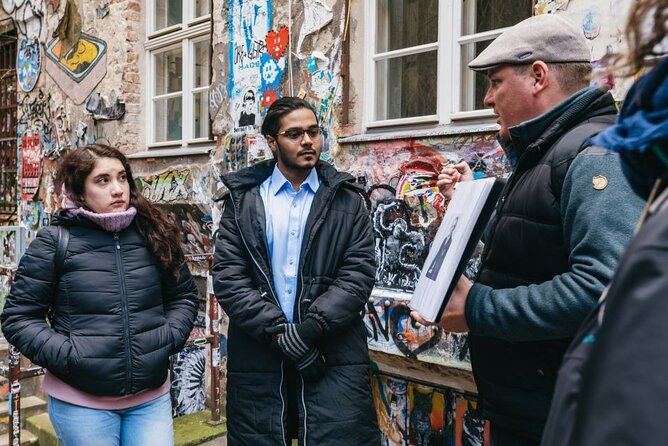
At the Rosenstrasse memorial, the tour turns to a rare public protest against the Nazi regime. On February 27, 1943, police, the Waffen-SS, and the Gestapo arrested about 2,000 Jewish men married to non-Jewish German women.
Their wives gathered outside the detention site. The women faced threats, including warnings that they could be shot if they did not leave. They scattered briefly, then returned, often in larger numbers. As the pressure grew, Joseph Goebbels authorized the prisoners’ release.
The story is remarkable, but it should not be mistaken for a simple formula for protest or a sign that the regime was generally responsive to public pressure. The stop shows one specific moment when sustained protest helped secure a release. At around 10 minutes, it offers a concentrated account of courage and risk.
The Lustgarten, remade for Nazi spectacle
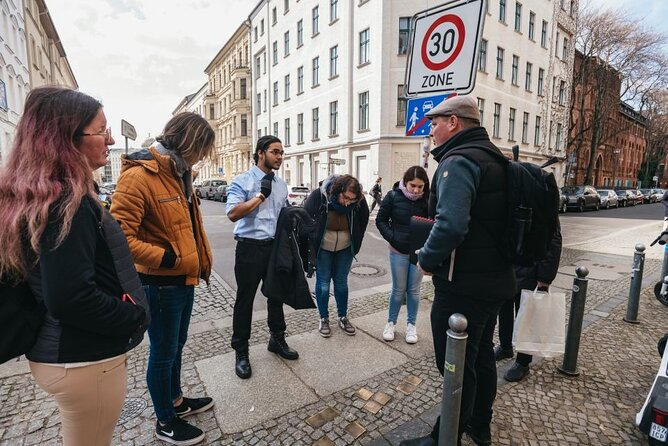
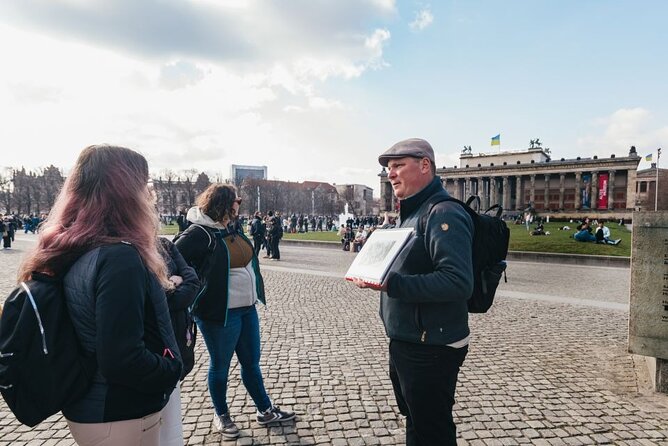
The Lustgarten is framed by the Berlin Cathedral, the Altes Museum, and the Zeughaus. Before Nazi rule, it was a familiar place for speeches and demonstrations. A week after Hitler became Chancellor, about 200,000 Berliners gathered there to protest the new government.
The regime steadily restricted the right to protest through arrests and heavy fines. In 1934, the Lustgarten was paved over and repurposed for propaganda rallies, military parades, and swearing-in ceremonies. A public garden became a controlled stage for the state.
This 10-minute stop helps explain how political power was made visible in Berlin. The guide can point out the setting and use photographs or maps to connect the current space with its altered past. The site itself may look peaceful now, which is part of the lesson: public places can change meaning without changing location.
The Zeughaus and a plot against Hitler
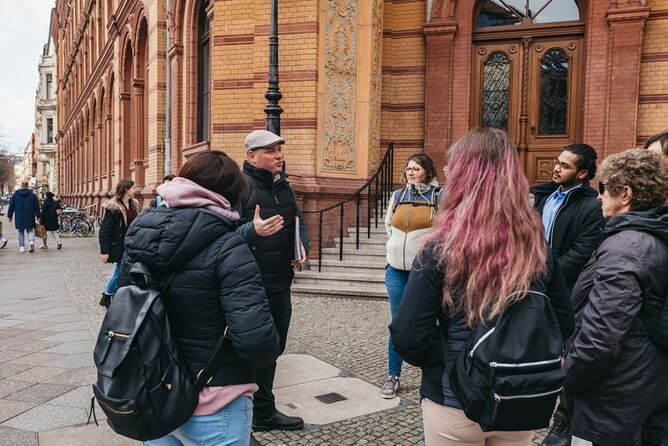
The Zeughaus, built in 1730 as an artillery arsenal, is the oldest building on this stretch of Unter den Linden. Its part in the tour is tied to a planned assassination attempt in 1943. A display of captured Soviet weapons was scheduled there, and Major General Rudolf Christoph Freiherr von Gersdorff, a member of the Wehrmacht resistance, was assigned to lead the exhibition.
Gersdorff planned to use two concealed British mines to kill Hitler and himself. He intended to embrace Hitler, leaving no chance to escape the blast. The attempt was part of a wider coup plan, but the outcome is left as a question for the guide to explain on the walk.
That makes this stop a natural place to ask about resistance within the German military, and about the risks and failures faced by those who tried to remove Hitler. The building’s grand appearance can hide the fact that this story is about a dangerous plot in the middle of an official wartime event.
Memorials to tyranny, censorship, and rescued children
At the Neue Wache, the tour pauses at Germany’s central memorial to victims of war and tyranny. It is a quiet memorial in a busy part of the city, and its position along the route gives you a moment to take in the cost of the histories covered so far.
Nearby, Bebelplatz marks a different kind of attack. On May 10, 1933, members of the Nazi German Student Union and their professors burned more than 25,000 books judged to be against the so-called un-German spirit. The setting beside Humboldt University makes the scene all the more pointed: students and academics took part in the destruction of books and ideas.
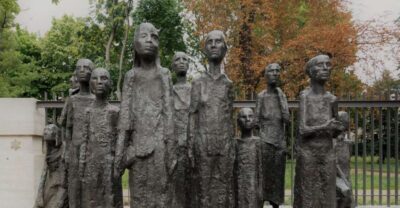
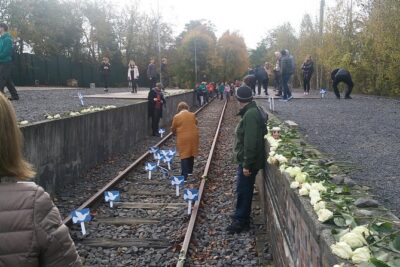
The final stop is the sculpture Trains to Life, Trains to Death at Friedrichstraße. It shows Jewish children facing in opposite directions, representing the contrasting fates of children sent to England on the Kindertransport and those deported to concentration camps. The sculptor, Frank Meisler, was among the children rescued by the Kindertransport, and he travelled from this station to England in 1939.
This is a fitting ending because it brings the route’s large political events back to individual lives. The tour finishes at S+U Friedrichstraße, with straightforward rail connections for your next stop.
What $48.01 buys you
At $48.01, you are paying for about two and a half hours of guided interpretation, not for entry to a string of paid attractions. Admission at the listed stops is free, and the value lies in the route, the historical links, the guide’s explanations, and the use of maps and period photographs.
That can be good value if you want a compact introduction to Berlin’s resistance stories and prefer a guide to explain what you are seeing. A maximum group of 15 makes it easier to hear and ask questions than on a large coach tour. It also gives the guide some room to adapt the pace, something that has mattered to people who have taken the walk.
The price is less compelling if you prefer to spend a long time inside museums or to explore each site at your own pace. The stops are short, and food, drinks, and hotel pickup are not included. The tour is usually booked about 37 days ahead, so plan early if your schedule is fixed.
Who should take this walk?
I would choose this tour if you want a people-focused account of Berlin under Nazism, especially the actions of Jewish rescuers, protestors, military opponents, and families. It is also useful if you have already seen some of the city’s better-known memorials and want the stories that connect them.
Families may find the personal accounts more engaging than a general lecture, though the standing and subject matter call for preparation. The route is not light entertainment. It deals directly with persecution, deportation, desecration, and murder, while also showing moments of courage and rescue.
Book it if you can manage a steady walking tour and value a guide who can answer questions. If you need a slower visit, prefer a seated experience, or want extensive time at the Centrum Judaicum and workshop museum, plan separate visits or choose a different format.
FAQ
How long is the tour?
It lasts approximately 2 hours and 30 minutes.
What is the price?
The listed price is $48.01 per person.
Where does the tour start?
It starts at Oranienburger Strasse 36, 10117 Berlin, Germany.
Where does the tour end?
It ends at S+U Friedrichstraße, a major Berlin train hub.
What language is the tour offered in?
The tour is offered in English.
How large is the group?
The maximum group size is 15 people.
Are admission tickets included?
Admission at the listed stops is free. The tour includes an expert guide, a small-group format, and then-and-now photographs and maps.
Is the tour accessible?
It is listed as an accessible tour. Service animals are allowed, and most people can participate.
What is included in the price?
An expert guide, the small-group tour, and then-and-now photographs and maps are included. Food, drinks, and hotel pickup and drop-off are not included.
Newest tours in Berlin
- Berlin: guided canoe | kayaktour★ 4.1 · 7 reviews
- Understanding Kreuzberg: The roots of local (sub)culture★ 4.9 · 11 reviews
- Where It All Began: Berlin’s Queer & Trans History Tour★ 4.9 · 6 reviews
- Warnemünde Shore Excursion: Private Sachsenhausen and Berlin Tour★ 5.0 · 12 reviews
- Ultimate E-Bike Tour of Berlin with Beer Garden Stop★ 5.0 · 4 reviews
- Potsdam Highlights – Private sightseeing tour by minibus★ 5.0 · 3 reviews
- Private Potsdam City Tour in an authentic vintage van★ 5.0 · 14 reviews
- Transfer from Berlin Schönefeld Airport (SXF) to Berlin city Hotels – ROUND TRIP★ 4.0 · 3 reviews
Berlin Jewish History Tours, compared.
Path of Resistance: Berlin’s Hidden Holocaust Stories
Read our review →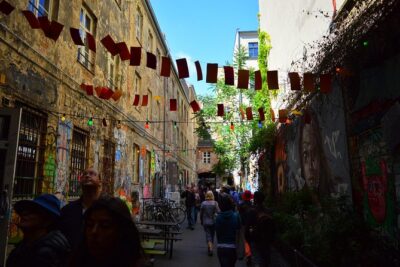
Private Tour: Jewish Heritage Walking Tour of Berlin
Read our review →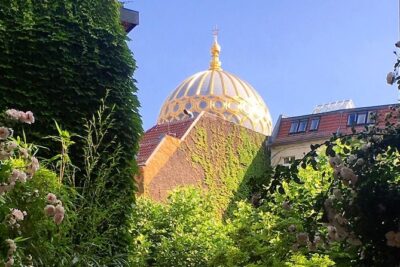
Jewish Berlin: Walking tour The Old Jewish Quarter (private 3 Hours tour)
Read our review →
Browse the lists this tour appears in