
Reviewed · BERLIN THIRD REICH TOURS
Hitler’s Berlin – the rise and fall (Small Group)
Berlin’s Nazi-era past is not tucked away in one museum. It is written into the streets around the Brandenburg Gate, the Reichstag and the former Gestapo headquarters. This 2.5-hour walk links those places into a clear story of how the Nazi Party gained power, what its rule did to people and how the war ended in Berlin. I especially like the use of then-and-now photographs and historic maps to make a site’s past easier to picture.
I also like the small group size, capped at 15, which gives you room to ask questions and hear the guide without feeling lost in a crowd. Guides named Scott, Jochen, Matt, Johan and Roshana have led the tour, and the strongest descriptions of the experience point to lively, thoughtful explanations of a difficult subject.
One consideration: this is a history-heavy walk, not a light overview of Berlin. You’ll be outside in all weather, and the subject matter is grim. Wear comfortable shoes, dress for the forecast and be ready to listen closely. The tour can also run longer than its stated 2.5 hours when discussion and questions keep going.
- Nine stops connect the Nazi rise and fall: From the Reichstag to the site of Hitler’s bunker, the route puts political history beside places where it unfolded.
- Memorials widen the story: Stops recognize Jewish, Sinti and Roma, and homosexual victims of Nazi persecution.
- A small group allows questions: The maximum is 15 people, with time for discussion and reflection.
- Maps and photographs add context: Then-and-now images help you compare Berlin as it is with the city shaped by war and Nazi rule.
- The route ends at the Topography of Terror: You finish at the former Gestapo headquarters, where there is time for a break.
- Plan for serious subject matter and outdoor walking: The tour runs in all weather, and the history calls for attention.
From the Brandenburg Gate into a difficult history
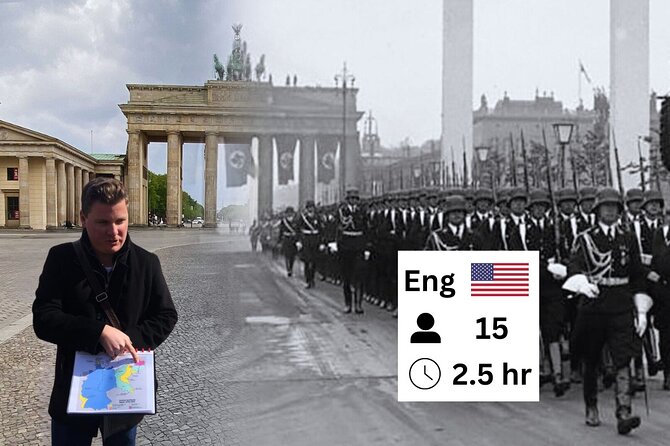
The meeting point is Pariser Platz, beside the Brandenburg Gate, a fitting place to start a tour about power, symbolism and the remaking of Germany. From there, your guide sets out to explain how the Nazi Party rose and how Hitler became Germany’s dictator. The walk is not just a string of landmarks; its value lies in linking the sites to the political choices and human consequences behind them.
The tour is offered in English and lasts about two and a half hours. That is enough time to visit nine stops, hear the main historical thread and ask questions, but the guide has a lot to cover. Several descriptions of the experience praise the guides’ ability to make the story clear and to invite discussion, so come ready to focus rather than treating this as background sightseeing.
The group limit of 15 is a practical advantage. At a larger size, it can be harder to hear explanations outdoors or get a question in. Here, the format is intended to feel more personal, though street noise can still make a guide difficult to hear at times. If that happens, move closer when you can.
The memorial to Sinti and Roma victims
The first stop is the Memorial to the Sinti and Roma Victims of National Socialism. Your guide discusses the persecution of these communities and the social thinking that helped prepare the ground for later mass murder. This opening matters because it establishes that Nazi persecution targeted more than one group, and that dehumanizing ideas did not appear overnight.
The stop is scheduled for about 10 minutes, so expect a focused introduction rather than a long visit. It gives you a frame for the broader history ahead, including the Holocaust memorial and the monument to homosexual victims. The site is a place for attention and reflection, not a photo stop to rush through.
More Third Reich tours in Berlin:
- Berlin: Third Reich and Cold War 2 Hour Walking Tour
★ 4.9 · 6,830 reviews - Berlin: Berlin Story Bunker Entry Ticket
★ 4.6 · 6,759 reviews - Berlin’s Best: 2 Hour Walking Tour Third Reich and the Cold War
★ 5.0 · 5,486 reviews
The Reichstag and the path to power
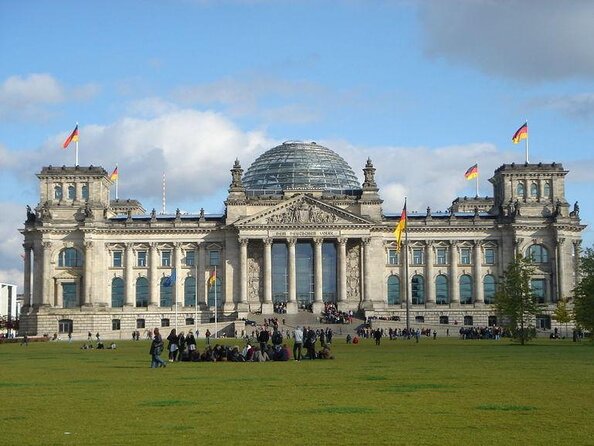
At the Reichstag, Germany’s parliament building, the guide explains how the Nazi Party came to power and how Hitler became Führer. The setting makes the political story tangible: this is a tour about the collapse of democratic government as much as it is about wartime events.
You spend about 15 minutes here. The stop helps you connect the public institutions of Berlin with the steps that weakened them. Rather than reducing the story to one dramatic moment, a good explanation can help you understand how a party gained political power and then consolidated control.
This is also a useful point to ask questions if you want more detail about the political sequence. The tour covers a large subject in a short time, and the guide’s answers can help distinguish the broad timeline from details you may have encountered elsewhere.
The Soviet Memorial in Tiergarten
The Soviet Memorial in Tiergarten shifts the focus to the Battle of Berlin and its aftermath. The battle was among the most destructive operations of the Second World War, and this stop addresses the brutal fighting and the ways those events have been remembered since.
Allow about 15 minutes. The memorial gives the tour a view of the war’s final phase, rather than keeping the story centered only on Nazi leaders and institutions. It also helps explain that the end of the regime came through devastating conflict, with lasting consequences for Berlin.
The guide uses historical maps and then-and-now photographs across the tour. At a site like this, those tools can help you grasp how Berlin’s physical setting and wartime history relate, especially if you are unfamiliar with the city.
Two memorials, two forms of remembrance
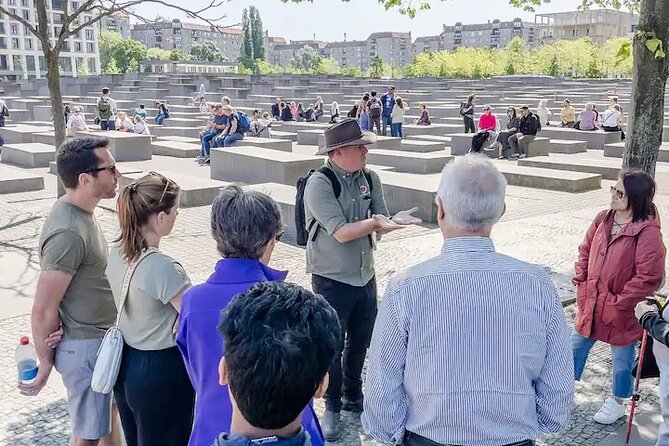
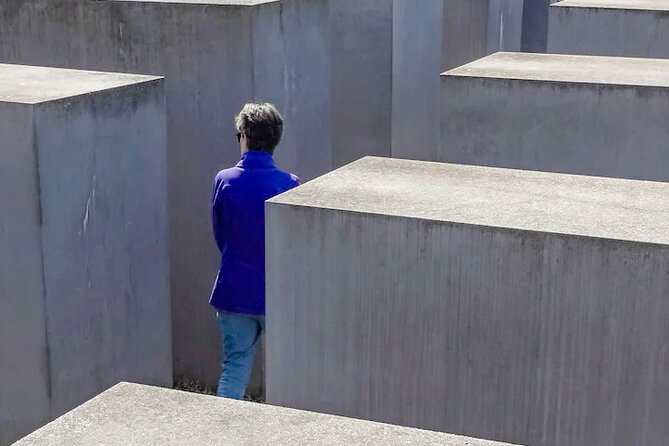
At the Memorial to the Murdered Jews of Europe, the guide discusses the Jewish victims of the Nazi regime and the meaning of the memorial. You’ll have around 15 minutes to consider the site and talk through its purpose. This is one of the tour’s most emotionally weighty stops, and it is worth giving it your full attention rather than treating it as a quick passage between landmarks.
The memorial is a place to reflect as well as learn. The guide can add historical context, but no short explanation can settle every question about how a society remembers mass murder. The tour makes room for discussion, and you can use that time to ask what the memorial communicates to you.
A short visit follows at the Monument to Homosexuals Persecuted Under National Socialism. At about five minutes, this is a brief stop, but it adds another group targeted under Nazi rule to the picture. Together, these memorials show why a tour of this period should not reduce persecution to a single story.
The subject is painful, and the tone needs care. The guides who receive the strongest praise are described as sensitive and clear, able to make a difficult history understandable without making light of it. Humor may be part of a guide’s style, but the purpose here is serious remembrance.
Same city, a different kind of day:
- Berlin: Reichstag, Dome and Government District Guided Tour
★ 4.7 · 18,288 reviews - Berlin: 1-Hour City Tour by Boat with Guaranteed Seating
★ 4.3 · 16,993 reviews - Berlin: Boat Tour Along the River Spree
★ 4.4 · 11,252 reviews - Discover Berlin Half-Day Walking Tour
★ 5.0 · 9,624 reviews
The Führerbunker site and a story of resistance
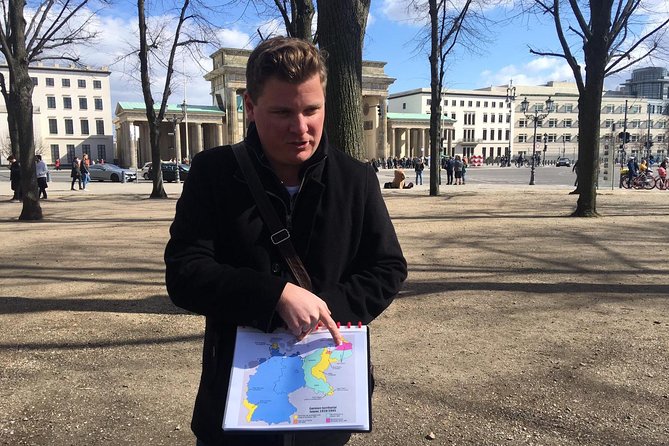
At the site of the Führerbunker, you’ll hear about Hitler’s final days in the Second World War. The stop lasts around 15 minutes. There is no admission charge for the visit, and the value comes from the guide’s explanation of what happened here and how the end of the regime unfolded.
This is a useful place to separate historical fact from the dramatic image many people bring to the subject. The guide helps locate the bunker within the wider story of Berlin’s final days, rather than presenting it as a stand-alone curiosity. Keep in mind that this is one stop in a broader walking tour, not an indoor exhibition.
The Johann Georg Elser Memorial introduces a different kind of story: opposition to the Nazi regime and attempts to kill Hitler. The guide discusses Elser and the role of others who resisted. In about 15 minutes, the tour moves from dictatorship and war toward the question of who opposed the regime, and how.
That contrast is valuable. A history tour can easily become a parade of Nazi buildings and leaders; this stop puts resistance into the narrative. It also gives you a chance to consider the risks faced by people who acted against the regime.
From the Aviation Ministry to the Gestapo headquarters
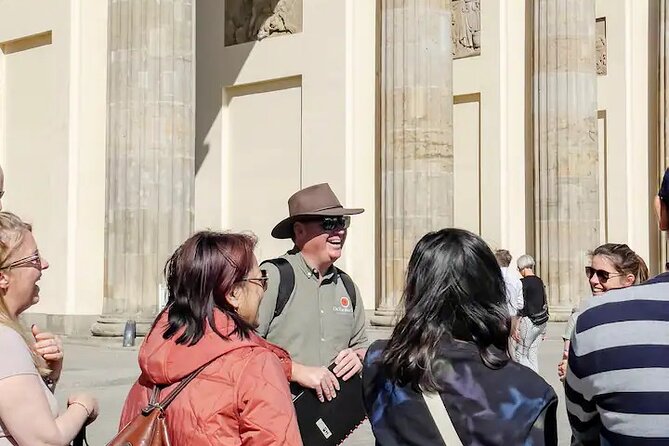
The former Aviation Ministry was built in 1936 to house the German Ministry of Aviation, headed by Hermann Göring. At the time of construction, it was Europe’s largest office building. The stop is brief, around five minutes, but it offers a striking look at the scale and bureaucracy of Nazi Germany.
Your guide explains the building’s original purpose and its place in the regime’s machinery. The point is not simply that the structure was large. It represents the offices and institutions through which the government organized its work, and it helps make the administration of Nazi rule less abstract.
The final stop is the Topography of Terror, on the site where the Gestapo headquarters once stood. You’ll spend around 20 minutes here, with an opportunity to take a break, get tea or coffee and use the restrooms. Food and drinks are not included, so bring money if you want to buy something.
Ending here gives the walk a strong final anchor. The tour’s route arrives at a place directly tied to Nazi state terror, and the guide can bring together themes from the earlier stops. You finish at Niederkirchnerstraße 8, not back at the Brandenburg Gate, so ask your guide about the best connection for wherever you’re heading next.
What the $54.44 price buys
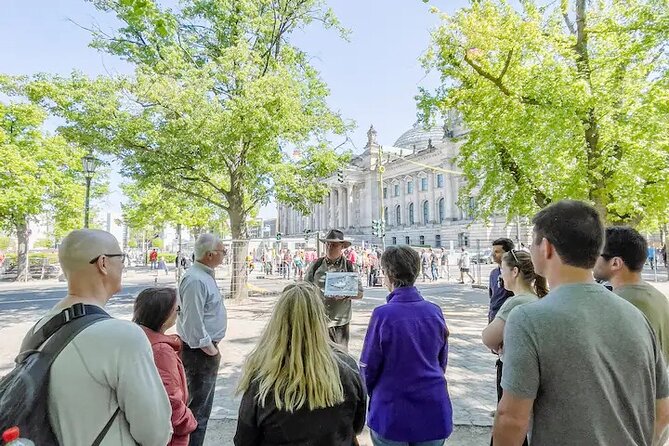
At $54.44 per person, the price pays for an expert local guide with an academic background in Second World War history, a small group and a structured route through major sites. The memorial stops themselves have no admission charge, so the main value is in the explanation: the historical links, the maps and photographs, and the chance to ask questions as you go.
That can be a good use of money if you want the city’s Nazi-era sites to make sense as a connected story. You could walk past many of these places on your own, but you would need to do the research in advance to understand how they fit together. A guide saves that preparation and gives you someone to talk with as the subject grows more complex.
The tour’s 4.9 rating from 179 reviews and 97% recommendation rate are strong signals, though no rating can guarantee the particular guide or group you’ll get. Guide names that come up include Scott, Jochen, Matt, Johan and Roshana. The most useful point is not to expect one specific person unless your booking confirms it; expect an English-speaking guide, and be prepared for different styles.
Some past walks have gone beyond the scheduled time because the group had many questions. That can be a bonus if you want discussion, but it may affect a tightly planned afternoon. Leave some breathing room after the tour rather than booking another activity immediately.
Walking, weather and who will get the most from it
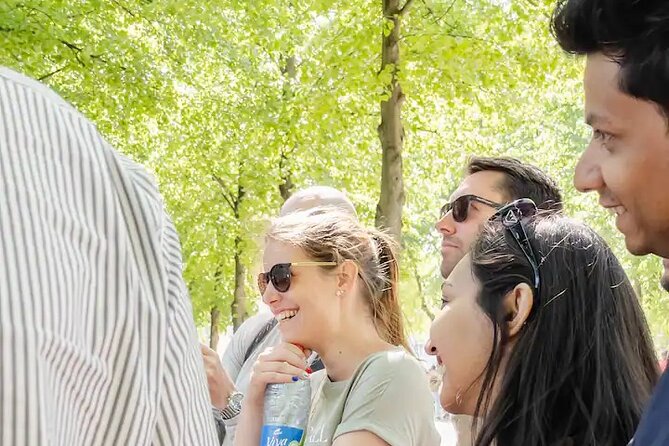
The walk is described as moderate in physical effort, but you should still expect to be on your feet between stops and standing while the guide speaks. Comfortable shoes matter, and the route operates in all weather. Bring suitable layers and rain protection if the forecast calls for it; Berlin’s weather does not pause for a history lesson.
The tour is a particularly good fit if you have a strong interest in the Second World War, want context for central Berlin’s memorials, or prefer a guide-led explanation to reading plaques alone. Families with teenagers may also find it worthwhile if the young person is ready for a serious discussion; one family specifically valued the guide’s ability to answer questions.
If you already know the broad chronology, you may still find the route useful for its local context and the connections between sites. But if you want a relaxed city walk with little narration, this is not the right choice. Several participants found the information dense, and you’ll get more from it by listening carefully.
Should you book this Berlin history walk?
I’d book this tour if understanding Berlin’s Nazi-era history is a priority and you want a guide to connect political events, persecution, resistance and the city’s memorials. The small group, use of historic visual material and thoughtful range of stops make the fee easier to justify than a walk that simply points out buildings.
Skip it if you are looking for light entertainment, prefer to explore at your own pace or have no room for a serious subject in your day. For everyone else, dress for the weather, wear good shoes and leave time for questions. The tour ends at the Topography of Terror, where you can continue reflecting on the history after the guide’s walk is over.
FAQ
How long is the tour?
It lasts approximately 2 hours and 30 minutes. It may run longer if the group has many questions.
Where does the tour start and end?
It starts at the Brandenburg Gate on Pariser Platz and ends at the Topography of Terror, Niederkirchnerstraße 8.
Is the tour in English?
Yes. The tour is offered in English.
How large is the group?
The group has a maximum of 15 people.
What is included in the price?
The tour includes an expert local guide, a small-group experience, guided visits to key Nazi-era sites and memorials, historic maps and then-and-now photographs, and time for questions and reflection.
Are food and drinks included?
No. Food and drinks are not included. There is an opportunity to take a break for tea or coffee and use the restrooms at the Topography of Terror.
What should I wear?
The tour operates in all weather, so dress appropriately and wear comfortable shoes. A moderate level of physical fitness is recommended.
Can I cancel for a refund?
You can cancel for a full refund at least 24 hours before the tour starts. Cancellations or changes made less than 24 hours before the start are not accepted.
Newest tours in Berlin
- Berlin: guided canoe | kayaktour★ 4.1 · 7 reviews
- Understanding Kreuzberg: The roots of local (sub)culture★ 4.9 · 11 reviews
- Where It All Began: Berlin’s Queer & Trans History Tour★ 4.9 · 6 reviews
- Warnemünde Shore Excursion: Private Sachsenhausen and Berlin Tour★ 5.0 · 12 reviews
- Ultimate E-Bike Tour of Berlin with Beer Garden Stop★ 5.0 · 4 reviews
- Potsdam Highlights – Private sightseeing tour by minibus★ 5.0 · 3 reviews
- Private Potsdam City Tour in an authentic vintage van★ 5.0 · 14 reviews
- Transfer from Berlin Schönefeld Airport (SXF) to Berlin city Hotels – ROUND TRIP★ 4.0 · 3 reviews
Berlin Third Reich Tours, compared.

Third Reich Berlin: Hitler and WWII Walking Tour
Read our review →
Berlin Third Reich Sites: Half-Day Walking Tour
Read our review →
Guided Bike Tour of the Berlin Wall and Third Reich
Read our review →
Hitler’s Germany: Berlin During the Third Reich & WWII
Read our review →
Private Walking Tour Berlin Third Reich Hitler and World War II
Read our review →
Private Walking Tour: World War 2 and Cold War Sites in Berlin
Read our review →Browse the lists this tour appears in