

Reviewed · BERLIN JEWISH HISTORY TOURS
Jewish Life in Berlin – Private Walking Tour
Berlin’s Jewish story is written into streets, courtyards, schools, cemeteries, and places of refuge. This private walk links those traces, from the first Jewish immigrants in 17th-century Berlin to the Holocaust and Jewish life today, with the former quarter as its open-air classroom.
I like two things in particular: the route includes places tied to everyday community life, not only major memorials, and a private guide can adjust the conversation to your group’s questions. At Otto Weidt’s workshop, for example, the story turns to one man’s efforts to protect blind and deaf Jewish workers from Nazi persecution.
One point to plan for: this is a three-hour walking tour, and the New Synagogue is the final stop, not a promise of an interior visit. A few people have expected to see the synagogue museum or Holocaust memorial, so be clear about what matters most to you before booking.
- The route covers nine central Berlin stops, from Hackescher Markt and the Scheunenviertel to the New Synagogue.
- Otto Weidt’s workshop brings individual courage into focus, amid the broader story of Nazi persecution.
- The tour links well-known names to local history, including Albert Einstein and philosopher Moses Mendelssohn.
- You get a guide for your group alone, with room to ask questions and follow a topic further.
- The walk is about three hours and mostly flat, though the weather can affect your comfort.
- The group rate is $355.25 for up to 15 people, so the per-person cost falls as your group grows.
A walk through Jewish Berlin, not just its memorials
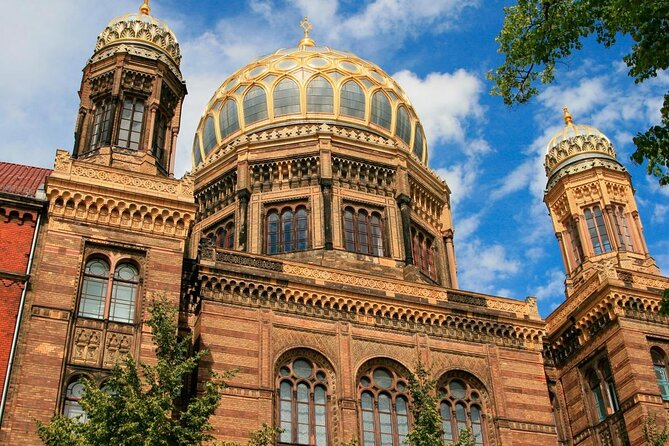
This tour’s value lies in the way it connects landmarks to the lives around them. You’ll hear about Berlin’s Jewish community across several centuries, then see streets and buildings that help make that story local and tangible. The emphasis is not only on the destruction of the community during the Holocaust, but also on its earlier growth and its present-day life.
That distinction matters. Berlin’s Jewish history is often approached through the Nazi era alone, but this walk begins with the first Jewish immigrants in the 17th century. It also introduces figures such as Moses Mendelssohn, who founded the first modern public school for Jewish boys, and Albert Einstein, whose life is part of the wider story of Jewish Berlin.
The route’s listed stops are brief, usually around ten minutes each, but the experience lasts about three hours. Walking between sites and listening to the guide’s running commentary provide the connective tissue. The short stop estimates should not be read as the full amount of time spent on the subject.
Starting at Hackescher Markt
Your guide meets you outside Hackescher Markt S-Bahn station, in front of Starbucks at Neue Promenade 3. This is a practical central meeting point, and the tour begins with an introduction to the area before heading toward the courtyards and streets of the former Jewish quarter.
The first stop is Hackescher Markt, followed by Hackesche Höfe. Here, the guide explains the history of the courtyards and points out a memorial connected with the women’s protest. The courtyards help set the scene for the neighborhood, while the memorial opens a more specific line of discussion about resistance and the Nazi period.
The group-only format is useful from the outset. You do not need to compete with a large crowd to hear the guide, and you can ask questions as the story develops. Past guides have included Caroline, Carlos, Finn, and Marriette. The specific guide for your departure is not identified in advance by the information provided, but the strongest feature repeatedly associated with the guiding is calm, thoughtful explanation and patience with questions.
More walking tours in Berlin:
- Discover Berlin Half-Day Walking Tour
★ 5.0 · 9,624 reviews - Berlin: Third Reich and Cold War 2 Hour Walking Tour
★ 4.9 · 6,830 reviews - Berlin: Discover Berlin Walking Tour
★ 4.9 · 5,998 reviews
Otto Weidt’s workshop and an act of protection
The Museum Blindenwerkstatt Otto Weidt is one of the most affecting stops. Otto Weidt ran a workshop in the 1940s and protected blind and deaf Jewish workers from persecution. The guide explains Weidt’s actions and resistance to the Nazis, giving the tour a personal story alongside the larger account of deportation and mass violence.
This stop can help make a difficult history less abstract. Rather than speaking only in terms of institutions and dates, the guide can explain how persecution shaped the choices of people in one workplace. It is also a reminder that Berlin’s Jewish history includes individuals who acted to help others, as well as those who were targeted.
The tour description identifies the site as the Museum Blindenwerkstatt Otto Weidt, but does not specify whether admission or an interior visit is included. If seeing the museum rooms is important to you, confirm that detail before booking. The stop itself is part of the route, but the information provided does not spell out the visit format.
The Scheunenviertel and streets of old Berlin
From there, the walk enters the Scheunenviertel, the former Jewish quarter. Here you’ll hear about the Jewish community in old Berlin and the district’s place in the city’s history. The appeal is in seeing ordinary streets as historical evidence: the neighborhood is not a single monument, but a collection of places that gain meaning through the guide’s account.
Sophienstraße offers a change of pace. It is described as a picturesque street named after Queen Sophie, and the guide explains its history. This is one of the tour’s more street-focused stops, so its value depends on how much you enjoy reading a city through its architecture and local stories rather than entering a museum at every turn.
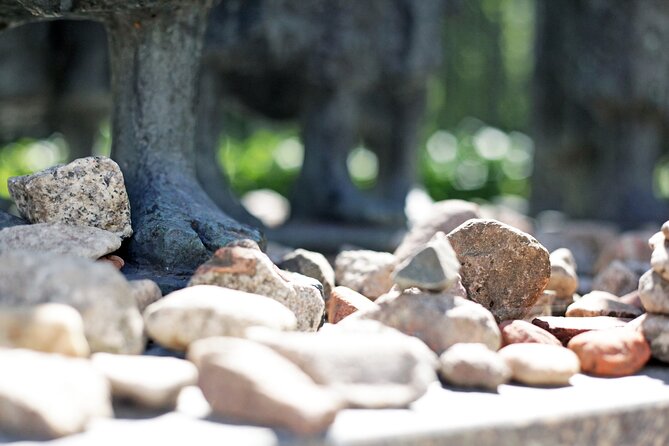
The route continues to Große Hamburger Straße, where the guide discusses a Jewish cemetery, a Jewish school, and deportations during the Nazi era. This stop brings together community life and its violent disruption. The school and cemetery point to institutions that served the community; the account of deportations explains how those ordinary foundations were attacked.
Auguststraße adds another layer. Known for art galleries today, it is also tied to important buildings of the old Jewish community. The contrast between the present-day street and its earlier associations is part of the walk’s strength: Berlin changes, but historical traces remain in the same urban fabric.
Sophia Church and unexpected connections
Sophia Church is another stop on the route. The guide explains the church’s history and its connection to Martin Luther King. The supplied tour details do not explain the nature of that connection, so this is a good moment to ask the guide for the context rather than arrive expecting a particular story.
This stop also broadens the walk beyond Jewish sites alone. The tour is about Jewish life in Berlin, but it takes place within a city shaped by many communities and institutions. That wider perspective can make the route more engaging than a sequence of memorials, especially if you want to understand how neighborhoods and religious life intersected.
More Jewish history tours in Berlin:
- Berlin: Jewish Museum Berlin Entrance Ticket
★ 4.5 · 8,393 reviews - Nazi Berlin and the Jewish Community Tour
★ 4.8 · 55 reviews - Path of Resistance: Berlin’s Hidden Holocaust Stories
★ 5.0 · 33 reviews - Private Tour: Jewish Heritage Walking Tour of Berlin
★ 5.0 · 29 reviews
Ending at the New Synagogue
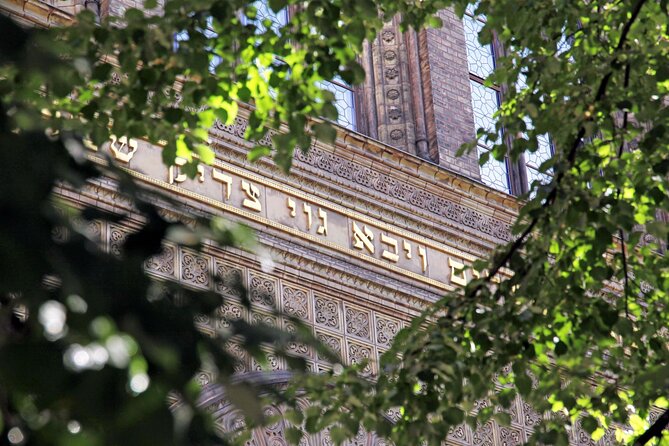
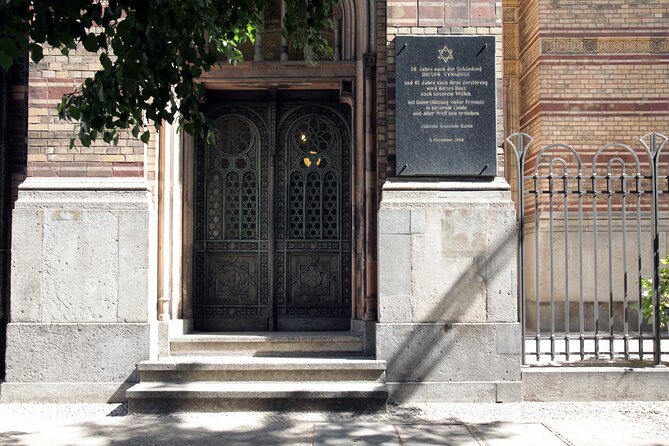
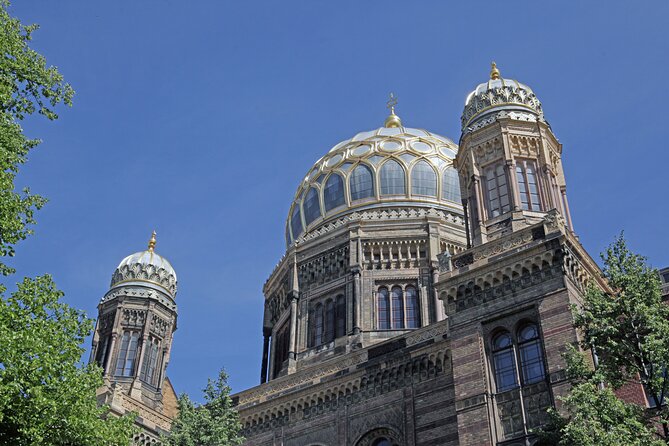
The final stop is the 19th-century New Synagogue on Oranienburger Straße, one of Berlin’s major Jewish landmarks. It served as the main synagogue of the Berlin Jewish community and is also an important example of late 19th-century architecture. The guide discusses its history, the Night of Broken Glass in 1938, and people who helped Jewish residents.
Today the building is home to the Centrum Judaicum, which traces the synagogue’s history and the life associated with it. The tour ends at the synagogue, but that does not necessarily mean you will go inside or visit the Centrum Judaicum exhibition. If you want time in the museum, plan to check its opening arrangements separately and leave extra time after the walk.
This distinction is worth taking seriously. Some people arrive expecting a visit to the New Synagogue’s museum or the Holocaust memorial and are surprised by a route centered on neighborhood history and daily life before the Second World War. The route described here does not include the Holocaust memorial. It does include the New Synagogue as a landmark and subject of the guide’s explanation.
What the private format adds
The price is $355.25 per group of up to 15, rather than per person. At the maximum group size, that works out to about $23.68 each. For a couple or a small family, it is a more substantial expense, but you are paying for a dedicated guide and the chance to shape the discussion around your interests.
The private arrangement is especially useful for mixed-age groups or people who want to ask questions without holding up a larger tour. Guides have been praised for handling sensitive material with poise, presenting facts candidly, and answering questions from participants of different ages. Carlos, Caroline, Finn, and Marriette are among the guides named by people who took the tour, with individual praise for their warmth, clarity, and ability to make the walk engaging.
A private guide can also help connect the stops. The route touches on schools, religious buildings, streets, workplaces, cemeteries, and the synagogue. Without explanation, some of these places may look like fragments. With a guide linking them to the people who lived and worked there, you get a clearer sense of how Jewish life formed part of Berlin’s wider story.
Walking, weather, and practical expectations
Allow about three hours and expect to spend most of that time on foot. The walk is described as flat, which makes it manageable for most participants, but it is still a substantial urban walk with several stops. Wear comfortable shoes and dress for the forecast.
The tour runs in all weather. Rain has not stopped people from finding the walk worthwhile, but a downpour can make the final stretch less pleasant. Hot weather can also add strain, especially over several hours outdoors. Bring water and weather-appropriate clothing, and consider whether everyone in your group is comfortable walking for the full duration.
The ticket is mobile, and the guide is included. The activity is private, so only your party takes part. Service animals are allowed, and the tour is near public transportation. Most people can participate, according to the provided information.
The meeting point is outside the station, in front of Starbucks at Neue Promenade 3. The tour ends at the New Synagogue, Oranienburger Straße 28-30. That point-to-point format is handy if you want to continue exploring the area afterward, but remember that the end location is not the same as a guaranteed museum visit.
Who should book this Berlin history walk?
Book this tour if you want a guided introduction to Jewish Berlin that moves beyond a single memorial or famous building. It suits visitors who value context, enjoy asking questions, and want to understand how community life existed before the Holocaust as well as how it was persecuted. It is also a good fit for families or small groups who would benefit from a guide able to adjust the pace and discussion.
Think twice if your main goal is to spend time inside the New Synagogue museum, visit the Holocaust memorial, or minimize walking. Those are not clearly included in the route described here. Ask about entry to the Otto Weidt museum and the synagogue before booking if interior visits are essential to you.
For a group of several people, the fixed price can be good value for a three-hour private walk. For a smaller party, compare the cost with your budget and consider how much you value a dedicated guide. I’d book it for the local stories, the mix of community history and individual experience, and the chance to discuss difficult subjects at your own pace.
FAQ
How long is the Jewish Life in Berlin tour?
The tour lasts approximately three hours. It is a walking tour with several stops around central Berlin.
What is the price, and how many people can join?
The price is $355.25 per group, with up to 15 people in the group.
Where does the tour start and end?
Meet outside Hackescher Markt S-Bahn station, in front of Starbucks at Neue Promenade 3. The tour ends at the New Synagogue Berlin, Centrum Judaicum, at Oranienburger Straße 28-30.
Is the tour private?
Yes. Only your group participates, and a professional guide is included.
Does the tour go inside the New Synagogue museum?
The tour ends at the New Synagogue and includes an explanation of its history. The provided details do not confirm that entry to the building or the Centrum Judaicum is included.
Does the tour run in bad weather?
Yes. It operates in all weather conditions, so dress appropriately.
Newest tours in Berlin
- Berlin: guided canoe | kayaktour★ 4.1 · 7 reviews
- Understanding Kreuzberg: The roots of local (sub)culture★ 4.9 · 11 reviews
- Where It All Began: Berlin’s Queer & Trans History Tour★ 4.9 · 6 reviews
- Warnemünde Shore Excursion: Private Sachsenhausen and Berlin Tour★ 5.0 · 12 reviews
- Ultimate E-Bike Tour of Berlin with Beer Garden Stop★ 5.0 · 4 reviews
- Potsdam Highlights – Private sightseeing tour by minibus★ 5.0 · 3 reviews
- Private Potsdam City Tour in an authentic vintage van★ 5.0 · 14 reviews
- Transfer from Berlin Schönefeld Airport (SXF) to Berlin city Hotels – ROUND TRIP★ 4.0 · 3 reviews
Berlin Jewish History Tours, compared.
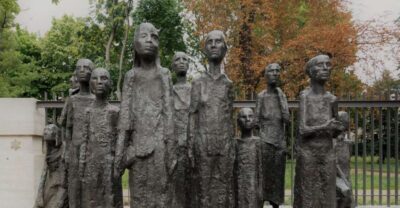
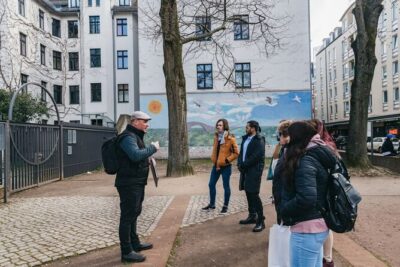
Path of Resistance: Berlin’s Hidden Holocaust Stories
Read our review →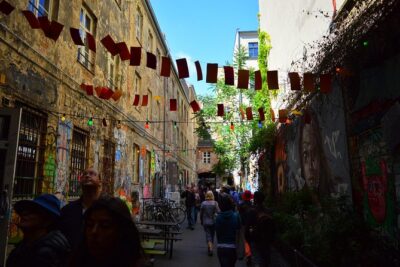
Private Tour: Jewish Heritage Walking Tour of Berlin
Read our review →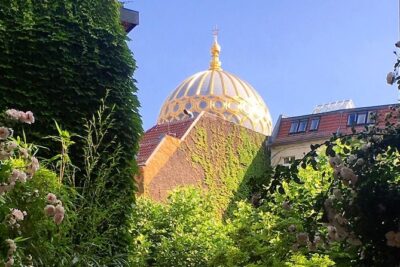
Jewish Berlin: Walking tour The Old Jewish Quarter (private 3 Hours tour)
Read our review →
Browse the lists this tour appears in