
Reviewed · BERLIN TOURS
Private Taxi Tour City East & West History and Architecture 3-4h
Berlin’s story changes by the block: imperial boulevards give way to wartime ruins, Cold War borders and the glass-fronted government district. I like that Gunter Bauer connects those layers while driving you across both sides of the city, so you can see how far apart its landmarks are without spending half your day on public transport.
I also like the private format: Gunter can shape the tour around your interests, and the taxi gives you a warm, dry base between stops. The trade-off is that three to four hours is a brisk introduction, not enough time to explore every site in depth. Expect a broad overview, with some landmarks seen from the car and others on foot.
- A citywide introduction: The route links central Berlin, the western shopping district, government buildings and Cold War landmarks.
- A private English-language guide: Gunter Bauer drives and explains the city, with the chance to focus on your interests.
- Short walks, not a full day on foot: Named stops include the Brandenburg Gate, Hackesche Höfe and Checkpoint Charlie.
- Useful in poor weather: The air-conditioned taxi keeps you comfortable between outdoor stops.
- Pickup inside the S-Bahn ring: Hotel or apartment pickup in that area is included.
- Some costs are extra: Lunch is not included, and pickup at BER airport or outside the S-Bahn ring costs more.
Berlin’s big story, told between stops
This tour is best understood as a fast-moving orientation to a city whose history is spread across a wide area. In a single ride, you can pass from the stately western boulevard of Kurfürstendamm to the Brandenburg Gate, government offices, the former Wall crossing at Checkpoint Charlie and the rebuilt courtyards of Hackesche Höfe.
The private taxi matters because the city’s major sights are not all clustered together. Rather than stitching the day together on trains, you can use the drive to hear context and save your walking time for places where the details reward a closer look.
Gunter’s approach is personal as well as practical. He contacts you ahead of time about your interests, shares historical explanations and local stories, and can take photos of you at some of the stops. The tour is offered in English and is for your group alone, not a mixed coachload.
From the Memorial Church to the Ku’damm

The western part of the route introduces Berlin’s mix of old status and postwar reinvention. At the Kaiser Wilhelm Memorial Church, the surviving tower and west portal sit beside modern buildings designed by Egon Eiermann. The contrast is the point: rather than clearing every damaged remnant after the war, Berlin kept part of the old church and built anew around it.
The guide’s explanation helps untangle the church’s name, which refers to Wilhelm I, not simply to a general memorial for war dead. Its surviving entrance also carries a reminder of Prussian power, with figures said to resemble members of the royal family. You may see this area from more than one side during the tour, offering a useful view of how the preserved ruin and modern structure meet.
Nearby, the route passes the Berlin Zoo and the ornate Theater des Westens. The zoo’s origins go back to King Friedrich Wilhelm IV, who moved animals from Pfaueninsel to a section of his hunting grounds. From the street, look for the distinctive elephant and lion gates. The theater, built when Berlin’s western districts were growing, reflects the period’s taste for grand villas and elaborate public buildings. Today it is used for musicals.
Then comes Kurfürstendamm, usually shortened to Ku’damm, and Tauentzienstrasse. Ku’damm was planned as a grand boulevard on the model of Paris’s Champs-Élysées. Its role has shifted from a promenade lined with villas, cafes and cinemas to a shopping street of flagship stores and luxury boutiques. At the Tauentzien end stands KaDeWe, a huge department store whose food floor is a destination in its own right. You have only about 15 minutes here on the route, so think of that as time to look around, not a proper shopping session.
The Memorial Church also appears again from the other side. If you have time to enter the modern church hall, its blue light and sound-buffering double-wall design offer a striking contrast with the traffic and crowds outside. The tour’s brief stop may not allow a long visit, but the exterior alone makes the story of destruction and rebuilding clear.
More history tours in Berlin:
- Berlin: Natural History Museum Entrance Ticket
★ 4.6 · 3,382 reviews - Berlin: World Heritage Cruise to Potsdam
★ 4.5 · 1,435 reviews - Berlin Historical Highlights Walking Tour
★ 4.9 · 657 reviews
Tiergarten and the government quarter
Leaving the western shopping district, the drive crosses the Tiergarten, once a royal hunting ground and later shaped into a public park. Peter Lenné’s work helped turn marshy ground into a planned garden with water, open views and paths. The park was badly damaged in the Second World War, when trees were cut and land was used to grow food, before being replanted after the conflict.
The Victory Column sits at the park’s center. It was first erected near the Reichstag and moved to its present location under Hitler. Its added fourth drum marked a victory that did not come to pass. That history gives the monument a more complicated story than its grand gold figure might suggest.
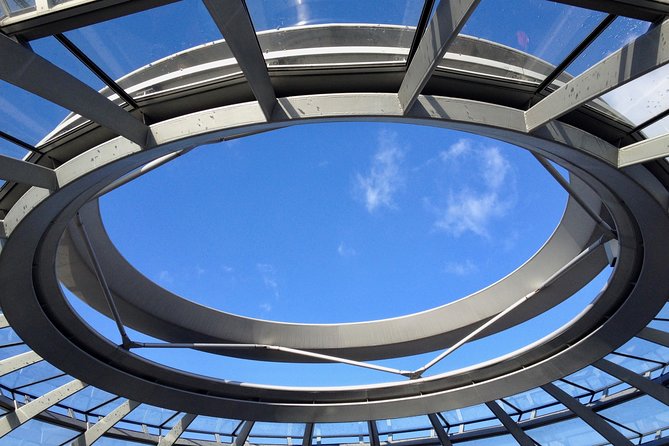
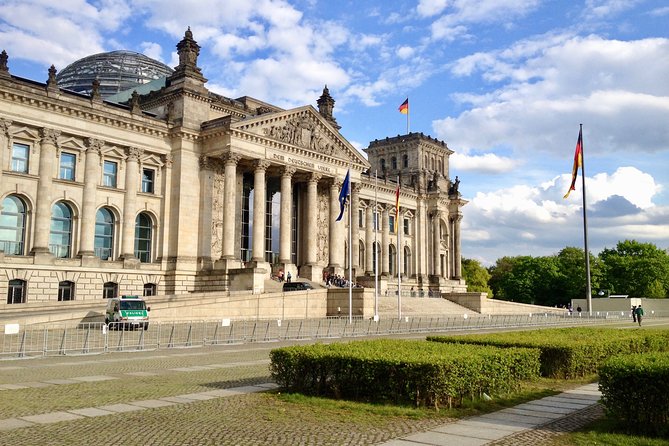
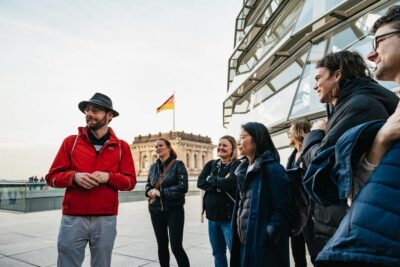
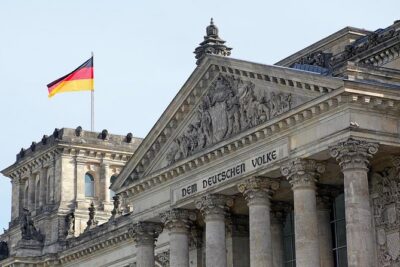
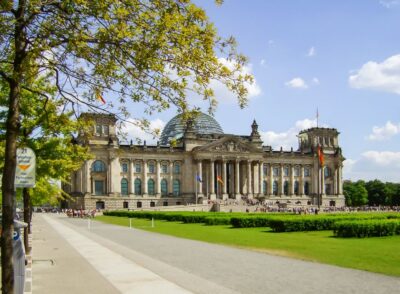
The route then reaches the Reichstag, the seat of Germany’s parliament, and the nearby government buildings. The Reichstag’s history includes the famous Soviet flag photograph at the end of the Second World War, years of limited use in West Berlin, and its later redesign for reunified Germany. The glass dome is a defining feature of the modern building, though this taxi tour is not the same as a booked visit inside it.
Nearby, the long, modern parliamentary buildings and the Federal Chancellery show how Germany’s government works today. The Chancellery’s scale is hard to miss, and the route also passes the press briefing building where government spokespeople meet accredited journalists. This part of the drive is especially useful if you want to understand the layout of the government district, rather than just collect photographs of its best-known facades.
The House of World Cultures, nicknamed the Pregnant Oyster for its curved roof, adds a different architectural note. It was a gift from the United States to West Berlin, and the roof collapsed in 1980 before being rebuilt. The building now serves as a venue for international arts and culture.
East Berlin courtyards and stories of division
Hackesche Höfe offers one of the tour’s most rewarding short walks. Built in the early twentieth century as a linked group of courtyards, it was designed to bring workshops, small businesses and homes together. After years of decline, it was restored following the fall of the Wall. Today, you can see the Art Nouveau details and browse small shops selling selected goods, including Berlin’s familiar Ampelmännchen figures. The stop is around 10 minutes, enough to get a feel for the courtyards, though not to linger over every shop.
From there, the route passes through parts of Mitte shaped by Jewish life, commercial streets and Cold War history. The New Synagogue’s golden dome and Moorish-style details are visible above the surrounding buildings. The original synagogue was destroyed during the war; the surviving front section now houses an exhibition about Jewish life in Berlin. Security is strict, so an interior visit takes more time than a quick roadside view.
Friedrichstrasse and the former border crossing at Friedrichstrasse station tell a different story. During the division of Berlin, this was the only station where passengers could travel onward between East and West Berlin. The station’s barriers and checkpoints made it a place of surveillance and separation. Nearby, the Palace of Tears preserves some of that experience in an exhibition, though a visit inside would need more time than a short taxi stop.
The route also passes Torstrasse, the former line of city gates, and the Friedrichstadt-Palast, a large revue theater known for elaborate productions. These details help show that Berlin’s identity is not only about war and politics. Its nightlife, entertainment and everyday commercial streets are part of the same urban story.
Pariser Platz, Unter den Linden and the old center
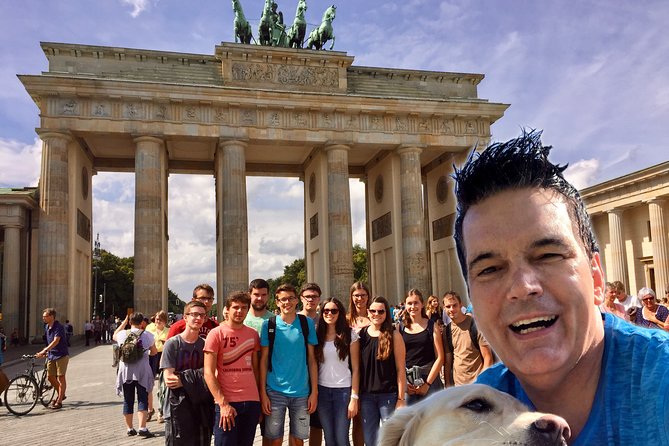
The Brandenburg Gate is one of the tour’s key stops, with about 15 minutes set aside. It stands on Pariser Platz, a ceremonial square rebuilt after the Wall fell. For decades, the gate was cut off by the border, with walls and fences blocking access from both sides. The restored square now includes the French and American embassies, the Academy of Arts and the Liebermann House.
From here, Unter den Linden leads toward the historic center. Once a route from the royal palace to the hunting grounds, it became Berlin’s grand boulevard, lined with major cultural and civic buildings. The route passes the State Opera, Humboldt University and the former Royal Library, among others. At Bebelplatz, a glass panel in the ground marks the site of the Nazi book burning of 1933. It is a small memorial, easy to miss without someone pointing it out.
Gendarmenmarkt is another short but worthwhile stop. The concert hall sits between the French and German churches, whose towered facades look like cathedrals but are not bishop’s seats. The French church still hosts services in French, while the German church contains an exhibition on Germany’s parliamentary history. Five minutes is enough to take in the square’s layout, but not to visit both interiors.
The route continues past the Neue Wache, now a memorial to victims of war and tyranny, and the former armory, which houses the German Historical Museum. These stops add weight to the elegant boulevard: official monuments and grand buildings sit close to reminders of the violence that shaped the country.
More private tours in Berlin:
- Berlin: Private Reichstag and Glass Dome Tour
★ 4.8 · 2,226 reviews - Berlin Private Complete History All Day Walking Tour
★ 5.0 · 474 reviews - Private Walking Tour Berlin Third Reich Hitler and World War II
★ 5.0 · 360 reviews - Private Berlin: Iconic Sights and Hidden Gems Walking Tour
★ 5.0 · 292 reviews
Humboldt Forum and Nikolaiviertel
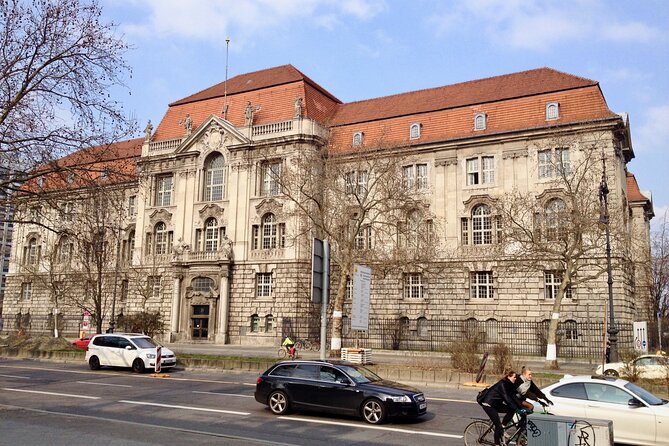
The Humboldt Forum occupies the site of the former Berlin Palace, which was badly damaged in the war and later demolished by East German authorities. Its exterior recreates much of the palace’s historic appearance, while the interior is modern. The tour allocates about 30 minutes here and lists admission as included, making this one of the few stops with a clear opportunity to spend time inside.
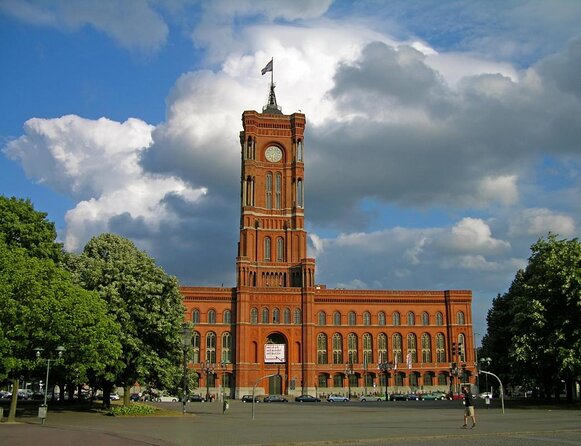
Nearby, Alexanderplatz reflects a different era. The broad square was redesigned during the East German period to accommodate marches and public gatherings, with the television tower rising above the surrounding buildings. The Red City Hall, named for its red brick rather than a political party, offers another landmark from the city’s civic center.
Nikolaiviertel is a compact reconstruction of old Berlin near the Spree. Much of the neighborhood was rebuilt in the 1980s, when the aim was to recreate the feel of historic streets. The Nikolaikirche, the city’s oldest church, now functions as a city museum. The Knoblauchhaus offers a look at a nineteenth-century family home and is free to enter. With roughly 10 minutes here, you can get a quick sense of the neighborhood, though a longer independent visit would suit anyone interested in its interiors or cafes.
Potsdamer Platz, the Wall and modern Berlin
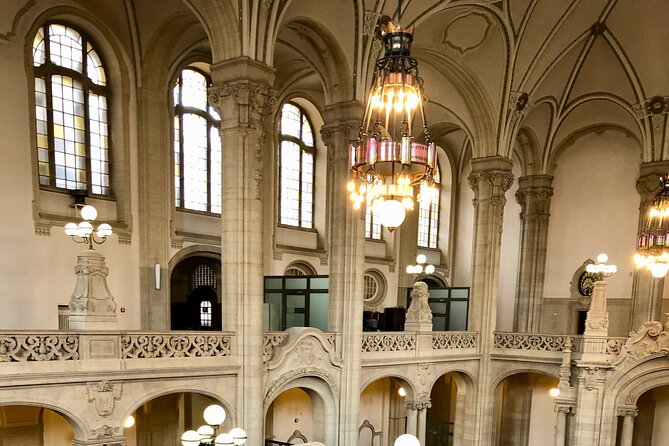
Potsdamer Platz and Leipziger Platz illustrate Berlin’s constant rebuilding. Potsdamer Platz was once a major traffic junction and entertainment area, then sat in a border zone during the city’s division. Today, modern buildings such as the Sony Center and the former Daimler complex mark its post-Wall redevelopment. The result is impressive in scale, though it can feel more planned than lived-in.
At Checkpoint Charlie, the tour makes a short photo stop of about 10 minutes. The guardhouse you see today is a replica, not the original crossing point. The site remains important because of the 1961 tank confrontation, when American and Soviet forces faced each other during one of the tensest moments of the Cold War. For a fuller account, the nearby private museum has more material than a brief stop can cover.
The Topography of Terror is another especially useful pause. Set on the former grounds of Nazi institutions, it links the Prussian era, the Nazi period, the Wall and the post-reunification memorial site. The outdoor exhibition and remaining section of the Wall make this a meaningful stop, with about 15 minutes allowed. If Nazi history is your main interest, you may want to return on your own for a longer visit.
Depending on the route, you may also pass the embassies, the InterContinental, the Aquarium and the Landwehr Canal. These sights help fill in the city’s geography, but not every drive-by merits a stop. That is where the private format is valuable: tell Gunter which subjects matter most, whether that is architecture, Jewish Berlin, the Wall or twentieth-century politics.
What the price and private format get you
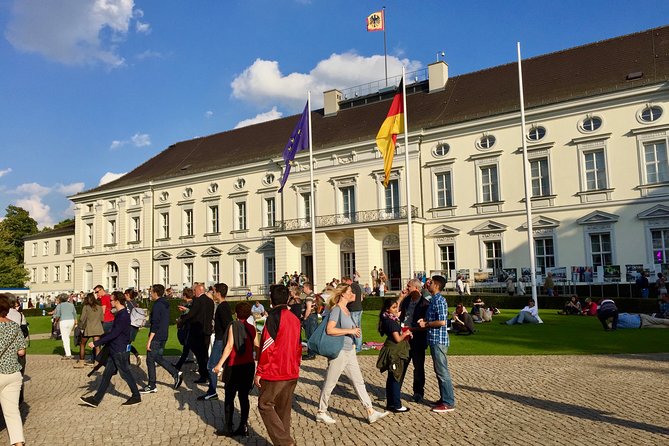
At $150.18 per person, the tour costs more than a group bus outing, but it buys a private vehicle, a driver-guide, pickup within the S-Bahn ring, WiFi, air conditioning and parking fees. The taxi fare and city-tour charge are included. Group discounts are offered, though the exact savings depend on the booking details.
The strongest value is time and flexibility. If you have only a few hours in Berlin, the taxi makes it possible to connect far-flung sights and get a useful overview without repeatedly changing trains. It also works well in winter or wet weather, when you can hear explanations from a warm vehicle and step out for shorter walks.
The limitation is depth. A city with this many layers cannot be properly explored in three or four hours, and some stops are only photo pauses or brief walks. Bring water, and be clear with Gunter in advance about your priorities. If you want to go inside several museums or spend an hour at the Reichstag, book those visits separately and allow more time.
The tour is private, and child seats are available: a seat for children from six months to three years, a booster for older children, and a Maxi-Cosy baby seat on request. Most people can take part, and service animals are allowed. Pickup from BER airport or outside the S-Bahn ring costs extra. You receive confirmation when booking, and cancellation is free up to 24 hours before the start time.
Should you book this Berlin taxi tour?
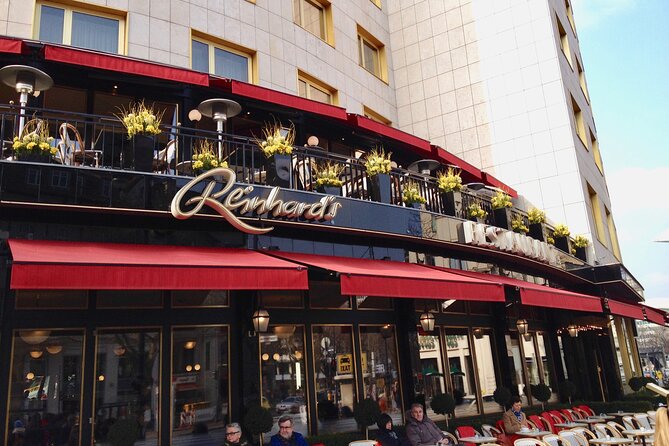
Book it if you want a personal, efficient first look at Berlin, especially if you value historical explanation and would rather not spend the day navigating transport. It suits couples, families and older visitors who want to cover a lot of ground with manageable walks. The guide’s advance questions, flexible focus and willingness to help with photos and practical details add real value.
Skip it if your priority is slow museum visits or a deep exploration of one neighborhood. The tour is a sampler, not a substitute for walking around Mitte, entering the Reichstag or spending an afternoon at the Topography of Terror. Tell Gunter what matters most, then treat the ride as a smart introduction to the city you can explore further on foot.
FAQ
How long is the tour?
The tour lasts approximately three to four hours.
Is this a private tour?
Yes. Only your group participates.
Is pickup included?
Pickup from a hotel, apartment or other location within the S-Bahn ring is included. Pickup from BER airport or outside the S-Bahn ring costs extra.
What is included in the price?
The tour includes private transportation, WiFi, an air-conditioned vehicle, parking fees and pickup within the S-Bahn ring. The taxi ride and city tour charges are included.
Is admission to any attraction included?
Admission to the Humboldt Forum is listed as included. The other named stops include public places and exterior visits, but the tour information does not list additional admission tickets.
Are child seats available?
Yes. A child seat is available for children from six months to three years, and a booster seat is available for older children. A Maxi-Cosy baby seat can be requested.
Can I cancel for a refund?
Yes. You can cancel for a full refund at least 24 hours before the tour’s start time. Cancellations or changes made less than 24 hours beforehand are not accepted for a refund.
Newest tours in Berlin
- Berlin: guided canoe | kayaktour★ 4.1 · 7 reviews
- Understanding Kreuzberg: The roots of local (sub)culture★ 4.9 · 11 reviews
- Where It All Began: Berlin’s Queer & Trans History Tour★ 4.9 · 6 reviews
- Warnemünde Shore Excursion: Private Sachsenhausen and Berlin Tour★ 5.0 · 12 reviews
- Ultimate E-Bike Tour of Berlin with Beer Garden Stop★ 5.0 · 4 reviews
- Potsdam Highlights – Private sightseeing tour by minibus★ 5.0 · 3 reviews
- Private Potsdam City Tour in an authentic vintage van★ 5.0 · 14 reviews
- Transfer from Berlin Schönefeld Airport (SXF) to Berlin city Hotels – ROUND TRIP★ 4.0 · 3 reviews
Berlin Tours, compared.
Reichstag, Dome and Government District Guided Tour
Read our review →
1-Hour City Tour by Boat with Guaranteed Seating
Read our review →
Reichstag, Plenary Chamber, Cupola & Government Tour
Read our review →
Browse the lists this tour appears in