
Reviewed · BERLIN WALKING TOURS
Charité Hospital Walking Tour: Exploring Berlin’s Medical History
At Charité, the story of medicine is also a story about power, public health, and the choices doctors make when politics turns brutal. This two-hour walk connects famous scientific names with the buildings and memorials where Berlin’s medical past took shape.
I like two things in particular: the guide links medical breakthroughs to the people and problems behind them, and the route moves beyond science to include the Third Reich, socialist-era Berlin, and attempted escapes across a canal. With a maximum of 15 people, it should also feel more like a conversation than a lecture.
The main limitation is clear: you do not go inside buildings where clinical or university work takes place. If you want to tour hospital interiors or see exhibits, this is not that kind of visit. It is an outdoor history walk, best for people who enjoy places, stories, and context.
Key points before you book
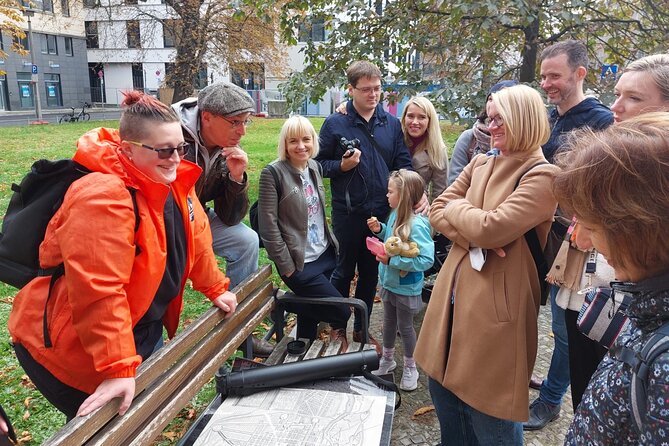
- Six stops, about 20 minutes each: The route gives time to explore six sites without taking up half a day.
- Science with human consequences: Robert Koch, Rudolf Virchow, and Albrecht von Graefe anchor stories about disease, pathology, social medicine, and ophthalmology.
- A broader Berlin story: The walk covers medical life during the Third Reich, the socialist era, and the years around the fall of the Berlin Wall.
- A small group: The maximum group size is 15, which can make it easier to hear and ask questions.
- Outdoor focus: You see monuments, historic buildings, and the canal, but do not enter active hospital or university buildings.
- Practical length and price: At about two hours and $30.12 per person, it fits a short Berlin visit without requiring a full day.
A hospital story that reaches beyond medicine
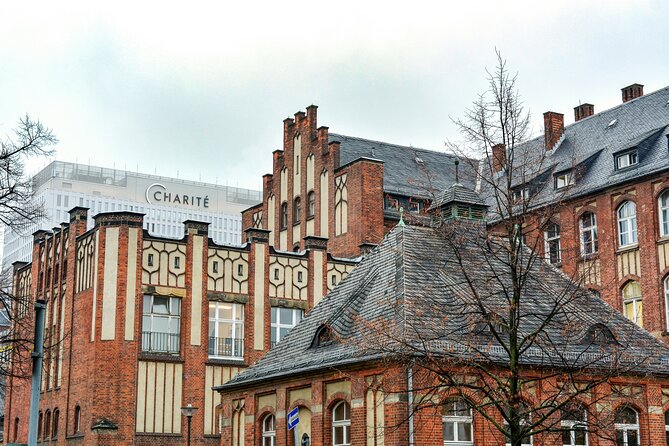
Charité is described as Berlin’s oldest hospital, established in the 18th century. This tour uses its surroundings to show how medical ideas developed, but it also asks what happens when medicine serves political power, or when doctors use their skills to help people despite it.
That range gives the walk its purpose. You move from the causes of disease and the rise of pathology to medical ethics under the Third Reich, then to life around Charité during socialism and after the Wall fell. The route is not just a list of scientists and dates. Its strongest thread is how medical work affects ordinary people.
The guide supplies the context that a monument or old building cannot provide on its own. The tour’s storytelling also connects historic medicine with current issues, so you can expect more than a string of names. If you like asking how a discovery changed practice, or how institutions behaved in a crisis, that approach should suit you.
More walking tours in Berlin:
- Discover Berlin Half-Day Walking Tour
★ 5.0 · 9,624 reviews - Berlin: Third Reich and Cold War 2 Hour Walking Tour
★ 4.9 · 6,830 reviews - Berlin: Discover Berlin Walking Tour
★ 4.9 · 5,998 reviews
Starting at Robert-Koch-Platz
The tour begins at Robert-Koch-Platz, where you meet the guide and start with Charité’s early story. The first stop takes about 20 minutes and includes the monument to Robert Koch, the Nobel Prize-winning scientist associated with discovering the causes of tuberculosis, anthrax, and cholera.
Koch’s work makes for a natural opening because it links scientific discovery to the practical fight against disease. The tour also covers a less comfortable part of his legacy: his role in what is described as the first pharmaceutical scandal in medical history. That contrast matters. It reminds you that a medical breakthrough does not make every decision around it beyond criticism.
The monument itself is an outdoor stop, not a visit to a medical exhibit. Your guide’s explanation is what turns it from a statue into a story about research, responsibility, and the people affected by new treatments.
The old veterinary theatre and medicine before modern science
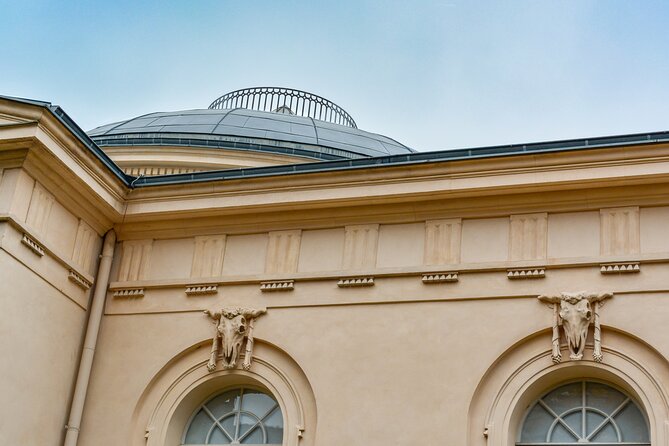
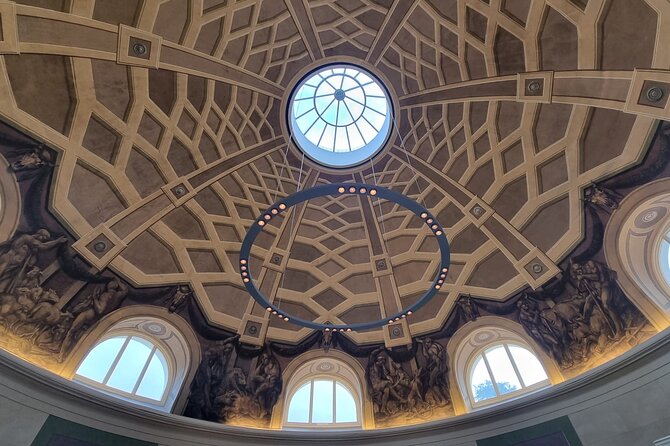
Next comes the Tieranatomisches Theater, an 18th-century neoclassical building described as Berlin’s oldest surviving academic building. Veterinary students once studied animal diseases here. The 20-minute stop gives you a glimpse of how people tried to understand illness before modern scientific methods took hold.
This is a useful change of scale after the Koch monument. Instead of focusing on one famous researcher, you consider a period when theories and treatments were far less reliable. The guide tells stories about how diseases were treated before science, a subject that can make old medical practice feel both strange and very human.
The building is a highlight for anyone interested in architecture as well as medicine. Still, keep expectations in line with the format: the tour explores the site from outside and does not promise entry to historic or active buildings.
Rudolf Virchow and medicine as a social question
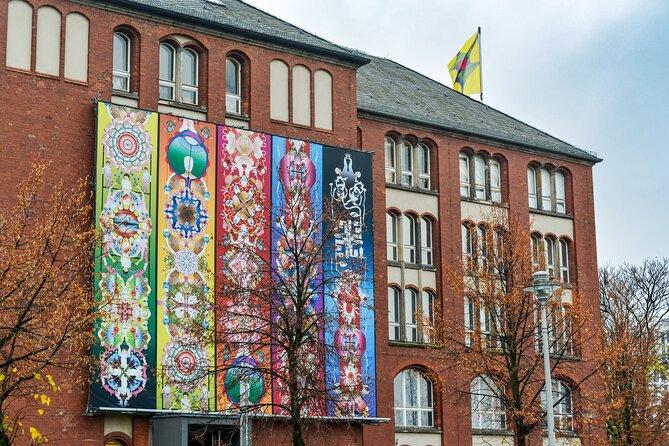
At the monument to Rudolf Virchow, the focus shifts to the father of modern pathology and founder of social medicine. The stop lasts about 20 minutes and broadens the tour’s central question: is health only a matter for doctors, or is it shaped by the conditions people live in?
Virchow’s place in the route helps connect laboratory thinking with public life. Pathology concerns the study of disease, while social medicine points toward the wider factors that influence health. You do not need a medical background to follow the idea. The guide’s job is to make clear why Virchow’s work mattered beyond the hospital.
This stop also gives you a useful pause between the architectural sites and the next memorial. If you are especially interested in medical history, ask how the tour links Virchow’s ideas to Charité’s later chapters. The format is small enough to make questions practical, though the amount of detail will depend on the group and available time.
More history tours in Berlin:
- Berlin: Natural History Museum Entrance Ticket
★ 4.6 · 3,382 reviews - Berlin: World Heritage Cruise to Potsdam
★ 4.5 · 1,435 reviews - Berlin Historical Highlights Walking Tour
★ 4.9 · 657 reviews - Berlin Private Complete History All Day Walking Tour
★ 5.0 · 474 reviews
Albrecht von Graefe and a landmark for science
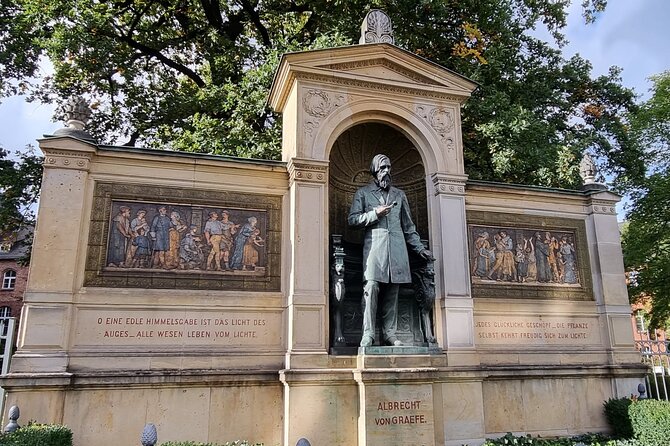
The fourth stop is the monument to Albrecht von Graefe, a pioneering ophthalmologist. It is described as the first monument in Berlin dedicated to a scientist, making it a notable site even if you arrive with little interest in eye medicine.
Graefe’s story adds another branch to the tour’s history of medical specialties. His work shows how medicine developed through focused fields as well as broad discoveries about disease. The monument also says something about how Berlin chose to honor scientific achievement in public space.
The stop is another 20-minute outdoor segment. It is not a clinical demonstration or a visit to a specialist collection, so its value lies in the guide’s explanation and the wider context. If you are more drawn to social history than to the history of medical specialties, this may be a quieter part of the walk, but it helps complete the picture of Charité’s scientific figures.
Charité Campus Mitte and the choices doctors faced
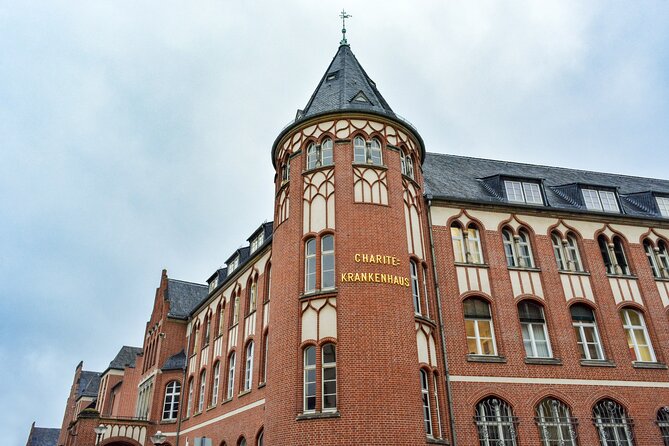
At Charité Campus Mitte, the route brings you to a striking neo-Gothic campus of red brick. The 20-minute stop combines architecture with a difficult chapter: how some doctors abused medicine during the Third Reich, while others helped people indiscriminately through the last days of World War II.
That contrast gives this part of the walk moral weight. The subject is not simply what medicine could do, but how doctors and institutions chose to use it. The tour description does not promise a building visit, and clinical or university spaces are off limits, so expect to take in the campus from the outside while the guide provides the narrative.
This is likely to be one of the most affecting stops for visitors interested in Berlin’s 20th-century history. It also calls for a thoughtful pace. The tour allots around 20 minutes here, which is enough for an introduction and key stories, but not a full study of medical crimes or resistance. If you want extensive detail on that period, treat this as a starting point rather than a complete account.
The canal, Cold War escapes, and the tour’s final stop
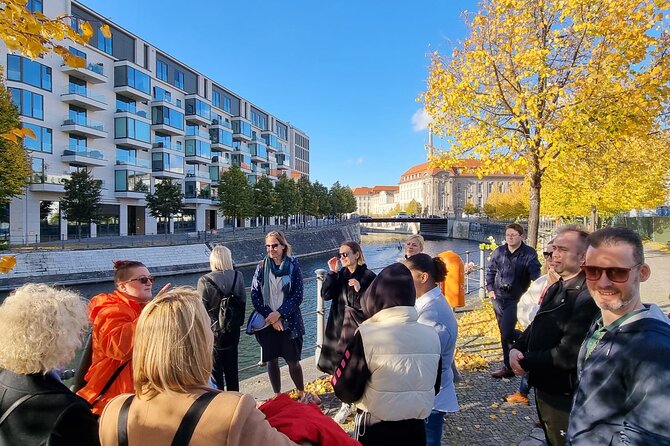
The walk ends at Alexanderufer by the Humboldthafen canal, near Design Offices Berlin Humboldthafen. Here the guide tells stories of East Berliners who attempted to swim across the city canal to reach the West, just outside Charité’s campus. The stop also covers hospital life during the socialist era and after the fall of the Berlin Wall.
It is a memorable way to end because the canal changes the scale of the story again. Earlier stops focus on discoveries and institutions; here, the setting connects political division with the risks taken by people trying to cross it. The tour’s medical theme remains present through accounts of life at the hospital during those years.
The endpoint is about a 10-minute walk from Berlin Central Station, which makes the finish convenient if you are heading onward by train or continuing around the city. The tour begins at Robert-Koch-Platz and ends at Alexanderufer, so plan for a one-way walk rather than a return to your starting point.
What two hours and $30.12 buy you
The tour costs $30.12 per person and lasts about two hours. For that price, you get a guide and a structured route through six locations, with all fees and taxes included. The attraction is not access to interiors; it is the context that ties monuments, architecture, and the canal into one story.
The short duration is a real advantage if your Berlin schedule is full. Each stop is allotted about 20 minutes, so the tour can introduce several distinct chapters without taking over your day. The tradeoff is that some subjects, especially the Third Reich and the development of medical science, are too large to cover in depth in a single walk.
A small group of up to 15 people is a sensible fit for this kind of experience. You are moving between outdoor stops and listening to explanations, not watching a performance from a distance. Smaller numbers can make it easier to hear and ask a question, though the maximum is still a group, not a private tour.
The tour is offered in English and uses a mobile ticket. It is generally suited to most people, and service animals are allowed. It requires good weather; if poor weather forces a cancellation, you are offered another date or a full refund. You can cancel for a full refund up to 24 hours before the start time. Bookings are made, on average, 19 days ahead, so consider reserving early if your dates are fixed.
Who should choose this walk
I would choose this tour if you are curious about Berlin’s scientific history but do not want to spend a day in a museum. It also fits people who like city walks that connect architecture with political and social history. The guide-led format is especially useful if you want the story behind a monument rather than a quick photo stop.
It is less suitable if your priority is going inside Charité buildings, seeing medical collections, or spending long stretches on one subject. The route offers six short stops and keeps to public outdoor locations. You may also find the pace brisk if you want to linger at every memorial, since the schedule gives each stop roughly 20 minutes.
The tour’s most compelling feature is its range. In two hours, you move from Koch’s discoveries to Virchow’s social medicine, from the red-brick campus to stories of wartime conduct and Cold War escape attempts. That is a lot of ground in a short walk, and the guide’s storytelling is central to making it cohere.
Should you book the Charité walk?
Book it if you want a compact, guided introduction to Charité and enjoy history that joins science with the difficult choices people face. The price is reasonable for a two-hour small-group walk with a guide, and the six-stop route gives you a clear sense of how the hospital’s story connects to Berlin’s past.
Skip it if you expect access to hospital interiors or a detailed museum-style examination of medical practice. For the right visitor, though, the outdoor format is part of the appeal: you see the places, hear the stories, and finish by the canal where Berlin’s divided history becomes personal.
FAQ
How long does the Charité Hospital Walking Tour last?
It lasts about two hours. The route includes six stops, each scheduled for roughly 20 minutes.
Where does the tour start and end?
It starts at Robert-Koch-Platz, 10115 Berlin, and ends at Alexanderufer, 10117 Berlin, by the Humboldthafen canal.
Is the tour offered in English?
Yes. The tour is offered in English.
How large is the group?
The tour has a maximum of 15 travelers.
Does the tour go inside Charité buildings?
No. It does not include visits to buildings where clinical or university operations take place.
What is included in the price?
The price includes the guide and all fees and taxes. Building visits are not included.
What happens if bad weather cancels the tour?
If the tour is canceled because of poor weather, you will be offered a different date or a full refund.
Newest tours in Berlin
- Berlin: guided canoe | kayaktour★ 4.1 · 7 reviews
- Understanding Kreuzberg: The roots of local (sub)culture★ 4.9 · 11 reviews
- Where It All Began: Berlin’s Queer & Trans History Tour★ 4.9 · 6 reviews
- Warnemünde Shore Excursion: Private Sachsenhausen and Berlin Tour★ 5.0 · 12 reviews
- Ultimate E-Bike Tour of Berlin with Beer Garden Stop★ 5.0 · 4 reviews
- Potsdam Highlights – Private sightseeing tour by minibus★ 5.0 · 3 reviews
- Private Potsdam City Tour in an authentic vintage van★ 5.0 · 14 reviews
- Transfer from Berlin Schönefeld Airport (SXF) to Berlin city Hotels – ROUND TRIP★ 4.0 · 3 reviews
Berlin Walking Tours, compared.



Third Reich Berlin: Hitler and WWII Walking Tour
Read our review →

Explore Berlin: Walking Tour of All The Iconic Sites
Read our review →Browse the lists this tour appears in