
Reviewed · BERLIN MUSEUM TICKETS
Berlin: Samurai Museum Entry Ticket
Berlin’s Samurai Museum brings together more than 900 historical objects and modern interactive displays, all focused on samurai culture and its influence on Japan. You can look closely at armor, weapons and tea utensils, then use screens and projections to explore the stories behind them.
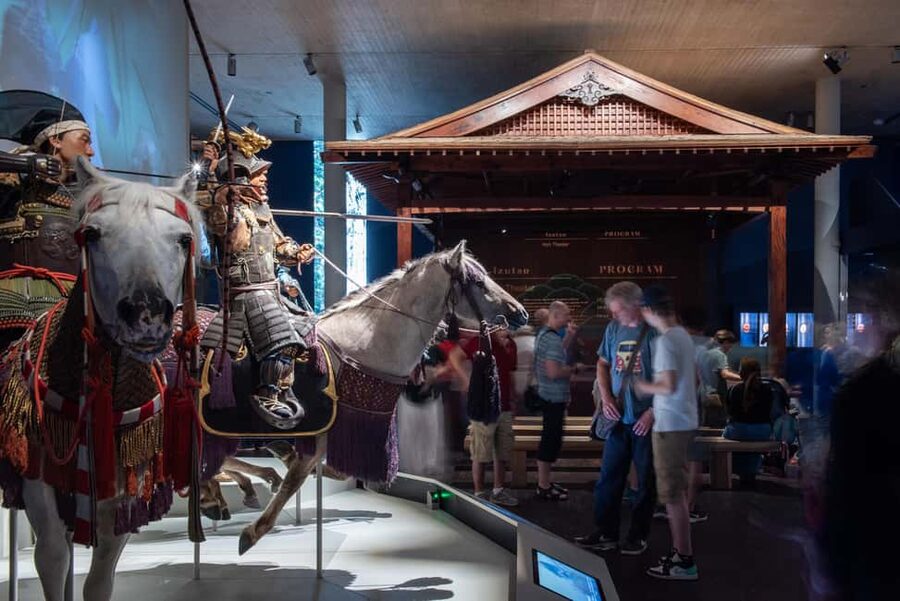
I like two things in particular: the chance to see rare objects up close, including a 17th-century Matsudaira clan armor, and the variety of ways to engage with the collection. A holographic music performance, a tea house, and the question-asking fox Kitsune give families and history buffs more to do than simply read labels.
One consideration: the interactive format may appeal more to visitors who enjoy screens and hands-on features than to those seeking a quiet, traditional museum visit. The ticket includes entry, but not an exhibition catalog, and food, drinks, pets and large bags are not allowed.
- More than 900 objects on display: Armor, weapons and artworks from a private collection of more than 4,000 pieces.
- A Japanese-built Nō theatre and tea house: Traditional structures erected in Berlin, with projections that help explain their cultural roles.
- Interactive features for all ages: Touchscreens, projections, ninja techniques and questions from the fox Kitsune.
- A standout armor and sword collection: See craftsmanship up close and explore how Japanese sword blades were made.
- A central Mitte address: Reach the museum by U-Bahn, S-Bahn, tram or bus, then pair your visit with a walk through the neighborhood.
A compact museum with a wide subject
The Samurai Museum is on Auguststraße in Berlin-Mitte, a useful stop if you are already exploring the city center. Its subject is bigger than battles and warriors: the displays connect samurai life with art, craft and cultural traditions, including tea ceremony and Nō theatre.
The museum draws on the Peter Janssen Collection, a private collection that began with an object found at a Berlin flea market and has grown to more than 4,000 items. The pieces span from the late Kofun period to the early Meiji period, roughly the sixth through nineteenth centuries. That long reach gives you a way to trace changes in Japanese craftsmanship and culture across many centuries.
The ticket covers entry to the museum. The exhibition presents about 900 historical objects, so you will see a substantial selection without needing to tackle the whole private collection. An exhibition catalog is not included, which matters if you like to take home a printed reference or want to study the objects in more depth later.
Starting with the objects, not a lecture
There is no scheduled guided route specified with the standard entry ticket. You can explore at your own pace, using the museum’s displays, touchscreens and projections to make sense of what you are seeing. That freedom suits independent visitors, though anyone who prefers a guide to set the pace should check whether a separate guided tour is available.
The collection ranges across armor, weapons and works of art. Rather than treating samurai culture as a single story, the range of objects lets you look at the practical skill and visual detail behind it. The museum’s interactive features add context to the objects, which can help if you arrive with only a passing interest in Japanese history.
A particular highlight is the 17th-century armor associated with the Matsudaira clan. The collection also includes an 18th-century palanquin and tea utensils from the time of Sen no Rikyū, the influential tea master who lived from 1522 to 1591. These pieces offer different ways into the subject: armor speaks to status and warfare, while tea utensils point to traditions of refinement and ceremony.
More museum visits in Berlin:
- Berlin: Jewish Museum Berlin Entrance Ticket
★ 4.5 · 8,393 reviews - Berlin: DDR Museum Tickets
★ 4.3 · 3,443 reviews - Berlin: Natural History Museum Entrance Ticket
★ 4.6 · 3,382 reviews
Sword craft and the work behind the weapon
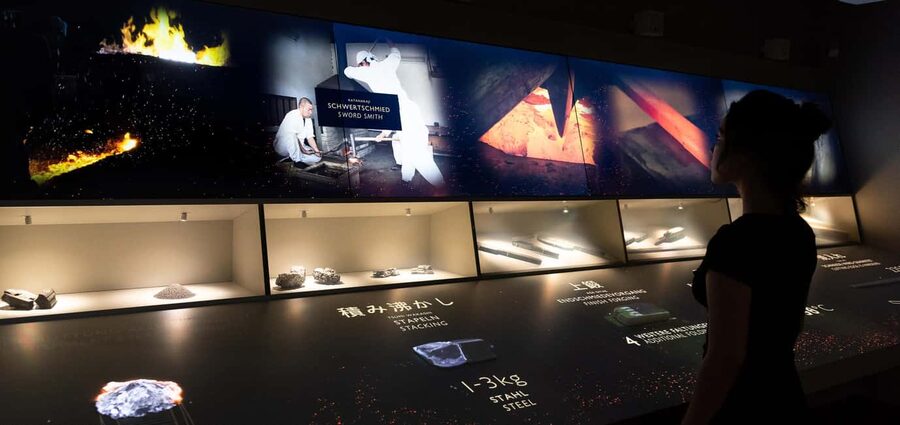
The sword section focuses on the art of swordsmithing, not just the finished blade. You can explore how legendary sword blades were produced, using the museum’s interactive material to look at the craft behind an object often treated only as a weapon.
That distinction is useful for visitors who want more than a display of impressive metalwork. The sword is also an example of skilled making, and the museum’s approach encourages you to notice technique and workmanship. If you are especially interested in arms and armor, allow yourself time here rather than rushing from one striking object to the next.
The museum also addresses ninja techniques and the world of the mysterious ninja. Interactive installations make these topics approachable, particularly for younger visitors, but the hands-on presentation is not a substitute for a specialist lecture. Think of it as an accessible introduction that gives you several ways to follow your curiosity.
The Nō theatre and tea house
Two of the museum’s most distinctive features are a spacious Nō theatre and a tea house, both built in Japan with traditional materials and techniques before being assembled in Berlin. Their presence gives the museum a strong architectural element alongside its cases and screens.
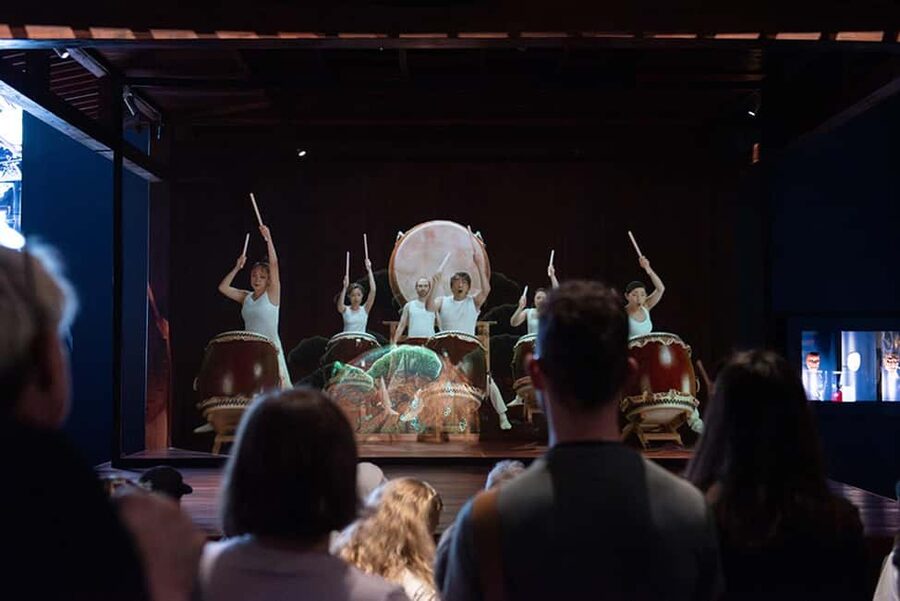
Projections help explain the use and cultural meaning of these spaces. In the Nō theatre, you can encounter the art form through realistic projections and a holographic drum performance. The presentation offers a taste of performance and sound without requiring you to attend a full theatrical production.
The tea house introduces the processes of the centuries-old tea ceremony. It is a practical way to see how the museum connects samurai history with wider Japanese traditions. You are not simply looking at a tea bowl in a case; the setting helps you think about the ritual and the space in which it takes place.
These rooms are among the best reasons to visit if you are curious about Japanese culture beyond armor and weapons. They also help balance the museum’s more theatrical, high-tech features with structures made using traditional methods.
Interactive exhibits, projections and Kitsune
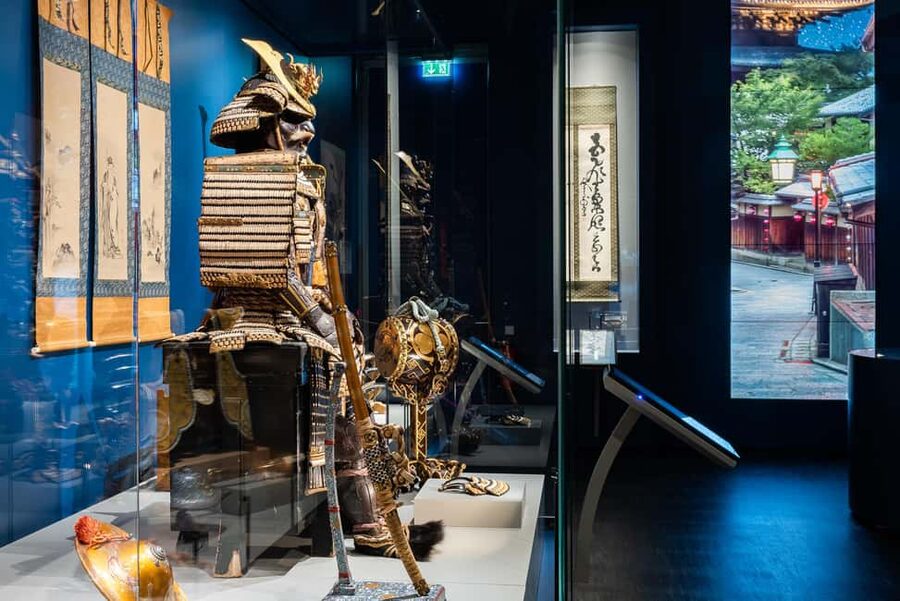
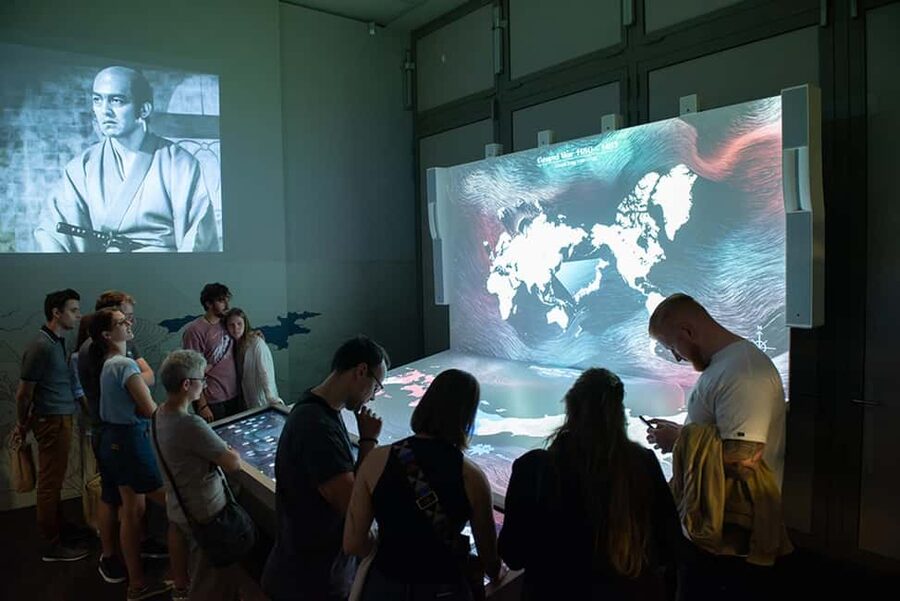
Touchscreens and projections are built into the exhibition, with material that guides you through objects and themes. The style is deliberately playful. A fox character named Kitsune asks questions, and the interactive system gives you a way to test what you have noticed as you move through the museum.
That format is especially handy for families. Children can engage with the displays rather than being asked to spend the whole visit reading long labels. The museum also offers information in both German and English, making it easier for mixed-language groups to follow the exhibits.
There is a holographic music performance among the features, alongside the tea ceremony and material on ninja techniques and sword production. These short, varied elements can keep the visit lively, but visitors who prefer quiet galleries may find the digital approach a little busy. The collection remains the main attraction; the technology works best when it helps you look more closely at the objects.
More tickets and passes in Berlin:
- Berlin: Berlin Story Bunker Entry Ticket
★ 4.6 · 6,759 reviews - Berlin: Illuseum Berlin Entrance Ticket
★ 4.1 · 3,970 reviews - Berlin: Madame Tussauds Admission Ticket
★ 4.6 · 3,941 reviews - Berlin: Neues Museum Entry Ticket
★ 4.6 · 3,261 reviews
What to expect from the visit
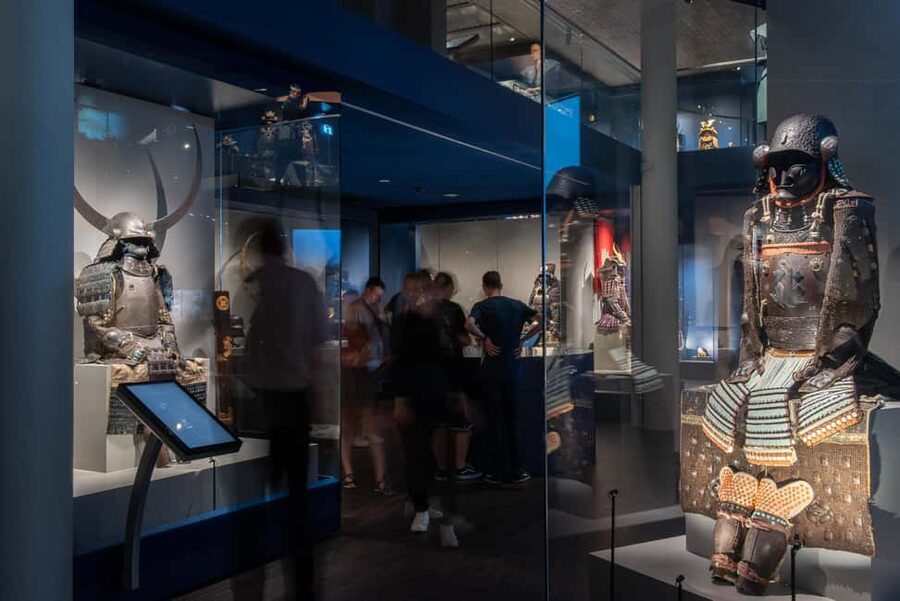
The ticket is for museum entry, and the activity ends back at the museum entrance. No fixed visit length is given. The ticket information describes validity of one to 14 days and asks you to check availability for starting times, so confirm the terms shown for your selected ticket before you go.
The Samurai Flex Ticket lets you choose your day and time spontaneously. You can go directly to the entrance barrier with the ticket on your smartphone, avoiding the ticket line. That is useful in a city where plans can shift, though it is still sensible to check the current availability details before setting out.
The standard ticket does not include an exhibition catalog. Large bags and luggage are not allowed, and neither are pets, food or drinks. The museum is wheelchair accessible, a practical point for visitors who need step-free access.
Is $15 good value?
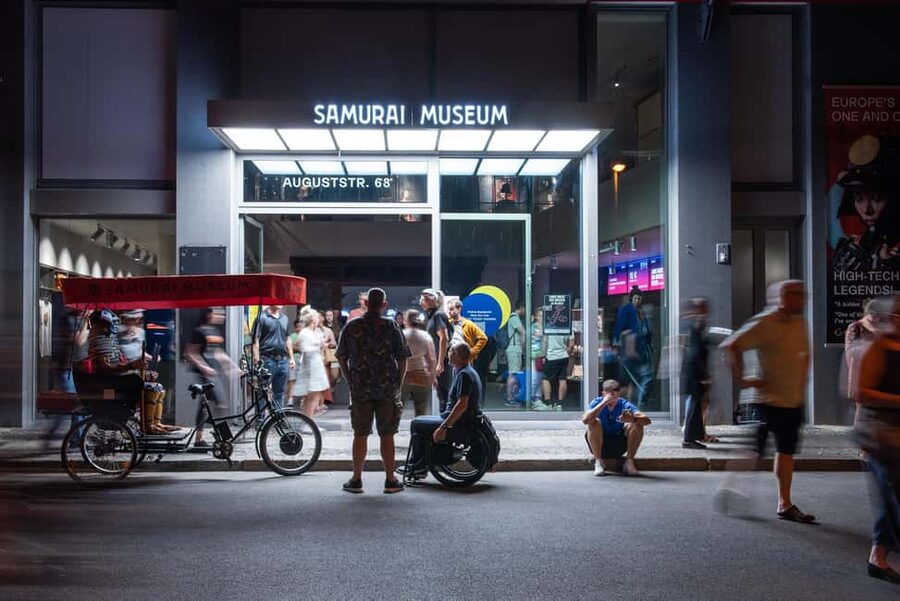
At about $15 per person, the ticket is reasonably priced for a museum visit that combines a large selection of historical objects with interactive exhibits and purpose-built cultural spaces. You are paying for more than a look at armor in glass cases: the Nō theatre, tea house, projections and digital features broaden the visit.
Value depends on how much you enjoy the subject and format. If samurai history, Japanese craft or cultural traditions interest you, the range of objects gives you plenty to examine. If you are visiting with children, the fox character and interactive displays can help make the subject accessible. If you prefer a low-tech museum with extensive written interpretation, you may find the presentation less suited to your taste.
The collection’s breadth is a plus, but remember that the museum displays a selection of more than 900 objects from a private collection of over 4,000. It is not a complete survey of Japanese history, and the experience is focused on samurai culture and related traditions. For the price, that focused approach feels sensible, especially if you give yourself time to explore the objects and the architectural features rather than treating it as a quick photo stop.
Getting there and planning the neighborhood
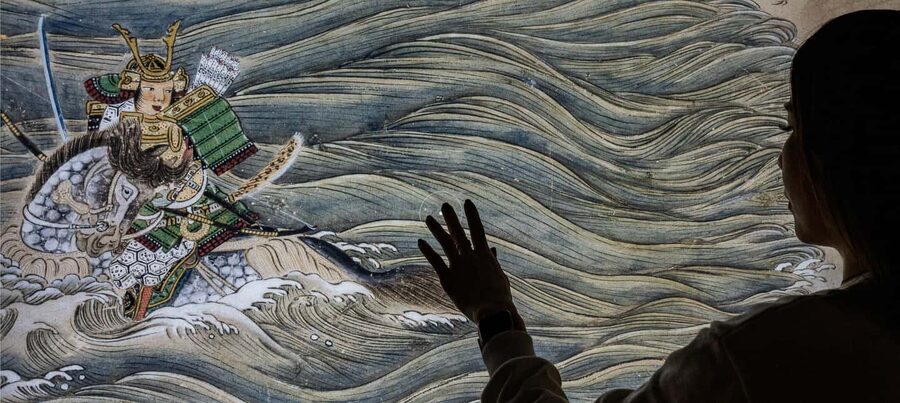
The museum is on Auguststraße in Mitte, close to major central Berlin sights such as Museum Island, the Brandenburg Gate and Alexanderplatz. Its address makes it easy to combine with a broader day in the center, though you should plan your route around the specific sights you want to see.
Public transport options include U-Bahn lines U6 at Oranienburger Tor and U8 at Rosenthaler Platz. For the S-Bahn, use S1, S2, S25 or S26 to Oranienburger Straße. Trams M1 and M5 also stop at Oranienburger Straße, while M8 serves Rosenthaler Platz. Bus stops listed for the area include Tucholskystraße for route 142 and Abgeordnetenhaus for M41.
After the museum, Auguststraße and the surrounding Mitte streets offer cafés, restaurants and shops. That makes the museum easy to fold into an unhurried day, with time for a meal or a neighborhood walk before heading to another central attraction.
Who will get the most from it
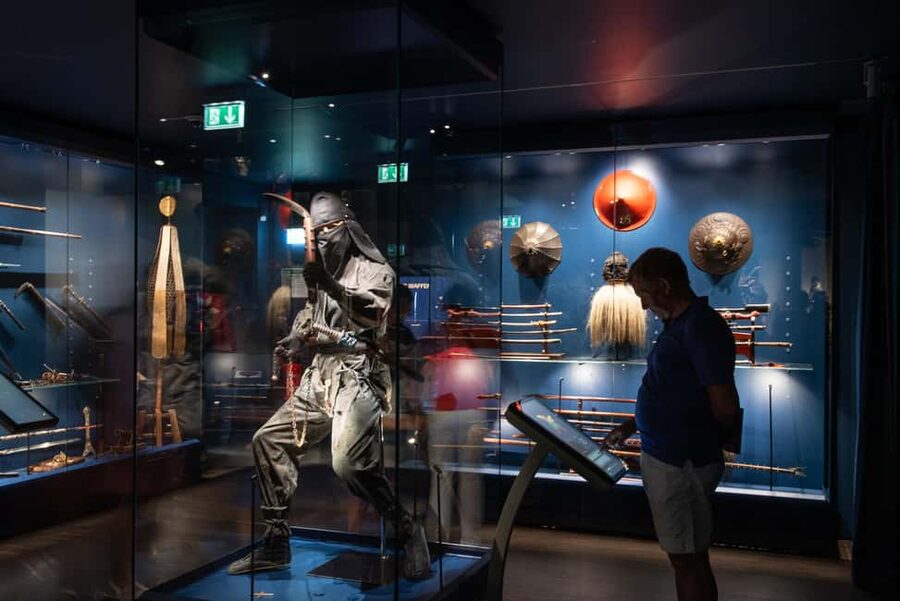
I would put this museum on the list for anyone interested in samurai armor, Japanese craftsmanship or the cultural life connected to the samurai. The combination of objects and demonstrations suits visitors who want context but do not necessarily want a formal lecture.
Families may find the interactive features especially helpful. The touchscreens, Kitsune questions and varied presentations give children different ways to take part, while adults can spend more time with the collection’s details. The English and German material also makes the museum practical for groups with different language needs.
It may be a less obvious choice if you have little interest in Japanese culture or if you prefer museums built around quiet contemplation and traditional labels. The technology is a central part of the presentation, and the museum is focused rather than broad. It works best when you arrive curious about the objects and willing to engage with the displays.
Should you book the Samurai Museum?
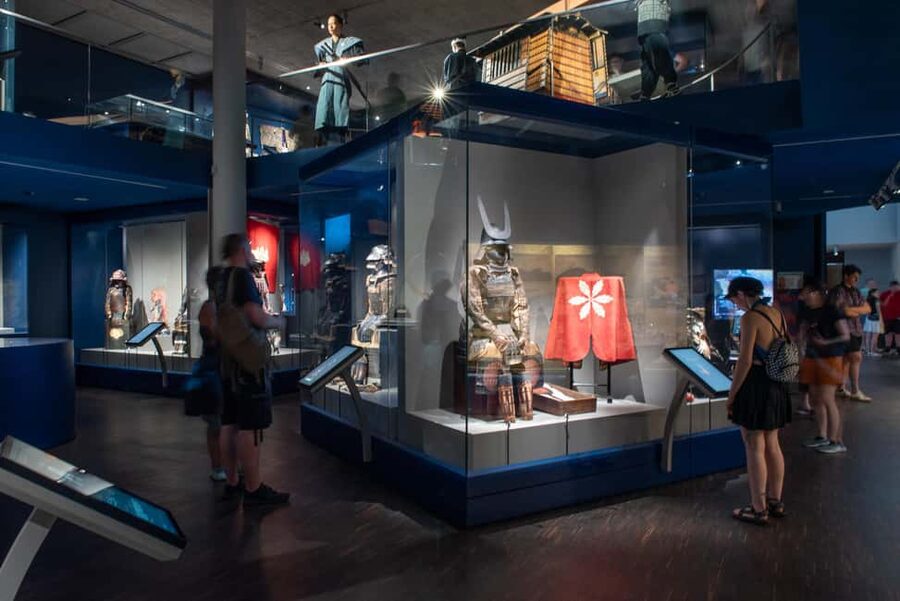
Book it if you want a central Berlin museum with a clear focus, unusual architectural features and a mix of historical objects and interactive interpretation. The armor, Matsudaira clan piece, sword-making material, tea house and Nō theatre give the visit a more varied shape than a single-theme display might suggest.
At about $15, it is a worthwhile choice for history enthusiasts, families and visitors who want to explore Japanese culture beyond the usual samurai imagery. If interactive technology is not your thing, or you are looking for a broad survey of Japan, consider another museum. For a focused visit that blends craftsmanship, performance and hands-on learning, this one earns its place in a day around Mitte.
FAQ
How much does admission cost?
The listed price is about $15 per person. The ticket includes museum entry, but not an exhibition catalog.
How long does the ticket remain valid?
The ticket information gives a validity period of one to 14 days. Check availability for the starting times and ticket terms that apply to your selection.
Can I choose my visit time spontaneously?
The Samurai Flex Ticket lets you choose your day and time spontaneously. Check the availability details when you book.
Is the museum wheelchair accessible?
Yes. The museum is listed as wheelchair accessible.
How can I reach the museum by public transport?
You can take the U6 to Oranienburger Tor or the U8 to Rosenthaler Platz. S-Bahn lines S1, S2, S25 and S26 stop at Oranienburger Straße, and tram M1, M5 and M8 and bus routes 142 and M41 serve the listed nearby stops.
Are pets, food, drinks or large bags allowed?
No. Pets, food, drinks, luggage and large bags are not allowed.
Newest tours in Berlin
- Berlin: guided canoe | kayaktour★ 4.1 · 7 reviews
- Where It All Began: Berlin’s Queer & Trans History Tour★ 4.9 · 6 reviews
- Understanding Kreuzberg: The roots of local (sub)culture★ 4.9 · 11 reviews
- Warnemünde Shore Excursion: Private Sachsenhausen and Berlin Tour★ 5.0 · 12 reviews
- Ultimate E-Bike Tour of Berlin with Beer Garden Stop★ 5.0 · 4 reviews
- Potsdam Highlights – Private sightseeing tour by minibus★ 5.0 · 3 reviews
- Private Potsdam City Tour in an authentic vintage van★ 5.0 · 14 reviews
- Transfer from Berlin Schönefeld Airport (SXF) to Berlin city Hotels – ROUND TRIP★ 4.0 · 3 reviews
Berlin Museum Tickets, compared.

Skip-the-Line: Berlin Wall Museum at Checkpoint Charlie
Read our review →

Browse the lists this tour appears in