
Reviewed · BERLIN WALKING TOURS
Berlin: Charité Hospital History Walking Tour
Charité began as a plague house in 1710, when Berlin feared an epidemic. On this two-hour walk, you follow that stark beginning through the rise of medical science, the first woman to hold a medical professorship in Prussia, and the hospital’s role under Nazi and socialist rule.
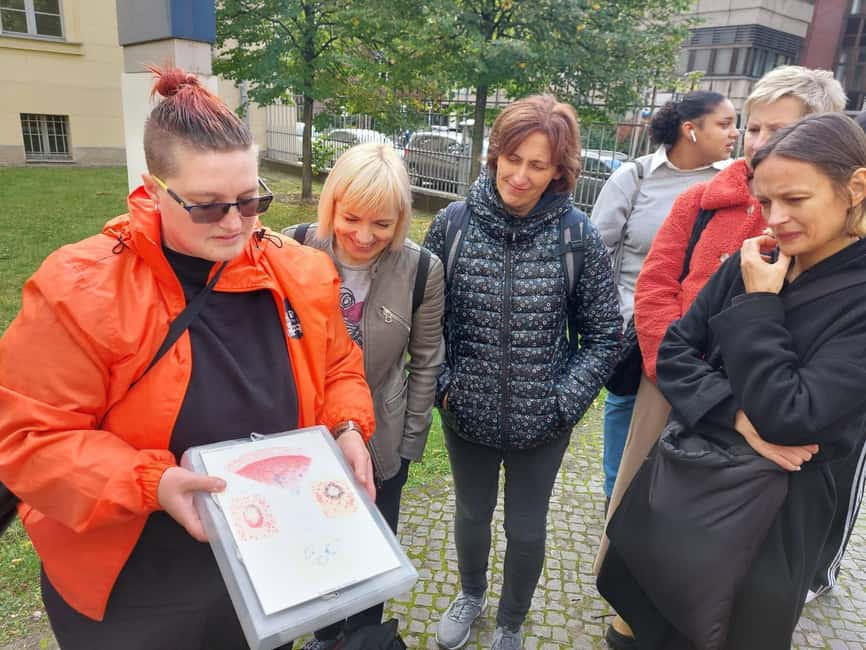
I like two things in particular: the tour links famous medical names such as Robert Koch and Rudolf Virchow to the place where they worked, and it visits the Veterinary Anatomy Theatre, an unusually vivid window into 18th-century medicine. The guides also bring supporting material to help make some stories easier to picture.
One consideration: most of the tour is outdoors, and you should be ready to walk and stand for about two hours. You will not enter hospital or university buildings, and the theatre can sometimes close for internal events or public holidays.
- A hospital born of plague fear: Start with Charité’s founding in 1710 as a simple facility built to protect Berlin from an approaching epidemic.
- Old medical practice, up close: Visit the Veterinary Anatomy Theatre, where 18th-century doctors studied the ailments of livestock and cavalry horses.
- A campus shaped by pioneers: Hear about Robert Koch, Rudolf Virchow and the discoveries associated with Charité.
- A difficult institutional past: Learn how the hospital changed under Nazi rule and in East Germany.
- Two hours on foot: The route begins at Robert-Koch-Platz and is largely outdoors, so comfortable shoes and weather-ready clothing matter.
From Plague House to Medical Landmark
Charité’s story begins in 1710, not as a grand research hospital but as a basic plague house. Berlin was facing the threat of an epidemic, and the facility was built to protect the city. That first chapter gives the tour a useful frame: medicine here grew from urgent public need, long before modern treatments or standards of care.
Early methods could be harsh by today’s measure. Bloodletting, mercury and amputations were common approaches to illness. Hearing about them on the campus where medical thinking later changed helps you see progress as a series of hard-won shifts, not a smooth march toward better answers.
The tour is not only a list of discoveries and celebrated doctors. It follows Charité through periods when medical knowledge, social attitudes and political power all shaped who received care and how medicine was practiced. That broader view makes the walk worthwhile even if you do not know much about German medical history before you arrive.
Meeting at Robert-Koch-Platz

The walk starts at Robert-Koch-Platz, by the statue of Robert Koch. Look for a guide carrying an orange umbrella. The meeting point is practical, but it also sets the subject: Koch is one of the medical figures whose work is tied to Charité’s history.
The tour is offered in English and German, and the listed duration is two hours. There are several guided stops, but the exact content depends on the guide’s presentation. Martina, for example, has led tours that connected Charité’s history with the wider story of medicine in Germany and Berlin. Your guide may be someone else, so treat her name as a helpful example rather than a guarantee.
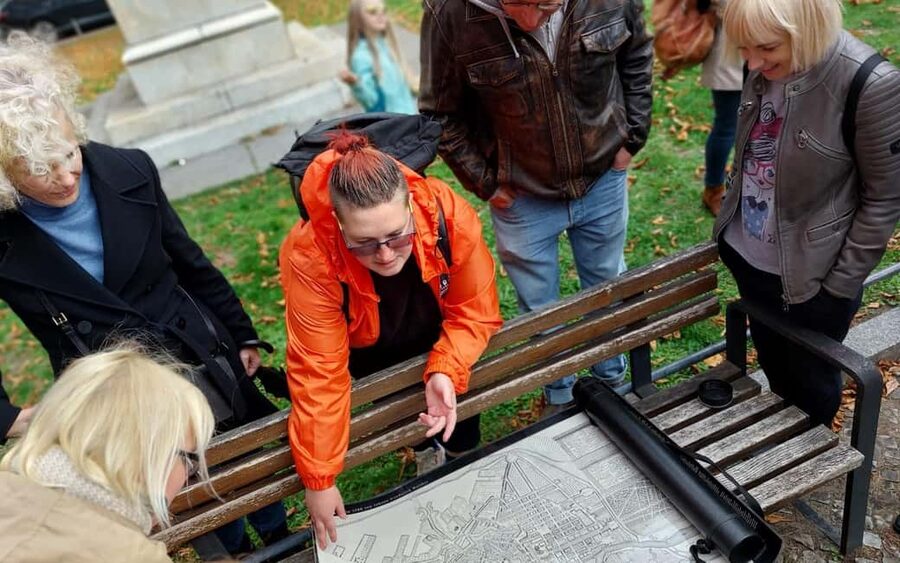
Several visitors have singled out the guides’ energy and preparation. One useful detail is that guides may bring additional material to illustrate parts of the history. That can help when a story concerns a past event or practice that is not obvious from looking at a building.
More walking tours in Berlin:
- Discover Berlin Half-Day Walking Tour
★ 5.0 · 9,624 reviews - Berlin: Third Reich and Cold War 2 Hour Walking Tour
★ 4.9 · 6,830 reviews - Berlin: Discover Berlin Walking Tour
★ 4.9 · 5,998 reviews
Inside the Veterinary Anatomy Theatre
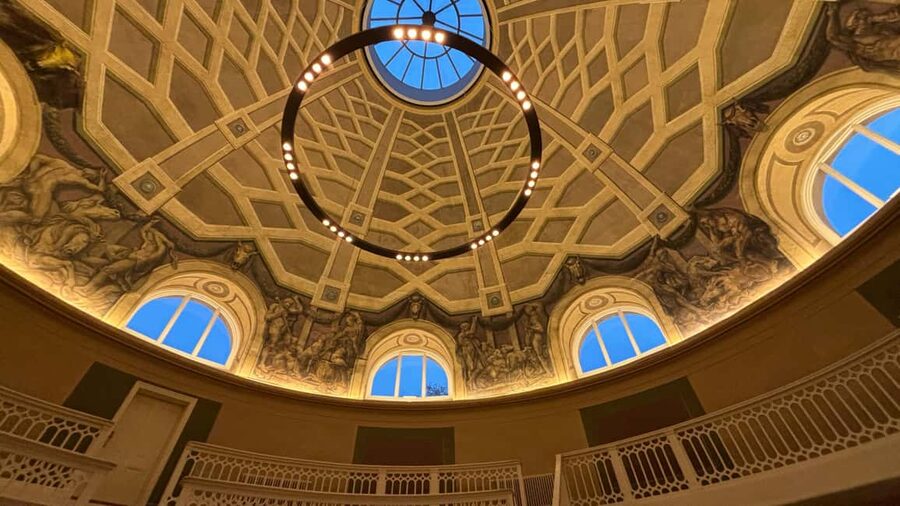
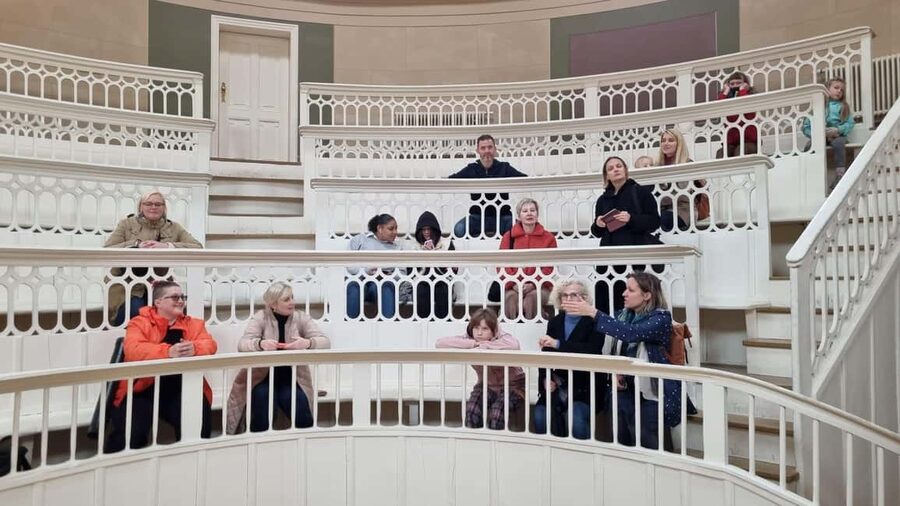
The Veterinary Anatomy Theatre is the tour’s most distinctive stop. It is described as Berlin’s oldest academic building still in existence, and the visit takes about 15 minutes. Here, the focus shifts to the health of the animals that mattered to an 18th-century city: livestock and cavalry horses.
That subject broadens the usual story of medicine. The theatre was a place to study animal ailments, not simply a monument to human doctors. It offers a glimpse of how practical questions about food, transport and military life shaped medical study.
Admission to the theatre is included, but access is not guaranteed on every date. Internal events or public holidays can lead to closure. If seeing the building is a major reason for booking, keep that caveat in mind and check availability before you go.
The visit is brief, so do not expect a long museum stop. Its value lies in the setting and the contrast it provides with the hospital’s later work. You move from early medical methods and animal anatomy into a much larger account of scientific change.
Walking the Neo-Gothic Campus

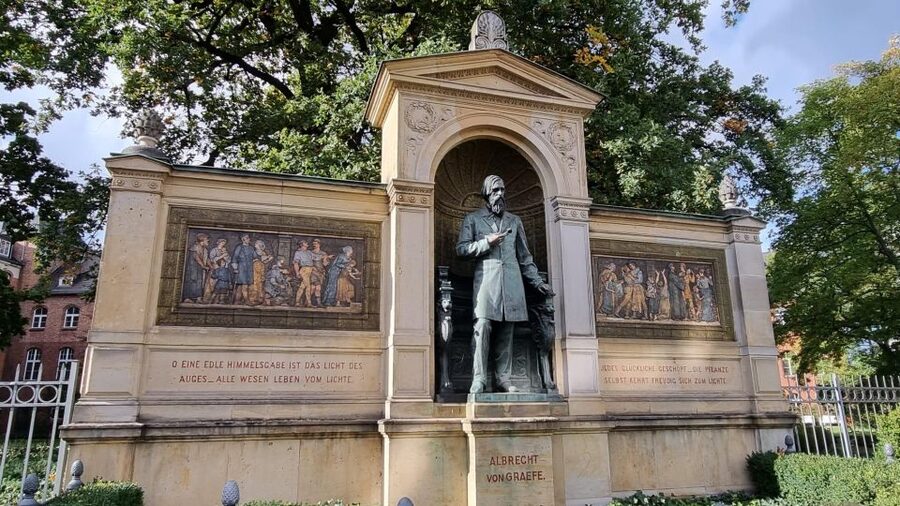
After the theatre, the route circles the historic Charité campus, with guided portions listed at about 15 minutes each. The neo-Gothic architecture gives the walk a strong visual thread. Rather than spending the whole time inside a single exhibition, you see the historic campus as a working medical place with layers of institutional history.
The route highlights figures such as Robert Koch and Rudolf Virchow, both associated with major advances in medicine. The tour’s value is not just in hearing their names, but in placing their work within Charité’s setting and showing how the hospital became a center for research and treatment.
There is an important limit: you do not enter buildings where hospital or university activity takes place. Some campus areas are restricted to guided tours, although you may be able to explore certain areas independently afterward. If you want an interior-focused visit, this is not that kind of tour. It is an outdoor historical walk, with the campus itself as the setting.
The format suits people who learn best by connecting a story to a physical place. It is less suited to anyone hoping for a tour of clinical facilities or access to hospital interiors. Charité remains an active institution, and that working role shapes what can be visited.
Rachel Hirsch and a Changing Medical Profession
Charité’s history also gives space to social change. Rachel Hirsch became the first woman to hold a medical professorship in Prussia in 1913. Her appointment marked a significant step for women in medicine, even as she faced resistance within the institution.
This is one of the tour’s more revealing threads. A medical campus can tell stories of scientific achievement, but it can also show who was allowed to take part in that achievement. Hirsch’s experience puts institutional progress in perspective: a historic first did not mean that barriers vanished.
For you, this section adds more than a biographical detail. It helps connect the hospital’s past to broader shifts in education and professional life in early 20th-century Germany. The tour treats Charité as both a place of medical work and a reflection of the society around it.
More history tours in Berlin:
- Berlin: Natural History Museum Entrance Ticket
★ 4.6 · 3,382 reviews - Berlin: World Heritage Cruise to Potsdam
★ 4.5 · 1,435 reviews - Berlin Historical Highlights Walking Tour
★ 4.9 · 657 reviews - Berlin Private Complete History All Day Walking Tour
★ 5.0 · 474 reviews
The Nazi Era and East Berlin
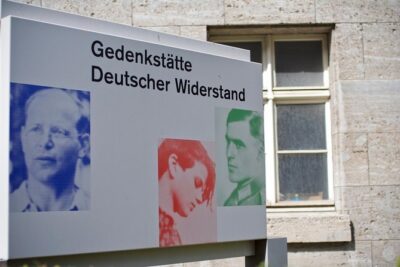
The walk does not soften Charité’s darkest chapter. Under the Nazi regime, medical ethics were discarded and racial hygiene imposed. Some doctors stayed silent, while others took an active role in organizing the extermination of psychiatric patients.
That history is sobering, and it deserves more than a passing mention. The tour’s attention to the institution’s choices and failures matters because hospitals are not separate from the politics around them. Medical authority can be used to help people, but it can also be turned into an instrument of harm.
The story continues into the socialist period in East Germany. The state took pride in Charité’s achievements, while windows facing the capitalist West were bricked up. It is a striking detail that makes political division tangible at the scale of a hospital building.
Together, these chapters make the tour more than a celebration of scientific progress. You hear about discoveries and famous names, but also about complicity, silence and the way political systems left marks on the campus. The subject matter is serious, so the tour is recommended for ages 14 and up. Minors must be accompanied by an adult.
What Two Hours and $28 Get You

At $28 per person, the tour offers a guided account of a complex site, a visit to the Veterinary Anatomy Theatre when it is open, and a clear way to connect Charité’s history with Berlin’s wider past. You are paying for interpretation and context, not access to hospital buildings or a long list of interiors.
That makes the value strongest if you are curious about medicine, German history or the way a major institution changes over time. The guide’s role matters: a well-paced account can turn a campus walk into a coherent story, and the tour’s highly rated feedback points especially to careful planning, lively delivery and substantial historical detail. Past guide Martina has been praised for connecting Charité’s story to the history of medicine in Germany and Berlin.
The price may feel less compelling if your main goal is to enter historic buildings or spend a long time at the theatre. The theatre visit is around 15 minutes, and access can be affected by closures. Think of the building as one important stop within a broader outdoor tour, not the whole experience.
At two hours, the walk is manageable for most visitors who are comfortable walking and standing. Wear comfortable shoes and bring water. In cold weather, dress warmly: much of the route is outside, and there is no promise of extended indoor shelter.
Route, Endpoint and Practical Notes
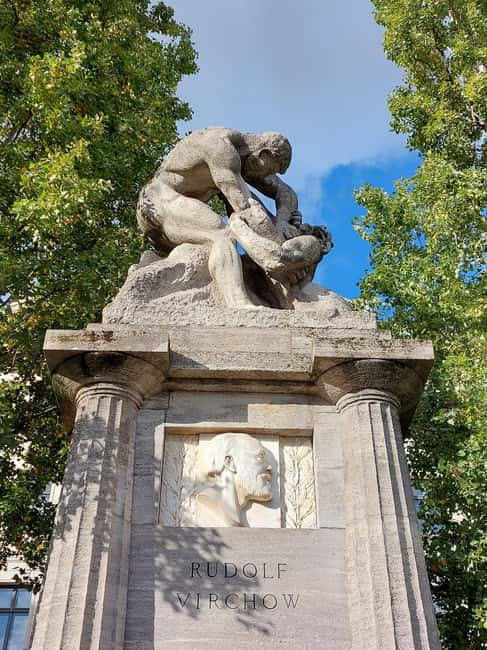
The meeting point is by the Robert Koch statue in Robert-Koch-Platz, with the orange umbrella as the visual cue. The route is described as finishing at Alexanderufer, near Berlin Central Station. The meeting details also say that the activity ends back at the meeting point, so the stated endpoint is not fully consistent. Confirm the finish location with the operator before arranging a tight onward connection.
The tour is listed as wheelchair accessible, but it still involves walking and standing for roughly two hours. If you need specific access details for the route or theatre, ask the operator before booking, especially since parts of the campus are restricted and the theatre can occasionally close.
You can cancel up to 24 hours in advance for a full refund, and the reserve-now, pay-later option can help if your plans are not settled. Those are useful safeguards, but the central question is whether an outdoor history walk matches your interests and energy.
Should You Book the Charité Tour?
Book this walk if you want a grounded account of Berlin’s medical past, with a strong mix of science, architecture and difficult political history. It is especially suited to adults and older teenagers who are comfortable on foot and interested in how institutions affect people’s lives.
Skip it if you want access to hospital interiors, a long museum visit or a light sightseeing stroll with little historical detail. The subject can be grim, and the tour is mostly outdoors. If those limits sound acceptable, $28 buys a thoughtful two-hour introduction to one of Berlin’s most consequential institutions.
FAQ
How long is the Charité Hospital History Walking Tour?
The tour lasts two hours. You should be comfortable walking and standing for approximately that long.
Where does the tour start?
Meet by the Robert Koch statue in Robert-Koch-Platz. Look for the guide holding an orange umbrella.
Where does the tour finish?
The route information gives Alexanderufer, near Berlin Central Station, as the finish. The meeting details also say the tour ends back at the starting point, so confirm the exact endpoint with the operator.
What languages are available?
The tour is offered in English and German.
Is admission to the Veterinary Anatomy Theatre included?
Yes. Admission is included at no extra charge. The theatre can sometimes close because of internal events or public holidays.
Can I enter hospital or university buildings?
No. Entry to buildings where hospital or university activities take place is not included. Some campus areas are also restricted to guided tours.
Is the tour suitable for children?
There is no strict age restriction, but the tour is recommended for ages 14 and up because of its historical content. Minors must be accompanied by an adult.
What should I bring?
Wear comfortable shoes and bring water. Dress warmly in cold weather, since most of the tour takes place outdoors.
Newest tours in Berlin
- Berlin: guided canoe | kayaktour★ 4.1 · 7 reviews
- Understanding Kreuzberg: The roots of local (sub)culture★ 4.9 · 11 reviews
- Where It All Began: Berlin’s Queer & Trans History Tour★ 4.9 · 6 reviews
- Warnemünde Shore Excursion: Private Sachsenhausen and Berlin Tour★ 5.0 · 12 reviews
- Ultimate E-Bike Tour of Berlin with Beer Garden Stop★ 5.0 · 4 reviews
- Potsdam Highlights – Private sightseeing tour by minibus★ 5.0 · 3 reviews
- Private Potsdam City Tour in an authentic vintage van★ 5.0 · 14 reviews
- Transfer from Berlin Schönefeld Airport (SXF) to Berlin city Hotels – ROUND TRIP★ 4.0 · 3 reviews
Berlin Walking Tours, compared.




Third Reich Berlin: Hitler and WWII Walking Tour
Read our review →

Explore Berlin: Walking Tour of All The Iconic Sites
Read our review →Browse the lists this tour appears in