
Reviewed · SACHSENHAUSEN MEMORIAL TOURS
Berlin: Sachsenhausen Concentration Camp Memorial Tour
Sachsenhausen is a place where history feels hard to keep at a distance. This five-hour visit pairs the memorial site with a guided train journey from Berlin, giving you context before you arrive. I like two things in particular: the guide helps you make sense of the site’s different memorials, and the route leaves room to stay longer afterward if you want to explore at your own pace.
The main consideration is the subject matter. The history is painful, and the grounds can be emotionally demanding. You’ll also need to buy an ABC-zone train ticket separately, and this tour is not suitable for wheelchair users or people with mobility impairments.
- Start at Alexanderplatz: Meet your guide beside the World Time Clock, then travel together by train to the memorial.
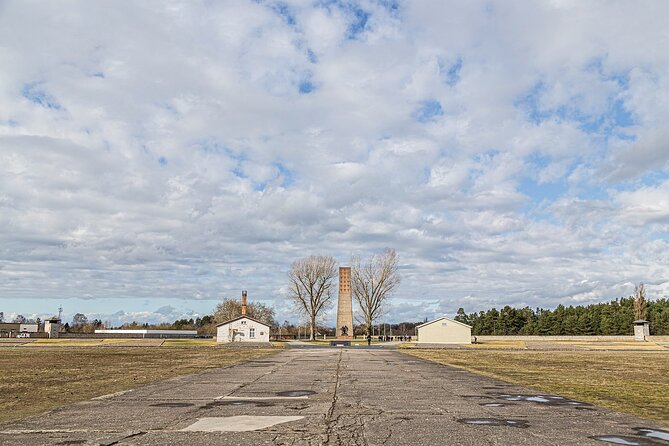
- See the camp’s central sites: The route includes Tower A, Barracks 38 and 39, punishment cells, the infirmary and morgue, the prisoner kitchen, Station Z, and the Soviet memorial.
- Get context as you go: Your guide explains the camp’s origins, its role in the Nazi camp system, and the memorial’s changing symbolism.
- Plan for the train fare: The $21 price includes the €3 memorial entrance fee, but not the required ABC-zone ticket.
- Choose your return: At the end, you can head back to Berlin with the guide’s help or remain at the memorial longer.
- Expect a serious visit: Comfortable shoes and snacks are useful, and the camp’s history calls for a thoughtful approach.
From Alexanderplatz to Sachsenhausen
The meeting point is beside the World Time Clock at Alexanderplatz. Look for a guide wearing Buendía accreditation. This is a practical, central place to gather, but do check that you have the right location before setting off: Alexanderplatz is busy, and the clock is the specific landmark to use.
The group travels to Sachsenhausen by train. Your guide accompanies you from Berlin and uses the journey to explain the camp’s origins, purpose, and place in Nazi Germany’s system of concentration camps. That introduction matters. You arrive with a framework for understanding what you see, rather than having to piece the history together from signs alone.
You must buy an ABC-zone ticket before the activity, either at a station ticket machine or online through Berliner Verkehrsbetriebe. The ticket is not included in the tour price, so factor it into your budget. Guides have helped groups check their tickets and navigate train changes, but the fare itself remains your responsibility.
The train ride is also part of the experience. The route connects the capital to a memorial outside the city, and the guide can use that time to prepare you for a difficult visit. If you are traveling with a group, staying close and listening for instructions will make the changes between trains and stops easier.
Starting at Tower A
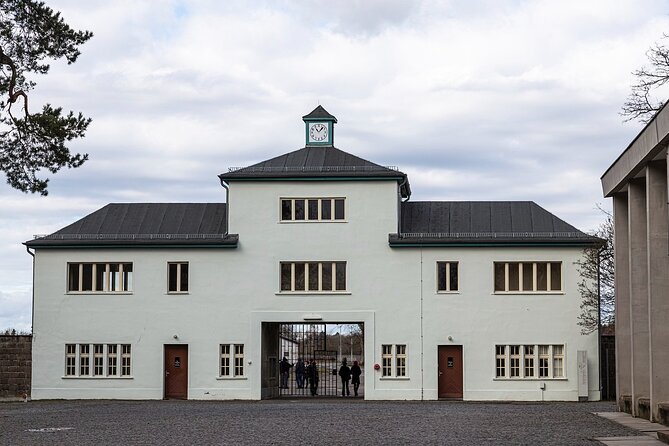
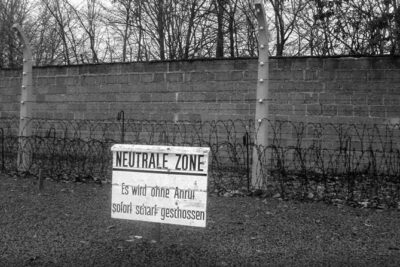
At Sachsenhausen, the visit begins at Tower A, the camp’s main entrance, marked by the words Arbeit macht Frei. This is a stark introduction to the site. Your guide can explain the entrance’s place in the camp and help you read the grounds as a whole, not simply as a collection of buildings.
The camp was designed as a model for the Nazi concentration camp system. That role gives the visit a wider frame: Sachsenhausen was not only a place of imprisonment and cruelty, but also part of a system whose methods and structures had broader significance. Your guide’s historical explanations help connect the site to the political setting that produced it.
The memorial includes monuments from different periods and ideologies. Your guide will discuss how the site has been represented over time, including how its meaning changed after World War II. This part is useful because memorials are not neutral markers. They reflect decisions about what a society chooses to remember and how it chooses to tell that story.
More Sachsenhausen visits in Berlin:
- Berlin: Sachsenhausen Concentration Camp Tour in English
★ 5.0 · 5,711 reviews - Sachsenhausen Concentration Camp Bus Tour in English from Berlin
★ 5.0 · 1,962 reviews - Berlin: Sachsenhausen Concentration Camp Tour in English
★ 4.8 · 1,889 reviews
Barracks 38 and 39
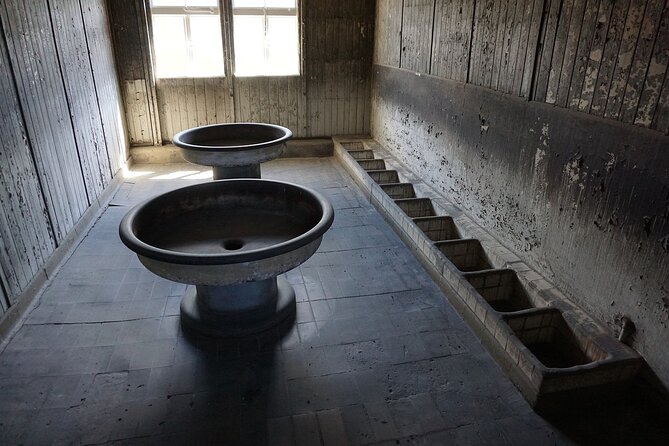
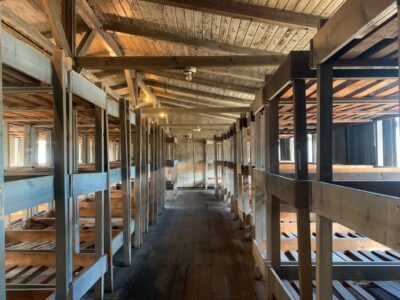
Barracks 38 and 39 are among the most affecting stops. Jewish prisoners were held here in extremely cramped conditions. Barracks 38 now serves as a museum, with material about daily life in the camp. The exhibits bring the history down from the scale of institutions and policies to the conditions people faced day by day.
A guide can give context to the displays and explain what you are looking at. That is particularly valuable in a place where the surviving structures, restored spaces, and museum material may not all speak for themselves. You can ask questions as you go, and guides on this tour have been praised for explaining difficult subjects clearly and with care.
There is a lot to take in, so don’t feel you need to rush through each display. The tour is five hours overall, with roughly three hours at the memorial site according to the experience of past groups. That is enough time for a guided overview, but you may want more if you prefer to study exhibits slowly.
Punishment cells, the infirmary, and Station Z
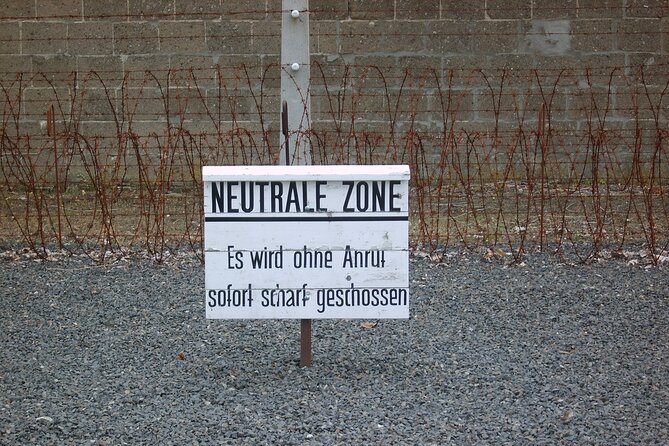
The tour also visits the original punishment cells, which were used to detain prisoners for minor offenses. The small scale of such spaces can make the camp’s systems of control feel especially concrete. Your guide can explain how these cells fit into the larger machinery of punishment and daily life.
The infirmary and morgue provide insight into cruel medical experiments carried out at the camp. These are difficult subjects, and the guide’s role is not to soften them, but to explain them accurately and respectfully. Visitors have described guides such as Richard, Peter, Amelia, and Walid as careful in their presentation of the history. Your assigned guide may be someone else, but the tour is offered in five languages: Spanish, English, German, French, and Italian.
Station Z is the remains of the area where many executions took place. It is a sobering stop, and you may find that the contrast between the site’s physical remains and the scale of what happened there is hard to process. There is no need to treat this visit like a checklist. Take time to listen, reflect, and move at a pace that feels appropriate.
The prisoner kitchen and Soviet memorial
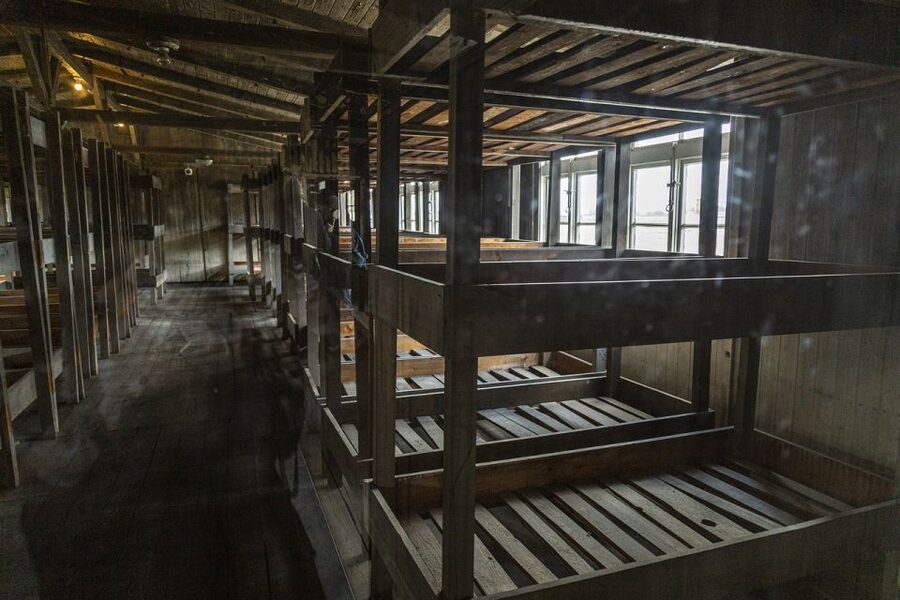
The former prisoner kitchen is now a museum highlighting key moments in the camp’s history. Its use as an exhibition space gives the tour another way to trace events across the site. Rather than relying on one memorial or building to tell the whole story, the route moves through different spaces, each with its own focus.
The Soviet memorial, built in 1961, reflects the camp’s role after World War II. It is an important stop for understanding how the site was commemorated in a later political period. Your guide can explain how monuments from different eras convey different interpretations, helping you distinguish the history of the camp from the history of its memorialization.
This layered approach is one of the tour’s strongest features. Sachsenhausen is not presented as a single, frozen story. The buildings, exhibits, and memorials reveal different parts of its history, and the guide connects them so the visit has a clear thread.
Same city, a different kind of day:
- Berlin: Reichstag, Dome and Government District Guided Tour
★ 4.7 · 18,288 reviews - Berlin: 1-Hour City Tour by Boat with Guaranteed Seating
★ 4.3 · 16,993 reviews - Berlin: Boat Tour Along the River Spree
★ 4.4 · 11,252 reviews - Discover Berlin Half-Day Walking Tour
★ 5.0 · 9,624 reviews
How the guide shapes the visit
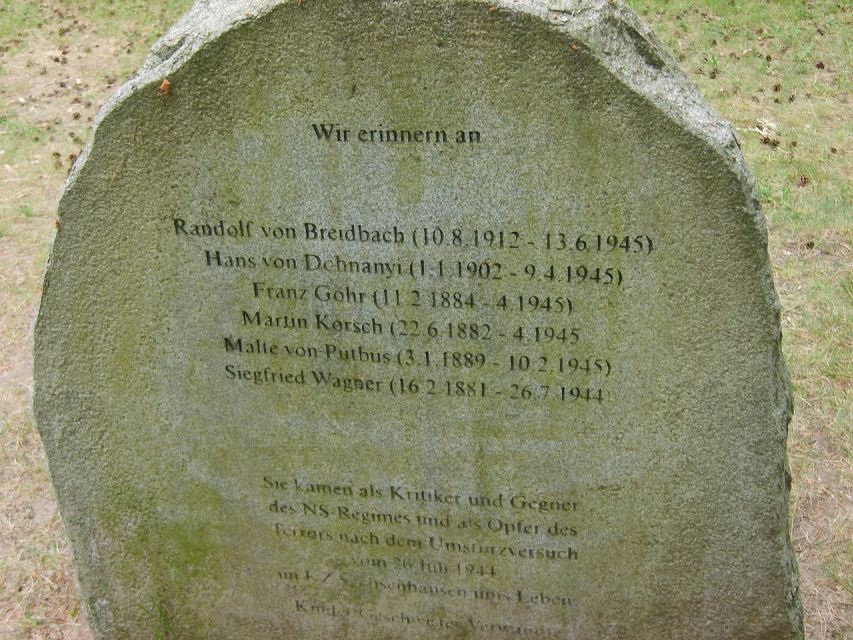
The guide is central to the value of this tour. At a large memorial site, clear explanations help you understand what is original, what is now a museum, and why a particular location matters. Guides including Peter, Walid, Richard, Felipe, Paul, Amelia, Hugo, and Mathis have led groups. The guide on your date may differ, but the tour is designed to include detailed historical explanations throughout the visit.
The strongest guides balance depth with restraint. Visitors have particularly valued explanations that are clear, organized, and respectful, as well as help with the train journey and navigation around the site. Some have also appreciated a guide’s ability to answer questions and add context beyond the immediate stop. A light touch of humor may help keep a long tour engaging, but the subject itself remains serious.
Group size can vary. One guide has been described as managing a group of 28 people, which suggests that you should stay attentive when moving between locations and listen for meeting instructions. If you have a question, ask when there is a suitable pause. The subject is broad, and a focused question can help you connect the guide’s explanation to what you are seeing.
Five hours, $21, and what the price covers
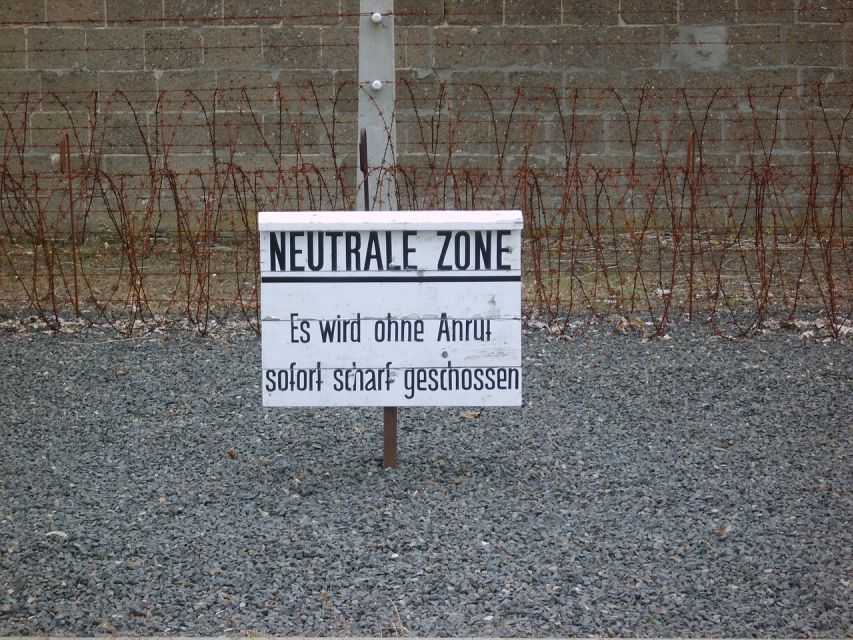
At $21 per person, the tour is a low-cost way to get a guided visit to Sachsenhausen, especially because the price includes the €3 memorial entrance fee. It also includes the guide from Berlin and the guided tour at the site. You are paying for structure and historical context as much as transport assistance: the guide prepares you on the way there, then helps interpret the memorial.
The train ticket is extra and must be an ABC-zone ticket. Remember to include that cost when comparing the tour with independent travel. The tour’s price is appealing, but it does not cover every part of the trip.
Five hours is a substantial half-day commitment. The schedule offers a guided overview rather than unlimited time at every exhibit. If you want to spend longer at the memorial, you can stay after the guided portion and return to Berlin later. The guide can help you with the return journey, or you can travel back on your own.
The booking terms also allow you to reserve now and pay later, with free cancellation up to 24 hours in advance for a full refund. Starting times depend on availability, so check the date you want before planning the rest of your day around the visit.
What to bring and who should go
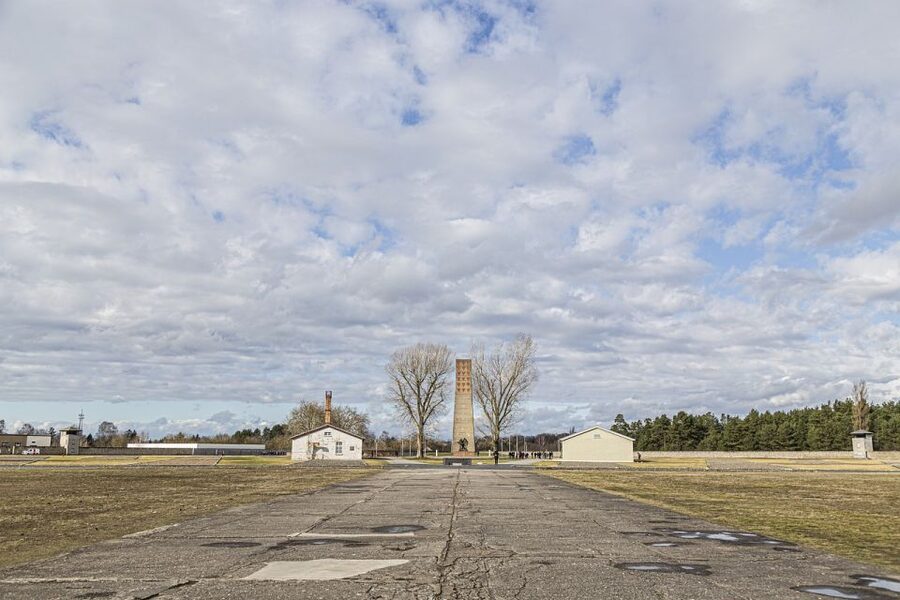
Wear comfortable shoes. The tour involves walking around the memorial grounds, and the site visit is long enough that footwear matters. Bring snacks too, especially if you prefer to have something with you during a five-hour outing.
The experience is best for you if you want a guided introduction to Sachsenhausen and are ready to engage with a painful part of history. It can suit first-time visitors to the memorial, history students, and anyone who wants help understanding the site’s buildings and changing memorials. It is not a light sightseeing stop, and you should allow yourself some quiet time afterward if you think you may need it.
The tour is not suitable for wheelchair users or people with mobility impairments. If accessibility is a concern, contact the provider before booking to check whether the route and site conditions will work for you. The information provided does not describe step-free access or alternative routes.
Should you book the Sachsenhausen tour?
Book this tour if you want an affordable, guided visit that begins in Berlin and gives you historical context before you reach the memorial. The guide-led train journey, detailed site explanations, and option to stay longer make it a practical choice for a first visit. Just remember to buy the ABC ticket, wear comfortable shoes, and approach the subject with care.
Skip it if you need a fully accessible route, want a light day out, or prefer to explore the memorial without a fixed guided schedule. For most visitors seeking a thoughtful introduction to Sachsenhausen, this tour offers strong value and a useful way to understand a place that deserves more than a quick walk-through.
FAQ
Where does the tour meet?
Meet your guide beside the World Time Clock at Alexanderplatz. The guide will be wearing Buendía accreditation.
How long is the tour?
The tour lasts five hours. Check the available starting times when choosing your date.
Is the train ticket included?
No. You need to buy an ABC-zone train ticket before the activity. You can get one from a station ticket machine or online through Berliner Verkehrsbetriebe.
Is the Sachsenhausen entrance fee included?
Yes. The €3 memorial entrance fee is included in the tour price.
What languages are available?
The live tour is offered in Spanish, English, German, French, and Italian.
Can I stay at the memorial after the guided tour?
Yes. At the end, you can return to Berlin with the guide’s help or stay longer to explore the memorial at your own pace.
What should I bring?
Bring comfortable shoes and snacks. You also need to purchase your ABC-zone train ticket before the tour.
Is the tour suitable for wheelchair users?
No. The activity is not suitable for wheelchair users or people with mobility impairments.
Newest tours in Berlin
- Berlin: guided canoe | kayaktour★ 4.1 · 7 reviews
- Understanding Kreuzberg: The roots of local (sub)culture★ 4.9 · 11 reviews
- Where It All Began: Berlin’s Queer & Trans History Tour★ 4.9 · 6 reviews
- Warnemünde Shore Excursion: Private Sachsenhausen and Berlin Tour★ 5.0 · 12 reviews
- Ultimate E-Bike Tour of Berlin with Beer Garden Stop★ 5.0 · 4 reviews
- Potsdam Highlights – Private sightseeing tour by minibus★ 5.0 · 3 reviews
- Private Potsdam City Tour in an authentic vintage van★ 5.0 · 14 reviews
- Transfer from Berlin Schönefeld Airport (SXF) to Berlin city Hotels – ROUND TRIP★ 4.0 · 3 reviews
Sachsenhausen Memorial Tours, compared.
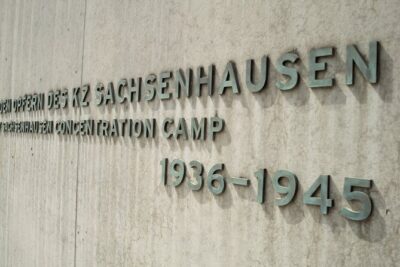
Sachsenhausen Concentration Camp Tour in English
Read our review →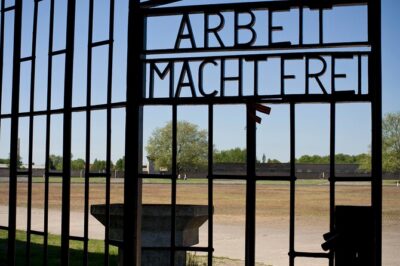
Sachsenhausen Concentration Camp Bus Tour in English from Berlin
Read our review →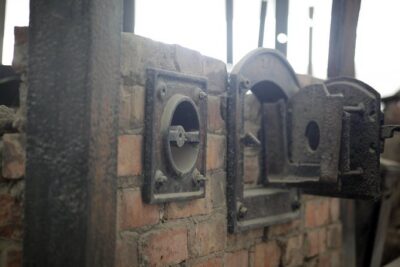
Sachsenhausen Concentration Camp Memorial Tour (Max. 15 Guests)
Read our review →
Sachsenhausen Concentration Camp and Potsdam Tour
Read our review →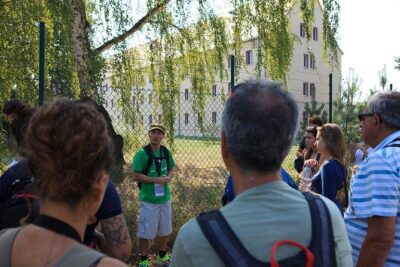
Visita en español al campo de concentración Sachsenhausen
Read our review →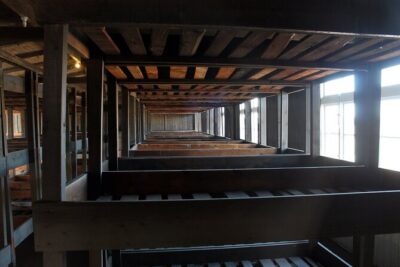
Browse the lists this tour appears in