
Reviewed · BERLIN MUSEUM TICKETS
Berlin: Tickets for the BODY WORLDS Museum in Berlin
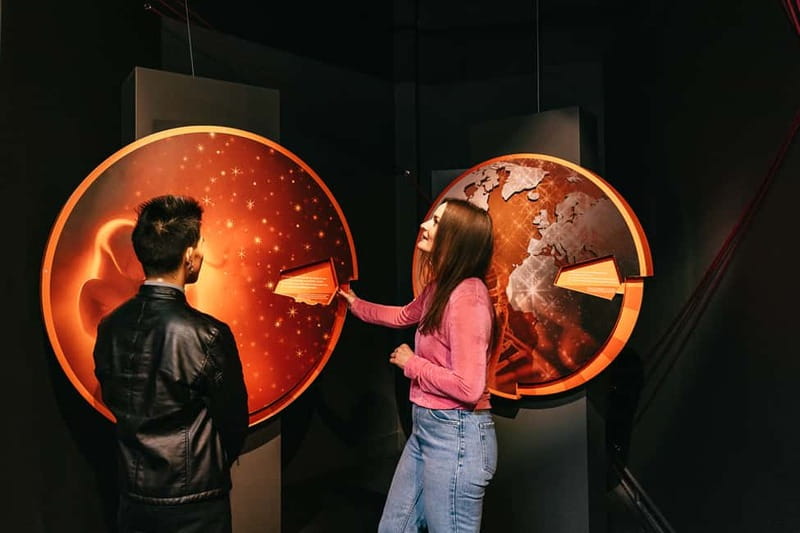
The striking idea here is simple: instead of studying the human body from a diagram, you see real human preparations that show how its parts fit together. BODY WORLDS uses whole-body plastinates and individual organs to explain functions and common diseases in a direct, visual way.
I like that the exhibition links anatomy to everyday life, including stress, happiness and what the body needs for a long, healthy life. I also like the range: skeleton, muscles, digestion, embryo development, circulation, breathing and the nervous system all have a place.
One consideration: this is an exhibition of real human remains, and some displays may feel confronting. The ticket does not include an audio guide, and some audio exhibits may not be working, so don’t count on every listening station being available.
What to know before you go
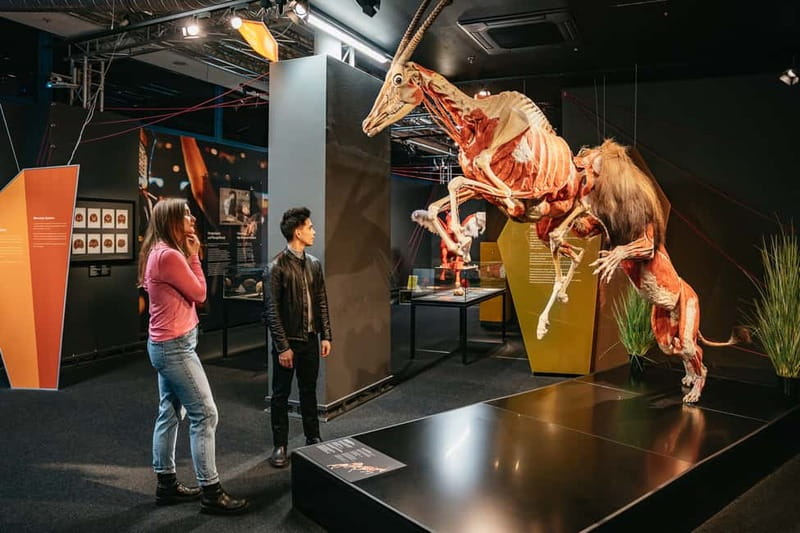
- Real plastinates make anatomy visible: See whole-body preparations and organs used to explain how the body works.
- Follow several body systems: The displays cover the skeleton, muscles, digestion, circulation, breathing and the nervous system.
- Look beyond anatomy: Exhibits also consider stress, happiness and the conditions that support a long, healthy life.
- Admission costs $22: Your ticket covers entry to the exhibition, while the audio guide, cloakroom and paid lockers are not included.
- Plan around the last entry: The museum is open daily from 10 AM to 7 PM, with last admission at 6 PM.
- You can visit at your own pace: The ticket is valid for one day, and the activity begins and ends at Panoramastraße 1a.
A museum that puts your own body in view
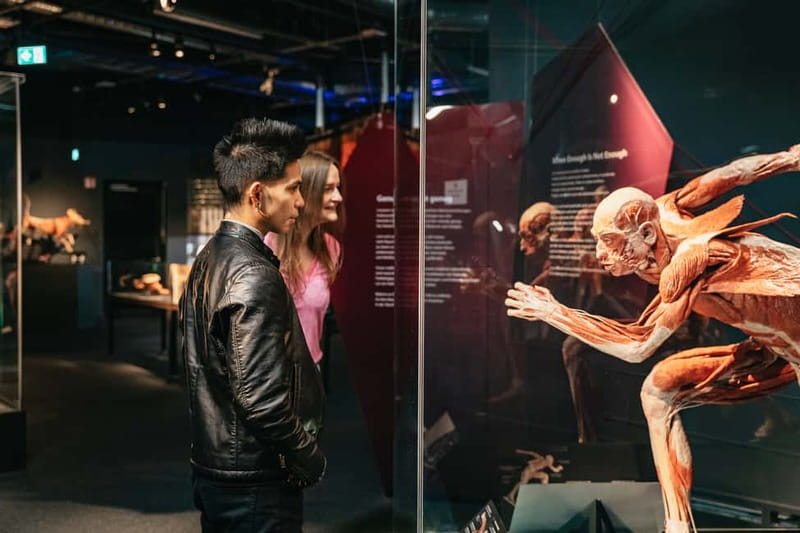
BODY WORLDS is not a conventional art museum, and it is not just a room full of anatomical models. Its central exhibits are real human preparations, including whole-body plastinates, arranged to show structures that are normally hidden beneath skin and clothing. The result can be fascinating, unsettling, or both.
That directness is the point. A diagram can label a heart or muscle, but a plastinate can show how one structure sits beside another and how the body works as a connected whole. The exhibition aims to make organ functions and common diseases easier to understand, rather than leaving anatomy as a list of unfamiliar terms.
The museum is by Dr. Gunther von Hagens, and the subject is the human body from the inside out. You are not joining a guided tour with a named guide. Instead, you move through the displays independently, taking time where your curiosity leads and pausing when an exhibit needs more thought.
The approach also asks something of you as a visitor. These are real human preparations, not plastic replicas. If you are comfortable with that, the exhibits can make anatomy feel unusually immediate. If you are unsure, consider how you feel about seeing exposed organs and whole-body preparations before you book.
More museum visits in Berlin:
- Berlin: Jewish Museum Berlin Entrance Ticket
★ 4.5 · 8,393 reviews - Berlin: DDR Museum Tickets
★ 4.3 · 3,443 reviews - Berlin: Natural History Museum Entrance Ticket
★ 4.6 · 3,382 reviews
The skeleton and muscles show how the body holds together
The skeleton gives you a natural starting point. It is the body’s structural framework, but the exhibition’s broader purpose is to show how that framework connects with the muscles and other systems around it. Seeing those parts in relation can make the body’s mechanics easier to picture than a page of labels ever could.
The muscular system is especially useful to consider as a network rather than a collection of isolated parts. The displays explore the interplay between muscles and organs, helping you see that movement and basic bodily function depend on systems working together. That kind of visual explanation is the exhibition’s strongest tool.
Take your time with the details. There is a lot to look at, and the effect can be less about reading every label than noticing how one structure relates to the next. If you rush through, you may finish quickly without getting much from the exhibits. A slower pace gives you more chance to connect the physical displays with the explanations.
Digestion, circulation and breathing tell the body’s working story
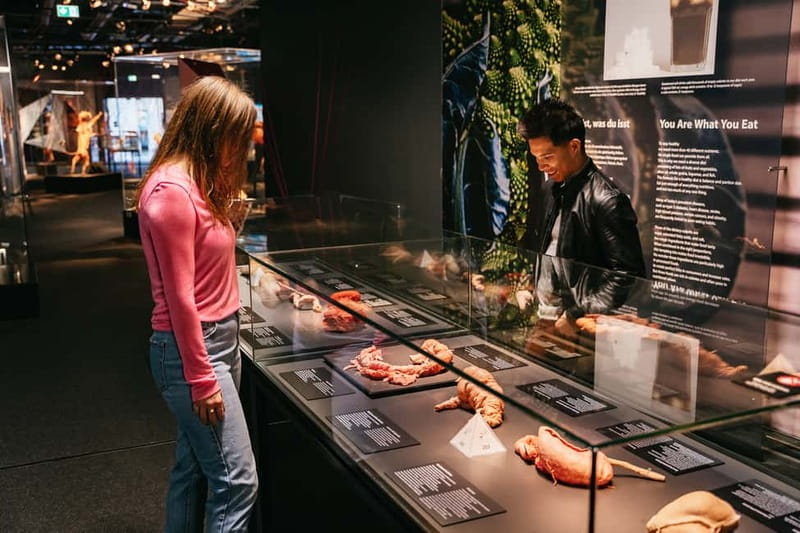
The digestive system offers another view of the body as a set of linked processes. The exhibition explains organ functions in accessible terms, and the real preparations give those explanations a physical setting. You are looking at more than a chart of where an organ sits: you can see the structures that make the system work.
The cardiovascular displays shift attention to circulation, one of the body’s essential systems. They sit within the exhibition’s wider exploration of how organs function and how disease can affect them. For visitors who learn best by seeing rather than reading, this is a practical strength of the format.
The respiratory organs and nervous system are also covered. Together, these displays broaden the visit beyond the most familiar anatomy topics. You can move from the body’s structure to the systems that support breathing and communication, building a more connected picture as you go.
There is no need to treat the exhibition like a test. You do not need a science background to get something from it. The stated aim is to explain complex but fragile structures in an understandable way, and the visual material does much of the work. Still, a little patience helps: the displays are more rewarding when you stop to consider what you are seeing instead of treating them as a quick sequence of unusual sights.
Embryo development adds a different perspective
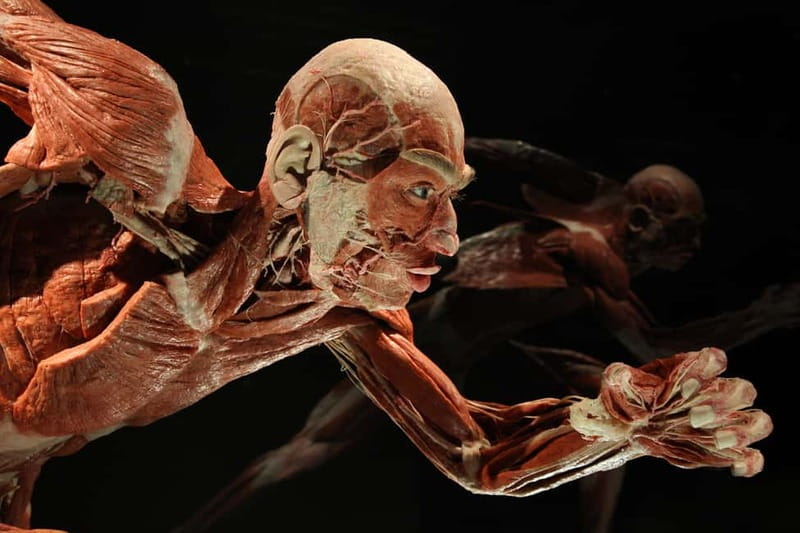
The exhibition also looks at the development of an embryo in the womb. This shifts the focus from how an adult body works to how human development unfolds, adding a perspective that is distinct from the displays on organs and body systems.
For some visitors, this may be one of the most thought-provoking parts of the exhibition. It brings the subject of human anatomy into a developmental context, rather than presenting the body only as a finished structure. The material is still part of the same larger idea: human beings share a complex physical design, even as the displays invite you to notice its many stages and parts.
If you are visiting with children or teenagers, this section may offer an opening for questions about development and biology. The displays are educational, but the real preparations mean this is not a light, cartoon-style science attraction. You know your own group best, so consider their comfort with direct anatomical images.
More tickets and passes in Berlin:
- Berlin: Berlin Story Bunker Entry Ticket
★ 4.6 · 6,759 reviews - Berlin: Illuseum Berlin Entrance Ticket
★ 4.1 · 3,970 reviews - Berlin: Madame Tussauds Admission Ticket
★ 4.6 · 3,941 reviews - Berlin: Neues Museum Entry Ticket
★ 4.6 · 3,261 reviews
Stress and happiness take the exhibition beyond anatomy
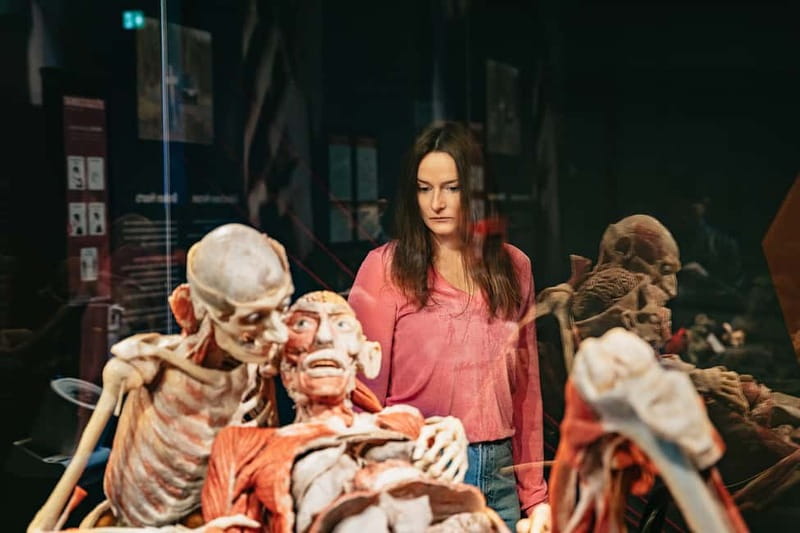
BODY WORLDS does not stop at organs. It also looks at factors that shape existence, including happiness and how the body copes with stress. These topics widen the visit from anatomy into questions about how you live and what supports health.
That broader frame is part of what makes the exhibition more than a collection of specimens. You are asked to think about the body not only as a machine with working parts, but as something affected by habits, strain and the conditions of daily life. The exhibition also considers a balance between excess and modesty, and what the body needs to live a long, healthy life.
Those ideas may be less concrete than a skeleton or a heart, but they give the visit a useful human scale. You can leave thinking not only about what is inside the body, but about how choices and circumstances relate to its wellbeing. The displays do not replace medical advice, of course. Their value is in prompting curiosity and helping you see health as part of a larger picture.
Give yourself enough time to look closely
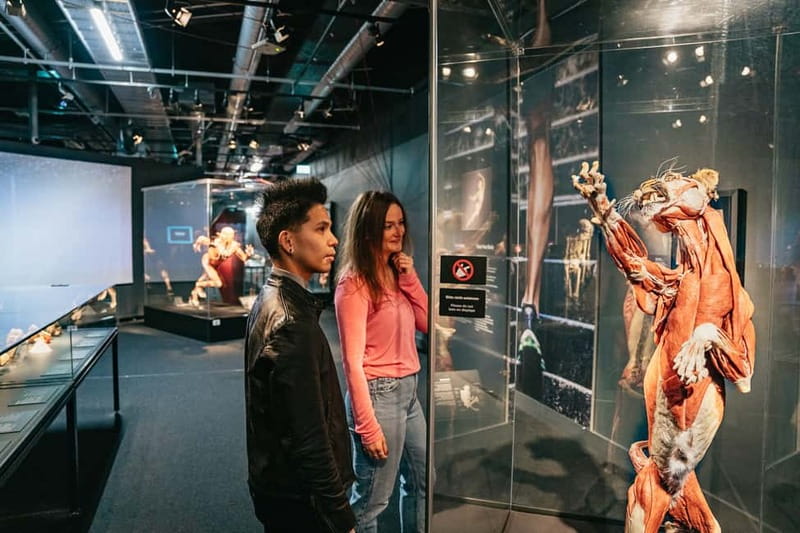
Your ticket is valid for one day, but no visit duration is specified. That means you can set your own pace rather than plan around a fixed tour length. I would avoid arriving close to closing time: the museum closes at 7 PM, but last admission is at 6 PM, leaving a firm cutoff for entry.
The exhibition can be moved through quickly, but that does not mean a quick visit is the best one. Some displays reward close attention, and the subject matter itself may lead you to pause. If anatomy interests you, or if you want time to read labels and consider the exhibits, allow room in your schedule rather than squeezing it between tight appointments.
The museum is at Panoramastraße 1a, 10178 Berlin. The activity ends back at the same meeting point, which makes the visit easy to place in a day’s plans. The venue is wheelchair accessible, a useful practical point if step-free access matters to you.
The museum is open daily from 10 AM to 7 PM and closed on December 24. Check the available starting times when you book, since the ticket information directs you to availability for entry details.
What the $22 ticket includes, and what it does not
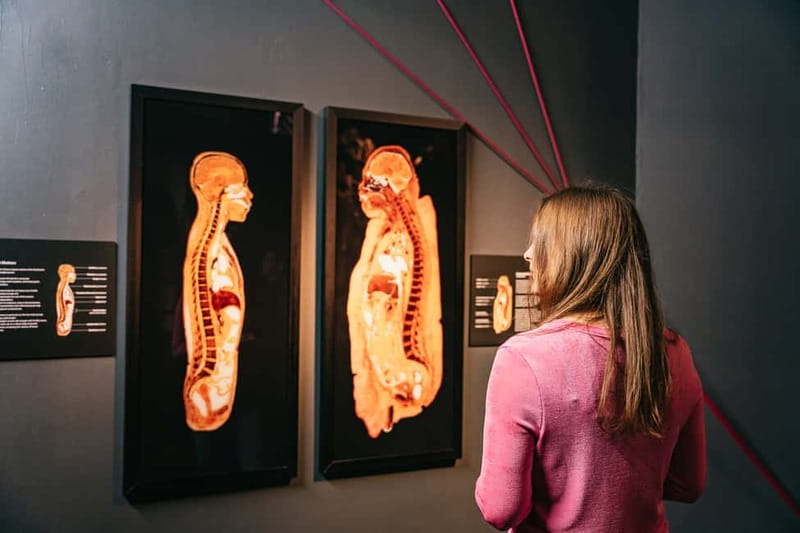
At $22 per person, the ticket includes admission to the BODY WORLDS exhibition. The value depends on how much you enjoy visual, educational exhibits. If you are curious about anatomy, the mix of whole-body plastinates, organs and explanations across multiple systems gives you a substantial subject to explore. If you prefer highly interactive attractions, you may find the experience less hands-on than you want.
The ticket does not include an audio guide, cloakroom or lockers. Lockers are available for an additional charge. An audio guide is offered separately, but some audio exhibits may be out of order, so I would treat it as a useful extra rather than the foundation of your visit.
English-language displays and audio are available, according to visitor experience, and an interactive guide on a phone has also been praised as helpful. That can make the exhibition easier to follow if you prefer listening or using your phone to support the visit. But the ticket itself does not include an audio guide, so check what is currently available before relying on a particular format.
The exhibition has a strong educational appeal for adults, families with older children, and teenagers studying the human body. Younger children may also find the displays engaging, but the real preparations are a serious consideration. School groups can make the rooms noisier, and a busy visit may be less calm than you would like. If quiet concentration matters, choose your visit time carefully within the daily opening hours.
A few practical details can improve the visit
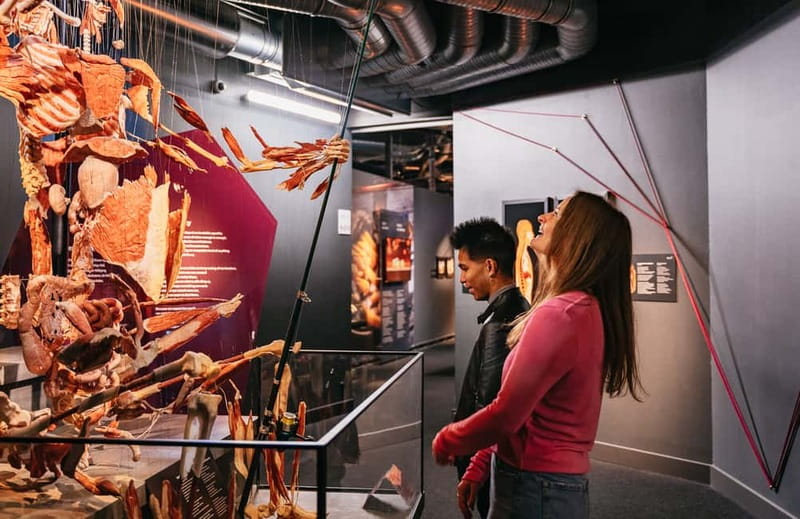
Wear comfortable shoes and keep your schedule flexible. No fixed duration is provided, and your pace will depend on how much time you spend with the displays. If you want to read closely or use an audio option, avoid arriving late in the afternoon.
Bring a plan for your belongings. The cloakroom is not included, and lockers cost extra. If you do not need to store anything, you can skip that expense; if you do, account for it when weighing the total price.
Keep in mind that not every audio station may be working. The visual exhibits and written explanations remain central to the visit, but if listening is important to you, confirm the available guide options before you go. English translations on displays and audio have been described as clear, which is reassuring for English-speaking visitors, though small translation or spelling errors can appear.
The exhibition has a 4.6 rating from 1,061 reviews, and the most consistent strengths are its educational value, unusual presentation and clear explanations. A few practical drawbacks recur: some displays may look dusty or tired, audio exhibits can be out of order, and children in school groups may be noisy. These do not erase the exhibition’s appeal, but they help set realistic expectations. This is a learning experience built around real preparations, not a polished, fully interactive theme attraction.
Should you book BODY WORLDS in Berlin?
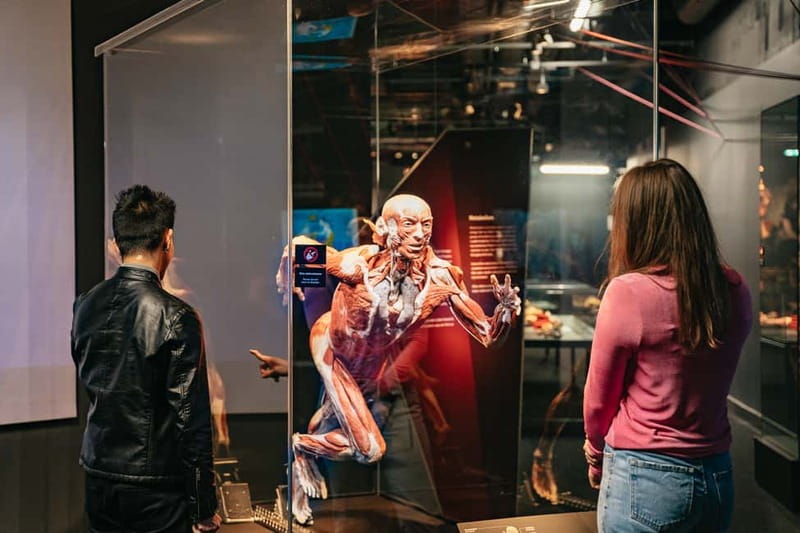
Book if you want to understand how the body works through direct visual examples, or if you enjoy science exhibitions that make familiar subjects feel newly visible. The wide range of systems, from muscles and digestion to circulation and the nervous system, gives the visit real educational value. The displays about stress, happiness and healthy living add another layer beyond anatomy.
Think twice if you are uncomfortable with real human remains, or if you want an attraction built around extensive hands-on activities. The material is unusual by nature, and the audio guide costs extra. At $22, the price is reasonable for an in-depth museum visit if the subject interests you, but less compelling if you expect a short, highly interactive stop.
For curious adults, teenagers and families prepared for direct anatomical displays, BODY WORLDS is a worthwhile Berlin visit. Go with time to look closely, and you will get more from the experience than a quick circuit of the exhibits.
FAQ
What does the BODY WORLDS ticket include?
The ticket includes entrance to the BODY WORLDS exhibition. It does not include the audio guide, cloakroom or lockers.
How much does admission cost?
The listed price is $22 per person.
What are the museum’s opening hours?
The museum is open daily from 10 AM to 7 PM. Last admission is at 6 PM, and the museum is closed on December 24.
Where does the visit start and end?
The meeting point is Panoramastraße 1a, 10178 Berlin. The activity ends back at the same meeting point.
Is the exhibition wheelchair accessible?
Yes, the activity is wheelchair accessible.
Can I cancel my booking?
Yes. You can cancel up to 24 hours in advance for a full refund.
Newest tours in Berlin
- Berlin: guided canoe | kayaktour★ 4.1 · 7 reviews
- Understanding Kreuzberg: The roots of local (sub)culture★ 4.9 · 11 reviews
- Where It All Began: Berlin’s Queer & Trans History Tour★ 4.9 · 6 reviews
- Warnemünde Shore Excursion: Private Sachsenhausen and Berlin Tour★ 5.0 · 12 reviews
- Ultimate E-Bike Tour of Berlin with Beer Garden Stop★ 5.0 · 4 reviews
- Potsdam Highlights – Private sightseeing tour by minibus★ 5.0 · 3 reviews
- Private Potsdam City Tour in an authentic vintage van★ 5.0 · 14 reviews
- Transfer from Berlin Schönefeld Airport (SXF) to Berlin city Hotels – ROUND TRIP★ 4.0 · 3 reviews
Berlin Museum Tickets, compared.


Skip-the-Line: Berlin Wall Museum at Checkpoint Charlie
Read our review →
East Side Gallery Spree Cruise in a Solar Catamaran
Read our review →Browse the lists this tour appears in