
Reviewed · SACHSENHAUSEN MEMORIAL TOURS
Never Again Sachsenhausen Concentration Camp
Sachsenhausen’s history reaches beyond its years as a Nazi concentration camp. It was later used as a Soviet special camp and then presented as a pro-communist, anti-fascist memorial. This four-hour tour helps you follow those changes and consider how a place can be used to shape political memory.
Two things I like about this tour’s approach: the guide connects the camp’s history to the present, including the rise of the far-right AfD, and the group is small, with no more than 15 people. Guide Siobhán also takes a sensitive, feminist perspective that brings attention to racism, women’s bodies, and medical abuse.
One consideration: this is a serious visit, and the subjects can be upsetting. The tour is not a dense academic lecture, but it does confront brutality and loss directly. You’ll also need to arrange and pay for your own public transport in Berlin’s ABC fare zone.
Key points
- A guided visit to Sachsenhausen lasts about four hours, with admission included.
- The group is limited to 15, allowing room for questions and discussion.
- Guide Siobhán connects past and present, including the camp’s later uses and current far-right politics.
- The barracks, kitchen, and infirmary each offer a different perspective on control, persecution, and medical abuse.
- Public transport is extra, and the tour begins and ends at Potsdamer Platz.
- The tone is respectful but not relentlessly grim, with room for thoughtful exchange and some appropriate levity.
A four-hour visit with a wider lens
Sachsenhausen is not a stop to squeeze between two cheerful Berlin attractions. The tour asks you to spend time with a painful history and to think about how that history is remembered and used. Its focus is not just what happened inside the camp, but also how the site’s meaning changed after the Nazi period.
The tour is offered in English and begins at Potsdamer Platz 10, then returns to the same meeting point at the end. The experience lasts about four hours. That gives the guide time to introduce the site and its history, then let you examine parts of the memorial for yourself.
The guiding style is more conversational than a tightly scripted academic lecture. That can be a strength if you want space to ask questions and think through what you’re seeing. It may be less suited to you if you prefer a highly detailed, lecture-style account with a dense timeline and extensive historical particulars.
The group limit of 15 is useful here. At a site where the subject matter can prompt difficult questions, a smaller group can make discussion easier and help the guide respond to the people in front of them. Siobhán’s approach, as described in the tour’s experience, is attentive and adaptable, including to a group of adults and teenagers.
More Sachsenhausen visits in Berlin:
- Berlin: Sachsenhausen Concentration Camp Tour in English
★ 5.0 · 5,711 reviews - Berlin: Sachsenhausen Concentration Camp Memorial Tour
★ 4.7 · 3,716 reviews - Sachsenhausen Concentration Camp Bus Tour in English from Berlin
★ 5.0 · 1,962 reviews
From Berlin to the memorial
The meeting point is Potsdamer Platz, and the tour ends there too. The public transport ticket is not included, so budget for your own travel to and from the memorial. The required fare is for Berlin’s ABC zone, a practical detail worth checking before you set out.
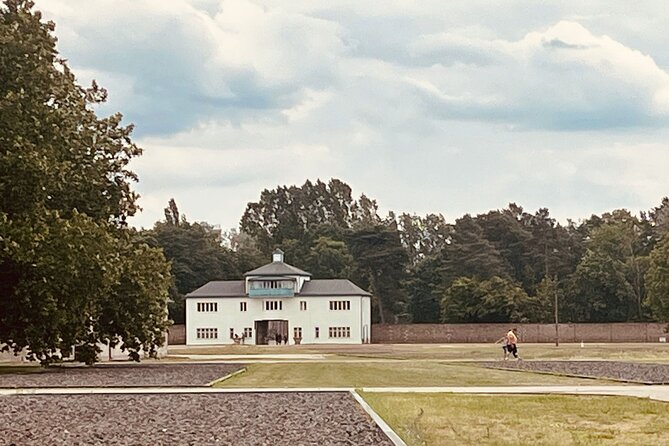
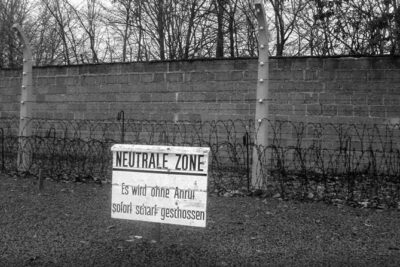
The route from the train station leads to the visitors’ center. Along the way, the guide introduces the site’s history and helps you understand the physical layout. At the center, models show how the camp’s structures were designed to control prisoners and reinforce the Nazi system of superiority.
That context matters. A camp model might seem like a dry museum display, but here it helps you read the site as a planned system rather than a collection of isolated buildings. It gives you a clearer sense of how space itself was used to impose control.
The walk also brings up an unsettling change in the area’s use: the former SS training camp became the home of today’s Brandenburg police academy. That juxtaposition makes the history feel less remote, though it may also feel jarring. The guide’s task is to explain the change without smoothing over its difficult associations.
Barracks and kitchen: seeing control up close
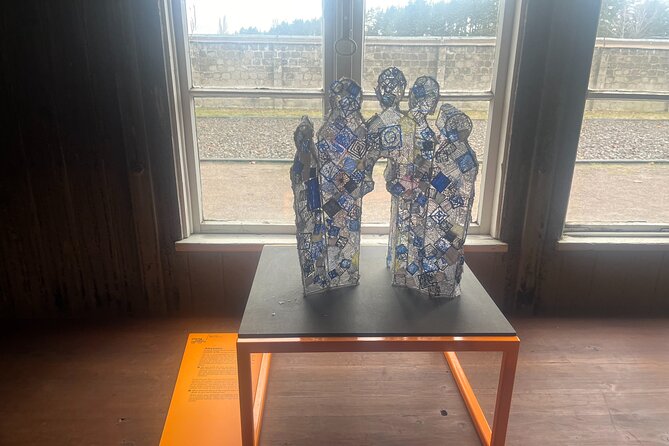
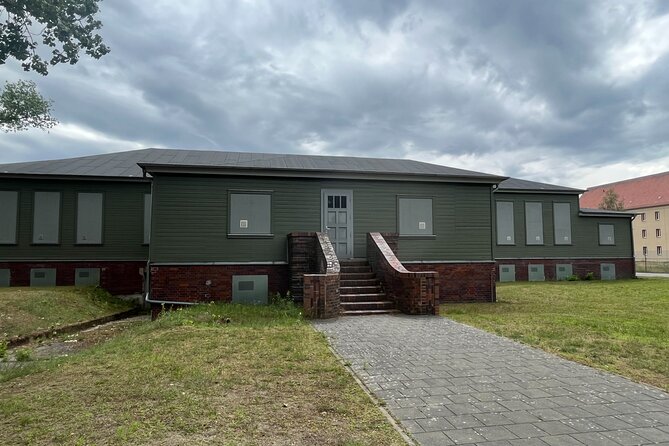
The tour allows time for autonomous exploration of the prisoners’ barracks and the camp kitchen. In other words, you are not accompanied by a running explanation at every step. The guide provides context, and you then have the chance to look around and take in the spaces at your own pace.
That balance suits a memorial visit. Listening can help you understand the structures, while quiet observation leaves room to process them. But it also means you should be ready to engage actively, rather than expect a guide to narrate every detail from start to finish.
The kitchen has particular weight because the site has been attacked by neo-Nazis who deny the Holocaust. That fact links the memorial to the continuing struggle over historical truth. The tour also connects this subject to the rise of the AfD, a German far-right group.
These present-day connections are a defining feature of the experience. They do not replace the history of the camp, but they give you a way to consider why remembrance still matters. If you prefer a visit focused only on the past, the tour’s contemporary political framing may not match your expectations. Its perspective is explicitly progressive and feminist, though the guide’s approach is described as thoughtful rather than heavy-handed.
The infirmary and the human cost of Nazi medicine
The infirmary section confronts racism, control over women’s bodies, and eugenics. It also addresses the use of prisoners as test subjects by Nazi doctors seeking to advance their careers. This is one of the tour’s hardest parts, and it makes clear how medical authority could be turned into an instrument of persecution.
A guided explanation can help you understand the ideas behind these crimes, not just their physical setting. The focus on women’s bodies and eugenics adds a perspective that can be missed in a more general account of the camp. It also connects the treatment of individual prisoners to wider systems of power and ideology.
Expect this part to be upsetting. The tour is designed to confront the past, not to make it comfortable. Siobhán is described as attentive to the brutality and suffering, as well as to the feelings of people visiting the site. She also makes room for appropriate levity at moments, which can help a difficult visit feel thoughtful rather than overwhelming.
Same city, a different kind of day:
- Berlin: Reichstag, Dome and Government District Guided Tour
★ 4.7 · 18,288 reviews - Berlin: 1-Hour City Tour by Boat with Guaranteed Seating
★ 4.3 · 16,993 reviews - Berlin: Boat Tour Along the River Spree
★ 4.4 · 11,252 reviews - Discover Berlin Half-Day Walking Tour
★ 5.0 · 9,624 reviews
Sachsenhausen after the Nazi period
The experience also traces how Sachsenhausen was used after the Nazi camp. It became a Soviet special camp, and later served as a pro-communist, anti-fascist propaganda tool. Those later chapters complicate the idea of the memorial as a straightforward account of one period.
That wider history is valuable because it shows that remembrance is shaped by politics. The site’s meaning changed over time, and understanding those shifts helps you approach the memorial with more care. The tour’s approach is to explain these uses and encourage you to think about what they reveal.
This is not presented as a reason to blur the crimes of the Nazi period with later events. Rather, it helps you see how a place can be used for different political purposes, and why the way history is told deserves attention. If that broader frame interests you, it adds depth to the visit. If you want a tour focused narrowly on the camp under Nazi rule, ask yourself whether you want this additional layer.
What the $31.29 price includes
At $31.29 per person, the price includes admission to the memorial and a donation for the site. For a four-hour guided experience with a maximum group size of 15, that is a reasonable price if you value having a guide set the context and connect the different chapters of the site’s history.
The price does not cover snacks, bottled water, or the public transport ticket for the ABC zone. Those are modest but important costs to plan for, especially since the tour involves walking and lasts several hours. The listed physical fitness level is moderate, so this is not a visit to book if you need a purely seated experience.
The tour is typically booked about 17 days ahead. That is useful to know if your Berlin dates are fixed, though it does not mean you need to book exactly that far in advance. Confirmation is provided at booking, and free cancellation is available up to 24 hours before the start time. If the minimum number of participants is not met and the tour is canceled, you can be offered another date or experience, or receive a full refund.
Who should choose this tour?
Choose this experience if you want more than an audio guide and value a human guide who can answer questions and frame the site’s history. Siobhán’s progressive, feminist approach is an important part of the tour’s character. It suits you if you want to consider how racism, eugenics, women’s bodies, and contemporary far-right politics connect to the history of Sachsenhausen.
It can also work for mixed-age groups: the guide has adapted explanations for a group of teenagers and adults. Still, the subject is heavy, and each person should be ready for frank discussion of persecution and medical abuse. The tour is best for people willing to listen, ask questions, and spend time with difficult material.
If you want a very formal lecture with a tightly scripted academic structure, you may prefer another format. If you want a guided, personal account that treats the site with care and leaves room for reflection, this offers a thoughtful way to visit. Allow the full four hours, arrange your ABC-zone transport separately, and do not plan a demanding activity immediately afterward if you think you’ll need time to process what you have seen.
FAQ
How long is the Sachsenhausen tour?
The tour lasts about four hours, including the visit to the memorial and museum.
Where does the tour start and end?
It starts at Potsdamer Platz 10 in Berlin and ends back at the same meeting point.
Is public transport included in the price?
No. You need to arrange and pay for your own public transport ticket for Berlin’s ABC zone.
What is included in the $31.29 price?
Admission to the memorial is included, along with a donation for the memorial. Snacks, bottled water, and public transport are not included.
What language is the tour offered in, and how large is the group?
The tour is offered in English and has a maximum group size of 15 people.
Can I cancel the tour?
You can cancel up to 24 hours before the start time for a full refund. Cancellations or changes made less than 24 hours before the start time are not accepted for a refund or change.
Newest tours in Berlin
- Berlin: guided canoe | kayaktour★ 4.1 · 7 reviews
- Understanding Kreuzberg: The roots of local (sub)culture★ 4.9 · 11 reviews
- Where It All Began: Berlin’s Queer & Trans History Tour★ 4.9 · 6 reviews
- Warnemünde Shore Excursion: Private Sachsenhausen and Berlin Tour★ 5.0 · 12 reviews
- Ultimate E-Bike Tour of Berlin with Beer Garden Stop★ 5.0 · 4 reviews
- Potsdam Highlights – Private sightseeing tour by minibus★ 5.0 · 3 reviews
- Private Potsdam City Tour in an authentic vintage van★ 5.0 · 14 reviews
- Transfer from Berlin Schönefeld Airport (SXF) to Berlin city Hotels – ROUND TRIP★ 4.0 · 3 reviews
Sachsenhausen Memorial Tours, compared.
Sachsenhausen Concentration Camp Tour in English
Read our review →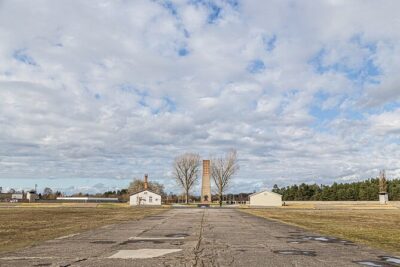
Sachsenhausen Concentration Camp Memorial Tour
Read our review →
Sachsenhausen Concentration Camp Bus Tour in English from Berlin
Read our review →
Sachsenhausen Concentration Camp Memorial Tour (Max. 15 Guests)
Read our review →
Sachsenhausen Concentration Camp and Potsdam Tour
Read our review →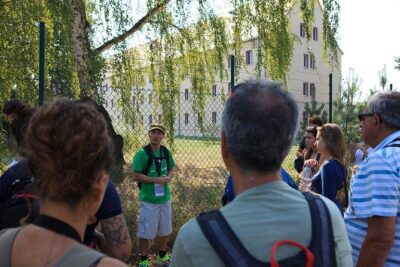
Visita en español al campo de concentración Sachsenhausen
Read our review →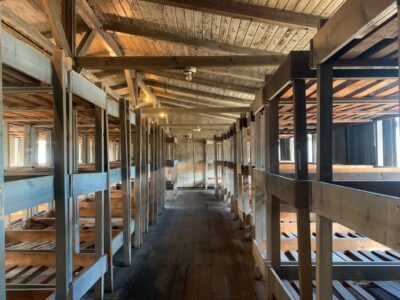
Browse the lists this tour appears in