
Reviewed · BERLIN WALL TOURS
Cold War, Berlin Wall, Spies and the East Side Gallery
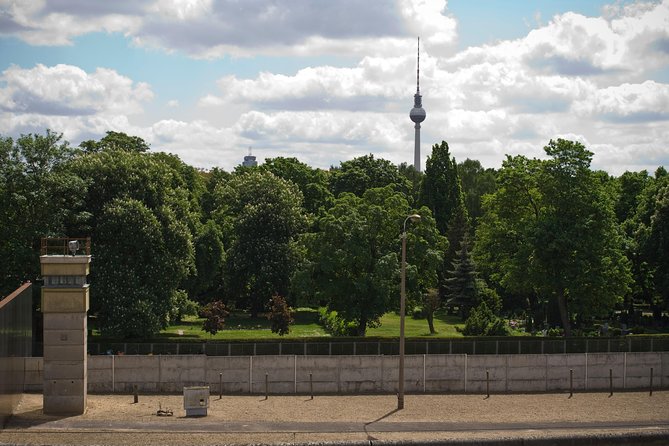
Berlin’s Cold War story is easiest to grasp when you can stand where the border once cut through the city. This three-hour tour links the Palace of Tears, East Berlin landmarks and surviving sections of the Wall, then ends at the East Side Gallery, where painted concrete has replaced a lethal border with a public canvas.
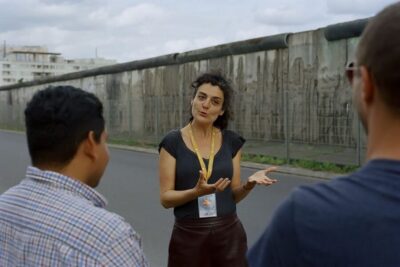
I like that the route connects political history with personal experience, from families forced to part at the Palace of Tears to escape attempts near Bernauer Strasse. I also like that local guides such as Klaus, Maria, Nikolai and Tobi have brought the period alive with anecdotes, photographs and, in some cases, firsthand memories of growing up in East Berlin.
One practical drawback: the advertised price of $18.04 does not include the Berlin AB transit ticket, listed at €10 per person. You’ll also need to arrive 15 minutes early at the correct meeting point, so check the address carefully before setting off.
At a glance
- The Wall is more than a photo stop: Explore the history of the Death Strip and surviving sections of the border.
- The Palace of Tears puts people first: See the former crossing where East and West Berliners said goodbye.
- East Berlin gets its own story: Alexanderplatz and Karl-Marx-Allee show how communist power shaped everyday city life.
- The route uses public transport: Bring money for the required Berlin AB ticket, and expect some travel between stops.
- The finish is the East Side Gallery: The former border’s longest remaining section is now covered with murals.
- Guides shape the experience: The strongest accounts pair clear historical context with stories and time for questions.
Starting at Friedrichstrasse, a border crossing in the middle of the city
The tour begins at Reichstagufer 17, by Friedrichstrasse station, at 10 a.m. The meeting point matters: Friedrichstrasse was not just a convenient station. It was a major crossing between East and West Berlin, and the tour uses that setting to introduce the divisions you’ll see throughout the day.
Arrive 15 minutes before the start. The meeting address is easy to confuse with the station itself, and a taxi or rideshare can leave you at the wrong spot. One person missed the tour after being dropped about 1.5 kilometres away, so confirm the exact location before you leave. The operator did not provide a refund in that case.
From here, the guide sets out the basic frame: after World War II, Berlin became a focus of the struggle between the Soviet Union and the United States and its NATO allies. That helps make sense of the city’s divided streets, border controls and competing political systems. The tour also describes an underground connection as a ghost train route, a useful way to picture how movement through the city could be shaped by the border.
The group is capped at 22 people. That is small enough to make questions possible, though you may need to stay close to hear the guide, especially outdoors or around busy streets. Past guides have included Klaus, Maria, Ariel, Paul, Cameron and Nikolai. The guide on your date may be someone else, but the experience is at its best when the guide keeps the story structured and welcomes questions.
More Berlin Wall tours in Berlin:
- Skip-the-Line: Berlin Wall Museum at Checkpoint Charlie
★ 4.1 · 2,041 reviews - Berlin: East Side Gallery Spree Cruise in a Solar Catamaran
★ 4.0 · 1,039 reviews - THE WALL: asisi Panorama Berlin Ticket
★ 4.5 · 580 reviews
The Palace of Tears makes division personal
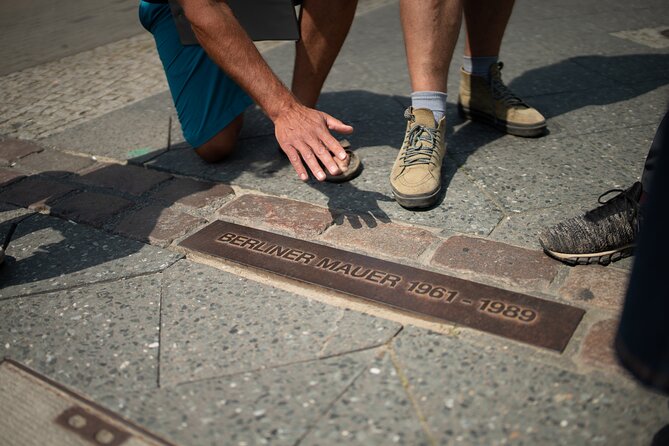
The Tränenpalast, or Palace of Tears, was a border crossing at Friedrichstrasse station. Its name comes from the painful farewells made there when people from East and West Berlin were separated. After hearing about rival superpowers and surveillance, this is where the human cost becomes immediate.
The tour allows about 20 minutes at the site. The museum’s exhibits cover separation, escape attempts and reunification, giving you a chance to connect political decisions with family life. Admission is listed as free, so this is one of the tour’s most useful stops without an extra entry charge.
I’d pay attention to the small details here: the Palace of Tears is not simply another preserved Cold War building. It helps explain what a border meant to ordinary people, especially when a visit, goodbye or journey could be controlled by the state. The short visit may leave you wanting more time to read every exhibit, but it gives the wider walking tour a strong emotional anchor.
Alexanderplatz shows East Berlin’s public face
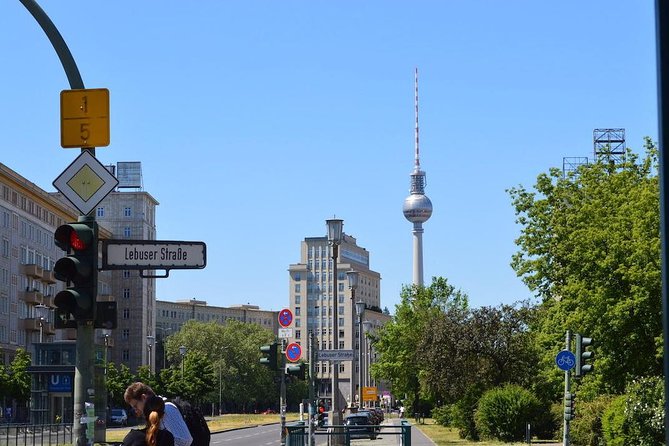
At Alexanderplatz, the guide turns from the border itself to life in East Berlin. The square was a center of communist power, public rallies and daily activity. Its architecture and socialist symbols reveal the official image the German Democratic Republic wanted to project, while stories about surveillance and daily routines help you see beyond the image.
The stop is about 15 minutes, so expect an overview rather than an extended architectural tour. Its value lies in the contrast: Alexanderplatz was a public stage for the state, but also part of the everyday city people had to navigate. The guide can help you link the visible buildings and symbols to the experience of living in a heavily policed society.
This is also where a clear guide makes a real difference. The subject can quickly become a string of dates and political labels. Strong storytelling ties the broad Cold War struggle to concrete questions: who could move where, what the state watched, and how people managed ordinary life under that scrutiny.
Karl-Marx-Allee puts ideology in the street
Karl-Marx-Allee was East Germany’s showcase boulevard, built on a monumental scale to express the state’s ambitions. The tour spends about 20 minutes here, where the grand architecture gives you a different view of communist Berlin than the checkpoints and Wall remains do.
The buildings were meant to impress, and that is precisely why the stop matters. They show how political ideas were put into the city itself, not just printed on posters or discussed in speeches. The guide can set the official image of socialist prosperity beside the less grand realities of daily life behind the Iron Curtain.
Admission is not included at this stop, though the itinerary does not specify a separate ticket or interior visit. Think of it primarily as an outdoor look at the boulevard and its role in East Berlin’s identity. If architecture interests you, this may be a highlight; if you are mainly here for escape stories and Wall history, it is useful context rather than the emotional peak.
More Cold War tours in Berlin:
- Berlin: Third Reich and Cold War 2 Hour Walking Tour
★ 4.9 · 6,830 reviews - Berlin’s Best: 2 Hour Walking Tour Third Reich and the Cold War
★ 5.0 · 5,486 reviews - Berlin: DDR Museum Tickets
★ 4.3 · 3,443 reviews - Berlin: Cold War Walking Tour on Berlin Wall Route
★ 4.8 · 437 reviews
Wall remains and the Death Strip bring the risks into view
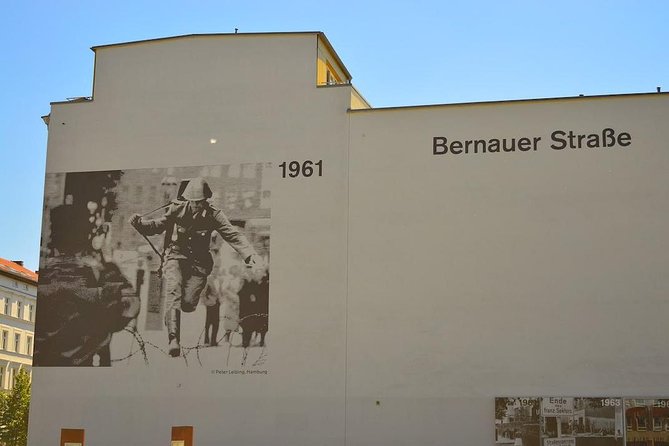
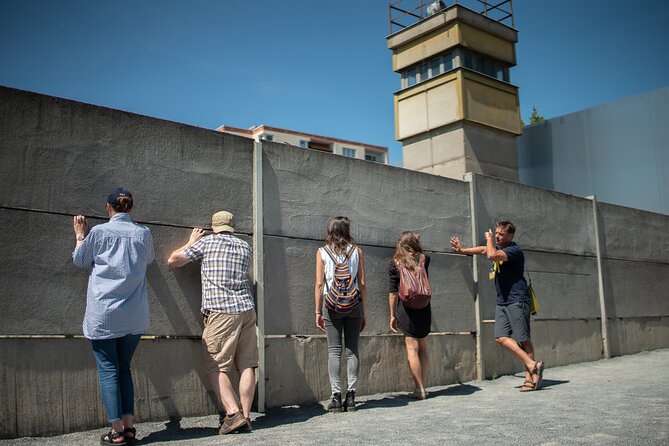
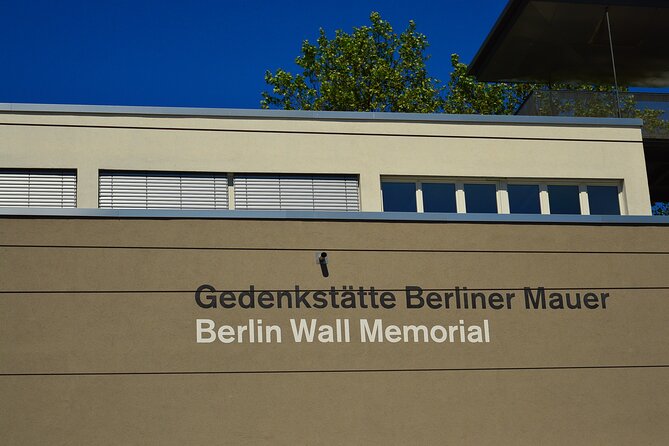
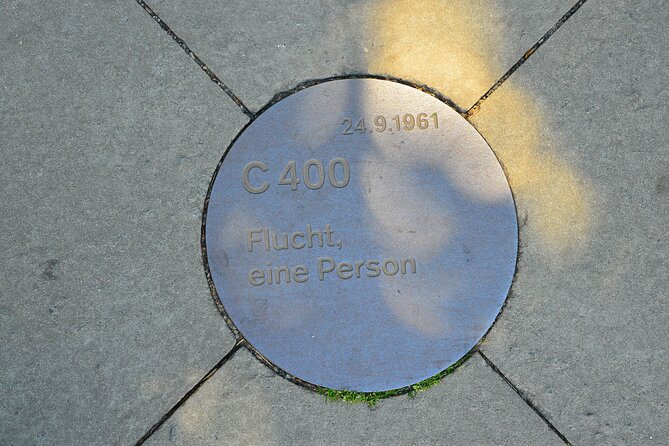
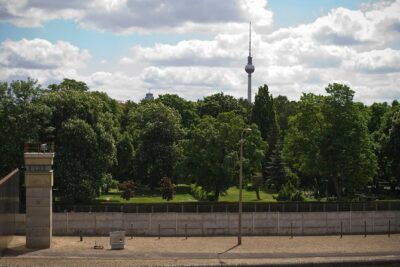
The tour’s most sobering moments come where you can see what remains of the Berlin Wall and hear about the Death Strip. Bernauer Strasse is associated with remarkable escape attempts, and the Berlin Wall Memorial preserves a setting where the border’s physical design becomes easier to understand.
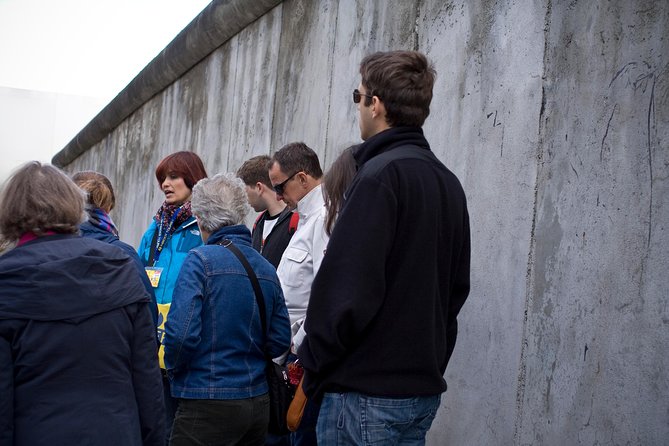
The experience is not limited to the famous concrete panels. The guide also explains how the space between border lines functioned and what the surveillance system was intended to prevent. The tour covers the Stasi, the East German secret police, as well as the CIA and KGB, placing local control within the wider contest between the two blocs.
One especially striking account from a past tour described looking through a crack on the eastern side of the Wall toward the former death zone and the western side. That image captures why standing at a surviving stretch can be more affecting than seeing a wall fragment in isolation. You get a sense of how the border divided actual streets and lives, not just a map.
The tour also refers to the former Stasi and hidden areas of the Death Strip. The supplied route does not give a separate timed stop for a Stasi museum, so don’t assume you’ll have a full museum visit as part of the three hours. For a closer look at the secret police, one past participant recommended continuing afterward with the Stasi Museum.
Brandenburg Gate offers a different symbol
The tour description includes a walk beneath Brandenburg Gate, a monument that shifted from symbol of division to symbol of peace and unity. Its role in the route is a reminder that Cold War Berlin was not only made of checkpoints and gray border structures. Major national symbols also took on new meaning as the city changed.
The named itinerary does not give this stop a separate time allocation, so treat it as a feature of the route rather than a guaranteed long visit. If you want time for photographs or a closer look, you may need to return independently.
East Side Gallery turns the Wall into public art
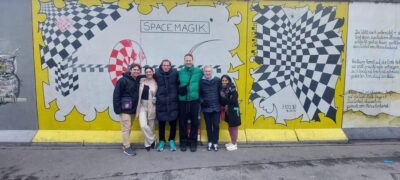
The tour ends at the East Side Gallery, a long surviving section of the Berlin Wall covered with murals. The contrast is striking: concrete that once marked a dangerous border now carries art about freedom, resistance and hope. The visit lasts about 25 minutes, enough to take in the setting and several works, though not necessarily enough for an unhurried look at every mural.
Ending here gives the day a natural arc. You begin with the mechanics of division, move through the structures and daily life of East Berlin, then finish at a place where the Wall’s meaning has changed. The Gallery is a public site with no admission charge listed, and it sits among onward transport options for your return journey.
The tour ends at Mühlenstraße in the 10243 district. If you are planning another activity, the final location is convenient for continuing across the city. The route involves public transport, so keep your AB ticket handy rather than assuming the whole experience is on foot.
What the $18.04 price really covers
At $18.04 per person, the tour is an inexpensive way to get a structured introduction to Cold War Berlin. You are paying for a local guide who links sites that can otherwise feel scattered, and who can explain why each one matters. The price is especially good value if you are new to the subject or want context before visiting the Wall Memorial and East Side Gallery on your own.
But the stated price is not the full cost. A Berlin AB Zone transport ticket is required and listed at €10 per person, purchased at the meeting point. Food and drinks, hotel pickup and drop-off are not included. There is no need to budget for entry at the Palace of Tears or East Side Gallery based on the provided tour details, but the tour does not include a separate Stasi Museum admission.
The walk lasts about three hours, though one past participant noted that the guide went over time while answering questions and adding context. That can be a bonus if you like a flexible lesson, but don’t schedule a tight appointment immediately afterward. The stop times add up to less than the full duration because transport and movement between locations take time.
Who will get the most from this Cold War walk
Choose this tour if you want more than a quick photo at the Wall. It suits history-minded visitors who want to connect military tension, secret-police surveillance, attempted escapes and ordinary life in East Germany. Families may also find it useful: one guide’s firsthand stories helped children understand the period, and the route gives younger visitors tangible places to connect with the history.
It is a good fit if you enjoy asking questions and hearing personal anecdotes alongside the larger story. Guides have used photographs and shared family experiences, and the strongest tours seem to balance explanation with human detail. You may also appreciate the moderate walking pace described by one participant, though the route still requires moving between stops and using public transport.
Consider another option if you need a strictly timed, highly uniform tour or want long visits inside museums. The experience depends in part on the guide, and one person found a tour poorly structured, hard to hear and short on historical context. That appears to be an exception among the feedback supplied, but it is a fair reminder to stay near the guide and speak up if you cannot hear.
The tour is offered in English, uses a mobile ticket and is typically booked about 31 days ahead. Free cancellation is available up to 24 hours before the start time. Most people can participate, and service animals are allowed.
Should you book it?
I would book this tour if you want an affordable, guided route that makes Berlin’s Cold War sites easier to read. The Palace of Tears, Bernauer Strasse, East Berlin’s monumental avenues and the East Side Gallery each tell a different part of the story, and a strong guide can connect them in a way a self-guided stroll may not.
Book with realistic expectations: bring money for the transit ticket, check the meeting address, arrive early and leave room after the tour in case it runs long. If you want a full museum day or a guaranteed deep visit to the Stasi Museum, plan that separately. For a three-hour introduction to the divided city, this is a worthwhile buy.
FAQ
How long is the tour?
The tour lasts approximately three hours. Allow some flexibility afterward, since a past tour ran over while the guide answered questions and added information.
Where does the tour start and finish?
It starts at Reichstagufer 17, 10117 Berlin, near Friedrichstrasse station, and finishes at the East Side Gallery on Mühlenstraße, 10243 Berlin. Arrive 15 minutes before the 10 a.m. start.
Is public transport included?
No. A Berlin AB Zone transport ticket is required and is listed at €10 per person. It can be purchased at the meeting point.
What is included in the price?
A local expert guide is included. Transport, food and drinks, and hotel pickup and drop-off are not included.
Is the East Side Gallery included, and does it have an admission fee?
The tour ends at the East Side Gallery and includes about 25 minutes there. Admission is listed as free.
Can I cancel the tour?
You can cancel for a full refund if you do so at least 24 hours before the experience starts. Changes made less than 24 hours before the start are not accepted.
More museum visits in Berlin
- Berlin: Jewish Museum Berlin Entrance Ticket
★ 4.5 · 8,393 reviews - Berlin: Natural History Museum Entrance Ticket
★ 4.6 · 3,382 reviews - Berlin: Neues Museum Entry Ticket
★ 4.6 · 3,261 reviews - Berlin: Museum Island Multiple Museum Entry Ticket
★ 4.4 · 2,007 reviews
Newest tours in Berlin
- Berlin: guided canoe | kayaktour★ 4.1 · 7 reviews
- Understanding Kreuzberg: The roots of local (sub)culture★ 4.9 · 11 reviews
- Where It All Began: Berlin’s Queer & Trans History Tour★ 4.9 · 6 reviews
- Warnemünde Shore Excursion: Private Sachsenhausen and Berlin Tour★ 5.0 · 12 reviews
- Ultimate E-Bike Tour of Berlin with Beer Garden Stop★ 5.0 · 4 reviews
- Potsdam Highlights – Private sightseeing tour by minibus★ 5.0 · 3 reviews
- Private Potsdam City Tour in an authentic vintage van★ 5.0 · 14 reviews
- Transfer from Berlin Schönefeld Airport (SXF) to Berlin city Hotels – ROUND TRIP★ 4.0 · 3 reviews
Berlin Wall Tours, compared.
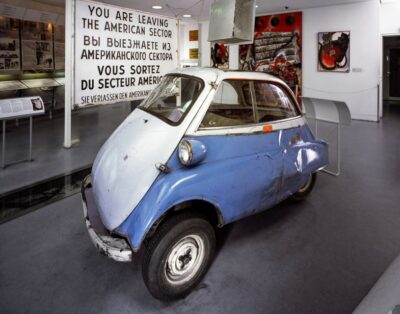
Skip-the-Line: Berlin Wall Museum at Checkpoint Charlie
Read our review →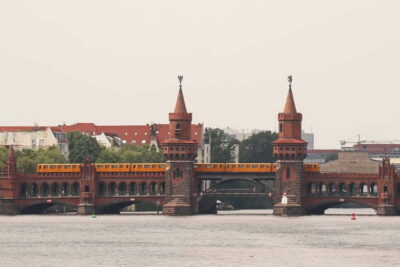
East Side Gallery Spree Cruise in a Solar Catamaran
Read our review →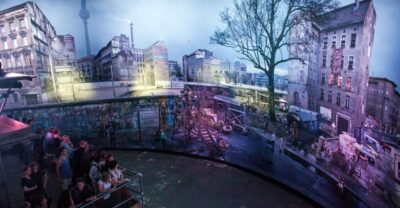
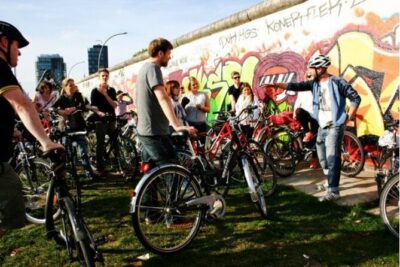
Guided Bike Tour of the Berlin Wall and Third Reich
Read our review →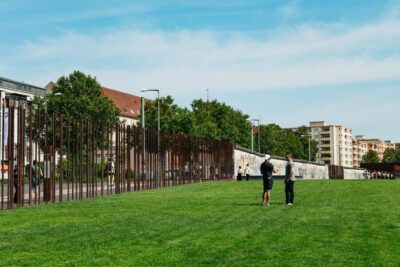
Cold War, Berlin Wall, Spies and the East Side Gallery
Read our review →Browse the lists this tour appears in