
Reviewed · BERLIN COLD WAR TOURS
East Berlin: City of Shadows Walking Tour
At the Brandenburg Gate, a call to tear down the Wall meets the grand old Soviet Embassy, built amid the ruins of World War II. That contrast sets up the tour’s best idea: Berlin’s streets and buildings are not just scenery, they show how power shaped daily life. I like the focus on personal stories from divided Berlin and the chance to connect widely scattered Cold War sites with a local historian.
I also like the small group limit of eight, which should make it easier to follow the story and ask questions. The trade-off is that this is a three-hour overview, with short stops and no museum admission. If you want to spend real time inside the Stasi Museum or other museums, plan a separate visit.
- Start at the Brandenburg Gate: Learn how the postwar division of Germany set the stage for decades of conflict.
- See the Palace of Tears: Friedrichstrasse station marks a crossing where families said painful goodbyes.
- Spot the traces of division: Nordbahnhof’s ghost stations show how the border cut through ordinary transport.
- Walk beside the Wall’s Death Strip: The memorial focuses on escape attempts and the people who died trying.
- Hear how surveillance worked: The former Stasi headquarters introduces East Germany’s secret police and spy network.
- Finish at Alexanderplatz: The site of mass demonstrations in 1989 brings the tour’s story to the regime’s collapse.
Berlin’s Cold War story starts at the Brandenburg Gate
This tour gives you a useful frame for Berlin before you set off to explore on your own. At the Brandenburg Gate, the guide discusses the Allied division of Germany into four zones after World War II and how that arrangement hardened into decades of Cold War tension. The nearby former Soviet Embassy adds a striking visual clue: built in 1945 among the wreckage, it was a show of Stalin’s ambition to control the whole city.
The Gate also links the city’s older history to the final years of division. In 1987, US President Ronald Reagan called on Soviet leader Mikhail Gorbachev to tear down the Wall here. You’ll hear about that moment alongside the realities of Communist rule, growing discontent in East Germany, and the government’s brutal response.
This is a strong opening because it moves beyond famous dates and helps you read the buildings around you. You are not just hearing that Berlin was divided; you are looking at places where that division shaped public life and personal choices. The first stop lasts about 20 minutes, so expect a concise introduction rather than a long lecture.
Friedrichstrasse makes the border personal

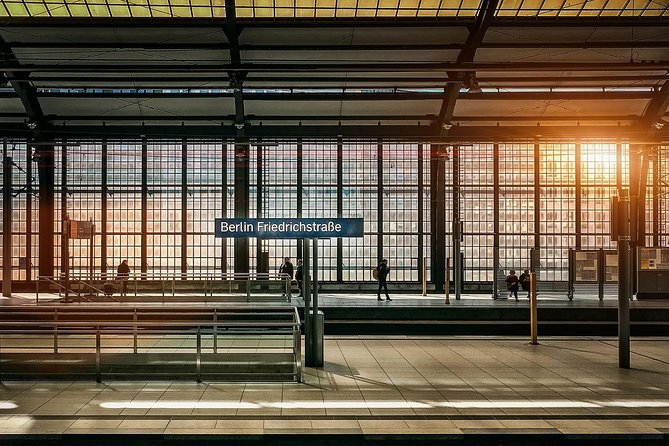
At Friedrichstrasse station, the tour turns from national politics to family life. This was a major crossing point between East and West Berlin. The station’s role in those crossings makes it a fitting place to talk about East Germany’s strict immigration rules and the families separated by them.
The nearby Palace of Tears gets its name from the goodbyes made there. It is a powerful stop because it puts a human scale on an otherwise abstract border. A map can show where the crossing stood; the stories help you grasp what it meant to leave someone behind.
You’ll spend about 15 minutes here. That is enough to set the scene and hear the history, but not a long visit to an exhibition. If you want more time with Berlin’s border history, consider returning to the area on your own after the tour.
More walking tours in Berlin:
- Discover Berlin Half-Day Walking Tour
★ 5.0 · 9,624 reviews - Berlin: Third Reich and Cold War 2 Hour Walking Tour
★ 4.9 · 6,830 reviews - Berlin: Discover Berlin Walking Tour
★ 4.9 · 5,998 reviews
Nordbahnhof reveals the city beneath the city
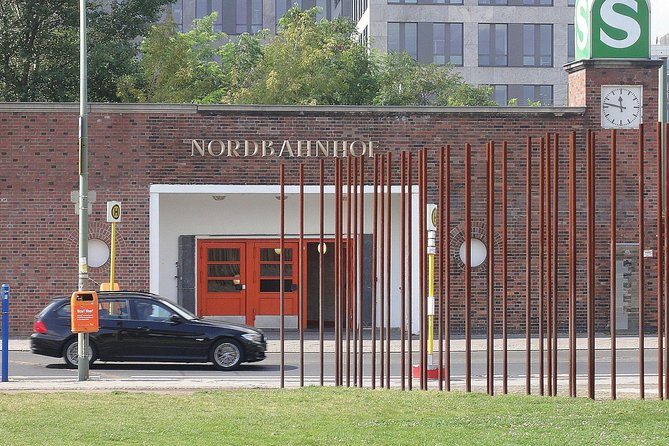
At Park am Nordbahnhof, the subject is the so-called ghost stations. Berlin’s division left some stops on West Berlin subway lines inside East German territory. Trains passed through these stations without stopping, while the sites were unused and heavily guarded.
This is one of the tour’s more unusual details. The border did not only split streets and neighborhoods. It also interrupted the city’s transport system, turning familiar infrastructure into a controlled zone. You’ll spend about 10 minutes here, enough to understand the idea and why it mattered to daily movement.
The stop is best appreciated as part of the wider route. It is not a long museum visit or a chance to explore an underground station in depth. Instead, it gives you a sharp example of how the division reached into ordinary routines.
Karl-Marx-Allee shows the promise and strain of East Berlin
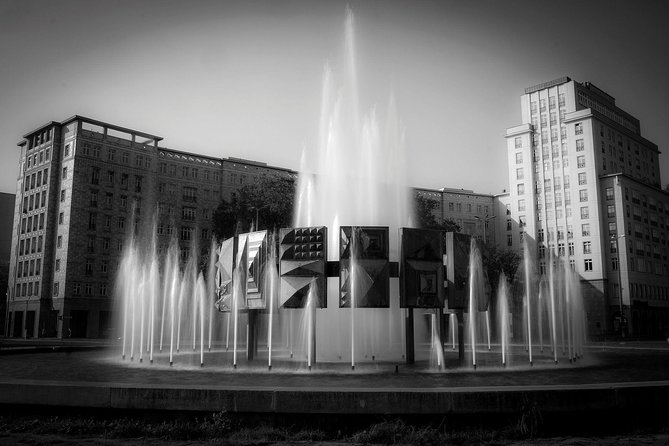
Karl-Marx-Allee brings you to a grand, mile-long housing complex built as a statement of socialist ambition. Here, the guide considers how dreams of a Socialist paradise gave way to deprivation, suppression, and paranoia.
The scale of the buildings helps make the topic tangible. This is not just a discussion of government policy; it is a chance to see the kind of urban environment the state chose to build. The stop lasts about 10 minutes, so expect an introduction to the avenue’s meaning rather than a detailed architectural tour.
I like that the route includes places beyond the best-known Wall sites. Karl-Marx-Allee helps explain how the East German government tried to present its vision of society in the built environment. It also gives you a useful contrast with the older landmarks and the more familiar border memorials.
The Berlin Wall Memorial remembers the people who tried to escape
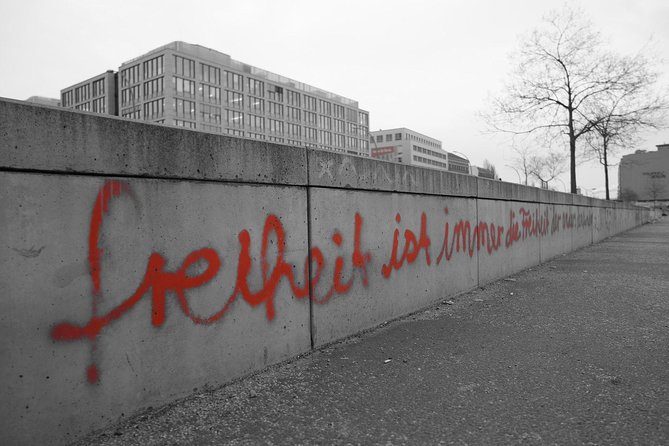
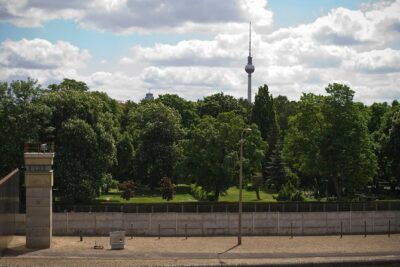
The Berlin Wall Memorial is the emotional center of the tour. Here you can experience the notorious Death Strip and hear about East Berliners whose escape attempts ended in tragedy. The focus on individual lives gives the Wall a human meaning that photographs and maps alone can miss.
You’ll have about 15 minutes at this stop. That is a brief visit for a subject this large, so think of it as an introduction rather than a complete memorial experience. If the stories move you, return later with more time to explore the site at your own pace.
The stop also helps tie earlier parts of the tour together. The border was not only a line on a map or a barrier between political systems. It was a dangerous obstacle that people tried to cross, with deadly consequences.
More Cold War tours in Berlin:
- Berlin’s Best: 2 Hour Walking Tour Third Reich and the Cold War
★ 5.0 · 5,486 reviews - Berlin: DDR Museum Tickets
★ 4.3 · 3,443 reviews - Cold War, Berlin Wall, Spies and the East Side Gallery
★ 5.0 · 1,024 reviews - Berlin: Cold War Walking Tour on Berlin Wall Route
★ 4.8 · 437 reviews
The former Stasi headquarters explains surveillance
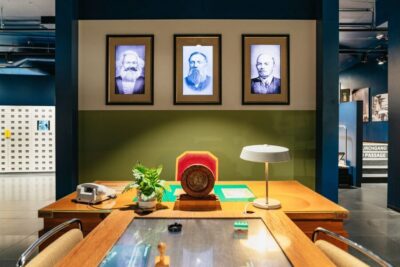
At the Stasi Museum stop, the guide introduces East Germany’s secret police, the Stasi, and its leader Erich Mielke. The discussion covers how the agency pressured neighbors and family members to spy on one another, built a large network of informants, and developed surveillance methods.
There is an important distinction here: the tour visits the former Stasi headquarters, but museum admission is not included. The planned stop is about 10 minutes, so do not expect to go through the museum’s displays as part of the tour. If you want to see the exhibits, set aside another visit and check the museum’s access details separately.
This is one of the stops where a guided overview can be especially useful. The subject can feel broad and technical, and a historian can help you understand the scale and effect of surveillance before you explore more on your own. Still, if the Stasi is your main interest, the short stop will likely leave you wanting a longer visit.
Alexanderplatz brings the story to 1989
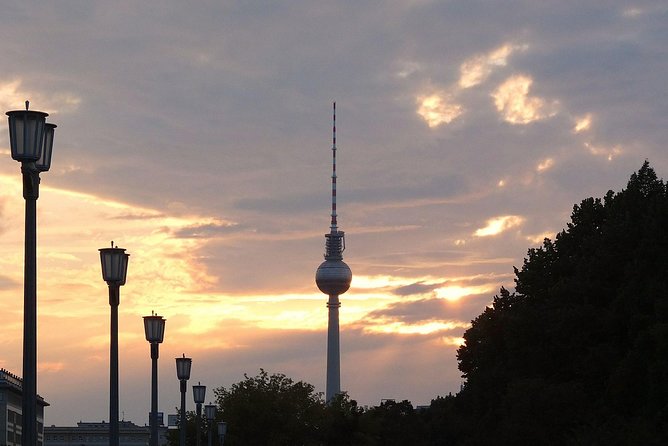
Alexanderplatz was the center of public life in East Berlin. The square was rebuilt in the 1960s with symbols of state confidence, including the futuristic parliament building and the TV Tower. In 1989, it became the setting for mass demonstrations that helped bring Communist rule to an end.
This final stop gives the tour a clear arc. You begin with the postwar division and move through border controls, surveillance, and the daily reach of the state. At Alexanderplatz, the story turns to the protests that helped end 40 years of Communist rule.
The stop lasts about 10 minutes, which is enough to connect the square’s landmarks with the political shift, but not to explore the area in detail. It is a useful finish if you want a concise account of how the regime fell and where public dissent became visible.
What the three-hour format gives you
The tour runs for about three hours and covers seven stops. The short visits keep the route moving and let you see several parts of Berlin’s divided past in one outing. In return, you get an overview, not deep time at each site. That makes this a good first-day activity if you want a historical map in your head before exploring further.
Some distances are too great to walk, so you’ll use public transport a few times. Transport is not included. If you already have a Berlin visitor transit pass, you can use it; otherwise, the tour information recommends a day ticket. Listed fares are €2.80 for a one-way AB ticket and €7 for a one-person day ticket, with lower senior fares of €1.70 and €4.70 respectively. If you cannot buy a ticket in advance, the guide can help you purchase one at the first metro station.
The group is limited to eight people, and the tour is offered in English. A moderate level of physical fitness is advised, so plan for a walking tour rather than a ride between every stop. Food and drinks are not included.
The meeting point is Unter den Linden 42, and the tour ends in Berlin. Pickup is shown as offered, with hotel or accommodation pickup mentioned, but hotel pickup and drop-off are also listed as not included. Confirm the pickup arrangement before booking rather than assuming a hotel transfer is part of the price.
Is $156.53 good value?
At $156.53 per person, this is not a bargain walking tour. The price makes the most sense if you value a historian’s explanation and want a guided overview that links sites across the city. The small group can also make it easier to ask questions than on a large coach tour.
But the price does not cover transport, food, or entry to museums. You are paying mainly for the guide and the structured route. If you prefer to read signs and explore at your own pace, you could visit some locations independently for less, though you would need to piece together the connections yourself.
The overall rating is 4.8 from 11 ratings, and 91 percent of travelers recommend it. That is encouraging, but the small number of ratings means it is sensible to judge the tour by its format, not the score alone. One critical assessment described it as a brief overview and advised returning independently for museum visits. That is fair advice: book it to understand the city’s story, not to replace a full day at the museums.
Who should book this Berlin history walk?
I’d recommend this tour if you are interested in the Cold War, want a local historian to explain what you’re seeing, and have roughly three hours to build a broad understanding of divided Berlin. It should also suit you if this is your first visit and you want an orientation before returning to the sites that interest you most.
You may want a different plan if you need long museum visits, prefer a slow pace, or want transport and admissions bundled into one price. The short stops are useful for breadth, but they do limit how much time you have to absorb each place.
Book this tour for the connections between the Brandenburg Gate, the Wall, the Stasi, and the protests at Alexanderplatz. Then leave room in your schedule to revisit the places that catch your attention. That combination makes the short format work in your favor.
FAQ
How long is the tour?
The walking tour lasts about three hours.
What language is the tour offered in?
The tour is offered in English.
How large is the group?
The group has a maximum of eight travelers.
Is public transport included?
No. You’ll need to use public transport between some sites, and transport costs are not included.
Is hotel pickup included?
Pickup is shown as offered, but hotel pickup and drop-off are also listed as not included. Confirm the arrangement before booking.
Is admission to the Stasi Museum included?
No. Museum admission is not included, and the Stasi Museum stop is brief.
What is included in the price?
A local guide is included. Food, drinks, transport, and hotel pickup and drop-off are listed as not included.
What is the meeting point?
The tour starts at Unter den Linden 42, 10117 Berlin.
Newest tours in Berlin
- Berlin: guided canoe | kayaktour★ 4.1 · 7 reviews
- Understanding Kreuzberg: The roots of local (sub)culture★ 4.9 · 11 reviews
- Where It All Began: Berlin’s Queer & Trans History Tour★ 4.9 · 6 reviews
- Warnemünde Shore Excursion: Private Sachsenhausen and Berlin Tour★ 5.0 · 12 reviews
- Ultimate E-Bike Tour of Berlin with Beer Garden Stop★ 5.0 · 4 reviews
- Potsdam Highlights – Private sightseeing tour by minibus★ 5.0 · 3 reviews
- Private Potsdam City Tour in an authentic vintage van★ 5.0 · 14 reviews
- Transfer from Berlin Schönefeld Airport (SXF) to Berlin city Hotels – ROUND TRIP★ 4.0 · 3 reviews
Berlin Cold War Tours, compared.

Cold War, Berlin Wall, Spies and the East Side Gallery
Read our review →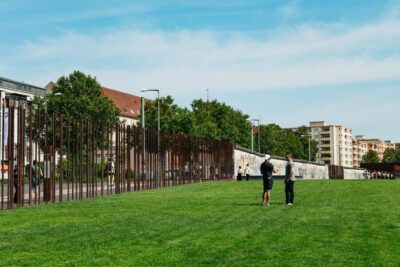



Private Walking Tour: World War 2 and Cold War Sites in Berlin
Read our review →Browse the lists this tour appears in