Reviewed · BERLIN TOURS
Explore Berlin: See All The Iconic Sights & Some Hidden Gems
Berlin’s story is written across its streets: a grand gate that once marked division, a Wall fragment beside a former Nazi headquarters, and the unmarked site of Hitler’s bunker. This three-hour walk connects those places with the buildings and squares that shaped the city around them.
I like that you get both the major landmarks and the historical links between them, rather than a string of photo stops. I also like the chance to hear complicated subjects explained by a local guide, with past guides such as Tina, Jimmy and Joseph praised for clear storytelling and thoughtful answers.
The trade-off is the pace: you cover a lot of ground and make many brief stops, so there is little time to linger or enter museums. If you walk slowly, need frequent breaks, or want time for photographs at every site, this may feel rushed.
- See the Wall in context: Visit a roughly 200-metre section near the Topography of Terror, close to places tied to Nazi rule.
- Follow Berlin’s divided past: Learn about the Palace of Tears and Checkpoint Charlie, two very different Cold War crossings.
- Stand above Hitler’s former bunker: The site is a sober stop, not a preserved underground attraction.
- Walk through the Holocaust Memorial: The route includes time to move among its concrete stelae.
- Trace central Berlin’s architecture: See Museum Island, Bebelplatz, Gendarmenmarkt, the Reichstag and Brandenburg Gate.
- Get a broad first look: The walk is about three hours, with a maximum group size of 25 and an English-speaking guide.
Berlin’s story, told street by street
This walk works best as an introduction to Berlin. It links several periods that can seem separate when you visit on your own: the city’s Prussian-era architecture, Nazi rule and the Holocaust, then the division of Berlin during the Cold War. The guide’s job is to connect these sites and explain what happened around them.
The route is dense. The schedule includes more than 20 stops, many lasting only five or ten minutes, so think of this as a guided overview rather than an in-depth visit to each place. You get context and a sense of the city’s layout, then can return later to the sites that deserve more of your time.
That format matters in Berlin, where a short walk can shift from grand civic architecture to a memorial or a site of political violence. A good guide can help you see those changes as part of the same story. Past guides named in feedback include Tina, who was praised for making several centuries of history understandable, and Joseph, whose clear explanations and openness to questions helped make the past accessible.
From Friedrichstrasse to the Palace of Tears
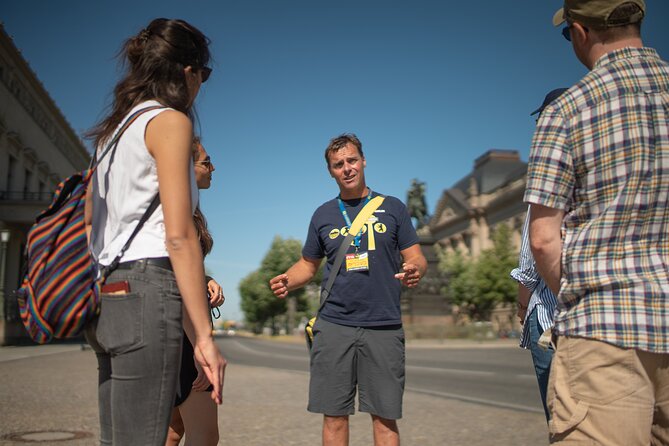
The walk begins near Friedrichstrasse station, at the listed meeting address of Reichstagufer 17. Arrive 15 minutes early. One person found the meeting point unclear, so check the exact address and map pin before setting out rather than relying only on the station name.
The first named stop is the Palace of Tears, or Tränenpalast, a former Cold War checkpoint. Its name hints at the human side of a divided city: this was a crossing point associated with farewells between people living on opposite sides of the border. The stop is brief, but it gives the guide a useful starting point for explaining how division affected ordinary life.
Next comes Neue Wache, a national memorial to war and tyranny. The route then passes Humboldt University, associated with Marx, Engels and Einstein as students or teachers. These stops broaden the tour beyond the headline sites, connecting political history to education, remembrance and Berlin’s public life.
Other tours people book in Berlin:
- Berlin: Reichstag, Dome and Government District Guided Tour
★ 4.7 · 18,288 reviews - Berlin: 1-Hour City Tour by Boat with Guaranteed Seating
★ 4.3 · 16,993 reviews - Berlin: Boat Tour Along the River Spree
★ 4.4 · 11,252 reviews
Museum Island, seen from the streets
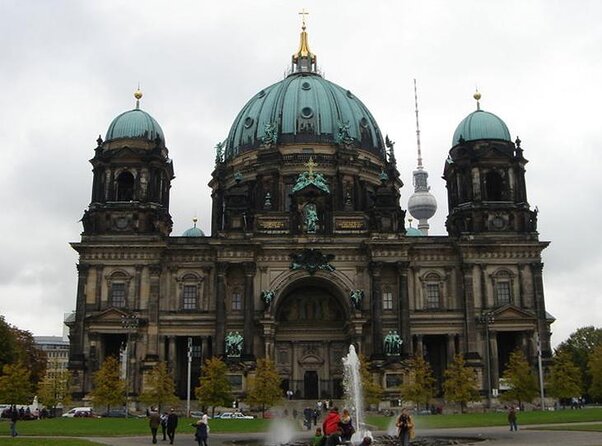
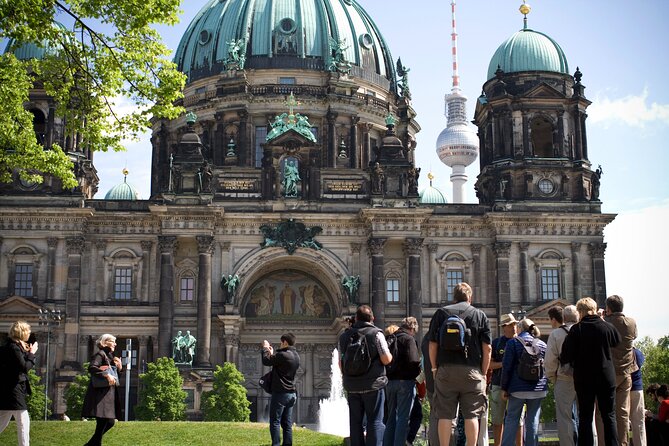
From there, the route moves through the central area around the Berliner Dom, Lustgarten, the City Palace and Humboldt Forum. You’ll also see the exteriors of the Pergamonmuseum, Neues Museum and Altes Museum. The guide introduces their collections and architectural importance, including the Ishtar Gate, the Market Gate of Miletus, ancient Egyptian objects and the work of architect Karl Schinkel.
The key word here is exteriors. Admission to the museums and the Berliner Dom is not included, and the walk does not allow time for a proper visit inside. If one of these collections is high on your list, plan a separate visit. A five-minute stop is enough to orient you, not to explore a museum.
The rebuilt City Palace, now the Humboldt Forum, adds another layer to this stretch. You can see the reconstructed Hohenzollern family palace and hear how the surrounding area has changed. The route is useful for getting your bearings around Museum Island, but museum lovers should resist treating the outside commentary as a substitute for time indoors.
Bebelplatz and Berlin’s grand squares
Bebelplatz offers a stark contrast between architectural beauty and political repression. The square is associated with the Nazi book burnings of 1933, when tens of thousands of books were burned. The route includes the Book Burning Memorial, a reminder that the site’s elegant setting carries a painful history.
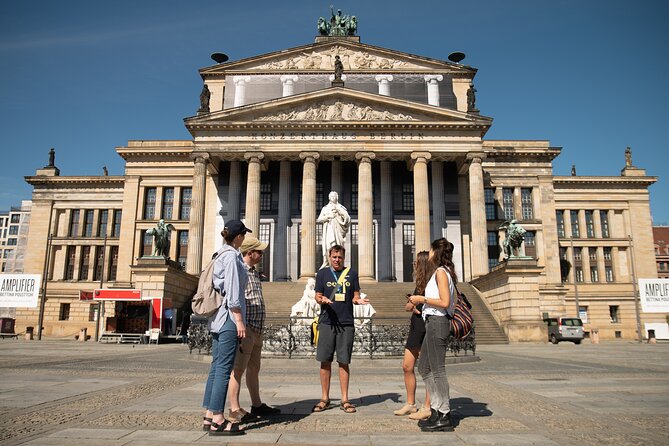
Nearby, the Staatsoper and Konzerthaus bring the focus back to Berlin’s cultural life and architecture. The opera house was built under Friedrich the Great in 1743, while the concert house was completed in 1821 and designed by Schinkel. The guide helps place these buildings within the city’s older civic story, rather than presenting them as isolated façades.
At Gendarmenmarkt, you’ll see the French Cathedral and German Cathedral, linked to a period of religious tolerance in Berlin. This is one of the route’s more attractive squares, and the stop lasts about ten minutes. Still, the overall rhythm remains brisk. Take your photos when you can, but don’t expect a long pause at each landmark.
Checkpoint Charlie and the Berlin Wall
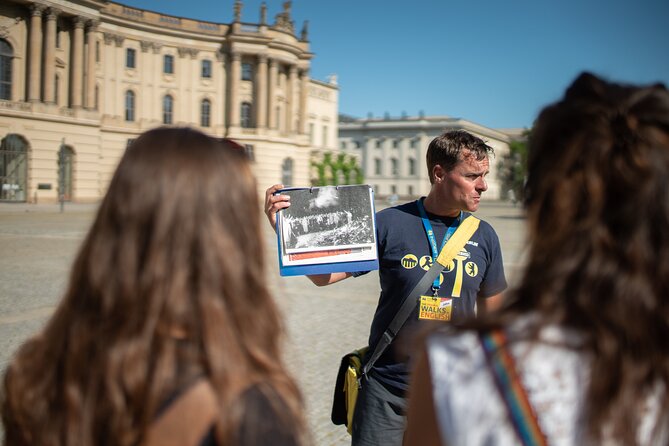
Checkpoint Charlie is the tour’s best-known Cold War stop. It was a civilian and military crossing between East and West Berlin, and the site of a 1961 standoff between Soviet and American forces. The guide can explain why this crossing became a potent symbol of the divided city, and what the border meant in daily life.
The stop is about ten minutes. Checkpoint Charlie is a busy, heavily visited place, so the value here lies less in lingering at the crossing than in hearing its history placed in context. If you want a quieter, more extended look at the Wall, use this walk to identify other places to visit afterward.
The route continues to the Topography of Terror, where you’ll see a roughly 200-metre section of the Berlin Wall. The site is tied to the institutions of Nazi persecution, making it a powerful place to consider how dictatorship operated. The walk also passes the former Aviation Ministry, built for Hermann Göring’s air force and later used as the East German House of Ministers. It is now the German Finance Ministry. One building, several political eras.
Same city, a different kind of day:
- Discover Berlin Half-Day Walking Tour
★ 5.0 · 9,624 reviews - Berlin: Hop-on Hop-off Bus Tour with Live Commentary
★ 4.3 · 8,579 reviews - Berlin: Government District around the Reichstag Guided Tour
★ 4.7 · 8,447 reviews - Berlin: Reichstag, Plenary Chamber, Cupola & Government Tour
★ 4.6 · 8,422 reviews
Hitler’s bunker site and the Holocaust Memorial
The stop at Hitler’s former bunker is unusual because there is no preserved bunker attraction to enter. You stand above the site where Hitler spent the last days of the Second World War. The guide explains the location and its significance; the site itself is plain, which is part of the point. It is a place to understand, not a spectacle to tour.
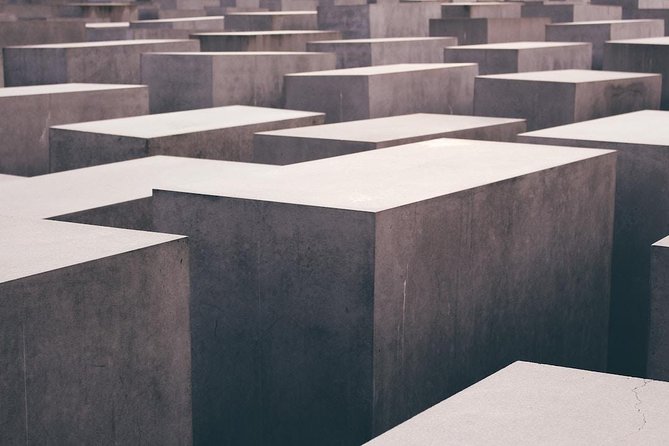
From there, the walk goes to the Memorial to the Murdered Jews of Europe. You’ll have time to walk among the concrete stelae and reflect on the memorial’s scale and setting. This is one of the tour’s most serious stops, and the route gives it more time than many of the architectural landmarks.
A past participant singled out a guide’s account of the Holocaust as especially moving. That kind of subject calls for care, and the tour’s value depends in part on the guide’s ability to explain without turning the memorial into a quick photo opportunity. You may want to return on your own for more time.
Reichstag and Brandenburg Gate finish
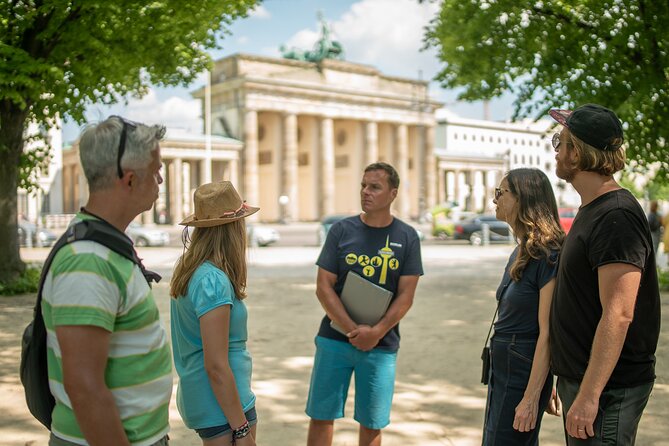
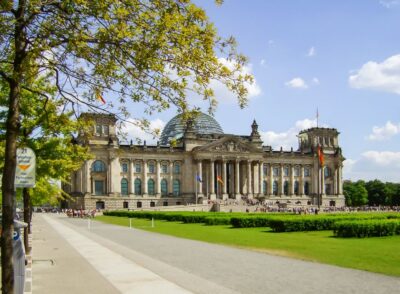
The route passes through the German parliament and government quarter, then reaches the Reichstag, the seat of the German Parliament. The tour ends nearby at Brandenburg Gate and Pariser Platz. The gate has served as a symbol of division and, after reunification, as a national emblem of peace and unity.
Pariser Platz brings together several notable sights: the American and French embassies, the Hotel Adlon and the Academy of Fine Arts. The final stop is a fitting close to the walk because it gathers Berlin’s political past and present in one place. The tour does not include entry to the Reichstag, so treat this as an exterior visit and a chance to note where you might return.
Ending at Brandenburg Gate is practical, too. You finish in a central area with several places worth revisiting, rather than being led back to the starting point. The guide can help you decide which nearby site deserves more time.
What the pace and price mean
At about $24.07 per person, the tour offers a lot of guided context for a modest price. You’re paying for a three-hour walk with an English-speaking local guide, not museum admission or transport. Because many stops are brief, the value is strongest if you want an orientation and a clear historical framework before exploring further on your own.
The route covers a substantial stretch of central Berlin. One participant estimated the walk at about three miles, a useful guide for planning, though the exact distance may depend on the route taken. Wear comfortable shoes and be ready to keep moving. A past participant noted that the steady pace and short warm-up stops helped in cold weather, but the distance may be tiring for some older walkers.
The group is capped at 25, which is not a private tour but does limit the size. Still, stay close to the guide, especially when the group moves between stops. One person became separated after feeling hurried, and another found that the guide did not always wait for everyone to gather before speaking. If you’re travelling solo or walk at the back, keep the guide in sight and speak up if you need the group to pause.
The experience has a 4.9 out of 5 rating from 4,429 ratings, with 99% recommending it. The recurring strengths are clear explanations, an engaging style, and guides who answer questions. Names mentioned include Hannah, Simon, Paul, Rohan, Jimmy and Tina. You cannot choose a particular guide from the information provided, but you can expect the experience to depend heavily on who leads your group.
Who should book this walk
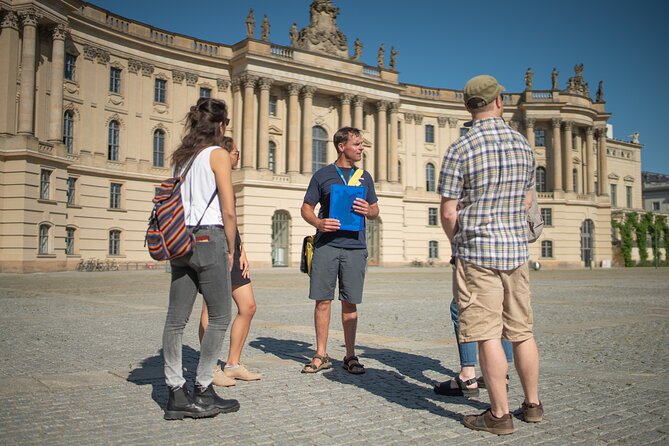
I’d book this tour early in a Berlin visit if you want to understand the city’s major historical sites before returning to the ones that interest you most. It suits first-time visitors, history-minded walkers and anyone who prefers a live explanation to reading every plaque alone.
I would choose another format if you want long museum visits, lots of time for photographs, or a slower walk with frequent stops. The three-hour route is efficient, but its breadth comes at the cost of depth at individual sites. For a first overview at a low price, that is a fair trade. For a focused visit to the Holocaust Memorial, Museum Island or the Wall, plan extra time on your own.
FAQ
How long is the tour?
The walking tour lasts about three hours.
What is the tour price?
The listed price is $24.07 per person.
What language is the tour offered in?
The tour is offered in English and includes an English-speaking local guide.
Where does the tour start?
The listed meeting address is Reichstagufer 17, 10117 Berlin, near Friedrichstrasse station. Arrive 15 minutes before the tour begins.
Where does the tour end?
It ends at Brandenburg Gate and Pariser Platz, 10117 Berlin.
How many people can join?
The group has a maximum of 25 participants.
Are museum admission fees included?
No. Admission to the Berliner Dom and the museums is not included.
Does the tour visit Hitler’s bunker?
The group stands above the site of Hitler’s former bunker. The tour information does not describe an interior visit.
How much walking should I expect?
It is a three-hour walking tour. One participant described the route as about three miles, so wear comfortable shoes and be prepared for a substantial walk.
Can I cancel for a refund?
You can receive a full refund if you cancel at least 24 hours before the tour’s start time. Cancellations or changes made less than 24 hours beforehand are not accepted for a refund.
Newest tours in Berlin
- Berlin: guided canoe | kayaktour★ 4.1 · 7 reviews
- Understanding Kreuzberg: The roots of local (sub)culture★ 4.9 · 11 reviews
- Where It All Began: Berlin’s Queer & Trans History Tour★ 4.9 · 6 reviews
- Warnemünde Shore Excursion: Private Sachsenhausen and Berlin Tour★ 5.0 · 12 reviews
- Ultimate E-Bike Tour of Berlin with Beer Garden Stop★ 5.0 · 4 reviews
- Potsdam Highlights – Private sightseeing tour by minibus★ 5.0 · 3 reviews
- Private Potsdam City Tour in an authentic vintage van★ 5.0 · 14 reviews
- Transfer from Berlin Schönefeld Airport (SXF) to Berlin city Hotels – ROUND TRIP★ 4.0 · 3 reviews
Berlin Tours, compared.
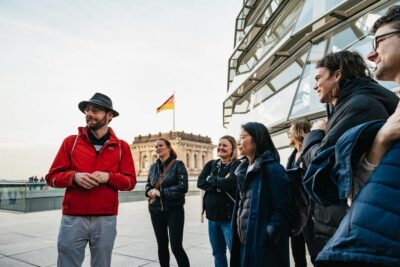
Reichstag, Dome and Government District Guided Tour
Read our review →
1-Hour City Tour by Boat with Guaranteed Seating
Read our review →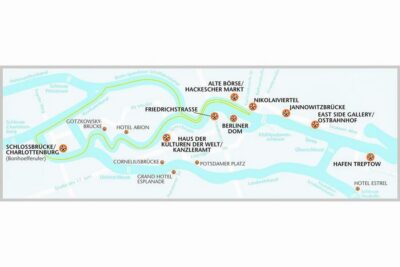
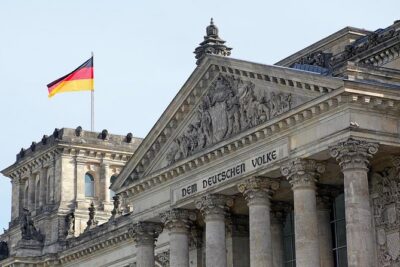

Reichstag, Plenary Chamber, Cupola & Government Tour
Read our review →