
Reviewed · BERLIN WALKING TOURS
Berlin: walking tour about Charité
Berlin’s medical story begins not in a grand research center, but with an 18th-century plague house. On this two-hour walk, you follow that unlikely beginning through the lives of famous physicians and the changing role of the Charité, one of Europe’s major university hospitals.
I like two things especially: the tour connects people such as Rudolf Virchow and Robert Koch to the city around them, and it takes you inside the Animal Anatomical Theatre, a surviving teaching building tucked away in a backyard. That mix of scientific history and an unusual old building gives the walk a clear focus.
One point to weigh: you see the Charité Bed House from outside, and group tours cannot enter the hospital grounds. The guide speaks German, too, so this is best for visitors who can follow a German-language tour.
The details that make this walk different

- A plague house becomes a major hospital: Follow the Charité’s story from its 18th-century beginnings to its role as a leading university hospital.
- Famous names, with Berlin connections: Hear about physicians and scientists including Rudolf Virchow, Emil von Behring, Robert Koch and Ferdinand Sauerbruch.
- A striking change of subject: The tour addresses both medical achievement and the institution’s dark history of collaboration with the Nazi regime.
- A teaching building behind an ordinary façade: Enter the Animal Anatomical Theatre, Berlin’s oldest surviving teaching building, if it is open.
- A two-hour route through central Berlin: Walk from the Charité Tower along Luisenstraße and across the university campus, then return to the starting point.
A walk through three centuries of medicine

This tour is less about seeing hospital wards and more about understanding the institution from the outside in. In two hours, your guide traces roughly 300 years of medical history through a small number of stops, using the people and buildings around you to make the subject tangible.
That approach suits the Charité. A hospital is not usually a place you can stroll through as a sightseer, and the grounds at Campus Mitte are not open to group tours. Instead, the walk uses nearby streets and a historic teaching building to explain how Berlin’s medical work developed, who shaped it and where its record becomes uncomfortable.
The guide’s stories cover life and death, scientific breakthroughs and the people behind them. You’ll hear about figures such as Virchow, Behring, Koch and Sauerbruch, along with the institution’s difficult relationship with the Nazi regime. The tour’s value is in setting those subjects side by side rather than presenting medical history as a simple parade of discoveries.
There is no guide name available in the tour details, so you cannot choose a particular storyteller. What is specified is the language: the tour is conducted in German. If your German is limited, the names and buildings may still interest you, but the explanations carry much of the experience, so language ability matters here.
More walking tours in Berlin:
- Discover Berlin Half-Day Walking Tour
★ 5.0 · 9,624 reviews - Berlin: Third Reich and Cold War 2 Hour Walking Tour
★ 4.9 · 6,830 reviews - Berlin: Discover Berlin Walking Tour
★ 4.9 · 5,998 reviews
From plague house to Charité Bed House
The route begins in front of the Charité Tower, at the crossroads of Schumannstraße, Charitéplatz and Charitéstraße. Arrive before the scheduled start: the tour begins on time, and the meeting point is specific enough to make a quick last-minute search less appealing.
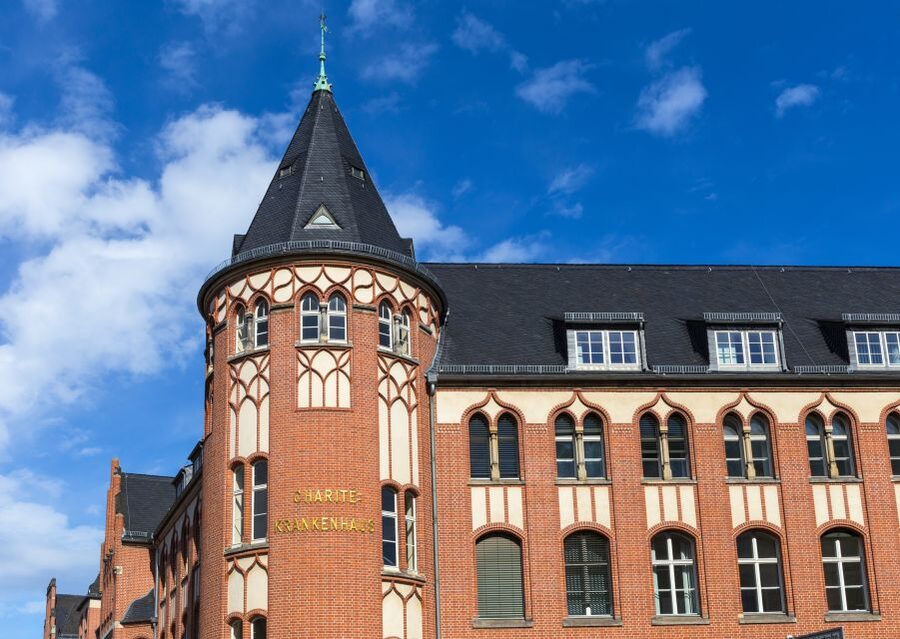
One of the first stops is the Charité Bed House, which you view from outside. It is a working hospital facility, not a visitor attraction, so the tour does not go inside. That boundary is worth understanding before booking. You are here to hear about the institution and look at it in its city setting, not to tour patient areas.
The story starts with a plague house in the 18th century and follows the growth of the Charité into one of Europe’s important university hospitals. That long arc gives the guide a useful way to explain how a place built in response to disease came to represent medical teaching and research on a much larger scale.
The exterior stop also helps set expectations for the rest of the walk. You will not be crossing into hospital buildings or seeing clinical facilities. The focus is on the history that can be told from public streets and on the people whose work is tied to the Charité.
Along Luisenstraße and across the university campus

From the Bed House, the group walks along Luisenstraße and across the university campus. This is where the tour shifts from a single institution to the wider world of Berlin medicine. The route is on foot, and its 2-hour duration leaves room for explanation without turning the outing into a full-day commitment.
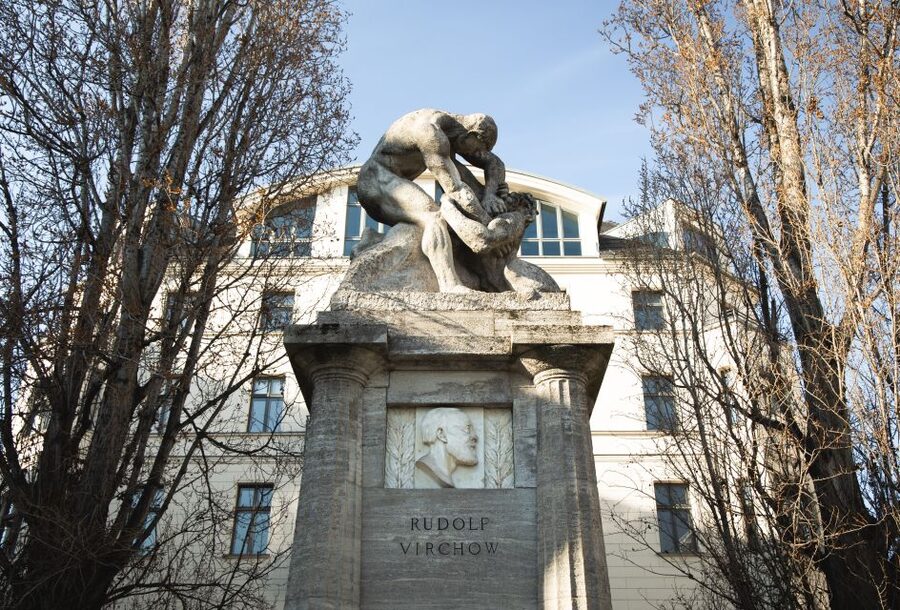
The guide introduces doctors and scientists whose names mark different chapters in the city’s medical story. Rudolf Virchow, Emil von Behring, Robert Koch and Ferdinand Sauerbruch are among the figures covered. Rather than treating the names as a roll call, listen for how the guide connects individual careers with the development of medical work in Berlin.
The tour also covers Nobel Prize winners and other scientific figures. The supplied information does not specify which discoveries or awards receive the most attention, so don’t expect a particular lecture or a set list of scientific details. The draw is the broader account of Berlin’s medical past, told through people and places.
A subject like this can lean heavily on dates and titles. The walk’s street-level setting helps keep it anchored: you move through the area while hearing how institutions, teaching and research fit into Berlin’s story. If you enjoy history that overlaps with science and public life, this is a more focused choice than a general city walk.
The difficult chapter behind medical progress
The Charité’s history includes more than celebrated researchers and advances in medicine. The tour also addresses the institution’s darker period, when doctors collaborated with the Nazi regime. This is an important part of the experience, and it gives the route a sober counterweight to its accounts of scientific achievement.
That subject deserves more than a passing mention. Medical institutions can be associated with care and progress, but their histories also raise questions about professional responsibility and the use of authority. The tour makes room for that uncomfortable side of the story rather than limiting its attention to famous names and accolades.
If you are traveling with children or prefer a light, entertaining history walk, consider whether this topic is right for your group. The tour is described as a moving journey through medical history, and its scope includes life, death and complicity under the Nazi regime. It is not simply a collection of curious anecdotes about old doctors.
For visitors drawn to the history of medicine, this complexity is a reason to go. You come away with a fuller sense of the Charité as an institution shaped by both important work and difficult choices. The guide’s account is central here, which makes understanding German especially useful.
Same city, a different kind of day:
- Berlin: Reichstag, Dome and Government District Guided Tour
★ 4.7 · 18,288 reviews - Berlin: 1-Hour City Tour by Boat with Guaranteed Seating
★ 4.3 · 16,993 reviews - Berlin: Boat Tour Along the River Spree
★ 4.4 · 11,252 reviews - Berlin: Hop-on Hop-off Bus Tour with Live Commentary
★ 4.3 · 8,579 reviews
Inside the Animal Anatomical Theatre
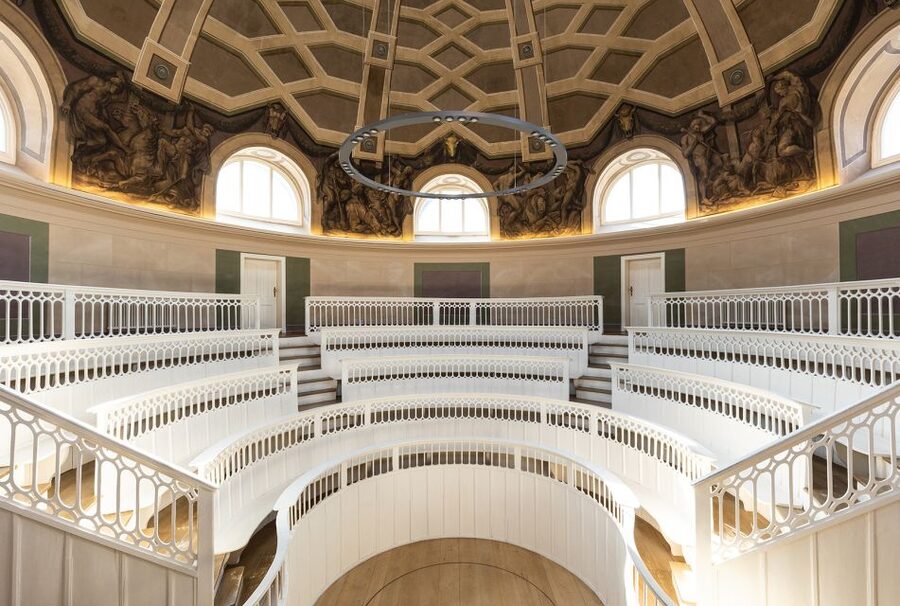
The tour’s most unusual stop is the Animal Anatomical Theatre, also known as TAT. Hidden in a backyard, it is Berlin’s oldest surviving teaching building. The group visits the building from the inside, making this the clearest chance on the route to step into a historic medical space rather than view an institution from the street.
The phrase medicine temple captures the building’s distinctive reputation, but the practical appeal is simple: it gives the history a physical setting. After hearing about physicians and medical teaching, you can enter a place connected to that tradition. It is a compact stop, not a visit to the Charité’s hospital wards or a tour of the wider campus.
Opening hours can change at short notice because of closed events, and the TAT is closed on public holidays. That makes this visit the one part of the itinerary most vulnerable to a change. If seeing the building is your main reason for booking, check the date carefully and keep in mind that access is not guaranteed in every circumstance.
The contrast between the tucked-away building and the modern hospital institution is part of what makes this stop useful. It offers a direct link to medical teaching while keeping the tour within its realistic limits: one historic interior, not access to the active hospital grounds.
What the $27 price buys you
At $27 per person, you are paying for a guided two-hour history walk, not entry to the Charité campus or an extended hospital tour. The price makes most sense if you value the guide’s explanations and want a concentrated look at Berlin’s medical past, including its celebrated scientists and its more troubling history.
The Animal Anatomical Theatre adds a distinctive interior stop, while the rest of the route gives you context from the surrounding streets and campus area. That combination helps the experience feel more than a lecture delivered outdoors. Still, the hospital buildings themselves remain outside the visit, so anyone expecting an inside look at the working Charité may feel the tour is narrower than its subject suggests.
There is no need to set aside more than two hours, and the walk ends back at the meeting point. Starting times depend on availability. Free cancellation is offered up to 24 hours in advance, and you can reserve without paying immediately, which can help if your Berlin schedule is not settled.
Who will get the most from the tour
I’d choose this walk if you are interested in the history of science, hospitals or Berlin’s institutions, and you can comfortably follow a German-speaking guide. It is also a good fit if you like a tour that balances notable names with the moral questions behind their work.
It may be less suitable if your priority is entering the Charité hospital, seeing clinical spaces or getting a broad overview of Berlin. The group cannot access the hospital grounds, and the route focuses on one subject. The two-hour format keeps it manageable, but it is still a specialist walk rather than a general introduction to the city.
The best way to approach it is to come curious about how medicine shaped Berlin, not expecting a hospital visit. Pay attention to the contrast between the early plague house, the famous physicians and the building used for teaching. Those elements give the walk its shape and make the subject easier to follow.
Should you book the Charité walk?
Book it if medical history is a real interest, German is comfortable for you, and you want a compact tour that takes in both scientific achievements and a difficult institutional past. The Animal Anatomical Theatre adds a rare interior stop, while the named physicians give the guide a strong cast of characters.
Skip it if you want access to the hospital itself, or if you need an English-language tour. The Charité grounds are off limits to groups, and the tour is conducted in German. For the right visitor, though, this is a thoughtful way to see a less familiar side of Berlin, one shaped by medicine, teaching and hard questions about responsibility.
FAQ
How long is the Charité walking tour?
The tour lasts two hours and ends back at its starting point.
What language is the tour conducted in?
The live tour guide speaks German.
Where does the tour start?
Meet in front of the Charité Tower, at the crossroads of Schumannstraße, Charitéplatz and Charitéstraße.
Does the tour enter the Charité Bed House?
No. You view the Bed House from outside because it is a hospital facility with protection and hygiene rules.
Can the group visit the Charité hospital grounds?
No. Charité Campus Mitte is not accessible to group tours.
Does the tour go inside the Animal Anatomical Theatre?
Yes, the itinerary includes a visit inside the Animal Anatomical Theatre. Its opening hours can change at short notice, and it is closed on public holidays.
Which historical figures are covered?
The tour includes physicians and scientists such as Rudolf Virchow, Emil von Behring, Robert Koch and Ferdinand Sauerbruch.
What is the price and cancellation policy?
The price is $27 per person. You can cancel up to 24 hours in advance for a full refund.
Newest tours in Berlin
- Berlin: guided canoe | kayaktour★ 4.1 · 7 reviews
- Understanding Kreuzberg: The roots of local (sub)culture★ 4.9 · 11 reviews
- Where It All Began: Berlin’s Queer & Trans History Tour★ 4.9 · 6 reviews
- Warnemünde Shore Excursion: Private Sachsenhausen and Berlin Tour★ 5.0 · 12 reviews
- Ultimate E-Bike Tour of Berlin with Beer Garden Stop★ 5.0 · 4 reviews
- Potsdam Highlights – Private sightseeing tour by minibus★ 5.0 · 3 reviews
- Private Potsdam City Tour in an authentic vintage van★ 5.0 · 14 reviews
- Transfer from Berlin Schönefeld Airport (SXF) to Berlin city Hotels – ROUND TRIP★ 4.0 · 3 reviews
Berlin Walking Tours, compared.



Third Reich Berlin: Hitler and WWII Walking Tour
Read our review →

Explore Berlin: Walking Tour of All The Iconic Sites
Read our review →Browse the lists this tour appears in