
Reviewed · BERLIN TOURS
Berlin Uncensored: A History of Sex & Freedom
Berlin’s sexual history is not a side story. This walk connects the city’s 1920s nightlife and early sexual science with Nazi repression, the Cold War divide, and the sex-positive culture of today. At street level, its past is often hard to spot, so augmented reality and archival material help make lost places legible.
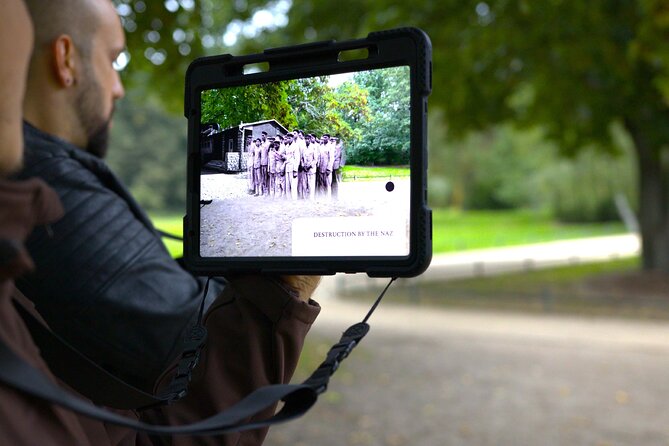
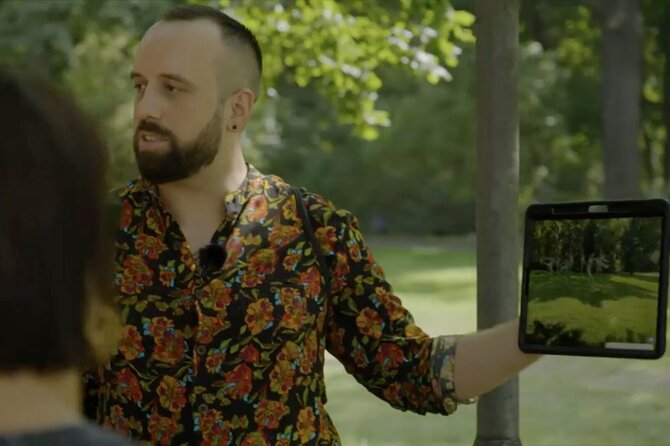
I like two things in particular: the unusual historical range, which puts sexuality alongside politics and daily life, and the chance to learn with Jeff, a sociologist and certified sex educator. His iPad-based images, videos, audio, and quotes add useful context instead of asking you to picture vanished clubs from a street corner alone.
The main consideration is the format. You spend much of the walk outside former sites rather than entering historic interiors, and three and a half hours is a long stretch without a planned refreshment stop. Bring water, comfortable shoes, and an open mind.
- A route through Schöneberg’s sexual history: Start and finish at Alnatura near Nollendorfplatz, with stops including the Memorial to the Homosexuals Persecuted Under Nazism and Metropol.
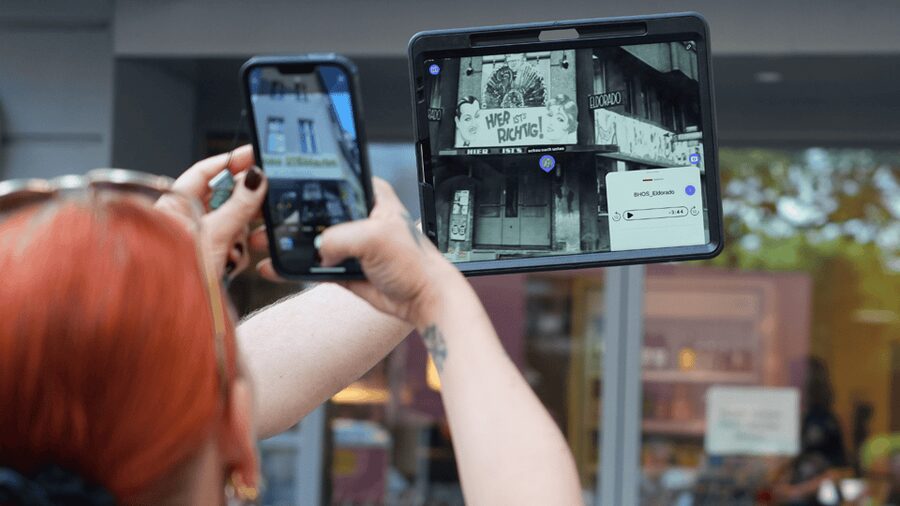
- Lost places brought back on screen: AR visuals recreate sites such as the Eldorado Club, while more than 200 archival items support the stories.
- A history that crosses eras: Follow the path from 1920s clubs and sexual science to Nazi censorship, divided Berlin, and current nightlife.
- A specialist guide: Jeff brings a background in sociology, sex education, and journalism to a subject that calls for care as well as curiosity.
- Small group, adult subject matter: The group is limited to 10, the tour is in English, and it is not suitable for children under 18.
- A long walk with practical needs: Plan for 210 minutes on foot, bring a public transport ticket, and note that some paths may be bumpy.
Berlin’s sexual history, told on the streets
This is not a standard city walk with a few saucy anecdotes added for effect. It treats sexuality as part of Berlin’s social and political history: a subject shaped by science, censorship, persecution, gender roles, and changing ideas about freedom.
The tour begins in the 1920s, when Berlin’s nightlife and public culture made room for clubs, cabarets, kink, and nudism. It then turns to the work of early sexual scientists, the destruction of their institution by the Nazis, and the consequences of repression for sexual minorities and sex workers.
After the Second World War, the story splits with the city. West Berlin’s sexual liberation took a different path from East Germany’s state-controlled approach, including its more permissive attitude toward nudism. The final chapters connect those histories to Berlin’s present-day clubs, fetish events, and underground scenes.
That broad arc is the tour’s real value. You are not just collecting names of old clubs; you are considering how political systems shape private life, and how a city’s image of freedom can be both real and complicated.
From Alnatura to the first street-side stories
Meet in front of the Alnatura organic supermarket at Else-Lasker-Schüler-Straße 18, directly by the entrance near Nollendorfplatz. The route returns to the same place, so you will not need to arrange a separate pickup or guess where the walk ends.
The first listed stop is Magnus-Apotheke, reached after a short walk. The guided visit there lasts about 20 minutes. The pharmacy is part of a route that uses real addresses as anchors for stories about sexual health, contraception, and Berlin’s pioneering role in the study of sexuality.
The tour’s claim that the first rubber condom was invented in Berlin is an eye-catching example of the practical side of this history. It helps move the subject beyond nightlife and scandal, toward the city’s efforts to address contraception and sexual health.
At each stop, expect interpretation from the street rather than a guaranteed visit inside a historic building. One point worth knowing before you book: this is a history walk through locations, not a series of club or museum admissions. The AR material helps fill in what no longer survives, but it does not turn every stop into an interior visit.
More history tours in Berlin:
- Berlin: Natural History Museum Entrance Ticket
★ 4.6 · 3,382 reviews - Berlin: World Heritage Cruise to Potsdam
★ 4.5 · 1,435 reviews - Berlin Historical Highlights Walking Tour
★ 4.9 · 657 reviews
Remembering persecution at the memorial
The route continues to the Memorial to the Homosexuals Persecuted Under Nazism, where the group spends about 15 minutes. This stop gives the tour’s earlier discussion of sexual freedom a necessary counterweight: under Nazi rule, desire and identity could become grounds for persecution, and people were sent to concentration camps because of their sexuality.
The guide also covers the suppression of erotic magazines, cabarets, and clubs, as well as the regime’s double standards. That nuance matters. A history of repression is not simply a story of one uniform policy applied in the same way to everyone.
Expect a serious tone here. The tour tackles a painful chapter, and its focus on the people and institutions targeted by the regime makes clear why preserving this history matters. If you want a lighthearted afternoon built around nightlife anecdotes alone, this section may feel heavier than you expect. It should.
Kurfürstenstraße, Schwerinstraße, and Nollendorfstraße
From the memorial, the walk proceeds to Kurfürstenstraße for a 20-minute guided stop, then to Schwerinstraße for 15 minutes and Nollendorfstraße for 10. Together, these street locations help place the stories of Berlin’s sexual culture in the neighborhoods where they unfolded.
The subject matter moves between sex work, queer and feminist liberation, lesbian bars, and the changing social rules around sexuality. The route also examines how institutions and public attitudes shaped people’s options. The point is not to turn a neighborhood into a spectacle, but to understand the lives and conflicts that formed its reputation.
The street-based format can be a strength: you see the urban setting rather than hearing about it in a lecture room. It also has limits. Some historic venues have disappeared or changed use, and you may be standing outside rather than walking into the places themselves. The guide’s photos, videos, sound recordings, and quotes help bridge that gap.
How the AR adds context
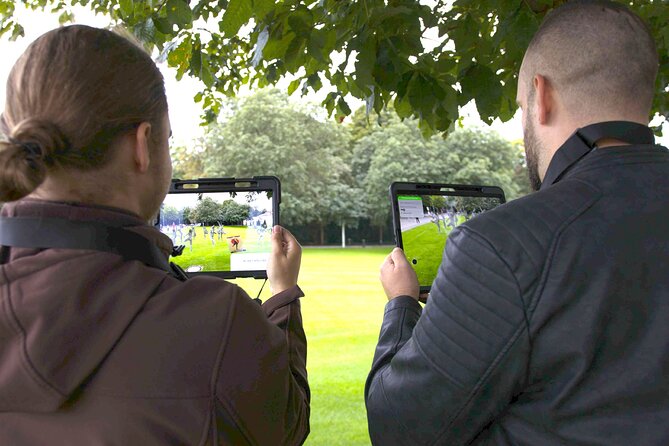
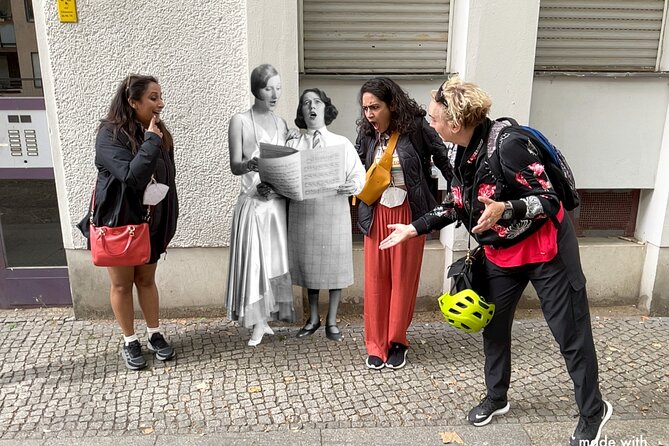
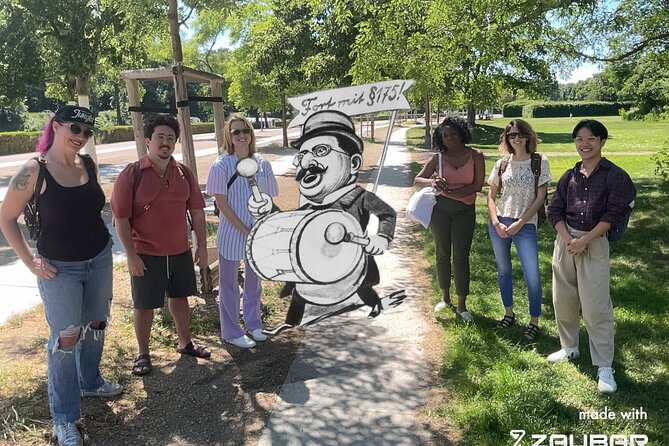
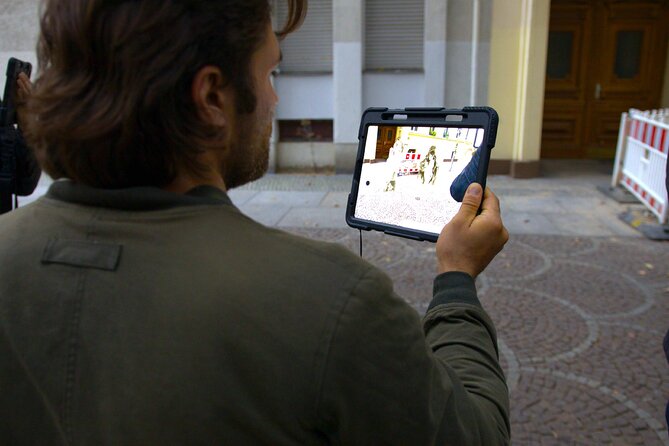
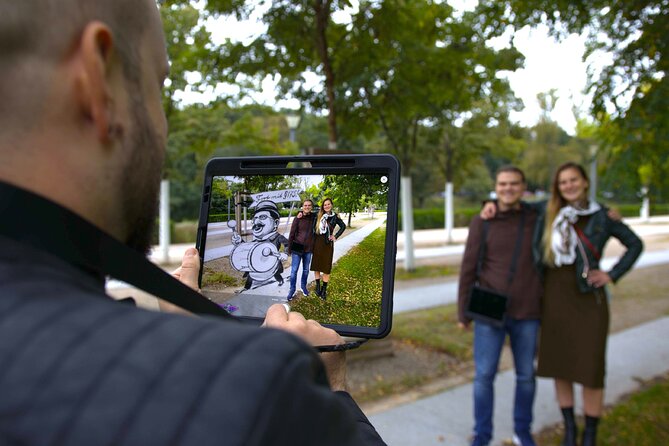
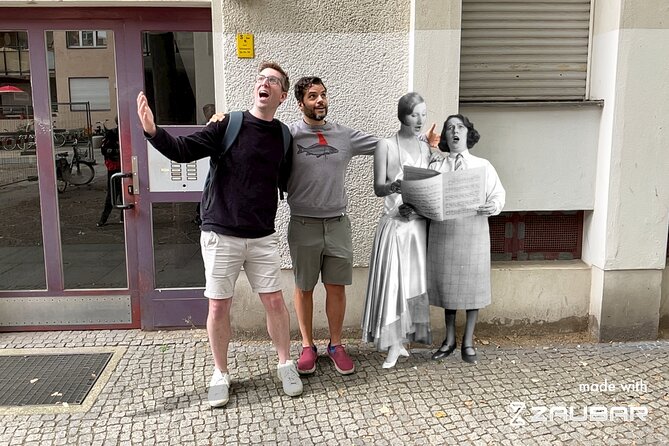
The tour uses an iPad to show archival material and AR scenes at selected stops. The collection includes more than 200 rare photographs, videos, audio recordings, and provocative quotes. In particular, the AR recreations can help you picture lost clubs such as the legendary Eldorado, rather than relying on a verbal description alone.
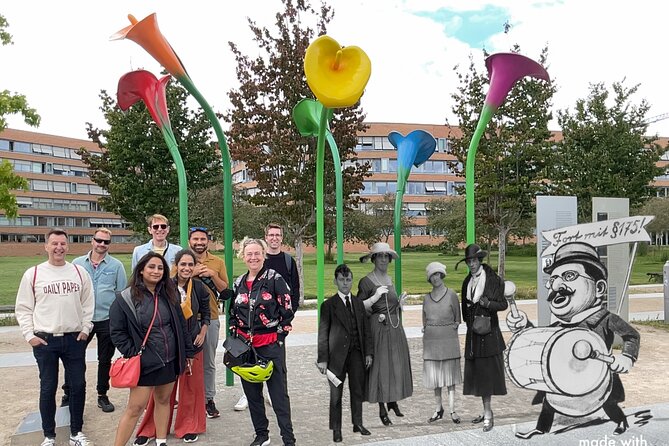
Think of the technology as a visual aid, not the whole attraction. Its best use is to connect a present-day street with the people and places that once occupied it. The experience also includes Mixies, personalized photos made with AR elements, a playful souvenir if you enjoy a bit of digital theater.
The tech is not equally compelling for everyone. If you expect a fully virtual-reality production or a building reconstructed around you, adjust that expectation: the guide presents material through an iPad as you walk. The format can be engaging, but the historical interpretation is the core of the experience. A past participant who was initially wary of the AR found that it supported the stories rather than interrupting them, which is the right standard to bring.
Same city, a different kind of day:
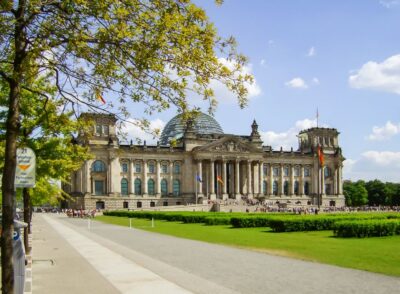
- Berlin: Reichstag, Dome and Government District Guided Tour
★ 4.7 · 18,288 reviews - Berlin: 1-Hour City Tour by Boat with Guaranteed Seating
★ 4.3 · 16,993 reviews - Berlin: Boat Tour Along the River Spree
★ 4.4 · 11,252 reviews - Discover Berlin Half-Day Walking Tour
★ 5.0 · 9,624 reviews
From Prinz Eisenherz to Metropol
Later stops include Denns BioMarkt, with a 15-minute guided visit, followed by Prinz Eisenherz for 20 minutes and Metropol for another 20. These places help carry the story from earlier sexual culture toward queer life and Berlin’s contemporary scene.
The itinerary’s names matter, but so does the time spent connecting them. The tour covers the split between East and West, including West Berlin’s role in sexual liberation and East Germany’s combination of nudism, or FKK, with tighter controls over sexuality. It also considers shifts in relationships and gender roles across the Wall.
At Metropol, the route reaches a venue associated with Berlin’s entertainment past. The wider discussion moves toward current clubs and events, including KitKat Club, Berghain, Lab.Oratory, and Folsom Europe, described as Europe’s largest fetish festival. These references offer useful orientation, but the walk is not a nightlife outing: it provides insider tips, not club entry or a promise of access to private venues.
The final walk returns to Alnatura. The exact rhythm depends on the group and conditions, but the advertised duration is 210 minutes, so set aside the full three and a half hours. One useful note from the tour’s practical experience is that rain can affect a walking route; Jeff has adapted the plan when weather changed, but you should still dress for the forecast.
A guide with the right background for the subject
Jeff is described as a sociologist, certified sex educator, and journalist who has studied Berlin’s sexual history for more than a decade. That mix suits the subject. The walk needs more than a list of provocative addresses: it asks for context, clear language, and sensitivity when discussing persecution, sex work, sexuality, and gender.
The teaching style includes anecdotes and group quizzes, making the walk more participatory than a long speech. The material can prompt lively discussion, and a small group of no more than 10 makes it easier to ask questions than on a large bus tour.
The best fit is someone curious about Berlin’s social history and comfortable with frank discussion of sex. You do not need to be an expert, but you should be ready for adult subject matter and for the history to include painful as well as entertaining episodes.
Is $81 a fair price?
At $81 per person, this costs more than a basic walking tour. The value lies in the specialist guide, small group, three-and-a-half-hour format, and the large collection of archival material. If you are interested in the subject, the combination of historical interpretation and visual tools gives you more than a casual stroll with a few memorable anecdotes.
The price is less compelling if you mainly want to see the interiors of famous clubs or spend the afternoon in Berlin’s present-day nightlife. The tour is focused on history and street locations; it does not include a club visit, meal, or public transport ticket. Bring your own water and plan a meal before or after. A refreshment stop is not built into the route, and the duration is long enough that you will notice.
You can reserve without paying immediately and cancel up to 24 hours in advance for a full refund. Check the available start times when booking, since the tour runs on selected schedules.
Access, comfort, and what to bring
The walk is listed as wheelchair accessible, though some paths may be bumpy. Accessible toilets can be arranged on request. If you have visual disabilities, detailed descriptions of the visual materials can be provided; videos have English, German, or both-language subtitles.
Some parts of the tour take place in high-stimulation environments with strong sensory input. If you have sensory or health needs, contact the provider ahead of time. Mandatory indoor mask use can be arranged if needed.
Wear comfortable shoes, carry water, and bring a valid public transport ticket for Berlin. The route begins and ends at Nollendorfplatz, but transport is not included. Since the subject is explicitly for adults, this is not an outing for anyone under 18.
Should you book Berlin Uncensored?
Book this if you want a thoughtful alternative to Berlin’s usual headline history, and you are interested in how sexuality, politics, science, and city life intersect. Jeff’s specialist background and the archival AR material give the walk a clear purpose, while the small group leaves room for discussion.
Skip it if you want a short tour, a meal stop, or entry into historic clubs. At three and a half hours and $81, it asks for a real commitment. But if you are curious about the forces behind Berlin’s reputation for sexual freedom, this walk offers a grounded way to understand how that reputation was made, attacked, divided, and remade.
FAQ
How long is the tour?
It lasts 210 minutes, or three and a half hours, and is a walking tour.
Where does the tour start and finish?
It starts and ends in front of the Alnatura supermarket entrance at Else-Lasker-Schüler-Straße 18, near Nollendorfplatz.
What language is the tour in?
The live tour is in English. Videos have English, German, or both-language subtitles.
Is the tour suitable for children?
No. It is not suitable for children under 18.
Is the tour wheelchair accessible?
Yes, it is listed as wheelchair accessible, though some paths may be bumpy. Accessible toilets can be arranged upon request.
Is public transport included?
No. Bring a public transport ticket with you.
Newest tours in Berlin
- Berlin: guided canoe | kayaktour★ 4.1 · 7 reviews
- Understanding Kreuzberg: The roots of local (sub)culture★ 4.9 · 11 reviews
- Where It All Began: Berlin’s Queer & Trans History Tour★ 4.9 · 6 reviews
- Warnemünde Shore Excursion: Private Sachsenhausen and Berlin Tour★ 5.0 · 12 reviews
- Ultimate E-Bike Tour of Berlin with Beer Garden Stop★ 5.0 · 4 reviews
- Potsdam Highlights – Private sightseeing tour by minibus★ 5.0 · 3 reviews
- Private Potsdam City Tour in an authentic vintage van★ 5.0 · 14 reviews
- Transfer from Berlin Schönefeld Airport (SXF) to Berlin city Hotels – ROUND TRIP★ 4.0 · 3 reviews
Berlin Tours, compared.
Reichstag, Dome and Government District Guided Tour
Read our review →
1-Hour City Tour by Boat with Guaranteed Seating
Read our review →
Reichstag, Plenary Chamber, Cupola & Government Tour
Read our review →
Browse the lists this tour appears in