
Reviewed · BERLIN TOURS
Berlin Protest History Tour: Rebels, Resistance, and Revolution
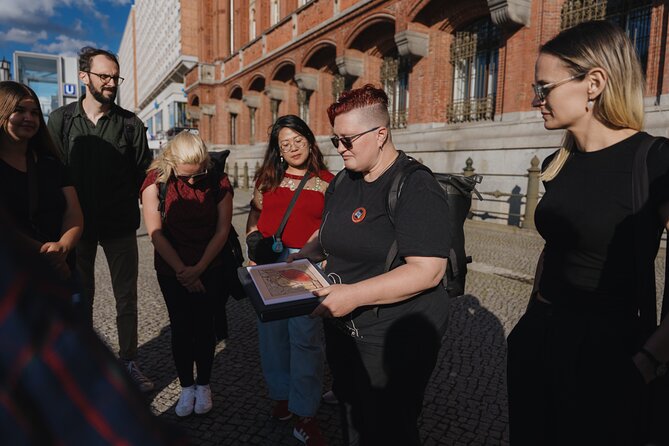
Berlin’s protest history is written into its public spaces, sometimes in plain sight and sometimes in what a monument leaves out. This two-hour walk links the Red Town Hall, the former East German center and Alexanderplatz to show how Berliners challenged power across very different eras. I like its close look at the city’s socialist landmarks and its attention to stories that a standard sightseeing walk could easily skip.
The route is about 2 km, so it packs a lot of history into a manageable walk. One consideration: the subject matter spans centuries and political systems, and some stops are brief. If you want time to linger at every site or visit buildings inside, this is not that kind of tour.
At a glance
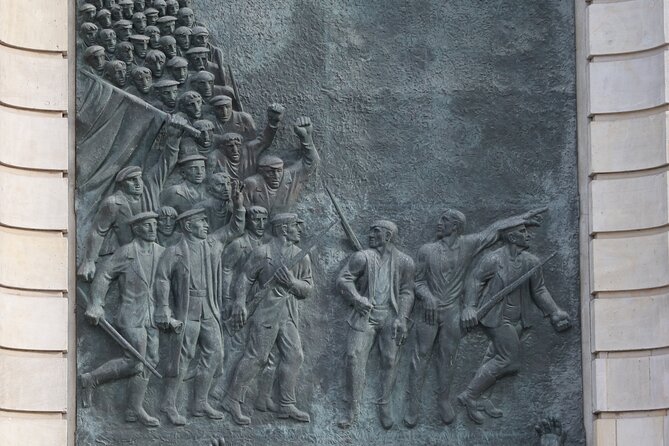
- A timeline in stone: The Red Town Hall’s terracotta panels depict Berlin’s history, including an early uprising.
- Socialist Berlin, seen from within: Stops include the Palace of the Republic’s last remnants, the Marx and Engels statue, and an East German timeline.
- Resistance under Nazi rule: Rosenstraße recalls a 1943 act of civil disobedience and Jewish life under Nazi rule.
- A route to 1989: At Alexanderplatz, the guide links a small T-shirt protest to the Peaceful Revolution and the Fall of the Wall.
- A small-group walk: The group is capped at 15, with an expert guide included in the $30.04 price.
Reading Berlin’s past in the Red Town Hall
The tour starts at the sculpture Aufbauhelferin near the Rotes Rathaus, or Red Town Hall. Its terracotta timeline runs around the building and puts Berlin’s beginnings and an early uprising into a public, walk-by format. Rather than begin with a broad lecture, the guide has a visible record to point to and discuss.
That makes a useful opening for a tour about protest. You can look closely at how a city chooses to present its past, then carry that question into later stops. The panels are outside, and admission is free, so you do not need to set aside time for an indoor visit.
The first stop is listed at 15 minutes. That is enough for an introduction and some explanation, but not for an unhurried study of every panel. If you like to read historical displays at length, arrive with that in mind.
More history tours in Berlin:
- Berlin: Natural History Museum Entrance Ticket
★ 4.6 · 3,382 reviews - Berlin: World Heritage Cruise to Potsdam
★ 4.5 · 1,435 reviews - Berlin Historical Highlights Walking Tour
★ 4.9 · 657 reviews
Socialist Berlin in Nikolaiviertel and at Mutter Hoppe
In Nikolaiviertel, the guide points out architecture built for Berlin’s 750th anniversary, described on the tour as an example of socialist kitsch. The area also offers a view of the last remnants of the Palace of the Republic, once the seat of East Germany’s parliament and a major entertainment venue in the socialist half of the city.
That pairing gives the stop its value. The Palace of the Republic was tied to official politics, but also to public entertainment. The remains prompt a practical question: what does a city keep, remove, or rebuild when the political order changes? The stop lasts 10 minutes, so expect context from outside rather than a long exploration.
A short walk later, Gasthaus Mutter Hoppe provides another timeline, this one charting East Germany. Its missing reference to the building of the Berlin Wall is a pointed detail. The omission shows how a public account can be shaped by what it leaves unsaid, not only by what it displays.
You have just five minutes here. That is enough to hear why the timeline matters, but not a deep examination of each entry. Together, these two stops make socialist-era Berlin more than a backdrop: they help you read its official memory and its gaps.
Marx, Engels, and the reconstructed palace
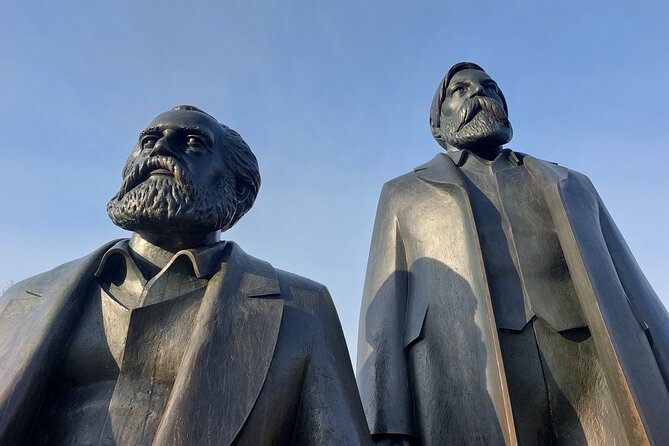
At Marx-Engels-Forum, you meet the statue of Karl Marx and Friedrich Engels, authors of The Communist Manifesto. The monument has been debated over the years, making it a natural stop on a route about changing political meanings. A statue can remain in place while the arguments around it shift.
The guide has 15 minutes here to explain the pair and the public discussion their monument has prompted. If political monuments interest you, this is a useful pause to consider who gets honored and how later generations interpret those choices. If you are hoping for an extended discussion of Marxist thought, the stop’s short length may limit how far the conversation can go.
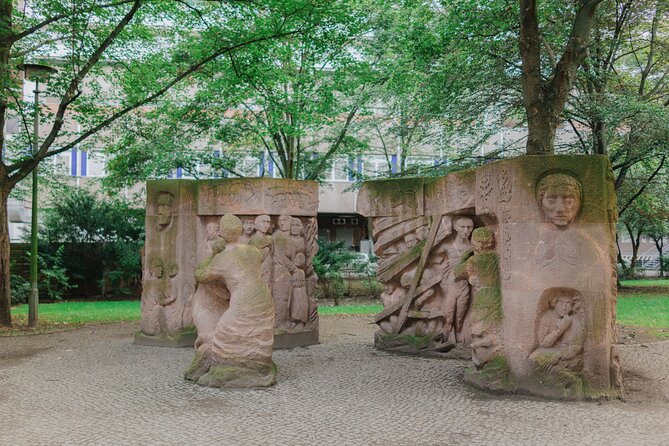
The route then reaches the Humboldt Forum, where you see the reconstructed Berlin Palace. The original palace witnessed protests and revolutions, including the March Revolution of 1848, which helped sow the seeds of democracy in Germany. That connection makes the site more than a grand facade: it places a major political struggle against a building associated with power.
The 20-minute stop is the longest on the route, giving the guide more room to explain the palace and its role in these events. You see the reconstruction from outside as part of the walk; admission to a palace interior is not included or described. I like that the tour treats reconstruction as part of the story too, rather than presenting the site as if Berlin’s past were fixed and undisputed.
Rosenstraße and the cost of speaking out
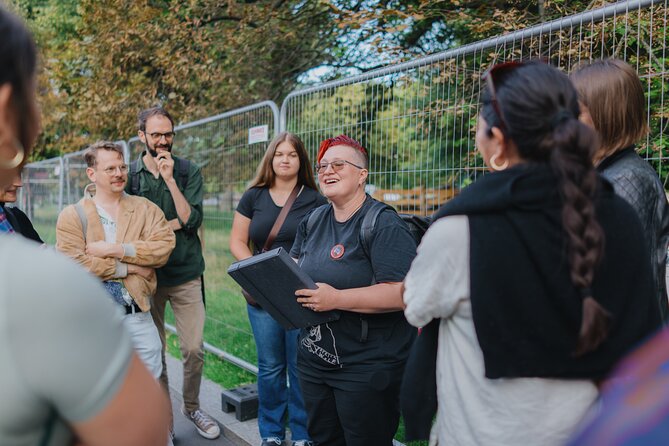
Rosenstraße brings the tour to a courageous act of civil disobedience in the winter of 1943. The guide explains the protest by women, described here as the only German protest against the Final Solution, and connects the monument to Jewish life under Nazi rule.
This is a serious subject, and the stop’s 15 minutes will necessarily be selective. The monument offers a specific human story within a period of enormous harm, while the guide supplies context that a passerby might not get from the site alone. Listen for how the act of protest is explained, and leave room for the fact that one short stop cannot cover the full history of Jewish life in Berlin.
The walk also passes the foundations of Berlin’s oldest synagogue. The foundations are a physical trace, not a complete building to tour, but they add another layer to the discussion of Jewish presence in the city. Taken together, Rosenstraße and the synagogue foundations make this part of the route especially meaningful, and especially demanding.
Same city, a different kind of day:
- Berlin: Reichstag, Dome and Government District Guided Tour
★ 4.7 · 18,288 reviews - Berlin: 1-Hour City Tour by Boat with Guaranteed Seating
★ 4.3 · 16,993 reviews - Berlin: Boat Tour Along the River Spree
★ 4.4 · 11,252 reviews - Discover Berlin Half-Day Walking Tour
★ 5.0 · 9,624 reviews
St. Mary’s Church and the Television Tower
At St. Mary’s Church, one of Berlin’s oldest churches, the guide recalls Martin Luther King’s 1964 sermon to a huge crowd. The stop lasts 10 minutes. Its place on this route links a historic church to a modern public gathering, another reminder that Berlin’s streets and buildings have served as stages for political expression.
The church is followed by a view of the Television Tower, the city landmark described as a symbol of communist power. There is no separate time allocation for this stop, so treat it as a passing sight rather than a scheduled visit. The tower gives the guide a strong visual marker for discussing how East German power presented itself in the city.
These stops are brief, but they change the pace after Rosenstraße. You move from a memorial and synagogue foundations to familiar landmarks that may be easy to photograph and move on from. The guide’s role is to connect what you see with the political history behind it.
From a T-shirt protest to Alexanderplatz
At the Brunnen der Völkerfreundschaft, or Fountain of the Friendship of Peoples, the tour turns to the Peaceful Revolution of 1989 and the events that led to the Fall of the Wall. The guide also explains a T-shirt protest staged by young East German oppositionists at the fountain in autumn 1989.
The detail makes a large political change more legible. The Fall of the Wall can feel like a single dramatic moment when told in brief, but this stop points to opposition and public action in the lead-up. The 15-minute pause gives the guide time to connect an individual protest to the larger events without turning the fountain into a mere photo stop.
The walk ends at the Weltzeituhr, or World Time Clock, in Alexanderplatz. This rotating clock displays the time in 148 cities and was East Berlin’s most popular meeting place. Its design and everyday public use make it a fitting final stop: a landmark that held a practical role in city life while also carrying meaning in the socialist capital.
The final stop is allotted 15 minutes. The tour finishes at the clock, so you end in Alexanderplatz rather than returning to the starting point. That is handy if you want to continue exploring the square, but plan your onward route from there.
What the $30.04 price gets you
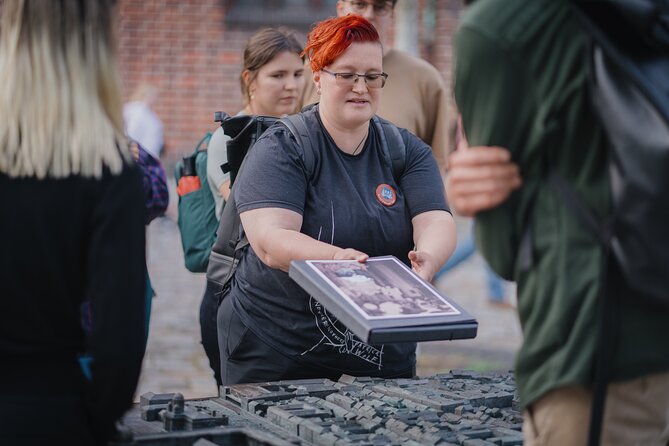
At $30.04 per person, the fee includes an expert guide. The stops listed are free-entry outdoor sites, so the main value is the guided interpretation: the stories linking a terracotta timeline, a missing reference on an East German display, a contested statue, and the 1989 protest at the fountain.
That value depends on what you want from a city walk. If you already know Berlin’s headline history, the focus on small details and less obvious connections may make the tour more useful than another overview of familiar monuments. The guides Martina and Simone are named in descriptions of the experience, and the tour’s emphasis on Eastern European history adds useful context. Your assigned guide may differ, so do not book on the assumption that one particular person will lead your walk.
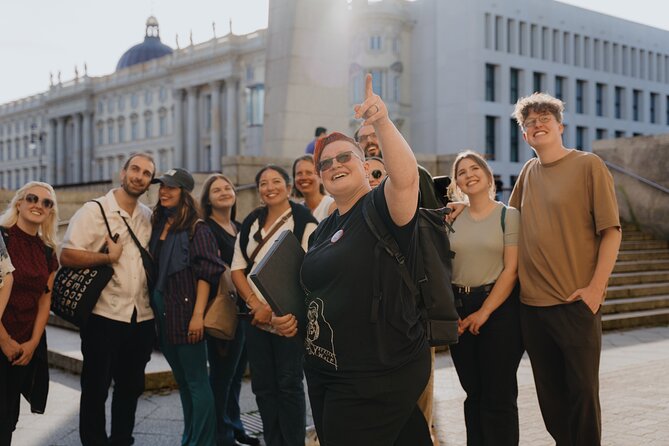
The group is limited to 15, which helps keep a street-level discussion manageable. The route is about 2 km and takes around two hours, making it a compact choice rather than a full-day commitment. The listed stop times add up to about two hours, with the Television Tower encountered along the way.
The reviews point to a consistent strength: careful research into small but meaningful stories, delivered in an engaging way. That sounds like the right fit for this route, where details often do more than a quick monument overview. One practical limit is the short schedule at some sites; this is a guided walk, not a series of long visits.
Who will get the most from this walk
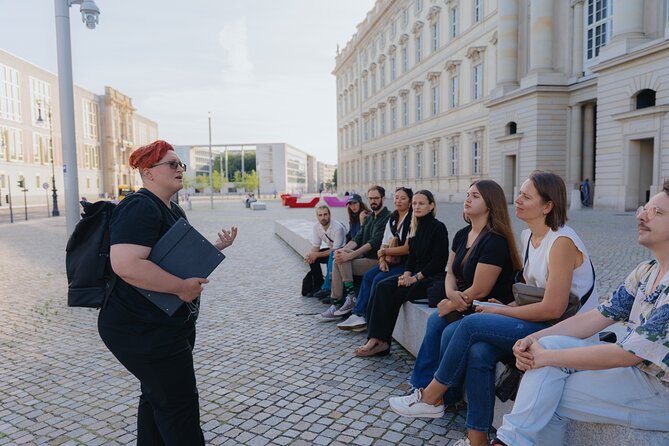
I would choose this tour if you want to understand how protest, public memory, and political change shaped central Berlin. It is especially well suited to history-minded visitors who have already seen the headline sights, as well as people living in Berlin who want to look again at familiar places. The focus on East German history gives the walk a clear identity.
It also works if you prefer a small group and a compact route. A maximum of 15 people and a walk described as roughly 2 km make it easier to follow the guide than a large, fast-moving tour. The English-language option is specified, and the ticket is mobile.
Think twice if you want to enter museums or buildings, spend long stretches at each stop, or get a broad survey of every era in Berlin. The tour is selective by design, and the short schedule means some topics receive only a few minutes. Its strongest use is as a guided introduction to the city’s protest history, not a substitute for further reading or museum visits.
Practical details are simple: the start is at the Aufbauhelferin sculpture by the Red Town Hall on Jüdenstraße, and the end is the World Time Clock at Alexanderplatz. Service animals are allowed, the meeting point is near public transportation, and the activity is described as suitable for most people. Confirmation is provided at booking. You can cancel for a full refund up to 24 hours before the start; poor weather may lead to a new date or a full refund.
Should you book the Berlin Protest History Tour?
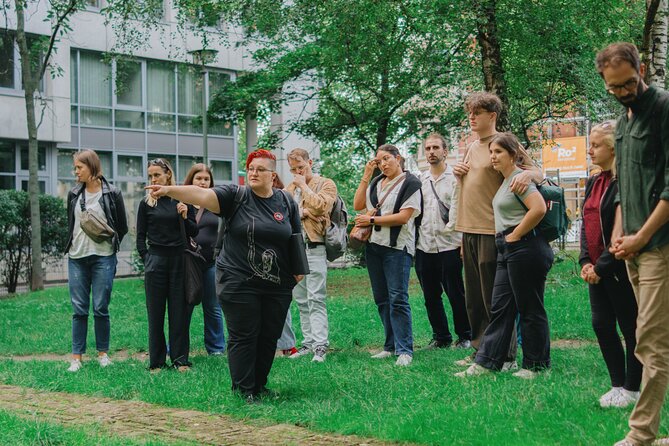
Book it if you want a thoughtful, compact walk that connects Berlin’s landmarks to acts of resistance, from the March Revolution of 1848 to the Peaceful Revolution of 1989. The most compelling parts are the specific details: the Wall’s absence from East Germany’s timeline, the women’s protest at Rosenstraße, and the T-shirt protest at the fountain.
Skip it if you need a slow-paced visit with substantial time indoors or at each monument. For $30.04, you are paying for the guide’s research and connections, not admission to attractions. If those connections are what you came for, this is a strong use of two hours in central Berlin.
FAQ
How long is the tour?
It lasts approximately two hours.
How much walking is involved?
The walk is described as about 2 km.
What language is the tour offered in?
The tour is offered in English.
Where does the tour start and end?
It starts at the Aufbauhelferin sculpture by the Red Town Hall on Jüdenstraße and ends at the World Time Clock in Alexanderplatz.
What is included in the price?
An expert guide is included. The listed stops have free admission.
How large is the group?
The tour has a maximum of 15 participants.
Can I cancel for a refund?
Yes. You can cancel at least 24 hours before the start for a full refund. If poor weather cancels the tour, you will be offered a different date or a full refund.
Newest tours in Berlin
- Berlin: guided canoe | kayaktour★ 4.1 · 7 reviews
- Where It All Began: Berlin’s Queer & Trans History Tour★ 4.9 · 6 reviews
- Understanding Kreuzberg: The roots of local (sub)culture★ 4.9 · 11 reviews
- Warnemünde Shore Excursion: Private Sachsenhausen and Berlin Tour★ 5.0 · 12 reviews
- Ultimate E-Bike Tour of Berlin with Beer Garden Stop★ 5.0 · 4 reviews
- Potsdam Highlights – Private sightseeing tour by minibus★ 5.0 · 3 reviews
- Private Potsdam City Tour in an authentic vintage van★ 5.0 · 14 reviews
- Transfer from Berlin Schönefeld Airport (SXF) to Berlin city Hotels – ROUND TRIP★ 4.0 · 3 reviews
Berlin Tours, compared.
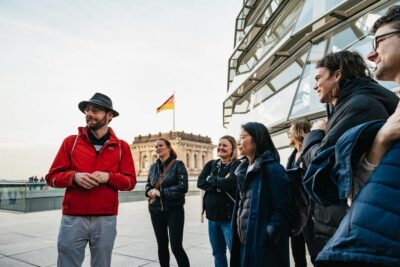
Reichstag, Dome and Government District Guided Tour
Read our review →
1-Hour City Tour by Boat with Guaranteed Seating
Read our review →

Reichstag, Plenary Chamber, Cupola & Government Tour
Read our review →
Browse the lists this tour appears in