
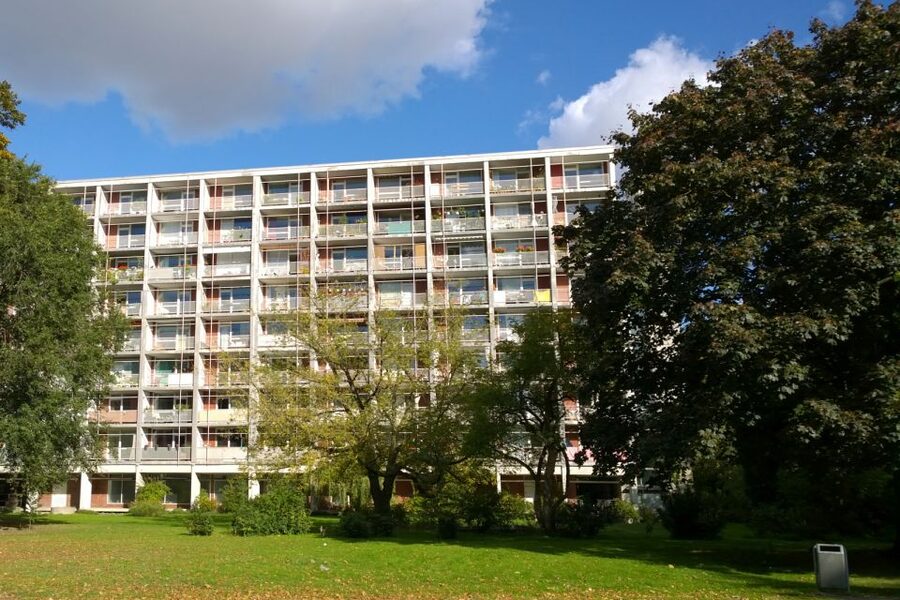
Reviewed · BERLIN TOURS
Berlin: Hansaviertel “The City of Tomorrow” Guided Tour
Hansaviertel is a walkable argument about how a city should be rebuilt. Designed for the 1957 International Building Exhibition, this West Berlin district still shows the ambitions of a postwar city that wanted space, light, and a new look toward the future.
I like two things about this tour: it brings together very different buildings, from the Gropius-Haus to the Hansaviertel Library, and it gives you a guide to connect them with Berlin’s history. Guides such as Tobias have earned particular praise for their warmth, humor, and command of the subject.
The main consideration is timing. Two hours on foot is a manageable commitment, but one visitor wished the winter tour started and finished earlier, so check the start time and daylight before you book.
- The 1957 vision is the main event: See how Hansaviertel was planned as a spacious, modern district.
- Architecture comes with context: The guide links individual buildings to the area’s postwar history.
- The route covers more than homes: Expect landmarks including Hansaplatz station, the library, hospital, and Academy of Art.
- It suits curious walkers: The tour lasts two hours and is focused on buildings and urban design, not a broad survey of Berlin.
- English and German tours are available: The meeting point can vary by booking option, so check your confirmation.
A walk through Berlin’s postwar idea of tomorrow

Hansaviertel makes the most sense when you see it as more than a collection of notable buildings. The district was newly designed for the 1957 International Building Exhibition, with a plan based on modern urban-development principles. The stated aim was a structured, spacious city, and the district still offers a chance to see that idea at street level.
That makes this walk a useful counterpoint to Berlin’s more familiar stories. The capital’s turbulent past is often told through monuments, walls, and sites of political power. In Hansaviertel, history is written into everyday places: homes, a station, a library, a hospital, and cultural buildings.
You’ll spend two hours walking between them with a guide. Rather than just identifying façades, the tour is designed to explain why the district took this form and how its architecture fits into the larger story of Berlin. That context matters. Without it, the buildings may look like an intriguing mix of styles; with it, you can read them as part of a deliberate postwar plan.
The pace is described as leisurely, which suits a route where looking is the point. You’ll have time to notice the variety of buildings and ask questions, rather than racing from one photo stop to the next. If you want a broad city overview or a tour inside major museums, this is not that. It is a focused walk through one distinctive neighborhood.
Starting with the 1957 exhibition

The key to the route is the International Building Exhibition of 1957. Hansaviertel was redesigned for it, bringing together work by German and international architects. The tour uses that project to explain how postwar planners imagined a new kind of city.
That is a strong subject for a guided visit because planning ideas can be hard to grasp from a map or a set of building names. On foot, you can compare the different structures and see how the area’s buildings serve more than one purpose. The story is not only about architecture as an art form, but about how a district might be organized for daily life.
The tour also sets the neighborhood against Berlin’s difficult past. The supplied details do not specify a full timeline or a sequence of political events, so expect the emphasis to be on Hansaviertel and the city’s history as it relates to the district, rather than an all-purpose history lecture.
Past participants have singled out Tobias and Mr Schwabe for engaging, friendly guidance, humor, and strong subject knowledge. The named guide is not guaranteed for every departure, but the feedback makes clear that the guide’s explanations are central to the experience. If you enjoy asking questions, this is the sort of walk where that can add a lot.
More guided tours in Berlin:
- Berlin: Reichstag, Dome and Government District Guided Tour
★ 4.7 · 18,288 reviews - Berlin: Government District around the Reichstag Guided Tour
★ 4.7 · 8,447 reviews - Berlin: Hidden Backyards Guided Walking Tour
★ 4.8 · 5,360 reviews
The Berlin Pavilion and Müller-Rehm/Siegmann House
The Berlin Pavilion and the Müller-Rehm/Siegmann House are among the first named stops. They give the tour a concrete start: instead of discussing modern planning in the abstract, you begin looking at actual buildings connected with the district’s postwar design.
The Pavilion is part of the route, while the Müller-Rehm/Siegmann House gives you another example to compare with the other architectural work in Hansaviertel. The supplied tour details do not assign a particular design feature or story to either stop, so it is best to let the guide supply that interpretation rather than arrive expecting a specific interior visit or architectural detail.
For you, the value is in seeing buildings as a group. A guided walk can point out how the district’s variety relates to the wider plan, and help you understand why the exhibition brought together architects from Germany and abroad. If you already know a little about architecture, you’ll have useful details to look for. If you don’t, the guide can provide a framework for noticing more than the overall shape of a building.
Gropius-Haus and the memorial church
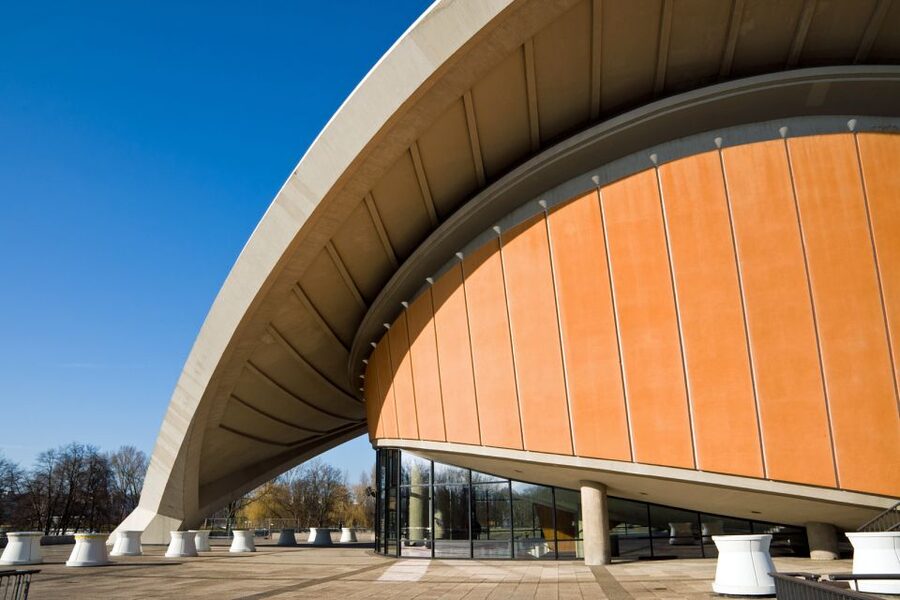
The Gropius-Haus is one of the route’s headline buildings, and a natural stop for anyone interested in modern architecture. The tour also visits the Kaiser-Friedrich Memorial Church, bringing a religious landmark into a walk otherwise centered on postwar planning and civic design.
That contrast is part of what makes Hansaviertel worth exploring. The district is not presented as a single architectural style or a neat row of matching structures. Instead, the tour points to a range of buildings that help show how the area took shape and how different functions sit within the same neighborhood.
The Gropius-Haus is likely to be a highlight if you are drawn to architecture, but the tour does not promise an interior visit. Plan on seeing the buildings as part of a walking route and hearing the guide explain their place in the district. The memorial church adds a different kind of reference point, and helps keep the walk from becoming a sequence of residential façades alone.
Hansaplatz station, library, and hospital
Hansaplatz station, the Hansaviertel Library, and the Hansaviertel Hospital broaden the route beyond architecture as something to admire from the outside. They are part of the neighborhood’s working infrastructure, and help make the idea of a planned, spacious city more tangible.
A station, library, and hospital tell you that Hansaviertel was conceived as a place for daily life, not simply as an architectural exhibition. Their presence helps connect the grand language of modern urban development with the practical needs of residents. This is one of the more useful parts of the tour for visitors who want to understand how a district functions, rather than collect a list of famous buildings.
The route also passes the Swedish House, another example of the international character of the exhibition. The supplied details do not explain its design or use, so treat it as one stop in a wider architectural story rather than expecting a detailed visit inside.
There is a practical benefit to this mix of stops: it gives the walk variety. You are not spending two hours looking only at apartment buildings. You’ll see transport, cultural, health, and residential structures, with the guide tying them back to the district’s larger plan.
More city tours in Berlin:
- Berlin: 1-Hour City Tour by Boat with Guaranteed Seating
★ 4.3 · 16,993 reviews - Berlin: City Sightseeing Hop-On Hop-Off Bus Tour
★ 4.1 · 4,233 reviews - Potsdam: City and Castles Tour
★ 4.7 · 3,721 reviews - Berlin: 1-Hour City Sightseeing Cruise
★ 4.4 · 2,210 reviews
Van den Broek House, Schwippert House, and the Academy of Art
The Van den Broek House and Schwippert House add further residential examples to the walk. Together with the buildings already on the route, they make clear that Hansaviertel is a place to compare individual works, not just admire one landmark and move on.
The Academy of Art gives the tour a cultural stop toward the end of its range. The route’s variety is a strength: you see buildings connected to housing, public services, transport, and the arts. That range helps explain the district as an urban project rather than a collection of architectural curiosities.
The walk’s appeal depends on your interest in looking closely. If you enjoy noticing how buildings differ and hearing why they were designed as they were, this is a rewarding way to spend time. If you prefer a tour built around interiors, famous historical figures, or a packed schedule of major attractions, the exterior-focused neighborhood walk may feel quieter than you want.
What the guide adds to the buildings
The strongest recurring praise for this tour is directed at the guides. Tobias is repeatedly described as friendly, funny, enthusiastic, and deeply informed about the architecture and history. Mr Schwabe is also singled out for clear information and a kind manner.
That matters because Hansaviertel is not always self-explanatory. A building may catch your eye, but the exhibition’s aims and the relationship between the structures are harder to read without context. A good guide gives you a way into the district, answers questions, and makes the two hours feel like a connected story rather than a walk past a checklist.
Tobias has also led tours on Karl-Marx-Allee, according to one participant who planned to join that walk after this one. If you are building a Berlin itinerary around postwar architecture, that may be another outing to look into, though it is separate from this Hansaviertel tour.
Guide assignments can vary, so don’t book on the assumption that one named person will lead your departure. The more reliable expectation is an English- or German-speaking live guide, with the tour’s focus on the district’s architecture and history.
Is $23 good value for two hours?
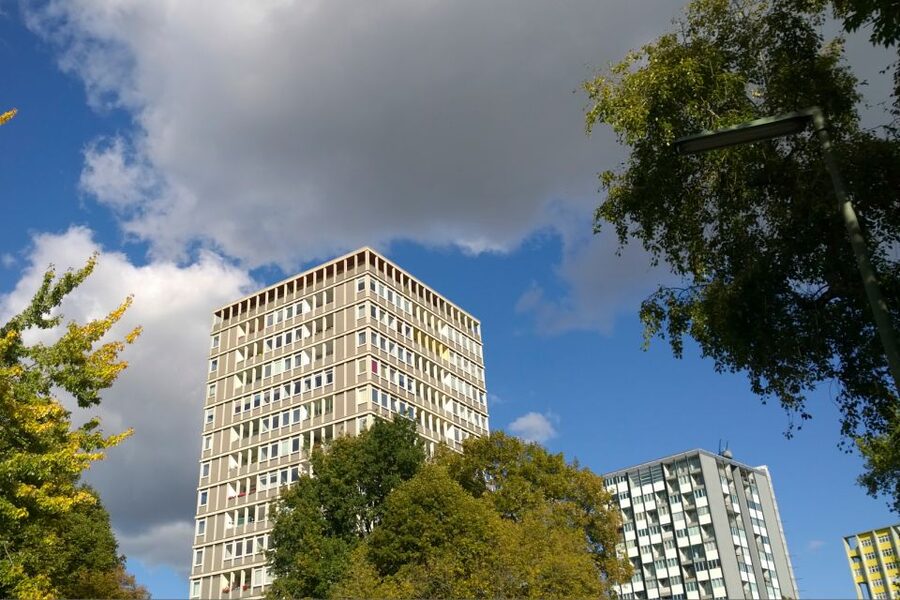
At $23 per person, this is a fairly focused way to spend two hours in Berlin. You are paying for a guided walking tour, not entry to a string of attractions, and the value lies in the guide’s explanations and the chance to understand a neighborhood you might otherwise pass through without context.
It is best value if you have a real interest in architecture, postwar planning, or Berlin’s changing history. The route includes a substantial set of named buildings and public sites, so you get more than a quick look at one landmark. The guide’s role is especially important here: several past participants praised the depth of the explanations, and that is what turns the walk into more than a self-guided stroll.
The price may feel less compelling if you want a broad introduction to Berlin or prefer tours with interiors and included admissions. No interior access or admission tickets are listed among the inclusions. Consider this a neighborhood tour with an expert-led interpretation, not a bundled attraction pass.
The two-hour duration is also a practical plus. It is long enough to cover the district’s key stops and make sense of the 1957 exhibition, but short enough to fit around other plans. Check the departure time, particularly in winter. One visitor specifically wished the tour began and ended earlier during the darker months.
Who should book the Hansaviertel walk?
I’d put this tour high on the list if you enjoy architecture, urban design, or the story of how Berlin rebuilt and reimagined itself after a turbulent period. It is also a good choice if you have already seen the city’s headline sights and want to spend time in a district that is less likely to be part of a standard first-day route.
You do not need to be an architecture expert. A guide can help you make sense of the buildings, and the reviews point to an approachable style with room for questions and humor. Still, some curiosity about the subject will help you get more out of two hours of looking at buildings and discussing how a neighborhood was planned.
The walk is wheelchair accessible, and tours are offered in English and German. The meeting point varies with the option booked, so check that detail before setting out. It is also possible to arrange tours beginning from specific points at certain times.
For the right person, $23 buys a clear, engaging look at a side of Berlin that is easy to overlook. Book it for the architecture and the guide-led context, not for a general city overview. If postwar design leaves you cold, choose another Berlin walk. If the idea of reading a whole neighborhood through its buildings appeals, this is an easy recommendation.
FAQ
How long is the Hansaviertel tour?
The walking tour lasts two hours.
How much does the tour cost?
The listed price is $23 per person.
Which languages are available?
The tour is offered with a live guide in English or German.
Is the tour wheelchair accessible?
Yes, the activity is listed as wheelchair accessible.
Which buildings and sites are included?
The route includes the Berlin Pavilion, Müller-Rehm/Siegmann House, Gropius-Haus, Kaiser-Friedrich Memorial Church, the Swedish House, Hansaplatz station, the Hansaviertel Library, the Hansaviertel Hospital, Van den Broek House, Schwippert House, and the Academy of Art.
Where does the tour meet?
The meeting point may vary depending on the option booked. Tours can also be organized to begin at specific points at certain times.
Can I cancel the tour?
You can cancel up to 24 hours in advance for a full refund.
Newest tours in Berlin
- Berlin: guided canoe | kayaktour★ 4.1 · 7 reviews
- Understanding Kreuzberg: The roots of local (sub)culture★ 4.9 · 11 reviews
- Where It All Began: Berlin’s Queer & Trans History Tour★ 4.9 · 6 reviews
- Warnemünde Shore Excursion: Private Sachsenhausen and Berlin Tour★ 5.0 · 12 reviews
- Ultimate E-Bike Tour of Berlin with Beer Garden Stop★ 5.0 · 4 reviews
- Potsdam Highlights – Private sightseeing tour by minibus★ 5.0 · 3 reviews
- Private Potsdam City Tour in an authentic vintage van★ 5.0 · 14 reviews
- Transfer from Berlin Schönefeld Airport (SXF) to Berlin city Hotels – ROUND TRIP★ 4.0 · 3 reviews
Berlin Tours, compared.
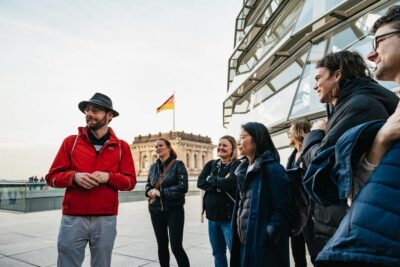
Reichstag, Dome and Government District Guided Tour
Read our review →
1-Hour City Tour by Boat with Guaranteed Seating
Read our review →


Reichstag, Plenary Chamber, Cupola & Government Tour
Read our review →
Browse the lists this tour appears in