Reviewed · BERLIN TOURS
Berlin during Nazism – Tour in Italian
Berlin’s Nazi-era story is not confined to one monument. This three-hour Italian-language tour links places of resistance, persecution, Jewish life, and remembrance, showing how the dictatorship shaped the city and the people who lived there.
I like the route’s range: it places the German Resistance Memorial Center beside sites connected to Nazi crimes, then turns toward the Jewish Quarter and its landmarks. I also like that the guide speaks Italian, with past tours led by guides including Lorenzo, whose clear, engaging explanations earned particular praise.
The main consideration is the pace. You have about three hours for eight stops, and travel between them is not included in the price. The group can reach 20 people, so this is not a private or especially intimate tour.
At a glance
- The route connects distinct stories: resistance, the T4 killing program, deportations, Jewish life, and postwar Berlin.
- The Italian guide is central to the experience: the stops gain meaning through context and explanation, not just the buildings and memorials.
- The T4 memorial addresses a less familiar Nazi crime: it commemorates people killed because of disabilities or chronic illness.
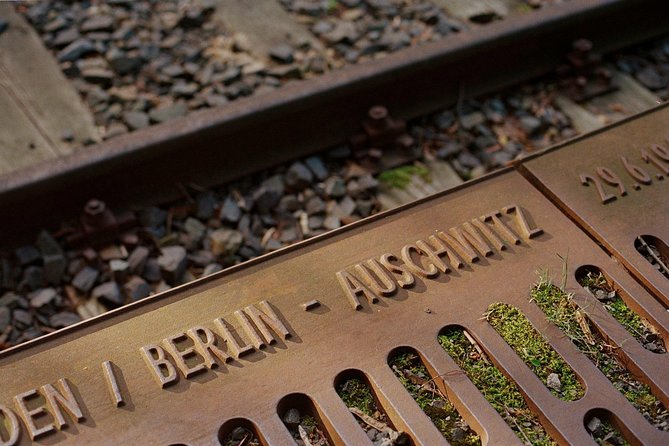
- Anhalter Bahnhof links the city to deportation: the remaining station ruins recall trains that left for death camps from 1942 to 1945.
- The tour begins at Potsdamer Platz at 10:00 am and finishes at Hackescher Markt.
- The listed price is $27.87 per person, with public transport, food, and drinks not included.
A route through several sides of Nazi Berlin
This tour is useful because it does not tell the story of Nazism through one grand building or one familiar symbol. Instead, it connects places where people resisted, people were targeted, and Jewish institutions and community life existed before and during the Nazi period.
That variety matters. The New Synagogue and the old Jewish cemetery point to a long-standing community; the T4 memorial and Anhalter Bahnhof show how Nazi policies turned into organized killing and deportation. The Resistance Memorial Center adds a different question: how did people act against the dictatorship?
The tour is led in Italian by a professional guide, and the listed route runs from Potsdamer Platz to Hackescher Markt. The group limit is 20. That is small enough to keep the experience more focused than a large coach tour, though a group of 20 is still large enough that you may need to stay close to hear every explanation.
The stops have different allotted times, from 10 to 45 minutes. These short visits make the route broad rather than exhaustive. I would think of it as a guided framework for understanding the city, not a substitute for spending a longer visit at a museum or memorial that particularly moves you.
Other tours people book in Berlin:
- Berlin: Reichstag, Dome and Government District Guided Tour
★ 4.7 · 18,288 reviews - Berlin: 1-Hour City Tour by Boat with Guaranteed Seating
★ 4.3 · 16,993 reviews - Berlin: Boat Tour Along the River Spree
★ 4.4 · 11,252 reviews
Potsdamer Platz sets the starting point
Meet at Potsdamer Platz 10, near the S- and U-Bahn station, at 10:00 am. Look for the blue VIVE BERLIN TOURS bicycle and the company flag. The meeting point is specific, but arriving a little early gives you time to orient yourself and find the group without rushing.
The tour starts with a short meeting period before the first listed stop. From here, the guide sets up the subject: Hitler’s rise to power in 1933, the events that led toward World War II, and the ways the war affected Germany and the wider world. That overview helps make sense of the stops ahead, which focus on different parts of the period rather than following one person’s story.
Potsdamer Platz is also a practical place to begin because it is served by public transport. The tour does not include transport between attractions. A Berlin public transport day card for zones AB is recommended, so budget for that separately if you need it.
The Resistance Memorial Center puts opposition in focus
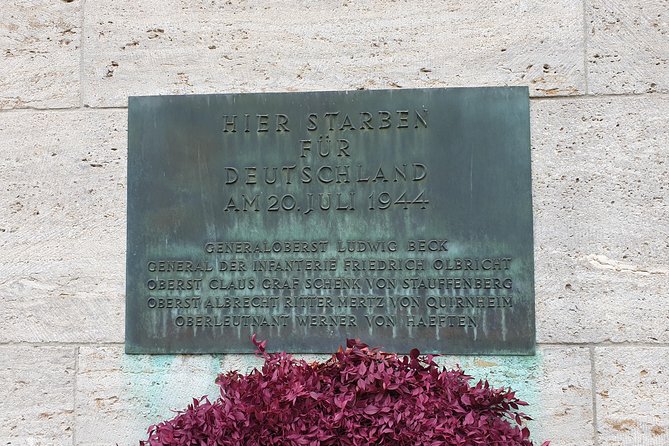
The German Resistance Memorial Center is at the site from which Operation Valkyrie was directed. The memorial examines individuals and groups who acted against the Nazi dictatorship between 1933 and 1945. The stop is scheduled for 25 minutes, giving it more time than most of the outdoor locations.
I value this part of the route because it complicates any idea that resistance was impossible or absent. The center’s focus is on people and groups who made choices under dictatorship. Your guide can place those actions within the larger story of the regime, giving the visit more context than a quick look at a plaque.
Twenty-five minutes is still a short visit. If you want to study the center in detail, you may need to return on your own. The tour’s strength is that it introduces the site and its importance as part of a wider account of Nazi Berlin.
The T4 memorial remembers victims targeted by Nazi policy
The next stop commemorates about 300,000 people killed under the Nazi euthanasia program. The victims included people with mental or physical disabilities and people with chronic illnesses. The program took its name from the office at Tiergartenstrasse 4, where it was directed.
The tour describes T4 as a precursor to the Holocaust. That connection gives the stop particular weight: it shows how Nazi persecution reached people beyond the groups most often discussed in accounts of the genocide. The planned visit is 15 minutes, enough for an introduction and reflection, though not a long examination of the history.
This can be a difficult part of the tour. I appreciate that the memorial is included rather than treating the story of Nazi crimes as only a sequence of military events or famous sites. It brings attention to people whose lives were targeted because of disability or illness.
Same city, a different kind of day:
- Discover Berlin Half-Day Walking Tour
★ 5.0 · 9,624 reviews - Berlin: Hop-on Hop-off Bus Tour with Live Commentary
★ 4.3 · 8,579 reviews - Berlin: Government District around the Reichstag Guided Tour
★ 4.7 · 8,447 reviews - Berlin: Reichstag, Plenary Chamber, Cupola & Government Tour
★ 4.6 · 8,422 reviews
Anhalter Bahnhof shows how transport served deportation
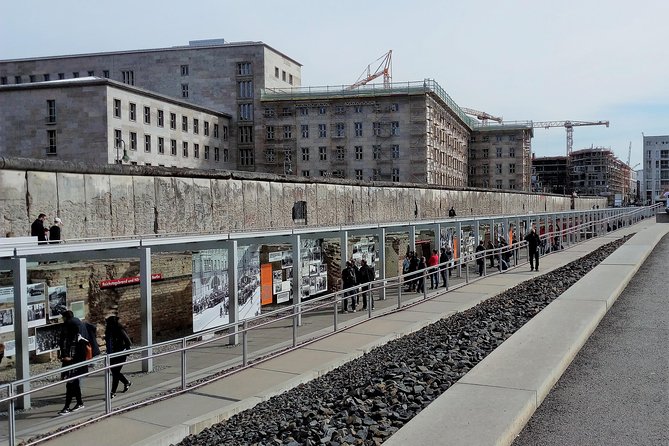
At Anhalter Bahnhof, the remains of a once major European railway station provide a stark contrast between past scale and present ruin. The station was among Europe’s largest at the end of the 19th century. Today, only remains damaged during World War II survive.
From 1942 to 1945, death trains left from the station. That detail changes how you read the site. A railway station is usually associated with arrival and departure, but here the history turns that ordinary function into part of the machinery of deportation.
The stop is scheduled for 10 minutes. That is brief, but the ruins make the connection between urban infrastructure and Nazi crimes tangible. The tour does not list a paid admission here, and the site is presented as an outdoor stop.
The Scheunenviertel connects persecution with Jewish life
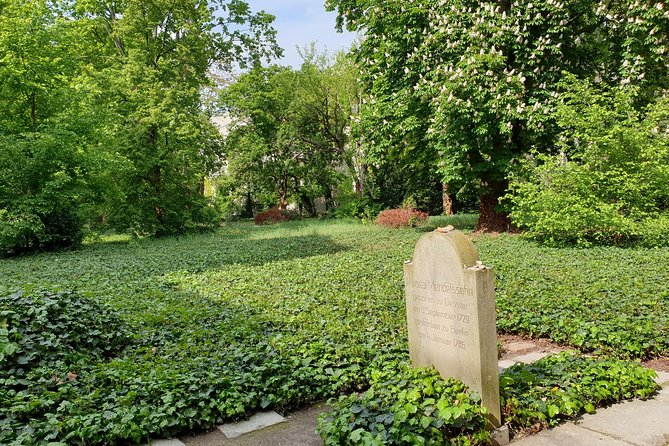
The route then moves into the Scheunenviertel, an area of Mitte often called Berlin’s Jewish Quarter. This is the longest scheduled stop, at 45 minutes, and includes several important Jewish institutions, among them the New Synagogue and the school founded by Moses Mendelssohn, an Enlightenment philosopher and Jewish modernizer.
This section gives the tour a needed shift in focus. Jewish history in Berlin did not begin with Nazi persecution. The synagogue and school point to a community with institutions, public presence, and a life that existed before the regime’s attempts to destroy it.
The tour description includes the New Synagogue among the sites in the quarter, then lists a separate 10-minute stop at the synagogue itself. The schedule does not spell out exactly which buildings you enter, so if interior access is important to you, check the details with the operator before booking. Either way, the guide’s explanation can help you understand how to read the area’s landmarks as more than surviving facades.
Otto Weidt’s workshop tells a story of individual action
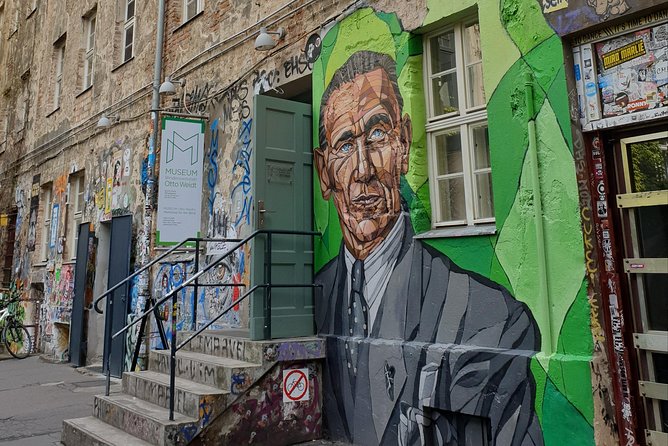
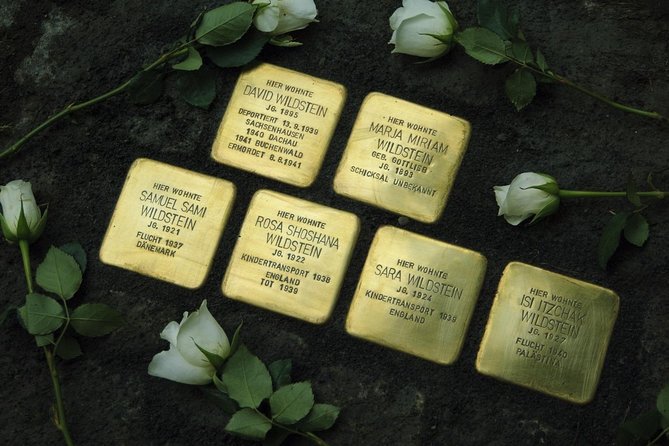
The Museum Blindenwerkstatt Otto Weidt occupies the original location of Weidt’s workshop. Weidt hired Jewish workers, including blind and disabled employees, and tried to protect them from deportation to Nazi extermination camps. His story is sometimes compared with that of Oskar Schindler.
The 15-minute stop brings the tour back to individual choices, after the larger systems of persecution at the T4 memorial and railway station. It also connects to the tour’s broader interest in people who acted within an oppressive system to help others.
The short schedule means you should not expect an extended museum visit. Still, the original workshop location gives the story a specific setting, and the guide can help explain why Weidt’s actions matter within the larger history.
The New Synagogue and old cemetery mark a lost community
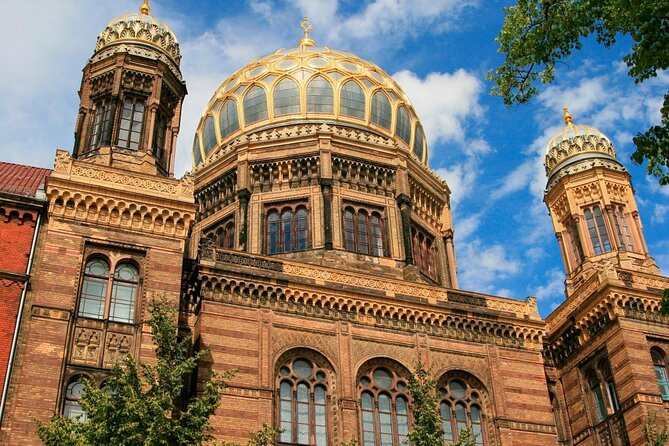
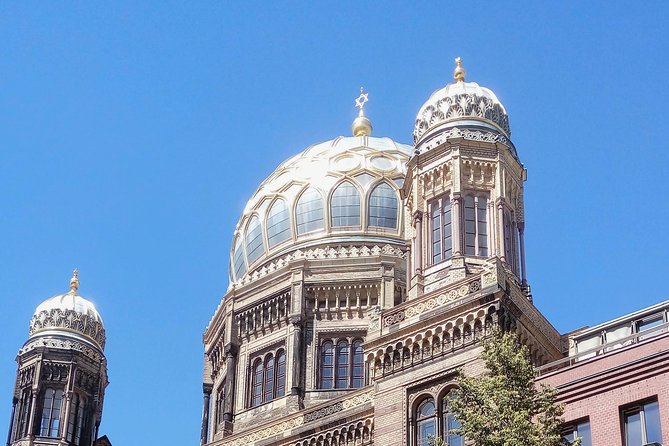
The New Synagogue was built in 1866 and could seat 3,200 people, making it the largest Jewish place of worship in Germany at the time. It was a symbol of a thriving Jewish community. The listed stop is 10 minutes, so expect a concise visit rather than a long stay.
The route then reaches the Old Jewish Cemetery on Hamburger Strasse, described as the oldest recognizable cemetery in inner-city Berlin. It was once the resting place of prominent members of the Jewish community. The cemetery was destroyed by the Gestapo during the Nazi period, and little of the original site remains. The scheduled stop is another 10 minutes.
Together, these sites help keep the tour from becoming only a record of Nazi actions. They show what was present before persecution: places of worship, education, burial, and community life. The cemetery’s destruction makes the loss visible in a different way from the surviving synagogue landmark.
What the guide adds, and what the schedule cannot do
The guide is a major part of the value here. Past accounts of this tour single out Lorenzo for clear, engaging explanations, and guides named in tour comments also include Fabio, Paolo, Vita, Federica, and Silvio. The guide assigned to your departure can vary, so treat those names as examples, not a promise.
The most praised qualities are preparation, passion for the subject, and the ability to hold attention through a serious three-hour route. One account describes the experience as emotionally affecting, while others emphasize that a good guide makes locations easier to understand than a self-guided walk. That is a sensible reason to book: many of the sites are meaningful, but the historical connections are not always obvious on their own.
The trade-off is the timetable. The listed stop durations add up to about two hours and 20 minutes, including the initial meeting time, while the tour lasts around three hours. That leaves time for movement between locations, but it does not turn each stop into a full museum visit. You will get a guided overview, with the option to revisit a site afterward if you want more time.
The tour operates in all weather, so dress for the conditions. You will be moving among multiple sites, and comfortable shoes are a practical choice. Food and drinks are not included; plan a meal or snack around the morning start and the finish at Hackescher Markt.
Is $27.87 good value?
At $27.87 per person, the price is reasonable for a three-hour guided tour in Italian, especially if you want help connecting sites across the city. The professional guide and local taxes are included. The stops are listed with free admission, but transport, food, and drinks are not part of the price.
The value depends on what you want from the day. If you are comfortable reading signs and building your own historical route, you could visit many of these locations independently. But the tour brings them together in a focused sequence and gives you an Italian-language explanation of how resistance, persecution, Jewish life, and the war connect.
The average booking lead time is 56 days, which suggests planning ahead is sensible, particularly if your dates are fixed. The tour has a maximum group size of 20, rather than a private-group format. If you need to cancel, free cancellation is available up to 24 hours before the start time; later cancellations are not refunded.
Who should book this tour?
I would choose this tour if you want a structured introduction to Nazi Berlin in Italian, especially if you value having a guide explain the links between sites. It suits history-minded adults and families with older children who are ready to discuss persecution and mass killing. One family account describes attending with children aged 10 and 17, but the subject matter is serious, so use your own judgment about what is suitable.
It is also a good fit if you want to see more than the best-known memorials. The route includes the resistance center, the T4 memorial, the remains of Anhalter Bahnhof, and several Jewish landmarks, with a stop at Otto Weidt’s workshop. That range gives you a broader view of how Nazi rule affected people and institutions.
I would skip it if you need a slow, detailed visit at each site, want a private guide, or are looking for a tour that includes transport and meals. For most visitors who want a thoughtful Italian-language overview at a fair price, this is a strong use of a Berlin morning.
FAQ
How long is the tour?
The tour lasts approximately three hours.
What language is the tour in?
The guide conducts the tour in Italian.
Where does the tour start and end?
It starts at Potsdamer Platz 10, 10785 Berlin, and ends at Hackescher Markt, 10178 Berlin.
What time does the tour begin?
The scheduled start time is 10:00 am.
How large can the group be?
The tour has a maximum of 20 participants.
Is public transportation included?
No. Transportation to and from the attractions is not included. A Berlin public transport day card for zones AB is recommended.
Can I cancel for a refund?
You can cancel for a full refund up to 24 hours before the tour’s start time. Cancellations made less than 24 hours beforehand are not refunded.
Newest tours in Berlin
- Berlin: guided canoe | kayaktour★ 4.1 · 7 reviews
- Understanding Kreuzberg: The roots of local (sub)culture★ 4.9 · 11 reviews
- Where It All Began: Berlin’s Queer & Trans History Tour★ 4.9 · 6 reviews
- Warnemünde Shore Excursion: Private Sachsenhausen and Berlin Tour★ 5.0 · 12 reviews
- Ultimate E-Bike Tour of Berlin with Beer Garden Stop★ 5.0 · 4 reviews
- Potsdam Highlights – Private sightseeing tour by minibus★ 5.0 · 3 reviews
- Private Potsdam City Tour in an authentic vintage van★ 5.0 · 14 reviews
- Transfer from Berlin Schönefeld Airport (SXF) to Berlin city Hotels – ROUND TRIP★ 4.0 · 3 reviews
Berlin Tours, compared.
Reichstag, Dome and Government District Guided Tour
Read our review →
1-Hour City Tour by Boat with Guaranteed Seating
Read our review →

Reichstag, Plenary Chamber, Cupola & Government Tour
Read our review →