Reviewed · BERLIN TOURS
Berlin: 2.5-Hour Neighborhood Tour of Neukölln
Neukölln’s story turns on a name change. In 1912, with Wilhelm II’s approval, Rixdorf became Neukölln, partly to shed its reputation as a place of frivolous entertainment. This 2.5-hour walk follows the layers beneath that old image, from Protestant refugees and a village-like square to civic buildings and working-class housing.
I like two things about this route: it brings together very different kinds of places, including the old district court, the former prison, Rollberg’s housing and the Bethlehem Church; and it gives you a way to read modern Neukölln through its past rather than treating it as just another Berlin neighborhood. The tour also reaches beyond the main streets to architectural details such as the Innstrasse housing complex and the old public pool façade.
One consideration: this is a focused neighborhood walk, not a broad survey of Berlin. The meeting point varies by booking option, so check it before setting out. The pace and exact order of stops are not specified, and the two-and-a-half-hour duration leaves limited time to linger at every site.
What Makes This Neukölln Walk Worth Your Time
- Rixdorf’s old identity: Learn why the town’s reputation helped prompt its 1912 renaming to Neukölln.
- The Bohemian refugee story: Visit the area around Richardplatz, where the history of Protestant exiles remains part of the district’s identity.
- Civic landmarks with a past: See the old district court, former prison and Town Hall, buildings that show how the town grew and governed itself.
- Housing as history: Compare the proletarian residence district of Rollberg with the architecture of the housing complex on Innstrasse.
- A varied local route: The walk also includes the old public pool façade, Saalbau Neukölln and the arcade on Karl-Marx-Strasse.
- A guide-led experience: Tours are offered in English and German, and guides such as Tobias have brought the area’s urban history to life through personal explanations and conversation.
Starting With Rixdorf’s Reputation
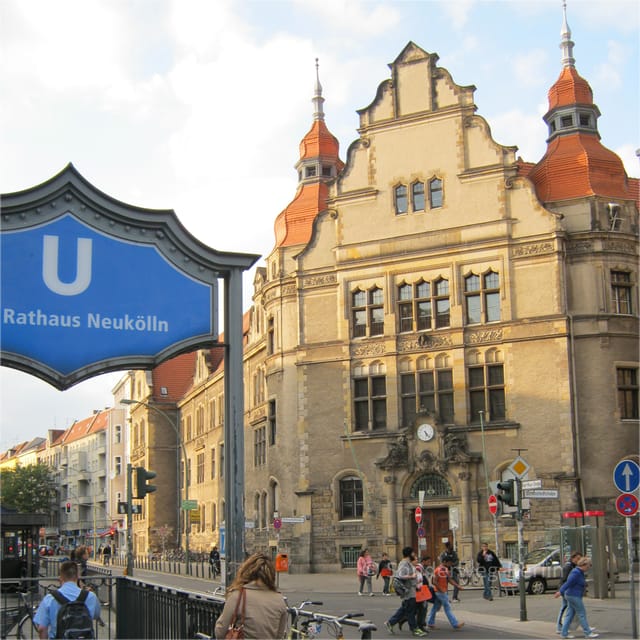
The most useful idea to carry into this walk is that Neukölln was not always called Neukölln. The settlement of Rixdorf had an identity of its own, and in 1912 it was renamed with Wilhelm II’s approval. The stated reason was an image problem: Rixdorf had become associated with frivolous entertainment. That change gives the neighborhood a good opening question: what did the authorities hope a new name would fix?
You will hear about older roots, too. The story reaches back to the Middle Ages, then moves to the 18th century, when Bohemian Protestant refugees, known as Exulanten, settled here alongside German residents. Religious faith and puritanism shaped everyday life among the refugees. That history adds a striking counterpoint to Rixdorf’s later reputation as a place of pleasure.
I like that the tour can make a name feel more than a label. It becomes a clue to changing attitudes, local politics and the way a town wanted to present itself. You do not need to know Berlin’s history in advance; the guide provides the context that helps connect a street or building to the larger story.
Other tours people book in Berlin:
- Berlin: Reichstag, Dome and Government District Guided Tour
★ 4.7 · 18,288 reviews - Berlin: 1-Hour City Tour by Boat with Guaranteed Seating
★ 4.3 · 16,993 reviews - Berlin: Boat Tour Along the River Spree
★ 4.4 · 11,252 reviews
Richardplatz and the Bohemian Village
Richardplatz is the natural heart of the walk’s Rixdorf story. The area still has a village-like atmosphere, a contrast with the broader city around it. That shift in feel is part of the appeal: within one neighborhood tour, you move from an urban district to a historic center that suggests a smaller settlement.
The square’s value is not just visual. It helps anchor the story of the Bohemian refugees and their religious life. The Bethlehem Church, on Richardplatz, gives the tour a specific place to explore that history. The available details do not promise a church interior visit, so think of this as a chance to see the church as part of the neighborhood’s historic setting rather than a guaranteed indoor stop.
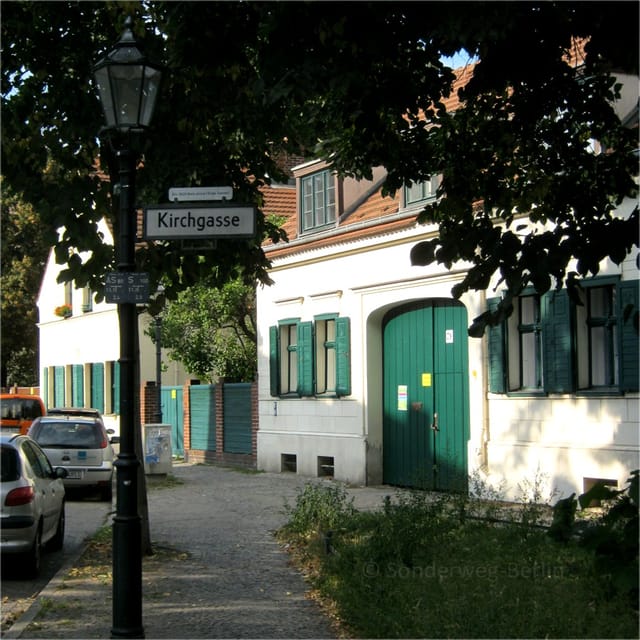
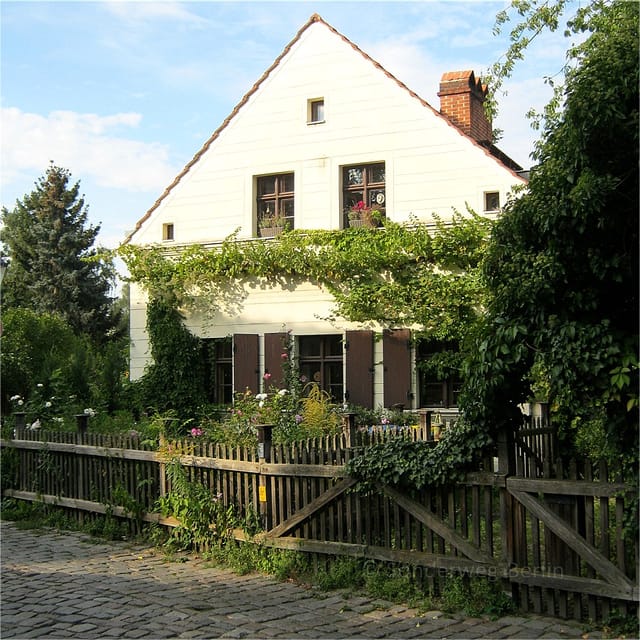
The Exile Houses in Bohemian Rixdorf add another layer. Their presence makes the refugee story tangible, connecting the movement of people to the place where they settled. A guide can help you understand why a community formed here and how its traditions shaped local life. For me, that is the kind of context that turns a pleasant walk through old streets into something more memorable.
Town Hall, Court and Former Prison
Neukölln’s civic buildings show a different side of its development. The Town Hall is singled out for its architecture, and the old district court and former prison bring the machinery of local government and justice into view. Taken together, these stops offer a useful counterweight to the village center: this is not only a story of settlement and faith, but also of a town becoming an organized urban district.
You will see the buildings from the outside as part of a walking tour. The information provided does not promise entry, so plan on learning about their roles and appearance rather than touring their interiors. Even without going inside, the former prison is a memorable stop because it gives the area’s legal history a physical address.
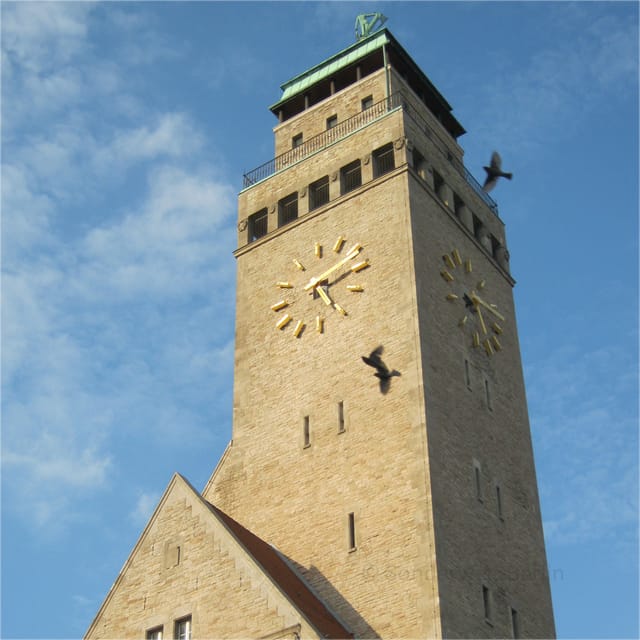
The Town Hall is the architectural highlight in this group. The tour invites you to look closely at its form and place in the district, rather than simply pass it on the way to another attraction. If civic architecture interests you, this stop should hold your attention. If you mainly want museum interiors, however, this walk is not presented as an indoor attraction.
Rollberg and Housing in Innstrasse
The housing stops give the tour a distinctly social history. Rollberg is described as a proletarian residence district, and the guide explains how it developed. That focus can help you see housing not just as a matter of façades, but as part of the story of who lived in Neukölln and how the district grew.
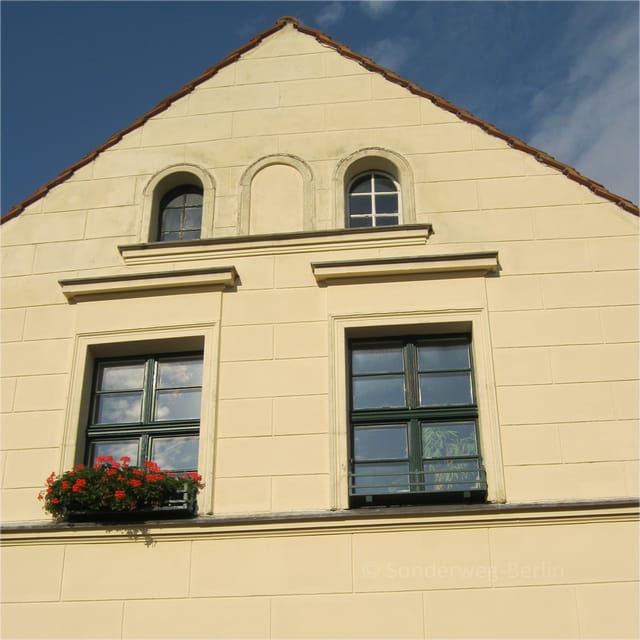
The complex on Innstrasse brings architecture to the foreground. It is noted for its outstanding design, making it a useful contrast with the historic village center and civic buildings. Seeing both Rollberg and Innstrasse in one walk gives you a broader sense of the neighborhood’s built environment, though the tour details do not specify the buildings’ architects, dates or design features. If those details matter to you, ask your guide what can be covered during the walk.
A past tour with Tobias also included the atrium houses on Rollberg. That is a specific architectural stop worth asking about, but it should not be assumed to appear on every route. The route may vary, and the advertised highlights do not guarantee every extra building mentioned by a guide.
Same city, a different kind of day:
- Discover Berlin Half-Day Walking Tour
★ 5.0 · 9,624 reviews - Berlin: Hop-on Hop-off Bus Tour with Live Commentary
★ 4.3 · 8,579 reviews - Berlin: Government District around the Reichstag Guided Tour
★ 4.7 · 8,447 reviews - Berlin: Reichstag, Plenary Chamber, Cupola & Government Tour
★ 4.6 · 8,422 reviews
The Pool, Saalbau and Karl-Marx-Strasse
The old Neukölln public pool is included for its façade. It is a good reminder that everyday public buildings can be landmarks in their own right. You will be able to appreciate its exterior, but no indoor visit is specified.
Saalbau Neukölln adds a cultural stop to a route otherwise rich in civic, religious and housing history. The tour includes it as one of the neighborhood’s notable places, though the available information does not describe a performance or an interior visit. Treat it as part of the district’s cultural story, not as a ticketed show.
The arcade on Karl-Marx-Strasse offers another change of scene. Alongside the historic and residential stops, it gives the walk a look at a commercial part of Neukölln. The mix matters: this tour does not confine itself to one picturesque corner. Instead, it connects the older Rixdorf center with landmarks that reflect the wider district.
The Guide Makes the Connections
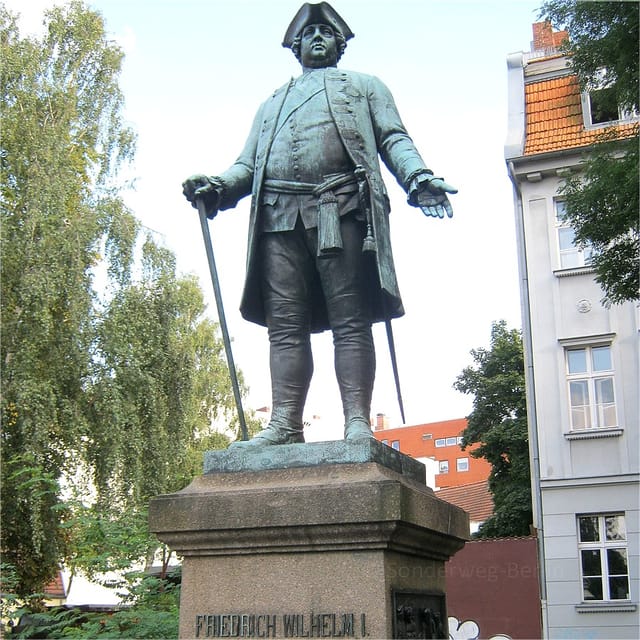
A neighborhood tour is only as useful as the explanations that tie its stops together. The guide is included, and tours are available in German or English. In past tours, Tobias has led the walk with detailed explanations, an informal manner and room for conversation. His approach has covered both headline sights, such as the Town Hall and public pool, and less obvious stops, including Rollberg’s atrium houses and a former brewery room.
That kind of local detail is where a guided walk can earn its price. A building’s façade is easy to see on your own; understanding how it fits into Neukölln’s changing identity takes more work. A guide can connect the name change, refugee settlement, housing history and civic landmarks as you move between them.
The tour is also suitable for someone who already knows Berlin. One past participant was born in the city and still found unfamiliar corners and useful context. You do not need to be a first-time visitor to get something from the walk, especially if you want to look beyond central Berlin’s best-known sights.
Is $23 Good Value for 2.5 Hours?
At $23 per person, the main value is the guided context across a broad range of local sites. You get a 2.5-hour walk and an expert guide, with no food, drinks or personal expenses included. For someone interested in architecture and neighborhood history, the price is reasonable for a concentrated introduction to an area that can be harder to understand through casual wandering.
The value depends on what you want. If you are content to stroll independently and look at buildings from the outside, you can explore the neighborhood without a guide. But if you want to understand why Rixdorf became Neukölln, how the Bohemian settlement shaped the area, and what Rollberg’s housing represents, the guided format is the point.
This is not a bargain if you expect admission to several attractions or a meal. Those are not included. It is a focused walking experience, and its worth comes from the guide’s explanations and the range of places covered in one outing.
Practical Details Before You Book
The tour lasts 2.5 hours and is listed as wheelchair accessible. English and German are the available languages. Starting times depend on availability, and the meeting point can vary by the option you book.
If you are arranging a tour for your own group, a meeting point, date and time can be requested. The supplied information does not specify group size, route distance or the amount of time spent at each stop, so confirm any needs that could affect your plans before booking.
You can reserve now and pay later, and cancellation is available up to 24 hours in advance for a full refund. These flexible terms can help if your Berlin plans are still taking shape, but check your chosen option for the exact meeting details.
Should You Book the Neukölln Tour?
Book this walk if you want Berlin history on a neighborhood scale: a former refugee settlement, a village-like square, civic buildings and housing districts, all within Neukölln. It suits curious walkers who like architecture and social history, and it can work for repeat Berlin visitors as well as first-timers.
Choose another activity if you want a broad city overview, museum interiors or a food-focused outing. The strength here is the combination of places and the guide’s ability to explain their connections. At $23 for 2.5 hours, it is a sensible choice if you would rather understand Neukölln than simply pass through it.
FAQ
How long is the Neukölln neighborhood tour?
The walk lasts 2.5 hours.
How much does the tour cost?
The listed price is $23 per person.
Which languages are available?
The live guide speaks German or English.
Is the tour wheelchair accessible?
Yes, the activity is listed as wheelchair accessible.
What is included in the price?
An expert tour guide is included.
Are food and drinks included?
No. Food, drinks and personal expenses are not included.
Where is the meeting point?
The meeting point varies depending on the option booked.
Can I request a meeting point and time for my group?
Yes. A meeting point, date and time can be arranged upon request for your group. Provide the details when booking.
Can I cancel for a refund?
Yes. You can cancel up to 24 hours in advance for a full refund.
Can I reserve without paying immediately?
Yes. The reserve-now, pay-later option lets you book without paying at the time of reservation.
Newest tours in Berlin
- Berlin: guided canoe | kayaktour★ 4.1 · 7 reviews
- Understanding Kreuzberg: The roots of local (sub)culture★ 4.9 · 11 reviews
- Where It All Began: Berlin’s Queer & Trans History Tour★ 4.9 · 6 reviews
- Warnemünde Shore Excursion: Private Sachsenhausen and Berlin Tour★ 5.0 · 12 reviews
- Ultimate E-Bike Tour of Berlin with Beer Garden Stop★ 5.0 · 4 reviews
- Potsdam Highlights – Private sightseeing tour by minibus★ 5.0 · 3 reviews
- Private Potsdam City Tour in an authentic vintage van★ 5.0 · 14 reviews
- Transfer from Berlin Schönefeld Airport (SXF) to Berlin city Hotels – ROUND TRIP★ 4.0 · 3 reviews
Berlin Tours, compared.
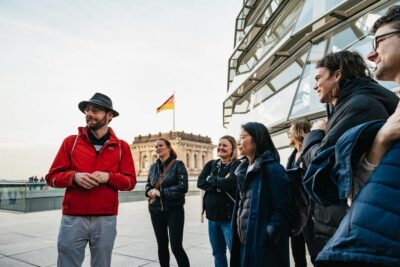
Reichstag, Dome and Government District Guided Tour
Read our review →
1-Hour City Tour by Boat with Guaranteed Seating
Read our review →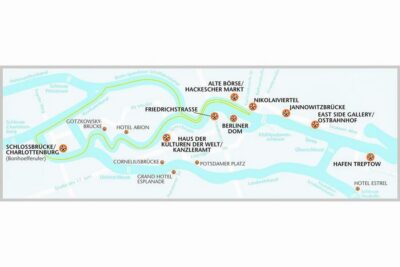
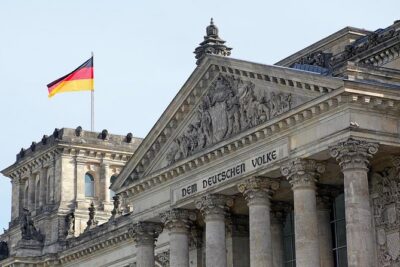

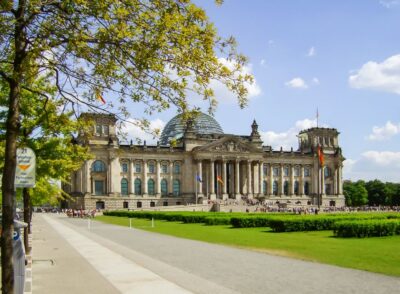
Reichstag, Plenary Chamber, Cupola & Government Tour
Read our review →