
Reviewed · BERLIN WALKING TOURS
An Introduction to Berlin Walking Tour
Berlin’s story is written across a few short blocks: the route takes you from a stretch of former Wall territory to the Brandenburg Gate, then through places tied to Prussian ambition, Nazi rule and divided Berlin. The point is not just to collect landmarks, but to see how one era left its mark on the next.
I like two things in particular: the tour connects the Prussian roots of German power to the better-known tragedies of the 20th century, and it makes room for present-day Berlin’s efforts to reckon with its past. One consideration is that three hours covers a lot of ground, and you may use public transport once or twice, with the ticket cost extra.
- Start at Potsdamer Platz: See a business district built where the Wall’s former Death Strip once cut through the city.
- Pause at the Holocaust Memorial and Reichstag: Consider remembrance, the 1933 fire and the modern glass dome’s democratic symbolism.
- Walk through Prussian Berlin: Follow Unter den Linden from the Brandenburg Gate toward Frederick the Great and the city’s royal past.
- Meet the city’s cultural and political contrasts: Visit Museum Island, Hackescher Markt and communist-era Alexanderplatz.
- Finish at Checkpoint Charlie: Discuss the Cold War border and the changes that continued after it opened.
- Budget for transit: A public transport ticket is not included; the guide can help you buy one.
Berlin’s story starts before the Wall
This three-hour walk takes a long view of Berlin, beginning with the city’s Prussian rise and moving through the German Empire, Nazi rule, the Cold War and reunification. That historical sweep matters. It helps explain how the city became a center of political power, why its streets were shaped by conflict, and how modern Berlin has tried to face what happened here.
The tour is led by a historian. Guides associated with the experience include professors, doctoral students, historians, journalists, art critics and published authors. Dr. Martin Sauter is a named guide, and people who have joined his tours have singled out his subject knowledge and personal approach. Your assigned guide is not guaranteed to be Dr. Sauter, so wait for booking confirmation before making plans around a specific person.
The route is in English and is available as a private or small-group experience. Group size is not specified, so ask the operator if that detail matters to you. The pace and format should suit anyone who wants more context than a self-guided walk provides, especially if this is your first visit and Berlin’s many historical layers feel hard to sort out.
Potsdamer Platz and the former Wall line
The walk begins at Cafe Einstein on Unter den Linden, but the first main stop is Potsdamer Platz. Today it is a business center. During the Cold War, the area was split by the Wall and its guarded strip, known to East Germans as the Death Strip. That contrast gives you a vivid first lesson in how quickly Berlin’s use of a place could change.
From here, the group follows the path where the Wall once stood toward Tiergarten. The route makes the division more tangible than a quick look at a surviving wall section can. You are tracing a former boundary through the current city, where there is no longer a physical barrier to stop you.
This section also sets the tour’s central theme: Berlin is not simply a city with old monuments and newer buildings. Its streets tell a story of political choices, power and rupture. If you are hoping for an extended visit to a museum or a preserved Wall site, this is not that kind of tour. It is a guided walk that uses places as evidence and keeps moving.
More walking tours in Berlin:
- Discover Berlin Half-Day Walking Tour
★ 5.0 · 9,624 reviews - Berlin: Third Reich and Cold War 2 Hour Walking Tour
★ 4.9 · 6,830 reviews - Berlin: Discover Berlin Walking Tour
★ 4.9 · 5,998 reviews
The Holocaust Memorial and Reichstag
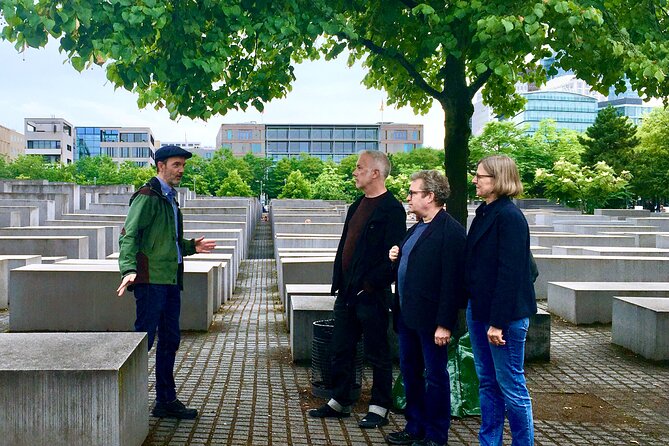
The Holocaust Memorial is one of the most emotionally forceful stops. Its field of concrete stelae invites you to move through it rather than view it from a single spot. The guide can help place the memorial within Berlin’s wider approach to acknowledging Nazi crimes and the victims of the Holocaust.
Give this stop your attention. The memorial’s effect is personal and can be difficult to reduce to a few facts, but historical context helps you understand why it occupies such a prominent place in the capital. The tour’s emphasis on the Nazi era means this is not a passing photo stop, though the three-hour schedule does limit how long the group can stay.
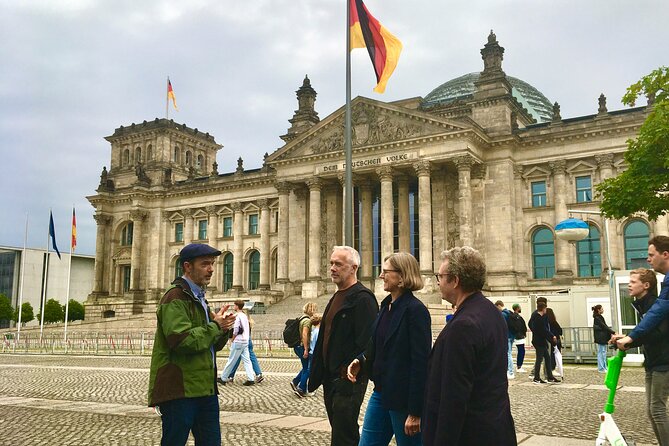
Nearby, the Reichstag brings the story from dictatorship to contemporary democracy. In 1933, a fire damaged the building. The Nazis used it as a pretext to suspend civil liberties and arrest political opponents. That event is an important part of the tour’s discussion of how Hitler’s government gained power and tightened its grip.
The building’s glass dome, designed by Norman Foster and created in 1992, provides a sharp contrast. Its walkways look down into Parliament, and the dome is discussed as a symbol of reunification, transparency and democratic government. The tour does not include a stated visit inside the Reichstag or dome, so treat this as an exterior stop and a conversation about the building’s meaning.
Brandenburg Gate and Prussian ambition
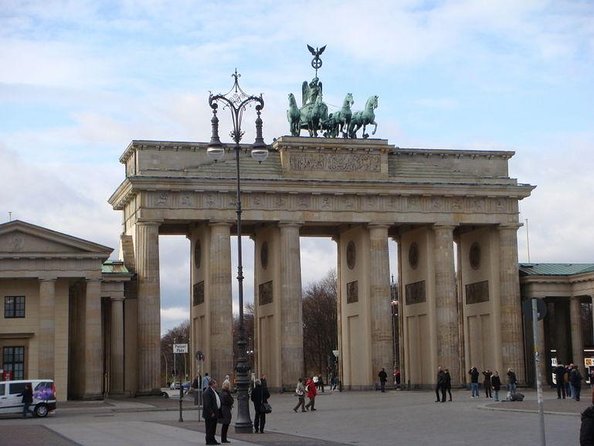
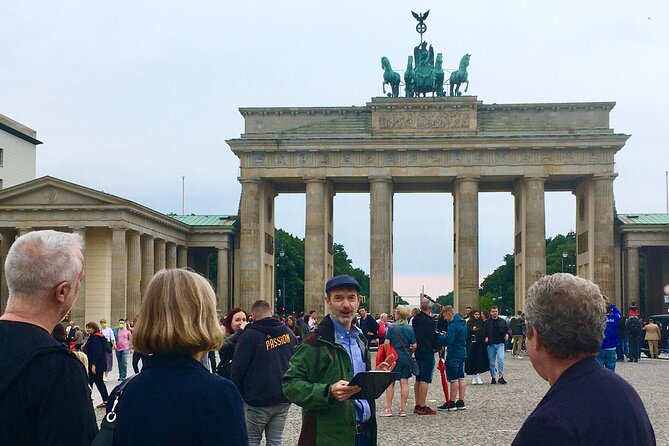
At the Brandenburg Gate, the tour turns further back in time. Napoleon passed through the gate, and the guide uses his presence and the effects of the French Revolution to explain how foreign upheaval helped stir German nationalism. The gate is often treated as a simple symbol of unity, but its history is bound up with changing rulers and competing political ideas.
From here, you continue along Unter den Linden, Berlin’s royal boulevard, lined with palaces, museums and theaters. The route gives you a sense of how Prussian rulers shaped the city’s public face. This is an important counterweight to the tour’s focus on the 20th century: the political culture that later fed German militarism did not appear overnight.
At the equestrian statue of Frederick the Great, the discussion turns to the Prussian king known as the Poet King. His reign combined cultural interests with military ambition, a pairing that helps explain the unusual mix of artistic prestige and disciplined state power in Prussia’s image. You do not need to arrive knowing the details. The guide’s job is to connect the statue and surrounding boulevard to the forces that helped shape the later German Empire.
Bebelplatz and the cost of Nazi rule
Bebelplatz is the site of the 1933 Nazi book burning. The location offers a direct way to discuss censorship, ideological control and the early stages of Hitler’s rule. It is a compact stop, but a significant one: it shows how the persecution of ideas and political opponents formed part of the same campaign to control German society.
The tour links this event to the larger consequences of Nazi power, including genocide and global war. That broader frame is useful if you have already seen the main memorials but want to understand the political steps that led there. It is also a sobering reminder that authoritarian rule can take hold through policies and public acts before its full consequences are clear.
Same city, a different kind of day:
- Berlin: Reichstag, Dome and Government District Guided Tour
★ 4.7 · 18,288 reviews - Berlin: 1-Hour City Tour by Boat with Guaranteed Seating
★ 4.3 · 16,993 reviews - Berlin: Boat Tour Along the River Spree
★ 4.4 · 11,252 reviews - Berlin: Hop-on Hop-off Bus Tour with Live Commentary
★ 4.3 · 8,579 reviews
Museum Island, Hackescher Markt and Alexanderplatz
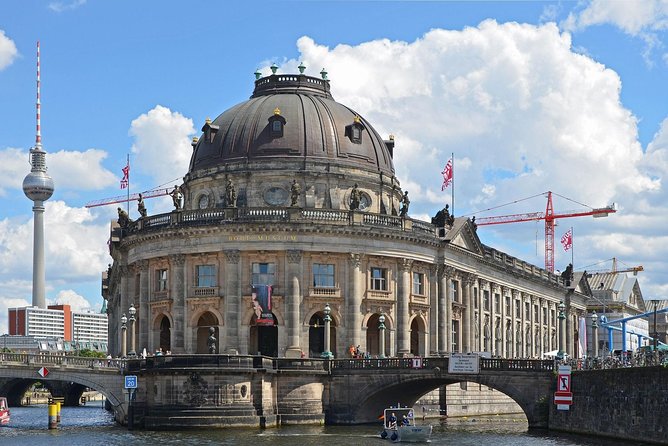
Crossing Museum Island brings the conversation back to Berlin’s 19th-century growth as a cultural center. The island is often called Berlin’s answer to the Louvre, and its cluster of museums reflects the city’s ambitions as a major European capital. The tour discusses that development, rather than promising entry to any museum, so plan a separate visit if you want time inside the collections.
Hackescher Markt offers a different feel. This pocket of pre-war Berlin includes a network of courtyards, giving you a chance to wander through spaces that contrast with the grand scale of the royal boulevard and state buildings. It is one of the route’s more intimate sections, and a welcome change of pace after the major monuments.
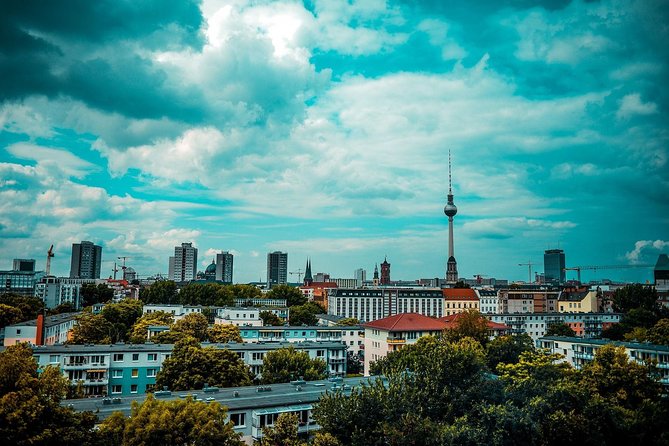
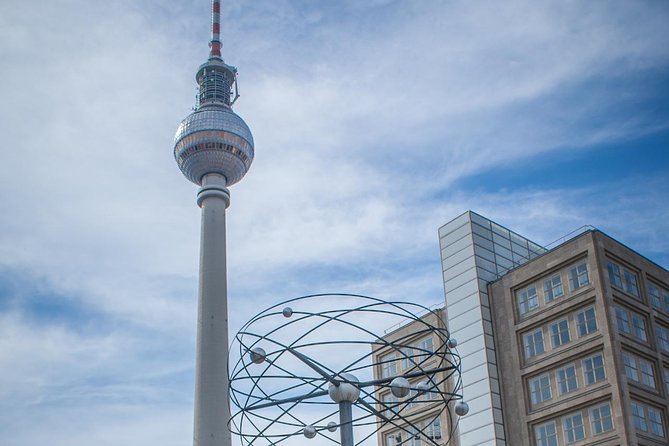
Then comes Alexanderplatz, rebuilt by East Germany in the 1960s as a communist showpiece. Its futuristic government buildings, apartment blocks and TV Tower present a very different vision of the capital from the Prussian structures along Unter den Linden. Seeing these styles within one tour helps make the city’s East-West division legible in its architecture, not just in dates and political labels.
The distance between key sites means you may need public transport once or twice. This is practical to know before you set out: the tour is not a continuous walk from start to finish, and transit fares are not included. A one-way Berlin AB ticket is listed at €2.80, with a senior fare of €1.70; a day ticket is €7, or €4.70 for seniors. The guide can help you purchase a ticket at the first station if you do not already have a pass.
Checkpoint Charlie and a divided city
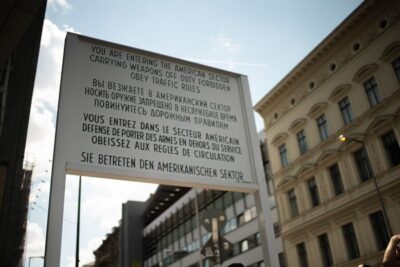
The tour ends at Checkpoint Charlie, the best-known crossing point between East and West Berlin. The guide discusses the border and the 1989 opening, when thousands of East Germans crossed into West Berlin and helped bring the Cold War to an end. It is a fitting finish because the checkpoint ties the city’s physical division to the political changes that reshaped Europe.
Checkpoint Charlie can feel more like a famous name than a quiet historical site, so the guide’s context is especially useful. The tour also considers how the old East-West divide still affects Berlin as it develops new identities and directions. That keeps the ending from treating reunification as a clean break after which every difference vanished.
Is $135 good value for three hours?
At $135 per person, this is a substantial price for a three-hour walk. The value depends on how much you want expert interpretation. You are paying for a historian-led route through several periods of Berlin’s history, not for transport, museum entry or a full day of sightseeing.
If you are comfortable doing your own research and mainly want to see the landmarks, you can visit many of these places independently for less. If you want a guide to connect Prussia, Nazism, the Wall and present-day Berlin in one coherent account, the price may make sense, especially for a private or small-group format. The listing does not specify exact group sizes, so confirm that before booking if the intimacy of the group is part of the value for you.
The strongest praise associated with Dr. Martin Sauter’s tours focuses on his expertise and the personal feel of the experience. That is a useful sign of what this format can offer, but his availability is not assured. Confirmation arrives within 48 hours of booking and is subject to availability.
The tour allows free cancellation up to 24 hours in advance, and you can reserve now and pay later. Those terms give you some flexibility, but they do not change the practical essentials: check your start time, bring a suitable transit ticket or budget for one, and wear shoes for several hours on foot.
Who should book this Berlin walk?
I would choose this tour if you want a strong historical framework early in your stay. It connects major sights to causes and consequences, rather than treating them as a checklist, and the mix of monumental sites, courtyards and communist-era architecture gives you a useful cross-section of the city.
It is best for adults and older teens who are ready to spend three hours with difficult history, including Nazi persecution and the Holocaust. It can also suit repeat visitors who have seen the central landmarks but want to understand how Prussian and Cold War history shaped them. The tour is less suitable if you want an easygoing stroll with little political discussion, lengthy museum visits or a route that avoids public transport.
Book it if interpretation is your priority and the price fits your budget. If you prefer to move at your own pace, you could visit the landmarks independently and use the saved money for a museum visit. For a first orientation to Berlin’s political history, though, this route offers a clear and unusually broad starting point.
FAQ
How long is the tour?
The tour lasts three hours.
What language is the tour in?
The live guide speaks English.
Where does the tour meet?
It meets at Cafe Einstein, Unter den Linden 42, 10117 Berlin.
Is public transport included?
No. You may need to use public transport once or twice, and the ticket is not included. The guide can help you buy a ticket at the first station.
Is the tour private or in a group?
Private or small-group options are available. The exact group size is not specified.
Can I cancel the tour?
Yes. You can cancel up to 24 hours in advance for a full refund.
Newest tours in Berlin
- Berlin: guided canoe | kayaktour★ 4.1 · 7 reviews
- Understanding Kreuzberg: The roots of local (sub)culture★ 4.9 · 11 reviews
- Where It All Began: Berlin’s Queer & Trans History Tour★ 4.9 · 6 reviews
- Warnemünde Shore Excursion: Private Sachsenhausen and Berlin Tour★ 5.0 · 12 reviews
- Ultimate E-Bike Tour of Berlin with Beer Garden Stop★ 5.0 · 4 reviews
- Private Potsdam City Tour in an authentic vintage van★ 5.0 · 14 reviews
- Transfer from Berlin Schönefeld Airport (SXF) to Berlin city Hotels – ROUND TRIP★ 4.0 · 3 reviews
- Potsdam Highlights – Private sightseeing tour by minibus★ 5.0 · 3 reviews
Berlin Walking Tours, compared.


Third Reich Berlin: Hitler and WWII Walking Tour
Read our review →

Explore Berlin: Walking Tour of All The Iconic Sites
Read our review →Browse the lists this tour appears in