
Reviewed · BERLIN WALKING TOURS
Berlin: Guided Walking Tour in English
Berlin’s past is easier to follow on foot, where medieval remains, royal architecture, Cold War divisions, and the open arches of the Brandenburg Gate fit into one clear route. I like the chronological story and the contrast between open Museum Island and the tight central streets that lead toward Gendarmenmarkt.
I also like that the tour gives you practical context along with history. Guides such as JR, Jule, Ru, and Will have led engaging outings, and one guide was praised for offering useful tips for the days ahead. Your guide may be someone else, of course.
The main consideration is the pace and the lack of a stated refreshment stop. You will be walking for 2.5 hours, and no scheduled drink or restroom break is specified, so plan ahead, especially in cold or wet weather.
- Start at the Red Town Hall: Meet near the TV Tower and Neptune Fountain, then begin in the city’s old center.
- Follow a chronological route: The tour moves from Berlin’s medieval roots toward its royal, Nazi, Cold War, and reunification-era landmarks.
- Compare grand spaces and narrow streets: Museum Island, Gendarmenmarkt, and the central lanes each show a different face of the city.
- Stand at sites tied to division and dictatorship: The route includes Checkpoint Charlie and the former location of Hitler’s bunker.
- Finish at a symbol of unity: The Brandenburg Gate provides a fitting final stop and a memorable way to frame Berlin’s modern story.
A walking route that makes Berlin’s timeline easier to grasp
This tour is built around a useful idea: place Berlin’s major landmarks in a sequence, rather than treating them as a collection of photo stops. In 2.5 hours, you move from the city’s early center to its royal and cultural heart, then toward sites tied to dictatorship, division, and unity.
That structure matters in Berlin. A grand square can sit only a short walk from a place marked by some of the city’s darkest events. Without context, the contrasts can feel abrupt. A local English-speaking guide helps connect the settings and explain how each belongs in the larger story.
The route is also a good first orientation. It takes you past several headline sights, but it is a walking tour, not an inside visit to every landmark. You should expect to see and discuss buildings and sites from outside, with the guide’s account doing much of the work.
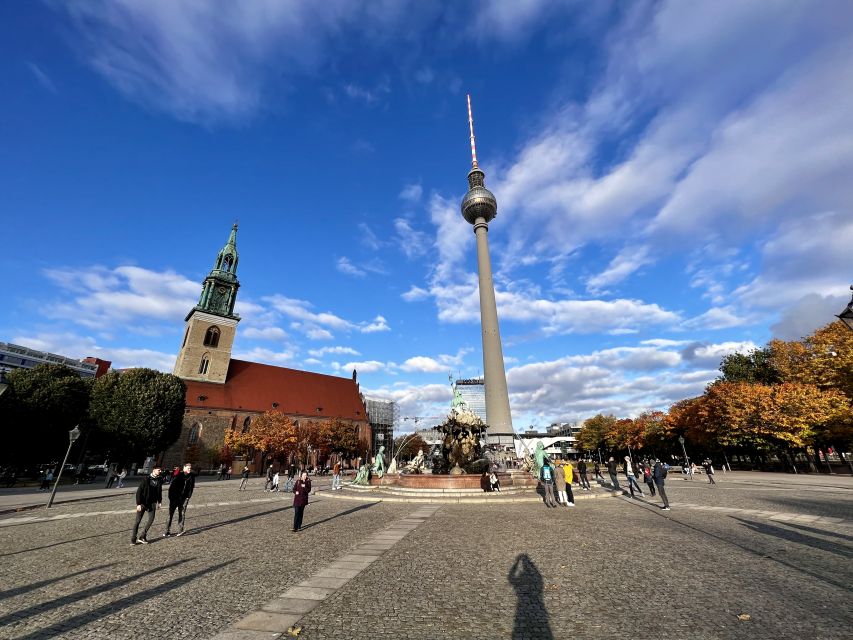
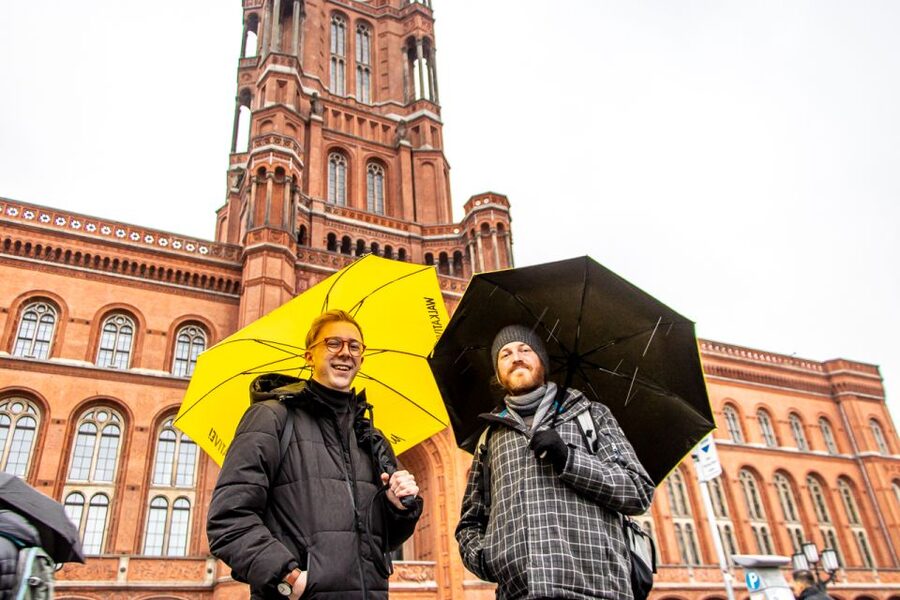
The starting point is in the historic center, in front of the Red Town Hall, near the TV Tower and Neptune Fountain. Arrive 10 minutes early so you can find the group and begin without a scramble.
Alexanderplatz and Berlin’s medieval beginnings
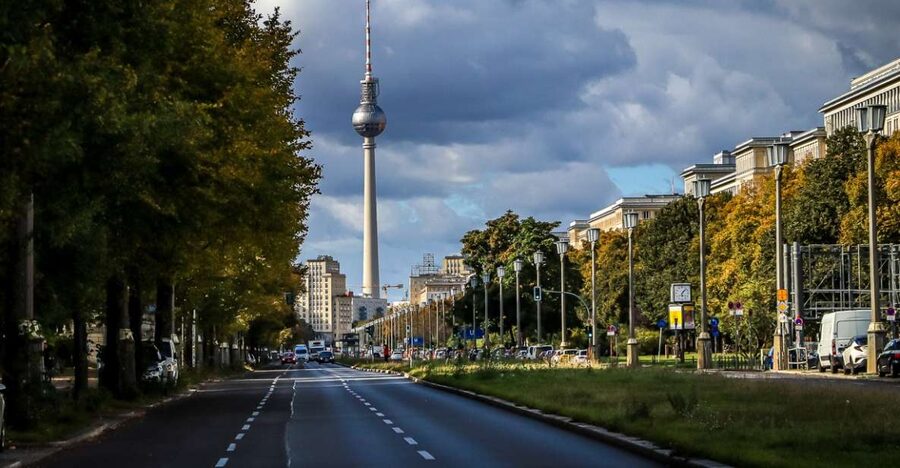
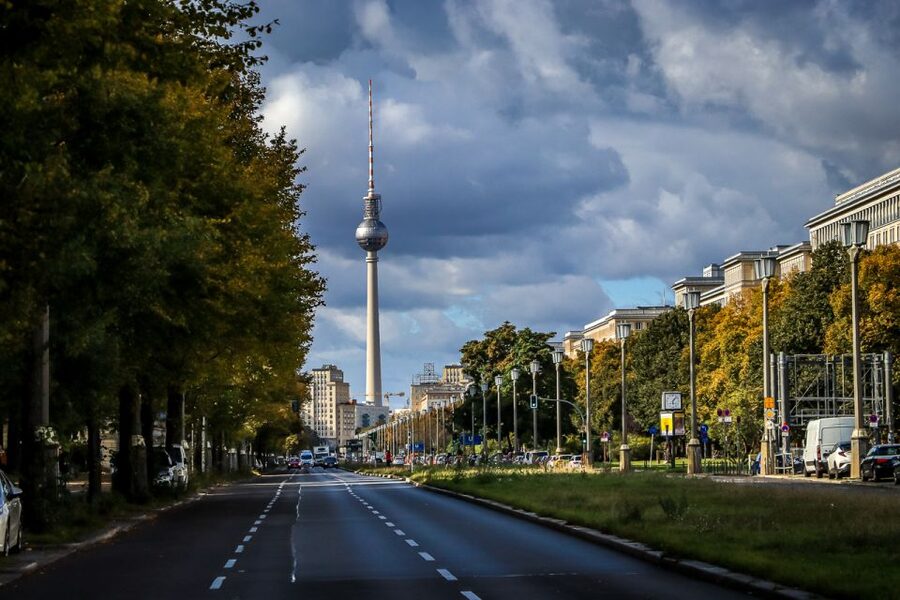
The opening stretch brings you to Alexanderplatz, where the TV Tower is an immediate marker of the city’s more recent past. Nearby, the tour points out the original medieval remnants of the small settlement that Berlin was for much of its history.
This is a useful starting contrast. The TV Tower is an unmistakable feature of modern Berlin, while the medieval remains offer a glimpse of the much smaller town beneath today’s capital. You begin with a sense of scale: Berlin’s present-day reach grew from a modest urban core.
The tower itself is a landmark to see from the outside on this route. The tour does not include a visit to its viewing platform, so if you want the elevated view, you would need to plan that separately. The value here is seeing the tower in context, not spending the morning inside it.
More walking tours in Berlin:
- Discover Berlin Half-Day Walking Tour
★ 5.0 · 9,624 reviews - Berlin: Third Reich and Cold War 2 Hour Walking Tour
★ 4.9 · 6,830 reviews - Berlin: Discover Berlin Walking Tour
★ 4.9 · 5,998 reviews
The former Royal Palace and the open setting of Museum Island
From the old center, the walk passes the reconstructed former Royal Palace of the Hohenzollern. Its reconstruction is controversial, an important detail in a city where rebuilding is rarely just a matter of putting old walls back in place. The guide can help you understand why the palace draws debate and how its presence fits into Berlin’s changing center.
Next comes Museum Island, where the pace and setting shift. The open space gives you room to take in the cultural district and enjoy a view of Berlin Cathedral. After streets and monuments, this broader setting is a welcome pause for the eyes, even if the tour continues on foot.
The visit is a walk through the area, not a museum admission. If you hope to explore the collections inside, allow separate time and check the museum schedule for your dates. For a first visit, simply seeing the island and cathedral together helps explain why this part of central Berlin feels so different from Alexanderplatz.
Humboldt University and the streets toward Gendarmenmarkt
The route passes Humboldt University before winding through the central streets toward Gendarmenmarkt. This transition is part of the tour’s appeal: Berlin’s history is not laid out as a neat row of monuments. You move through working city streets, with the guide drawing connections between the places along the way.
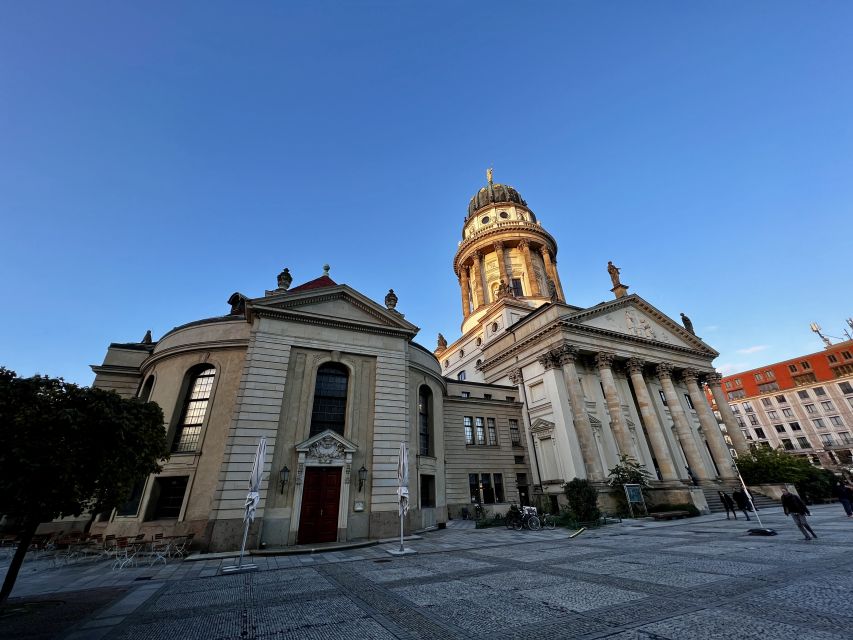
Gendarmenmarkt is described as the prettiest of Berlin’s squares, and it gives the walk one of its most striking architectural settings. The square’s beauty is a contrast to the political and historical weight of other stops. It is a place to look around, take in the urban design, and consider how public spaces help shape a city’s identity.
A short guided stop can give you a good introduction, but it cannot replace lingering. If you are drawn to the square, make a note to return later at your own pace. One advantage of taking this tour early in your stay is that you can use its route as a map for follow-up visits.
Checkpoint Charlie and the story of the Berlin Wall
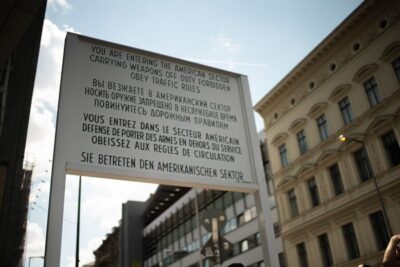
The walk then reaches Checkpoint Charlie, one of Berlin’s best-known sites associated with the Wall and the Cold War. The tour focuses on the history of the Berlin Wall here, giving you a chance to place the checkpoint within the larger story of a divided city.
This is a site where context matters. A famous name and a recognizable location can be easy to consume as a quick stop, but the human and political meaning is much larger than the photo opportunity. A guide can explain how the Wall affected Berlin and why this crossing became so prominent.
Keep your expectations grounded: the tour takes you to the location and explains its history. The supplied details do not include an interior visit or a museum admission. If you want a longer account of the Wall, you may want to set aside additional time elsewhere after the walk.
More guided tours in Berlin:
- Berlin: Reichstag, Dome and Government District Guided Tour
★ 4.7 · 18,288 reviews - Berlin: Government District around the Reichstag Guided Tour
★ 4.7 · 8,447 reviews - Berlin: Hidden Backyards Guided Walking Tour
★ 4.8 · 5,360 reviews - Berlin: 1-Hour Boat Tour with Bilingual Live Guide
★ 4.7 · 3,629 reviews
The former bunker site and Berlin’s darkest chapter
From Checkpoint Charlie, the route passes the place where Hitler’s bunker formerly stood. The site brings the tour into Germany’s Nazi past and offers a sharp change in tone from the elegance of Gendarmenmarkt and the openness of Museum Island.
There is no intact bunker to tour here. The importance lies in the location and in the guide’s explanation of what happened there and how Berlin confronts this part of its past. That distinction is useful: you are not visiting a preserved underground complex, but learning about a site whose story carries immense weight.
For many people, this is among the most sobering moments of the walk. The tour’s chronological structure helps connect dictatorship with the later division of Germany, rather than presenting the city’s past as a series of disconnected chapters.
The Brandenburg Gate as a final stop
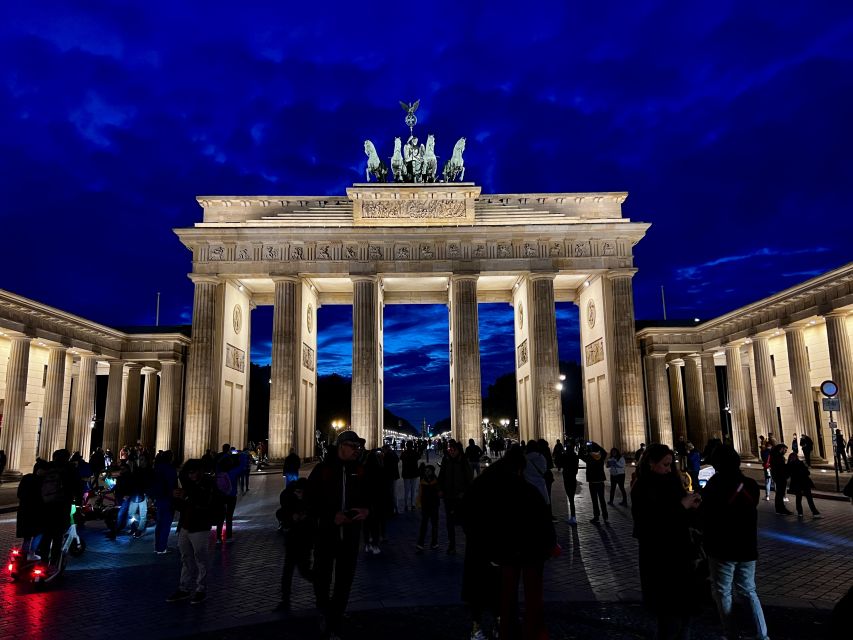
The Brandenburg Gate is the symbolic finish. Its classical archways make a striking sight, and its meaning as a symbol of German and European unity gives the final stop a natural sense of closure.
After walking through sites tied to royal rule, Nazi Germany, and Cold War division, ending at the gate helps bring the narrative toward reunification. The setting is also a good place to pause and think back over how much ground the tour has covered, both physically and historically.
The gate is a landmark to see on the route, not an entry-based attraction. You can take in its scale and open arches from the surrounding area, then decide whether to stay longer or continue exploring nearby on your own.
What the guide adds to the walk
The guide is central to the experience. The tour’s main promise is not simply that it passes major sights, but that an English-speaking local guide connects them with a deliberately chronological account. That can make a short visit more coherent, especially if Berlin’s layers of history feel daunting at first.
Names associated with recent tours include JR, Jule, Ru, and Will, but guide assignments can vary. JR has been praised for combining lively storytelling with practical advice for the rest of a stay. Jule was singled out for a particularly good tour, while Ru was noted for being mindful of the cold. Will was also named as a strong guide.
Those details point to a useful quality: the experience can be more than a lecture on dates and buildings. A good guide can help you notice what to look for, answer questions, and offer tips that make later sightseeing easier. Still, a named guide is not guaranteed, so book for the route and format rather than expecting a particular person.
Price, pace, and practical planning
The stated price is $31 per person. The tour is described as a general pay-as-you-wish experience, with the amount paid covering the reservation fee and the guide’s payment. In other words, the $31 price is not presented as a separate fee that replaces the guide’s compensation. Read the payment terms carefully when booking so you understand how your payment is handled.
For that cost, the value depends on how much you want a guided overview. You are paying for a local English-speaking guide and a route that joins several important parts of central Berlin into one story. If you would otherwise walk between these landmarks without context, the guided format can make the first outing more useful.
The tour lasts 2.5 hours, and the information provided does not state the walking distance or group size. Wear weather-appropriate clothing and comfortable shoes. A guide was praised for taking care in cold conditions, but you should still dress for the forecast rather than count on the weather being kind.
No food or drinks are included, and hotel pickup is not provided. The meeting point is in front of the Red Town Hall, close to the TV Tower and Neptune Fountain. No drink or restroom break is specified, so use facilities before the start and consider bringing water.
The activity is listed as wheelchair accessible. If you have specific access needs, confirm the practical details with the operator before booking, since the route’s surface conditions and assistance arrangements are not described here.
You can reserve now and pay later, and cancellation is free up to 24 hours before the activity for a full refund. Starting times vary, so check availability for your date.
Who should choose this Berlin walk
I would put this tour near the start of a Berlin stay if you want a clear orientation before exploring independently. The route covers enough landmark ground to help you understand the city’s layout, while its timeline can give later visits more meaning.
It suits first-time visitors, history-minded walkers, and anyone who would rather hear a connected story than rely on plaques and guidebooks at each stop. It may also work well if you have limited time and want to see several central landmarks in one outing.
It is less suitable if you want to spend long periods inside museums, avoid walking, or focus on a single subject in depth. This is a broad historical survey, not a specialist visit to the Wall, the palace, or the museums. You will get the most from it if you are comfortable moving at a walking-tour pace and are ready to listen outdoors.
Should you book?
Book this walk if you want Berlin’s central landmarks to add up to a story, especially if this is your first day in the city. The chronological route, the range of stops, and the chance to hear practical local tips make the $31 price reasonable for a guided introduction.
Skip it if you would rather explore at your own pace or spend the full 2.5 hours inside museums. And if you need a scheduled refreshment stop, ask before booking, since none is specified. For a compact, on-foot introduction to Berlin’s past, this is a strong place to begin.
FAQ
Where does the tour meet?
It meets in front of the Red Town Hall, or Rotes Rathaus, near the TV Tower and Neptune Fountain.
How long is the walking tour?
The tour lasts 2.5 hours.
What language is the tour in?
The live guide speaks English.
Which landmarks are included on the route?
The route includes Alexanderplatz, the former Royal Palace, Museum Island, Humboldt University, Gendarmenmarkt, Checkpoint Charlie, the site of Hitler’s former bunker, and the Brandenburg Gate.
Are food, drinks, or hotel pickup included?
No. Food and drinks are not included, and hotel pickup is not provided.
Can I cancel or pay later?
Yes. You can reserve now and pay later, and you can cancel up to 24 hours in advance for a full refund.
Newest tours in Berlin
- Berlin: guided canoe | kayaktour★ 4.1 · 7 reviews
- Where It All Began: Berlin’s Queer & Trans History Tour★ 4.9 · 6 reviews
- Understanding Kreuzberg: The roots of local (sub)culture★ 4.9 · 11 reviews
- Warnemünde Shore Excursion: Private Sachsenhausen and Berlin Tour★ 5.0 · 12 reviews
- Ultimate E-Bike Tour of Berlin with Beer Garden Stop★ 5.0 · 4 reviews
- Potsdam Highlights – Private sightseeing tour by minibus★ 5.0 · 3 reviews
- Private Potsdam City Tour in an authentic vintage van★ 5.0 · 14 reviews
- Transfer from Berlin Schönefeld Airport (SXF) to Berlin city Hotels – ROUND TRIP★ 4.0 · 3 reviews
Berlin Walking Tours, compared.



Third Reich Berlin: Hitler and WWII Walking Tour
Read our review →

Explore Berlin: Walking Tour of All The Iconic Sites
Read our review →Browse the lists this tour appears in