
Reviewed · BERLIN TOURS
Berlin: Karl-Marx-Allee 2-Hour Tour
Karl-Marx-Allee is a nearly two-kilometer monument to Berlin’s postwar ambitions, and this two-hour walk helps you read its grand scale one building at a time. I like that the route connects striking architecture with the boulevard’s shift from Frankfurter Allee to Stalinallee and finally Karl-Marx-Allee.
I also like the chance to see details you could easily pass by alone, from apartment arcades to historic artwork and photographs used to explain the area. One practical caveat: two hours gives you a focused introduction, not time to explore every building or the wider Friedrichshain district.
Key points
- Frankfurter Tor’s towers frame one of the boulevard’s most recognizable architectural scenes.
- The name changes tell a political story, from Frankfurter Allee to Stalinallee and then Karl-Marx-Allee.
- Friedrichshain’s apartment blocks show off arcades and the scale of postwar housing design.
- The Kosmos cinema and Hochhaus an der Weberweise add distinct chapters to the boulevard’s architectural mix.
- Strausberger Platz and the Church of the Resurrection offer contrasting views of socialist-era planning and a damaged religious landmark.
- The two-hour walk costs $23, with an expert guide in English or German; hotel pickup and drop-off are not included.
Reading Karl-Marx-Allee as a street-sized monument
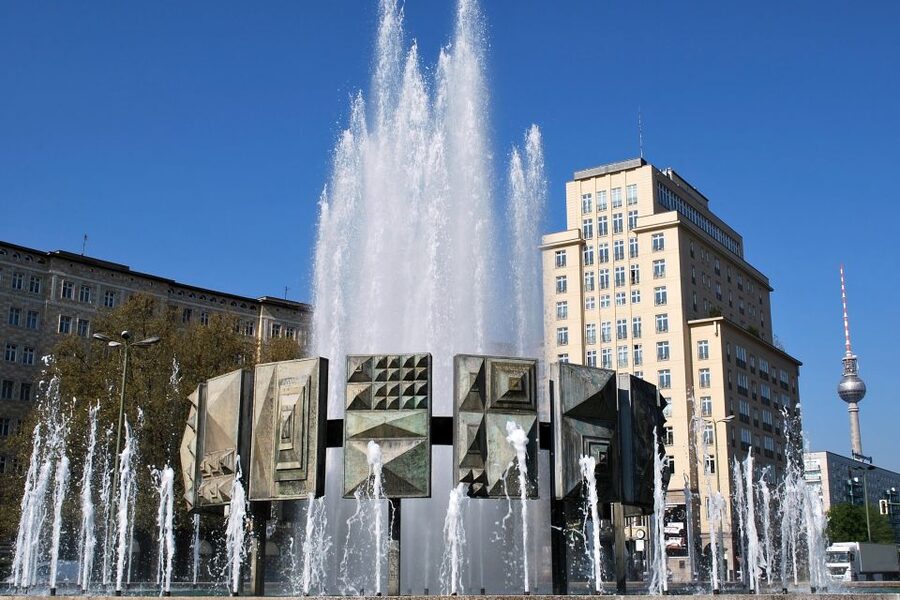
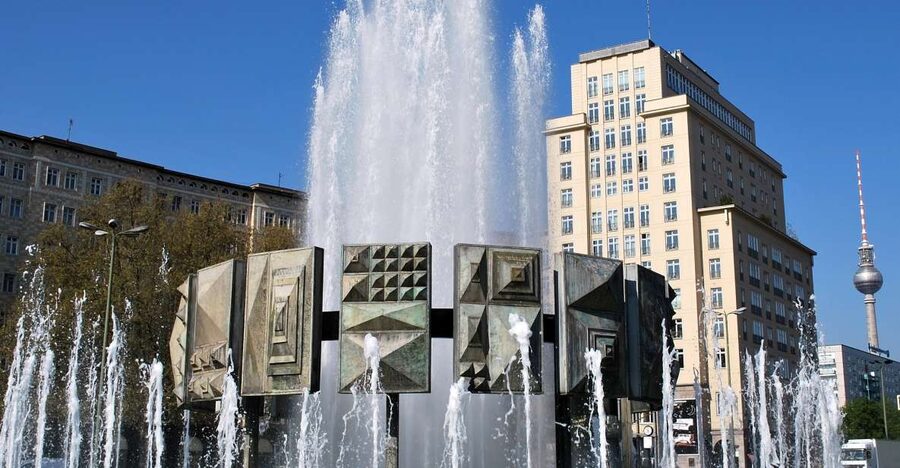
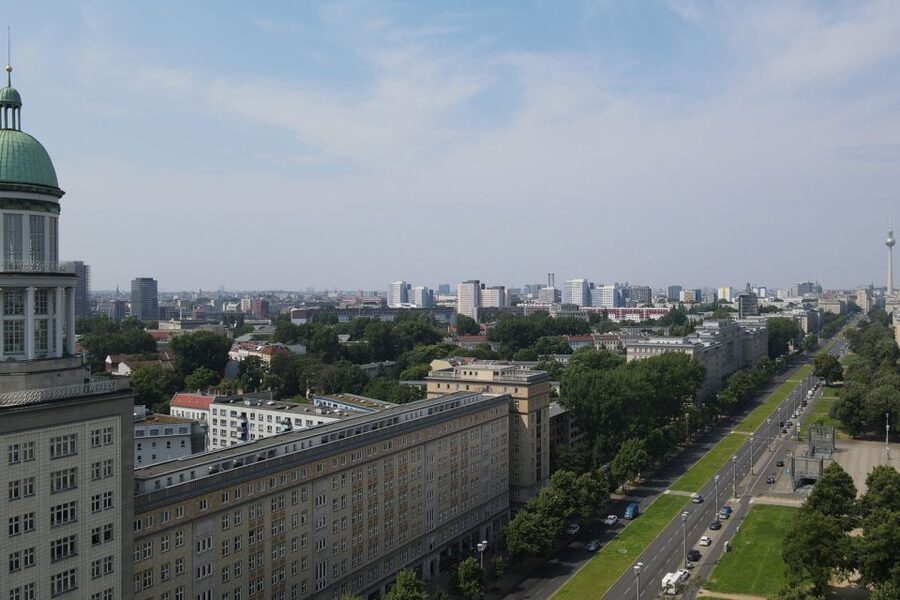
Karl-Marx-Allee is more than a long road with imposing buildings on either side. It was planned as a statement about the city and the society being built after the war. The boulevard is described as the first socialist street in Germany and as the largest monument in Berlin, a claim that makes more sense once you see its width, length, and carefully composed architecture in person.
The route covers an almost two-kilometer stretch, but the tour itself lasts two hours. That gives your guide time to connect the buildings with their purpose and changing names, rather than treating the walk as a fast parade of façades. You’ll hear how the street went from Frankfurter Allee to Stalinallee and then took the name it has today.
That history matters because the boulevard’s architecture was meant to communicate more than taste. Its buildings, plazas, and broad avenue formed part of a wider postwar vision. Looking at them with that context helps you understand why this street feels so different from a casual residential road or a conventional shopping avenue.
The tour is led by an expert guide and is offered in German or English. Tobias is a named guide associated with the experience, described as engaging, communicative, and strong on historical context. Guides can make a major difference here: the buildings are impressive from the pavement, but their story is what turns the walk into a coherent visit.
More two-hour outings in Berlin:
- Berlin: Third Reich and Cold War 2 Hour Walking Tour
★ 4.9 · 6,830 reviews - Berlin’s Best: 2 Hour Walking Tour Third Reich and the Cold War
★ 5.0 · 5,486 reviews - Berlin: 2-Hour Lake Oberhavel Cruise from Tegel
★ 4.4 · 577 reviews
Frankfurter Tor and its unmistakable towers
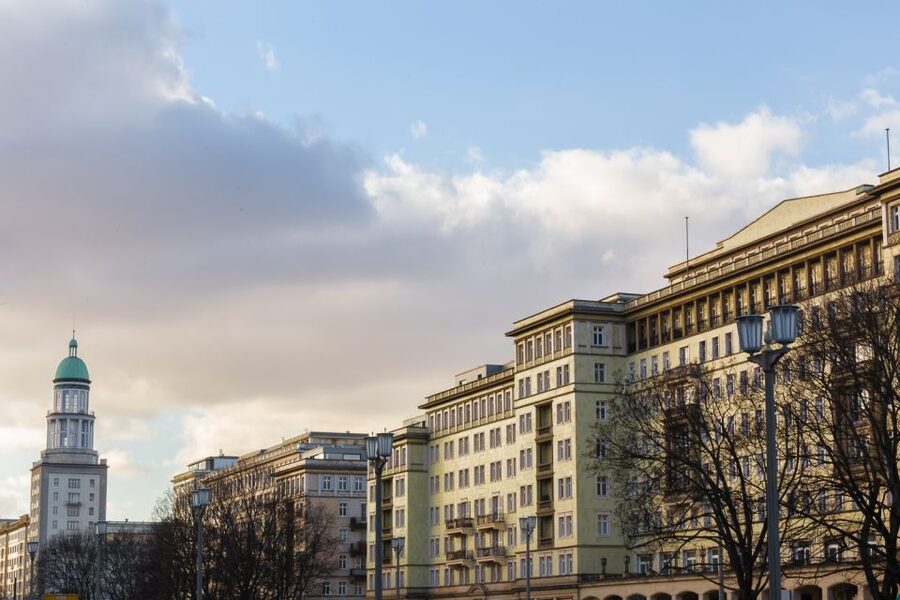
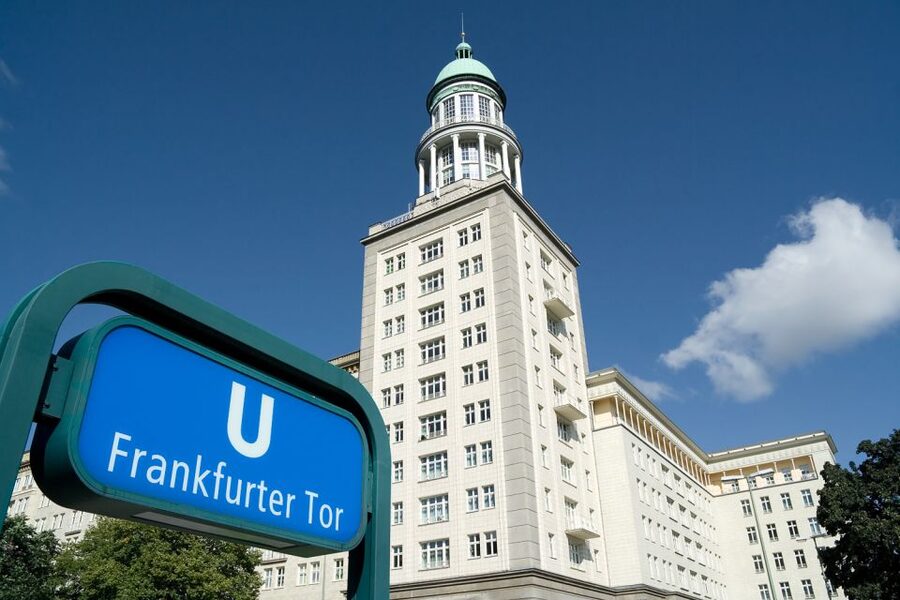
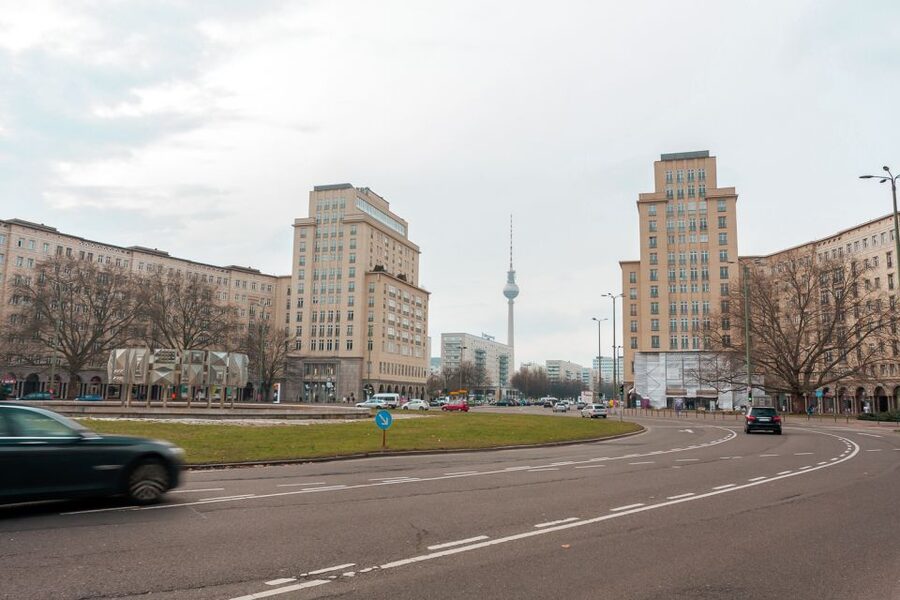
Frankfurter Tor is one of the tour’s main architectural highlights. Its distinctive towers give the area a strong focal point and make the scale of Karl-Marx-Allee easy to grasp. This is the sort of place where it pays to pause and look up, rather than simply cross the square and continue.
The towers also help you see how the boulevard was designed to make an impression. Their presence gives the street a formal, almost ceremonial quality. You are not just looking at separate apartment blocks; you are reading a planned urban composition, with landmark buildings helping define the route through the city.
Your guide can explain the architectural choices and their place in postwar urban development. Historic photographs and old posters have been used on the tour to set present-day views against earlier versions of the street. That kind of visual comparison is especially useful here, where a building’s scale and setting can be easier to notice than its past.
There is a practical limit, of course. The tour is a walking introduction, not an architectural seminar, and you should not expect to go inside every building. The value is in learning what to look for from the street and how the pieces fit together.
Arcades, apartments, and the daily life of the boulevard
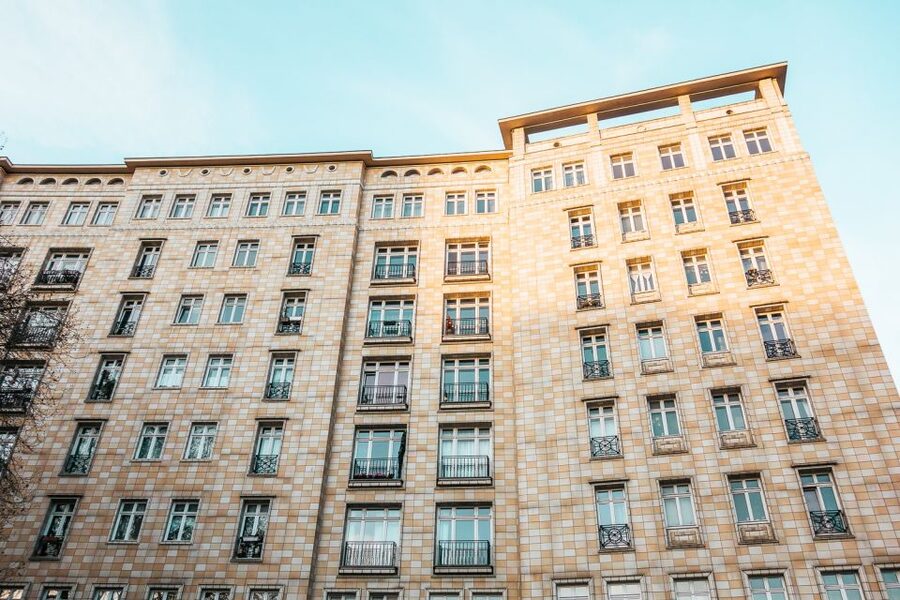
The apartment buildings in Friedrichshain are an important part of the route. Their arcades add a distinctive detail to the long blocks, while the overall buildings show how postwar urban design shaped places where people lived, not just grand public monuments.
This is one of the most useful parts of the walk for visitors interested in architecture beyond famous façades. A guide can point out how repeated forms, entrances, and sheltered walkways contribute to the street’s overall look. The buildings are meant to be seen as part of a larger plan, but the arcades also offer a more human scale amid the monumental setting.
I’d pay attention to the relationship between the ordinary and the grand. Karl-Marx-Allee is a powerful boulevard, yet much of its architecture is residential. That contrast can help you think about how political ideals were expressed in everyday housing and city planning, rather than only in official monuments.
The tour’s route has been praised for being well chosen, and guides may use photographs, posters, anecdotes, or artwork to bring out details that are easy to miss on a self-guided walk. The exact stories and materials can vary with the guide, so treat these as possible additions rather than a guaranteed presentation at every stop.
The Kosmos cinema and Hochhaus an der Weberweise
The Kosmos cinema, designed by Josef Kaiser, gives the walk a different architectural focus. A cinema is a public building, and its presence helps broaden the story beyond housing and monumental squares. You’ll see how cultural facilities formed part of the boulevard’s designed environment.
The name of the architect is useful context in itself. Rather than simply noting the cinema as another building on the route, you can connect it with the designers who shaped this period of Berlin. The tour does not promise an interior visit, so expect to view and discuss it from outside.
Hochhaus an der Weberweise adds a high-rise element to the mix. Its presence makes the street’s range easier to appreciate: towers at Frankfurter Tor, arcaded apartment buildings, a cinema, and a high-rise each contribute a different kind of urban landmark. The point is not to rank them, but to see how each one shapes the experience of moving through the area.
These stops are particularly worthwhile if you enjoy architecture but do not want a tour limited to a single building style. The guide can help you notice how the area’s forms relate to its socialist-era plans and how the boulevard’s character changes as you walk.
Same city, a different kind of day:
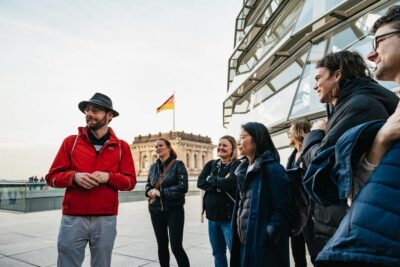
- Berlin: Reichstag, Dome and Government District Guided Tour
★ 4.7 · 18,288 reviews - Berlin: 1-Hour City Tour by Boat with Guaranteed Seating
★ 4.3 · 16,993 reviews - Berlin: Boat Tour Along the River Spree
★ 4.4 · 11,252 reviews - Discover Berlin Half-Day Walking Tour
★ 5.0 · 9,624 reviews
A damaged church and the city’s visible past
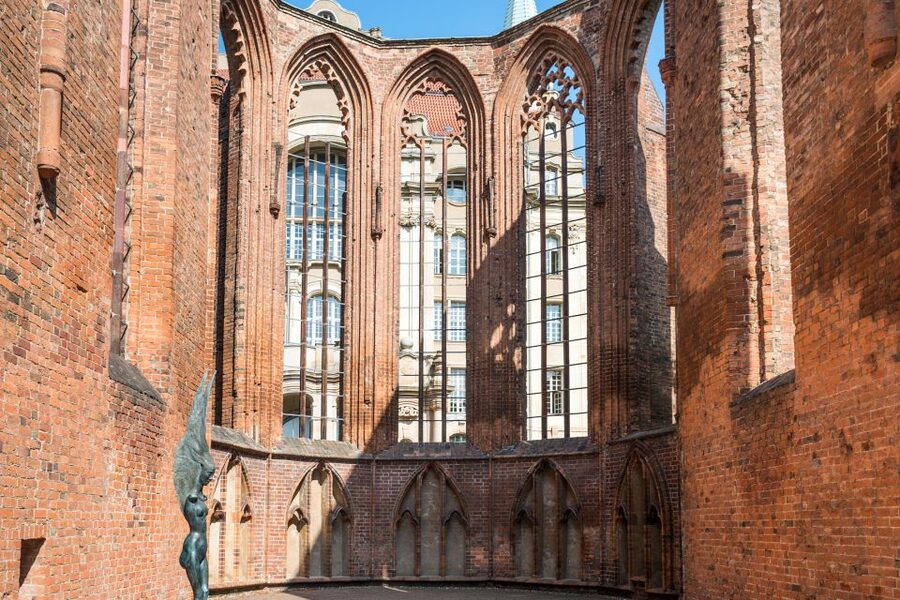
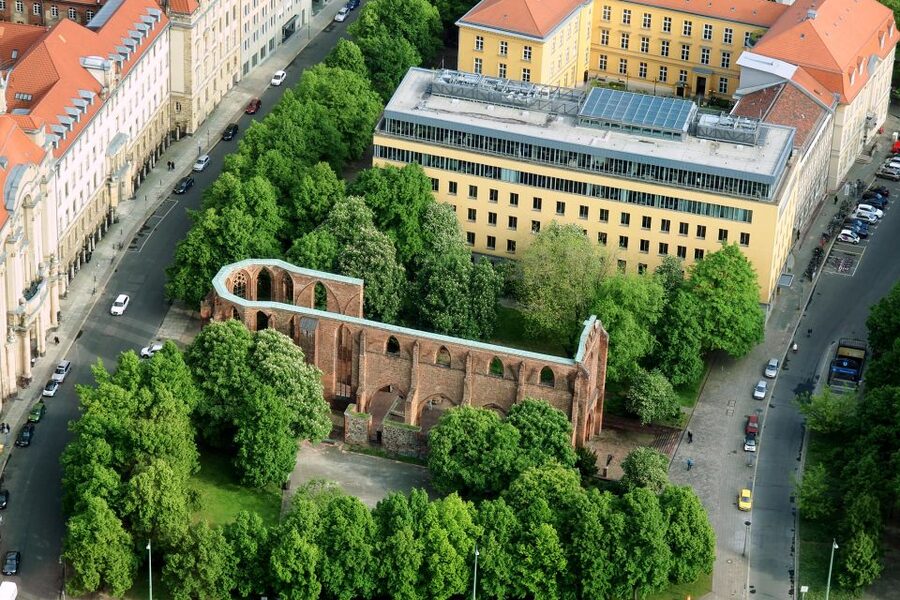
The partial ruins of the Church of the Resurrection offer a contrast to the imposing buildings nearby. Rather than presenting a polished civic landmark, the remains make damage and loss part of the streetscape. They are a reminder that Berlin’s postwar environment is not made up only of planned avenues and ambitious new construction.
The contrast is part of what makes this stop meaningful. The church’s condition sits alongside buildings associated with a new urban vision, giving you a more complicated picture of how the area changed. It is worth taking a moment to look carefully rather than treating the ruins as a quick photo stop.
The supplied tour details do not specify how much time is spent at the church, and the overall walk has several major stops. If this landmark is especially important to you, listen for the guide’s explanation and ask a follow-up question if time allows. A two-hour tour has to balance many places, so some stops will be brief.
Strausberger Platz as a gateway to the socialist city center
Strausberger Platz is another defining point on the walk, with distinctive high-rise buildings that served as a gateway to the socialist city center. Its role makes the square more than an attractive place to stand. It helps explain how the boulevard was organized and how the city’s planned center was approached.
The surrounding high-rises give the space a strong sense of enclosure and scale. From here, you can better understand the way Karl-Marx-Allee was intended to lead the eye and guide movement through the city. A good guide will connect the square’s design with the larger story of the street, rather than leaving you with a string of disconnected building names.
The stop also makes a useful comparison with Frankfurter Tor. Both are architecturally prominent, but they help define different parts of the boulevard’s experience. Together they make clear that Karl-Marx-Allee was planned as a sequence, not simply as a collection of impressive structures.
What a two-hour guided walk can and cannot do
At $23 per person, this is a reasonably priced way to get context for a part of Berlin that can be easy to admire without fully understanding. You are paying for a walking tour and an expert guide, not transport, hotel pickup, or drop-off. If you are already comfortable navigating the city and enjoy reading buildings on your own, you could walk the avenue independently. The guide’s value is the interpretation: the name changes, the postwar planning, and the details you might otherwise miss.
Two hours is long enough to cover the principal sights listed for the tour, but short enough to fit into a larger Berlin day. It is a good choice if you want a focused architectural outing rather than a full-day commitment. You should not expect an exhaustive account of every building or a broad survey of all Berlin history.
The experience is best suited to people interested in architecture, urban planning, postwar history, or the city’s socialist-era identity. It can also work well if you have already seen Berlin’s better-known sights and want to understand another side of the capital. If your main interest is interiors, museum collections, or a relaxed café stop, this walking tour is not designed around those things.
The meeting point can vary depending on the option booked, so check the details for your specific selection before setting out. Starting times also depend on availability. The walk is offered in English and German, and you can reserve now and pay later. Cancellation is free up to 24 hours in advance for a full refund.
Should you book the Karl-Marx-Allee tour?
Book this walk if you want to understand why Karl-Marx-Allee looks the way it does, and if buildings are more interesting to you when someone explains the ideas behind them. Frankfurter Tor, the apartment arcades, the Kosmos cinema, the high-rise at Weberweise, the ruined church, and Strausberger Platz make a varied route, while the boulevard’s changing names give the tour a clear historical thread.
I would especially recommend it if you like architecture and want a guide to help you notice visual details, photographs, posters, and stories that can be missed on your own. At $23 for two hours, it offers solid value for a focused introduction. Skip it if you prefer to explore at your own pace or want a tour with hotel transport or extensive indoor visits.
FAQ
How long is the Karl-Marx-Allee tour?
The walking tour lasts two hours.
How much does the tour cost?
The listed price is $23 per person.
What languages are available?
The tour is offered in German and English.
What is included in the price?
The price includes a walking tour and an expert guide.
Is hotel pickup or drop-off included?
No. Hotel pickup and drop-off are not included.
Where does the tour meet?
The meeting point may vary depending on the option booked. Check the details for your selected option.
Which places are included on the route?
The tour includes Karl-Marx-Allee, Frankfurter Tor, Friedrichshain’s apartment buildings with arcades, the Kosmos cinema, Hochhaus an der Weberweise, the partial ruins of the Church of the Resurrection, and Strausberger Platz.
Can I reserve now and pay later?
Yes. The activity offers a reserve-now, pay-later option.
What is the cancellation policy?
You can cancel up to 24 hours in advance for a full refund.
Newest tours in Berlin
- Berlin: guided canoe | kayaktour★ 4.1 · 7 reviews
- Understanding Kreuzberg: The roots of local (sub)culture★ 4.9 · 11 reviews
- Where It All Began: Berlin’s Queer & Trans History Tour★ 4.9 · 6 reviews
- Warnemünde Shore Excursion: Private Sachsenhausen and Berlin Tour★ 5.0 · 12 reviews
- Ultimate E-Bike Tour of Berlin with Beer Garden Stop★ 5.0 · 4 reviews
- Potsdam Highlights – Private sightseeing tour by minibus★ 5.0 · 3 reviews
- Private Potsdam City Tour in an authentic vintage van★ 5.0 · 14 reviews
- Transfer from Berlin Schönefeld Airport (SXF) to Berlin city Hotels – ROUND TRIP★ 4.0 · 3 reviews
Berlin Tours, compared.
Reichstag, Dome and Government District Guided Tour
Read our review →
1-Hour City Tour by Boat with Guaranteed Seating
Read our review →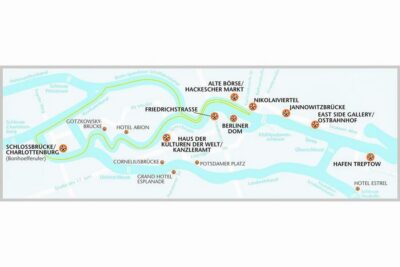
Reichstag, Plenary Chamber, Cupola & Government Tour
Read our review →
Browse the lists this tour appears in