Reviewed · BERLIN TOURS
Berlin: Entry Ticket To The Kunstgewerbemuseum
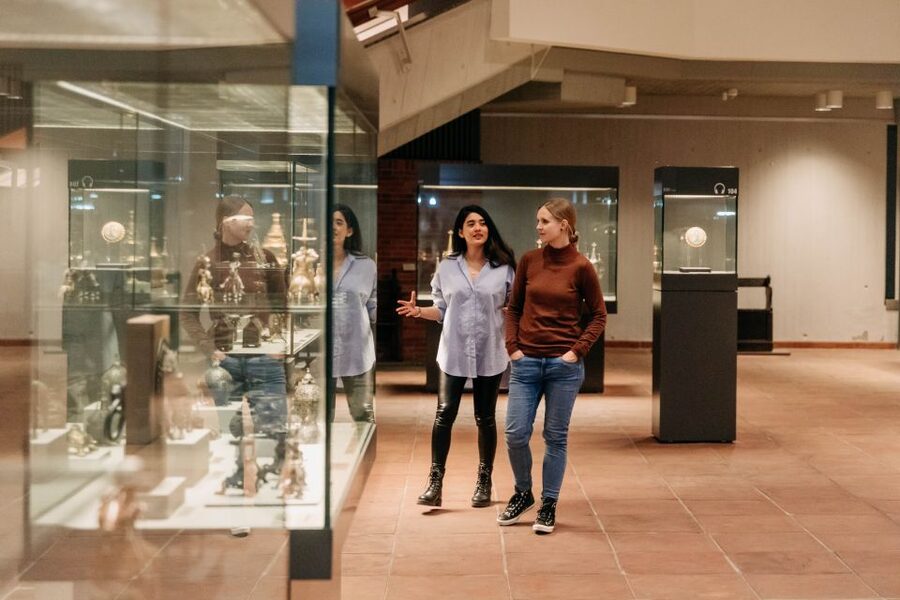
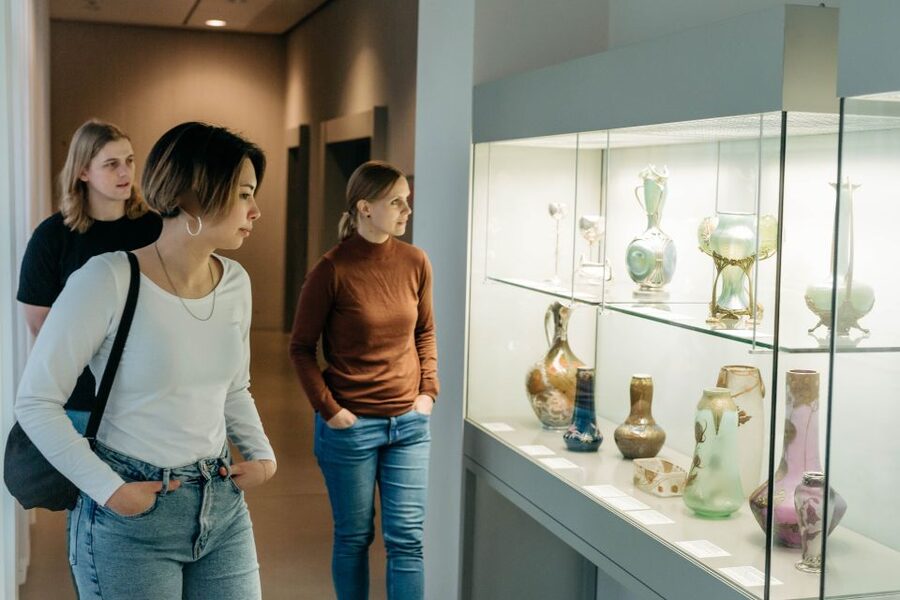
The Kunstgewerbemuseum brings together objects that make everyday life look anything but ordinary: golden reliquaries set with precious stones, finely worked glass and porcelain, embroidered clothing, furniture and modern industrial design. I like the range, from medieval craftsmanship to fashion and design, and I like that the museum’s spacious rooms and open staircase are part of the visit, not just a way to get between displays.
One thing to keep in mind: the collection is spread across two Berlin locations, while this ticket’s meeting point is the Kulturforum on Matthäikirchplatz. The audio guide and a tour guide are not included, and some displays may feel darkly lit or modest in size if you want a large, fashion-heavy exhibition.
What to know before you go
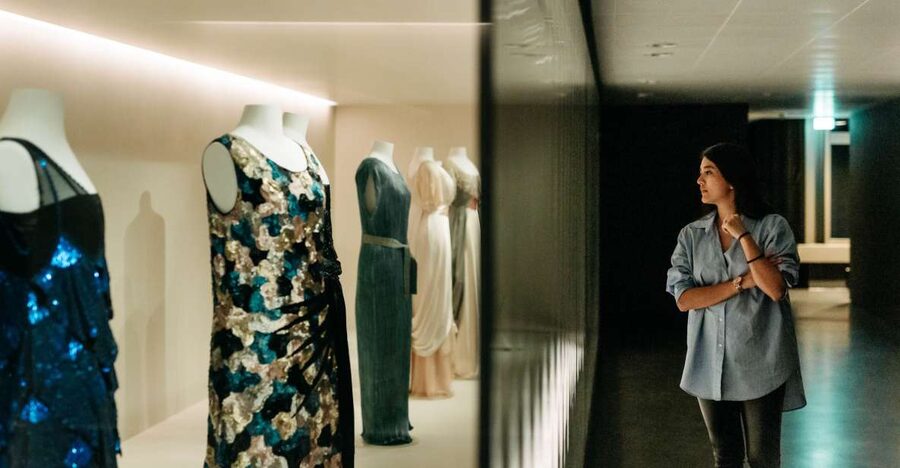
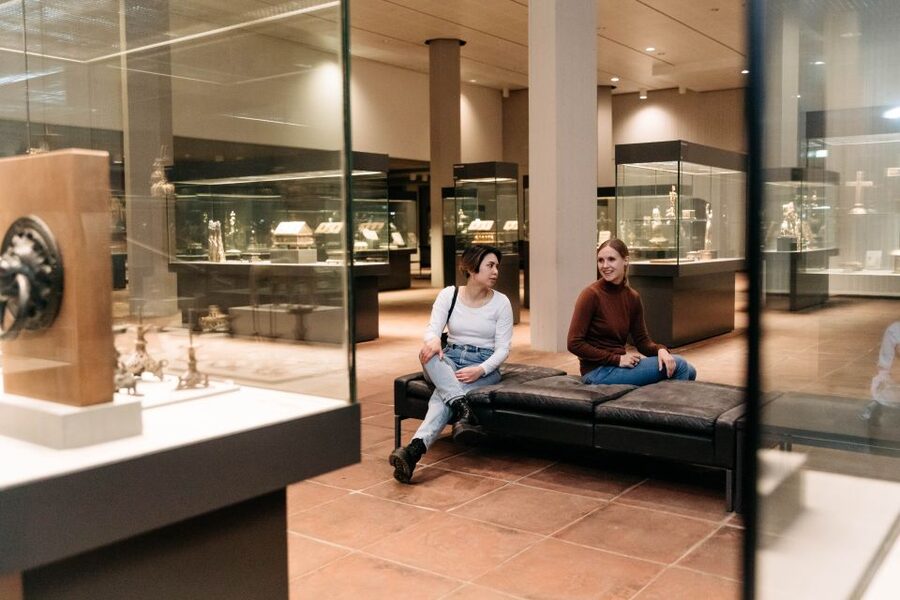
- Look for objects made to impress: The collection includes ornate reliquaries, precious vases, embroidered dresses, detailed furniture and modern industrial design.
- Start at the Kulturforum: This ticket’s meeting point is Kunstgewerbemuseum, Matthäikirchplatz, near Potsdamer Platz.
- Expect a broad time span: The museum presents European craftsmanship across different periods, with historic decorative arts and more recent design.
- Notice the building as well as the objects: Spacious galleries, an open staircase and greenery are part of the museum’s distinctive setting.
- Plan to explore independently: Admission is included, but a tour guide and audio guide are not.
- Allow for a personal pace: The ticket is valid for one day, and the museum is wheelchair accessible.
A museum of objects, not just paintings
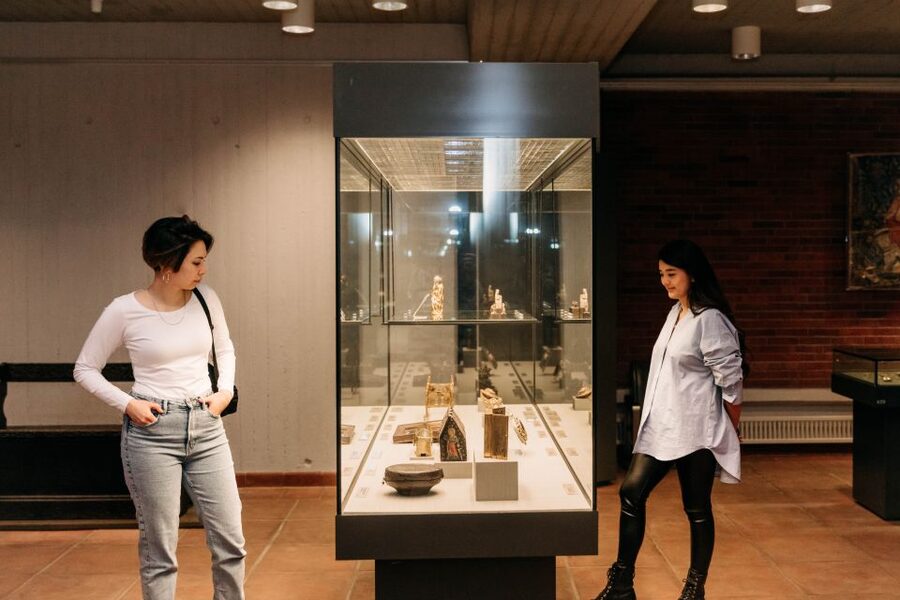
The Kunstgewerbemuseum is a good choice if you want to see how artistic skill appears in things people made, wore and used. Its collection ranges across decorative arts and design, so you can move from a piece of precious metalwork to glass, clothing, furniture or an object shaped by modern industrial design. That variety gives the visit a different rhythm from a museum focused mainly on paintings.
I find this kind of collection especially rewarding when you slow down enough to notice how an object was made. A reliquary, for example, is not simply a container: its gold and precious stones show the care and expense invested in it. A finely embroidered dress or carefully finished piece of furniture makes a different point, connecting skilled work to personal appearance and daily life.
The range also helps make the museum accessible to visitors with different interests. You might come for historic craftsmanship, stay for fashion, or find that glass and ceramics hold your attention longer than expected. There is no single star attraction named for the museum as a whole, so it helps to arrive curious rather than expecting one famous object to carry the visit.
The collection is described as one of the oldest of its kind in Germany. That long institutional history matters because the displays offer a chance to compare changing ideas of beauty, skill and design over time. You are not just looking at isolated objects; you are seeing how makers in different periods worked with materials and forms.
More tickets and passes in Berlin:
- Berlin: Jewish Museum Berlin Entrance Ticket
★ 4.5 · 8,393 reviews - Berlin: Berlin Story Bunker Entry Ticket
★ 4.6 · 6,759 reviews - Berlin: Illuseum Berlin Entrance Ticket
★ 4.1 · 3,970 reviews
What you may see inside
The objects range from precious reliquaries made with gold and gemstones to vases in glass or porcelain. These are the sorts of pieces that reward close looking: the materials catch your eye first, then the small details reveal the time and skill behind them. Some objects may feel formal or ceremonial, while others connect more directly to domestic life.
Historic clothing adds another dimension. Dresses and finely embroidered garments show how fashion can be studied as craft, with fabric, ornament and construction all part of the story. If fashion is your main reason for visiting, keep your expectations measured. The displays include clothing, but the museum’s broader decorative arts collection is not exclusively a fashion exhibition.
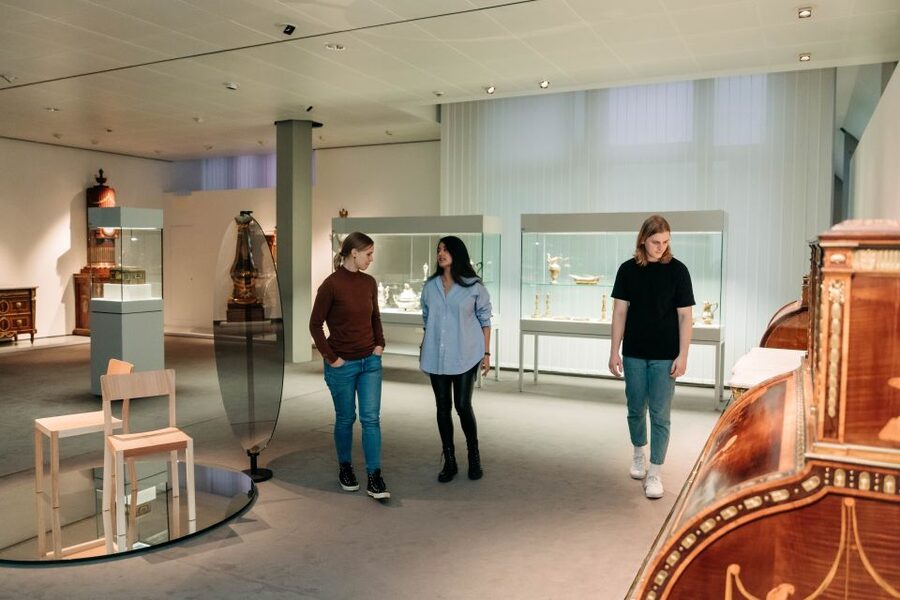
Furniture and woodwork offer a useful contrast to the smaller, more precious objects. A piece of furniture has to work at a different scale, and its design can make you think about both use and appearance. One visitor particularly remembered pictures made from wood, an unusual detail worth keeping in mind as you look beyond the more obvious gold, glass and clothing.
The collection also reaches into modern industrial design. That shift broadens the museum’s appeal: you can consider how design changes when objects are made for a more modern world, rather than seeing decorative art only as a subject of the past. The museum’s range is one of its strengths, though it also means that visitors hoping for an exhaustive display of any one subject may want to check the current exhibitions before setting out.
The galleries and the building
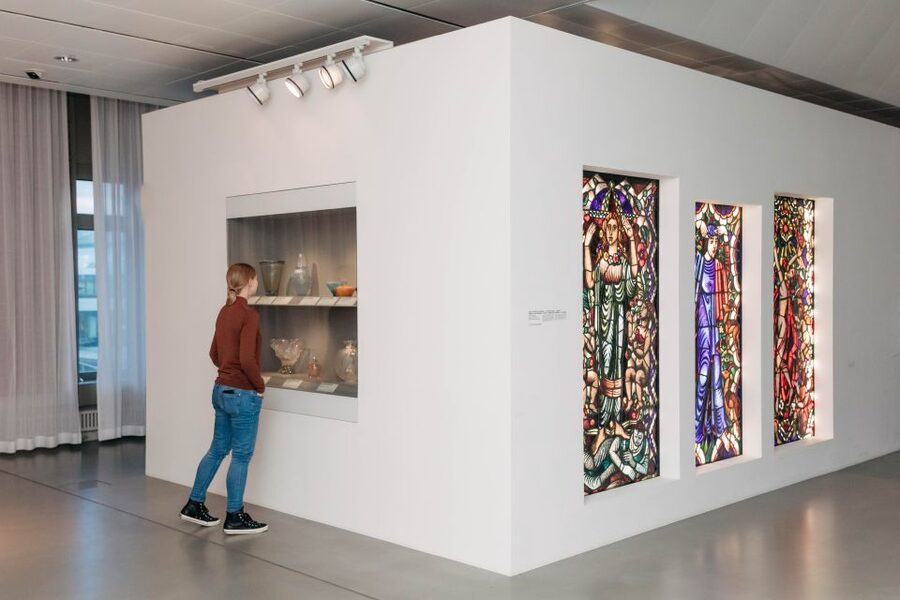
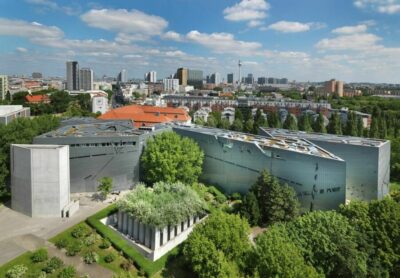
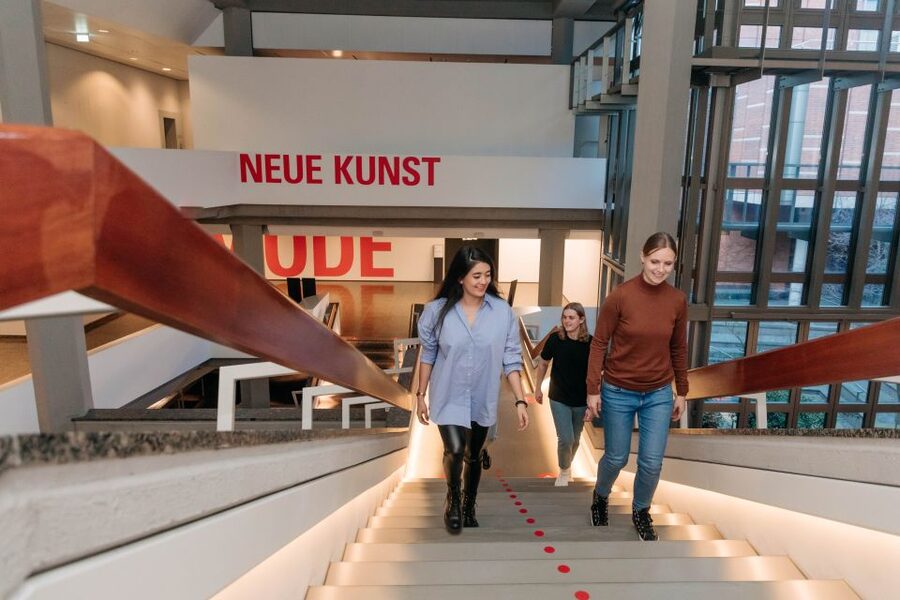
The exhibition rooms are described as spacious, with an open staircase that gives the interior a strong architectural feature. The museum was designed as a built landscape, and its greenery reflects the nearby Tiergarten. That connection between interior and park gives the visit a softer edge than a series of closed rooms alone.
I like the idea of a museum where the building itself helps shape the experience. The open staircase can make the route feel more spacious, while greenery brings a visual note that suits the setting. Still, the architecture should be treated as a complement to the collection, not a substitute for it. If you visit mainly for objects, the displays remain the main event.
Lighting is worth considering. The museum’s objects include materials that invite close inspection, but some exhibition areas may appear quite dark. That can suit precious or historic pieces, yet it may make details harder to see. Give your eyes time to adjust, and don’t assume that every room will feel bright and uniformly lit.
The galleries are described as spacious, but the overall collection may feel modest in size compared with a major museum devoted to one subject. That is not necessarily a flaw. A focused visit can be a welcome change of pace during a busy Berlin itinerary, particularly if you prefer looking carefully at a smaller selection rather than racing through a huge institution.
Two locations, one practical starting point
The Kunstgewerbemuseum’s displays can be seen at two places in Berlin: the Kulturforum near Potsdamer Platz and Köpenick Castle, set on a peninsula in the Dahme. The castle displays masterpieces of the art of space from the 16th to the 18th century. That second setting sounds quite different from the Kulturforum, but the meeting point provided for this ticket is the Kunstgewerbemuseum at Matthäikirchplatz, 10785 Berlin.
For a straightforward visit, use the address attached to your ticket as your starting point. The two-site setup is useful context when planning your day, but don’t assume this particular entry ticket automatically covers both locations. Confirm the scope of admission if visiting Köpenick Castle is part of your plan.
The different settings also suggest that the museum’s collection is not limited to one kind of room or display. At the Kulturforum, you can expect the spacious exhibition rooms and open staircase described for the museum. At Köpenick Castle, the focus is on works from the 16th to the 18th century. Those details can help you decide which site is most relevant to your interests, but the ticket information here identifies the Kulturforum as the meeting point.
Same city, a different kind of day:
- Berlin: Reichstag, Dome and Government District Guided Tour
★ 4.7 · 18,288 reviews - Berlin: 1-Hour City Tour by Boat with Guaranteed Seating
★ 4.3 · 16,993 reviews - Berlin: Boat Tour Along the River Spree
★ 4.4 · 11,252 reviews - Discover Berlin Half-Day Walking Tour
★ 5.0 · 9,624 reviews
How to get value from the $11 ticket
At $11 per person, this is an appealingly low-cost way to spend part of a day with a specialist collection. The value depends on what you want from a museum visit. If you enjoy looking at materials, workmanship, clothing and design across several periods, the breadth of the displays gives you plenty to explore without requiring a guided tour.
The ticket is valid for one day, which gives you room to take the visit at your own pace. It does not include an audio guide or tour guide, so you will need to be comfortable exploring without that added context. If you like to pause over details and form your own impressions, that can be a benefit. If you rely on detailed explanations to connect objects with their history, plan for a less guided experience.
The ticket includes entrance only. That simplicity makes the price easy to assess: you are paying for access to the museum, not a packaged tour with commentary or other extras. For someone with a strong interest in decorative arts, fashion or design, that can be good value. If you are looking for an all-day, single-theme exhibition or extensive guided interpretation, the offer may feel more limited.
The overall rating is 4.5 out of 5 from 15 ratings. That is a positive signal, but a small set of ratings is not a guarantee that every part of the museum will suit you. The more useful guide is the collection itself: it covers many materials and periods, while the scale and lighting may not match everyone’s preferences.
Who will enjoy this museum most
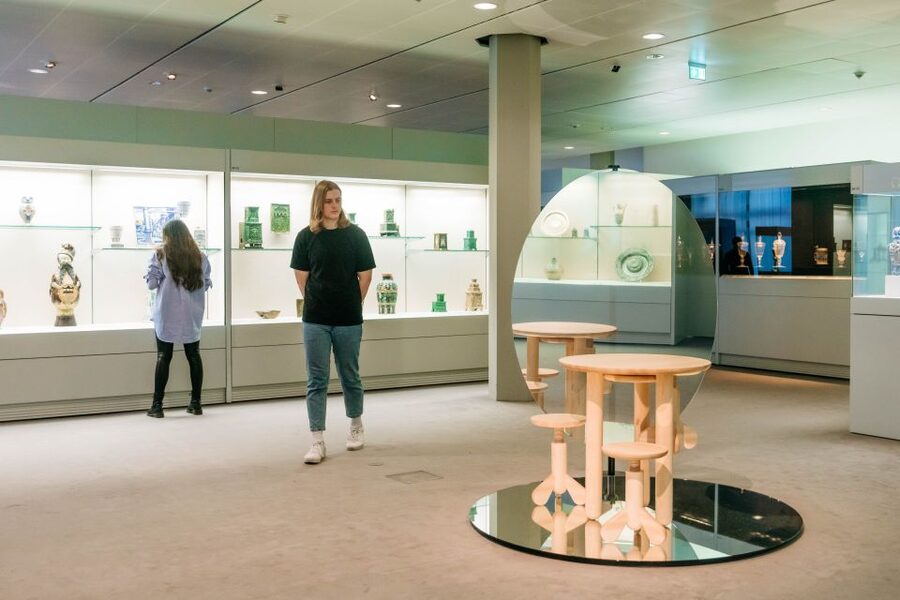
I would put this museum on the list for anyone who likes craft and design as much as traditional fine art. You can compare metalwork, glass, ceramics, textiles and furniture, then consider how modern industrial design fits into the story. It also suits visitors who enjoy a museum visit without a fixed group schedule, since no tour guide is included.
Fashion enthusiasts may find worthwhile displays of historic clothing and embroidered dresses. Still, if clothing is your sole interest, temper expectations: the collection covers much more than fashion, and the range of clothing displays may not be as extensive as you hope. The same advice applies if you are visiting for a particular type of object. The museum offers variety, not a promise that one area will dominate.
The visit may also suit you if you want to see evidence of high-level craftsmanship across a long span of time. The displays include historical works that show how intricate decorative arts could be, including pieces made long before modern production methods. That sense of human skill is a central pleasure here.
Wheelchair access is available. Wearing a medical or FFP2 mask is recommended, but not mandatory. The activity is non-refundable, so check the details and your plans before booking.
Should you book the Kunstgewerbemuseum?
Book this ticket if you enjoy looking closely at objects and want a reasonably priced museum visit that ranges from historic reliquaries to fashion, furniture and modern design. The variety is its best argument, and the $11 admission keeps the risk low if you are curious about decorative arts but not sure how long you will stay.
Think twice if you want a guided explanation, a large fashion-only exhibition or bright displays throughout. Neither a tour guide nor audio guide is included, and the museum’s lighting and scale may not suit every visitor. For curious, self-directed museumgoers, though, the Kunstgewerbemuseum offers a thoughtful look at the skill behind objects we often take for granted.
FAQ
How much does the entry ticket cost?
The ticket is listed at $11 per person.
How long is the ticket valid?
It is valid for one day.
Where is the meeting point?
The meeting point is Kunstgewerbemuseum, Matthäikirchplatz, 10785 Berlin.
Is an audio guide included?
No. An audio guide is not included in the ticket price.
Is a tour guide included?
No. A tour guide is not included.
Is the museum wheelchair accessible?
Yes, the activity is listed as wheelchair accessible.
Is wearing a mask required?
No. Wearing a medical or FFP2 mask is recommended but not mandatory.
Newest tours in Berlin
- Berlin: guided canoe | kayaktour★ 4.1 · 7 reviews
- Where It All Began: Berlin’s Queer & Trans History Tour★ 4.9 · 6 reviews
- Understanding Kreuzberg: The roots of local (sub)culture★ 4.9 · 11 reviews
- Warnemünde Shore Excursion: Private Sachsenhausen and Berlin Tour★ 5.0 · 12 reviews
- Ultimate E-Bike Tour of Berlin with Beer Garden Stop★ 5.0 · 4 reviews
- Potsdam Highlights – Private sightseeing tour by minibus★ 5.0 · 3 reviews
- Private Potsdam City Tour in an authentic vintage van★ 5.0 · 14 reviews
- Transfer from Berlin Schönefeld Airport (SXF) to Berlin city Hotels – ROUND TRIP★ 4.0 · 3 reviews
Berlin Tours, compared.
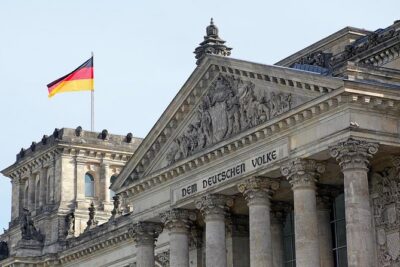
Reichstag, Dome and Government District Guided Tour
Read our review →
1-Hour City Tour by Boat with Guaranteed Seating
Read our review →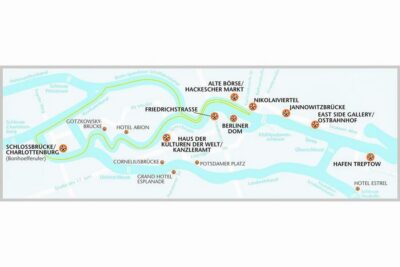

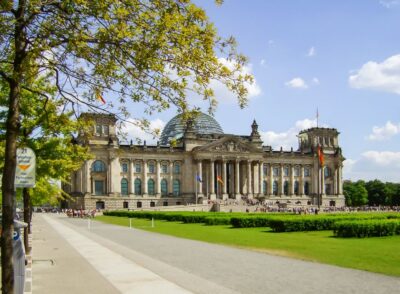
Reichstag, Plenary Chamber, Cupola & Government Tour
Read our review →