Reviewed · BERLIN TOURS
Berlin: Decolonial Berlin Castle/ Humboldt Forum Guided Tour
The most striking part of this tour is its change of angle: the Berlin Palace and Humboldt Forum are not treated as neutral backdrops, but as places whose architecture and collections carry colonial histories. You begin outdoors near the reconstructed Sanchi Gate, then move inside to consider the ethnological collection through a decolonial, Afrocentric perspective.
I like that the tour connects the palace’s long history to the present-day museum, rather than treating them as separate subjects. I also like that the guide asks you to look critically at the collection and the cross on the building’s roof, details that can prompt useful questions beyond the usual sightseeing checklist.
One thing to weigh is the balance of the visit: about an hour is spent outdoors, so the time inside the Forum is relatively short. The tour is also openly framed from a decolonial perspective, which is its purpose, but may not suit you if you want a conventional architectural or museum overview.
Key points to know before you go

- The meeting point is the reconstructed Sanchi Gate: Look for your guide near the white chairs.
- The first part is outdoors: Plan for roughly an hour seated outside before heading into the museum.
- The focus is decolonial and Afrocentric: Expect discussion of colonial structures, cultural heritage, and the meaning of the palace and museum today.
- The Humboldt brothers are part of the story: The guide explains their place in German history and their work as scientists.
- Collection entry is included: You also explore the ethnological collection with an audio walk.
- It is a short, focused visit: The full tour lasts two hours, with an English-speaking guide.
Start at the Sanchi Gate, not the museum doors
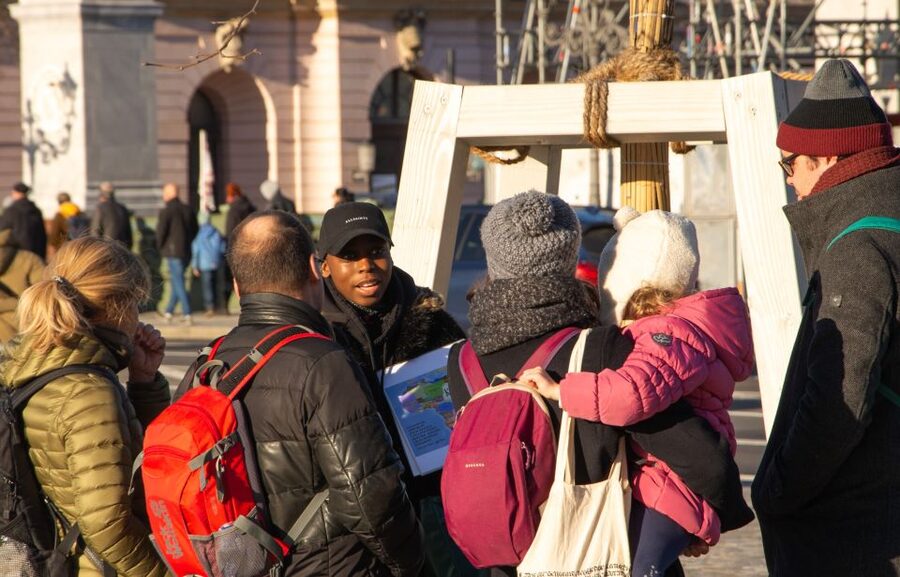
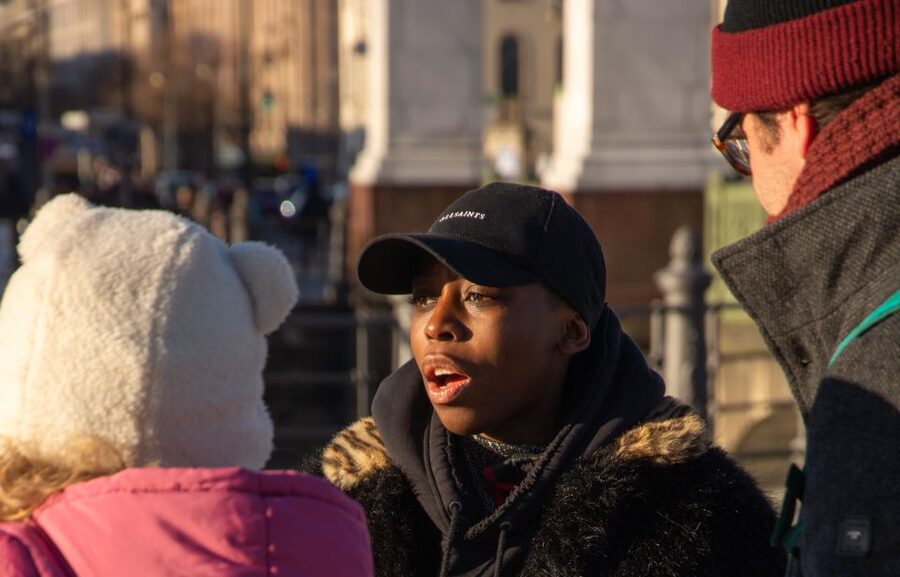
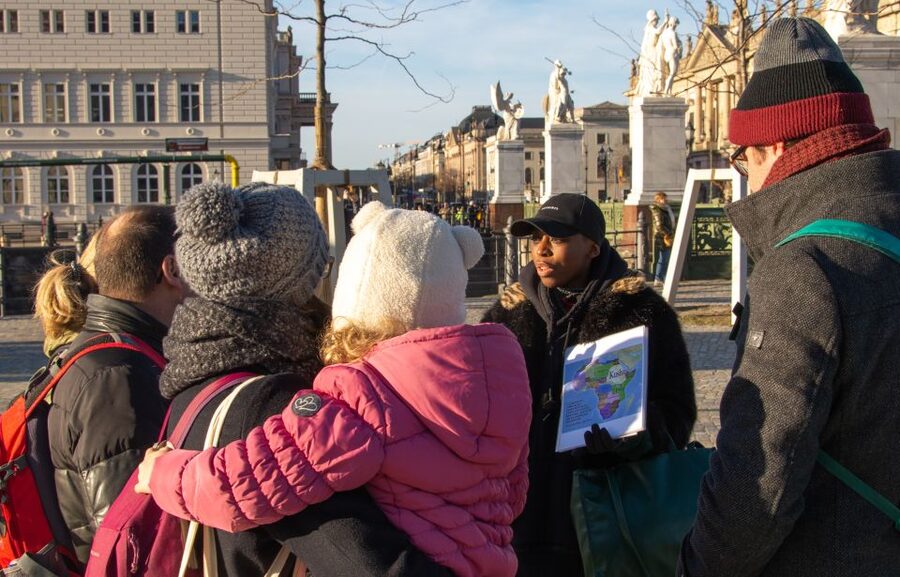
The meeting point is near the reconstructed Sanchi Gate, with white chairs where you can sit. It is a useful detail to know before setting off: the experience begins outside, not with an immediate entrance into the museum. Get there ready for an outdoor conversation, and wear shoes and clothing suited to the weather.
The tour is run by deSta, Dekoloniale Stadtführung. Its stated focus is a decolonial reading of Berlin, with Afrocentric insights used to create new narratives. That tells you what kind of visit you are booking: not a neutral survey of every room, nor a standard palace-history talk, but a guided interpretation that asks who shaped these institutions and whose perspectives have been centered.
That clear point of view is a strength if you want a tour with an argument and a purpose. It can also be a mismatch if you expect a broad, even-handed introduction to every aspect of the Humboldt Forum. I would read the framing carefully before booking, then arrive ready to listen, question, and think for yourself.
More guided tours in Berlin:
- Berlin: Reichstag, Dome and Government District Guided Tour
★ 4.7 · 18,288 reviews - Berlin: Government District around the Reichstag Guided Tour
★ 4.7 · 8,447 reviews - Berlin: Hidden Backyards Guided Walking Tour
★ 4.8 · 5,360 reviews
Spend the first hour with the palace’s complicated past
The Berlin Palace has a history stretching back about 500 years. The tour uses that long timeline to explore how the building’s past connects to colonialism and to the modern Humboldt Forum. Rather than treating the palace simply as a grand historic structure, the guide considers what its reconstruction and present use mean.
This is where the outdoor format matters. Sitting outside for roughly an hour gives the guide room to build context before you enter the museum. The trade-off is simple: you spend a substantial part of a two-hour tour outside, and the interior visit is shorter. In good weather, that can make the opening discussion an unhurried introduction. In poor weather, the same hour may feel long, so bring suitable clothing.
The guide also discusses the role missionaries played in establishing colonial structures. This adds an important thread to the history: colonialism was not only about distant territories or museum objects, but also about the institutions and ideas that helped support colonial power. The tour’s aim is to connect those histories with the building in front of you and the collection inside it.
You do not need to arrive with specialist knowledge. The tour is designed to explain key facts and offer a way to read the site. But it is worth bringing curiosity, and perhaps a willingness to sit with questions that do not have a tidy answer in a two-hour visit.
Look again at the palace and the cross on its roof

The Berlin Palace is not just the setting for the tour. Its history and symbolism are part of the subject. The guide addresses the symbolic meaning of the cross on the museum’s roof, a detail that can easily pass unnoticed if you are focused only on the building’s scale or design.
The point is not simply to identify a feature, but to ask what it represents in this particular place. The tour connects architecture, colonial history, and cultural heritage, encouraging you to consider how public symbols shape the way a museum presents itself. The supplied information does not promise a single definitive answer to the cross’s meaning, so go in expecting interpretation and discussion rather than a quick fact to memorize.
That approach is useful if you like to understand what a building is saying as well as what it looks like. If your main interest is architectural detail, though, this is not described as a specialist architecture tour. The palace is examined through its historical and decolonial context.
Meet the Humboldt brothers in a new context
The tour also explains why the Humboldt brothers matter in German history, with attention to their work as scientists. Their legacy is part of the Forum’s story, but here it is considered alongside broader questions about knowledge, collecting, and colonial structures.
That combination gives you more than a short biographical detour. It places well-known figures within the setting of a museum whose ethnological collection is examined critically. You are invited to consider how scientific work and colonial systems relate, rather than treating the history of science as separate from the history of empire.
The tour description does not specify which parts of the brothers’ lives receive the most time, so do not expect a full biography. The value is in the connection the guide draws between their legacy, the palace, and the Forum’s collections. If you want to know more about the brothers in detail, this visit can give you a framework for further exploration, but it is not a dedicated Humboldt biography tour.
Same city, a different kind of day:
- Berlin: 1-Hour City Tour by Boat with Guaranteed Seating
★ 4.3 · 16,993 reviews - Berlin: Boat Tour Along the River Spree
★ 4.4 · 11,252 reviews - Discover Berlin Half-Day Walking Tour
★ 5.0 · 9,624 reviews - Berlin: Hop-on Hop-off Bus Tour with Live Commentary
★ 4.3 · 8,579 reviews
Enter the ethnological collection with questions in mind
The indoor portion takes you into the Humboldt Forum’s ethnological collection. Admission to the collection is included in the $41 price, and the visit uses an audio walk to support a critical look at what is displayed. The emphasis is not simply on browsing objects, but on thinking about their context and cultural legacy.
This is the tour’s most direct encounter with the museum itself. After the outdoor discussion of the palace and colonial history, the collection gives those themes a physical focus. You can examine how objects are presented and consider the questions raised by the tour’s Afrocentric and decolonial approach.
Keep the time allocation in mind. The whole experience lasts two hours, and about an hour is spent outdoors before you head inside. That leaves a more limited stretch for the collection than you would have on a standalone museum visit. The guided framing may make that shorter visit more purposeful, but it is not a substitute for spending a full afternoon exploring the Forum independently.
The audio walk is part of the collection experience, though the practical details of how it works are not specified. You can expect it to accompany a critical look at the displays, but do not assume a particular device, route, or amount of independent listening time.
What $41 buys you, and where the value lies

At $41 per person for two hours, this is not the cheapest way to spend a morning in Berlin. The price includes a live English-speaking guide and entry to the ethnological collection, so you are paying for guided interpretation as well as access. The value depends less on how many rooms you cover and more on whether you want help connecting the palace, colonial history, and museum displays.
I see the strongest value in the guided context. A collection can be difficult to read if you do not know what questions to ask, and this tour gives you a specific lens for doing that. The guide’s role is central: the most positive feedback about the experience highlights how much people learned and how well the subject was explained. One account also notes that the historical background took up much of the tour, leaving less time for the Forum itself. That is a useful expectation to carry in.
There is also a practical reliability point worth treating seriously. One past booking account describes a guide not appearing at the agreed place and time. That is a single reported incident, not enough to predict how your tour will go, but it makes it sensible to confirm your booking details and exact meeting point before the day. Be especially careful to check that you have booked with the intended provider, deSta, Dekoloniale Stadtführung, since a separate account describes arriving at the wrong event after overlooking the actual provider.
The tour has a 4.4 rating from 12 reviews. That is a positive overall score, but the small number of ratings means it should not be treated as a guarantee. The most consistently useful signal is the tour’s clear subject and teaching style: people who value an informative, history-led discussion are likely to get more from it than someone looking for a fast museum highlights tour.
Who will get the most from this visit
Book this if you want to examine Berlin’s colonial past and its cultural legacy through a clearly stated decolonial perspective. It should suit you if you enjoy guided discussion, want an introduction to the Humboldt Forum’s ethnological collection, or prefer to connect a building’s history with the questions raised by its exhibits.
It may also work well as a first visit to the Forum, especially if you want a framework for thinking critically about what you see. You can always spend more time inside afterward if your schedule allows, but that additional time is not part of the two-hour guided experience.
Think twice if you want a comprehensive tour of the museum, a long indoor visit, or a guide who avoids a particular interpretive position. The approach is stated plainly: the tour uses Afrocentric insights and examines colonialism and its legacy. That focus is not a side note. It is the reason to choose this tour, and the main reason it may not be right for everyone.
Small practical details that make the day easier
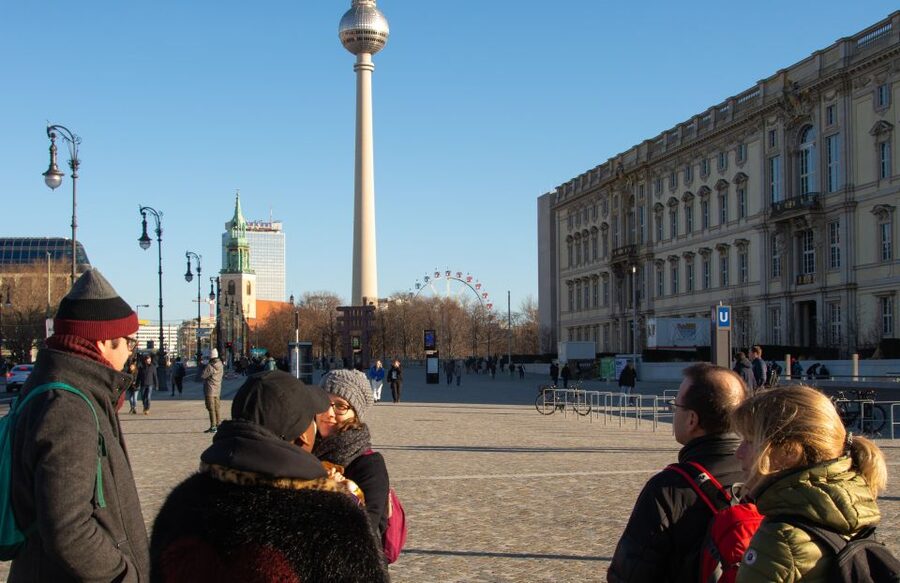
Wear comfortable shoes and weather-appropriate clothing. Since about an hour takes place outdoors, a light jacket or other suitable layer can make a real difference, depending on conditions. The meeting point is near the reconstructed Sanchi Gate, by the white chairs.
The tour is in English and lasts two hours. It is wheelchair accessible. Food, drinks, luggage, and large bags are not allowed, so travel light and plan to eat before or after the visit.
You can reserve now and pay later, and cancellation up to 24 hours in advance is eligible for a full refund. Check the available starting times when choosing a date, and verify the provider and meeting instructions before you set off.
Should you book the decolonial Humboldt Forum tour?
I would book it if you want the Humboldt Forum to raise questions, not just provide a route through exhibits. The tour’s strongest feature is its clear connection between the Berlin Palace, colonial history, the Humboldt brothers, and the ethnological collection. For $41, the guide and collection entry make sense if that interpretation is what you are seeking.
Skip it if you want most of your two hours indoors or prefer a general museum overview without a strong interpretive lens. If you do book, arrive prepared for an outdoor opening, check that you have the right provider, and leave extra time afterward if you want to explore the Forum at your own pace.
FAQ
How long does the tour last?
The tour lasts two hours.
What language is the tour in?
The live tour guide speaks English.
Where is the meeting point?
Meet near the reconstructed Sanchi Gate. White chairs are available there.
How much of the tour takes place outdoors?
You will be seated outdoors for approximately one hour before heading into the museum.
Is entry to the ethnological collection included?
Yes. Entry to the ethnological collection is included.
Does the tour include a guide?
Yes. A live tour guide is included.
Is the tour wheelchair accessible?
Yes, the activity is listed as wheelchair accessible.
Can I bring food, drinks, or a large bag?
No. Food, drinks, luggage, and large bags are not allowed.
Can I cancel, or reserve without paying today?
You can cancel up to 24 hours in advance for a full refund. The reserve-now, pay-later option lets you book without paying today.
Newest tours in Berlin
- Berlin: guided canoe | kayaktour★ 4.1 · 7 reviews
- Understanding Kreuzberg: The roots of local (sub)culture★ 4.9 · 11 reviews
- Where It All Began: Berlin’s Queer & Trans History Tour★ 4.9 · 6 reviews
- Warnemünde Shore Excursion: Private Sachsenhausen and Berlin Tour★ 5.0 · 12 reviews
- Ultimate E-Bike Tour of Berlin with Beer Garden Stop★ 5.0 · 4 reviews
- Potsdam Highlights – Private sightseeing tour by minibus★ 5.0 · 3 reviews
- Private Potsdam City Tour in an authentic vintage van★ 5.0 · 14 reviews
- Transfer from Berlin Schönefeld Airport (SXF) to Berlin city Hotels – ROUND TRIP★ 4.0 · 3 reviews
Berlin Tours, compared.
Reichstag, Dome and Government District Guided Tour
Read our review →
1-Hour City Tour by Boat with Guaranteed Seating
Read our review →
Reichstag, Plenary Chamber, Cupola & Government Tour
Read our review →