Reviewed · BERLIN TOURS
The Old Berlin Tour: Travel Through Time With a Historian
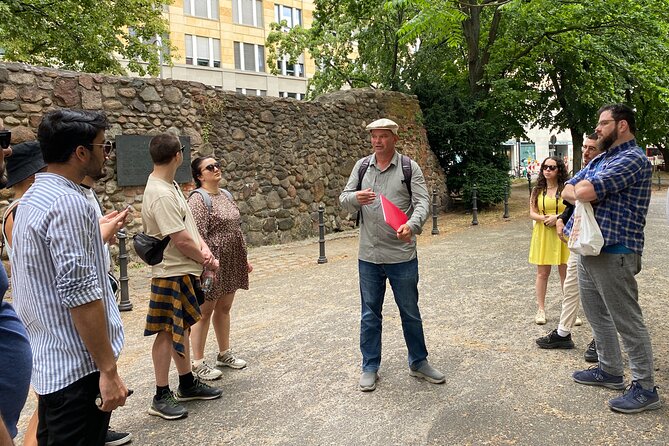
Berlin can feel like a city that keeps changing its story. On this two-hour walk, historian Sean Stewart guides you through central Berlin, using vanished streets, a medieval church ruin and a carefully rebuilt quarter to connect the Middle Ages with the city’s modern history, including the Berlin Wall.
I like two things especially: the small group, capped at eight, gives you room to ask questions, and the route is designed to teach you how to read the city rather than simply collect photographs. Sean is also described as adapting the walk to what you have already seen, which can be useful if this is not your first visit.
One consideration: at about two hours, the tour offers a brisk introduction, not a full account of Berlin’s history. The listed stops each take around 15 minutes, so expect to keep moving and save longer visits to individual churches or museums for later.
At a glance
- Start near Alexanderplatz: Meet at Espresso House Alea 101, Rathausstraße 6, at 11:00 am.
- Follow a history-minded route: The walk covers central sites from medieval Berlin to modern times, including the period of the Berlin Wall.
- See four named stops: Alexanderplatz, Franziskaner Klosterkirche, St. Mary’s Church and Nikolaiviertel.
- Get a historian’s perspective: Sean Stewart focuses on the meaning behind Berlin’s changing streets, old buildings and rebuilt quarters.
- Keep the group small: No more than eight people can join.
- Pay $23 for about two hours: Food and drinks are not included, and admission at the listed stops is free.
Reading Berlin’s history one layer at a time
This walk is for you if a city makes more sense when someone explains what used to stand where you are standing now. Berlin’s central district can put a medieval church, a modern square and a reconstructed historic quarter within the same short walk. Without context, those pieces can seem disconnected. With a historian beside you, they become clues to how the city changed.
The tour promises a broad sweep from the Middle Ages to modern times, with the Berlin Wall included in that larger story. The four named stops focus on older Berlin, so do not expect a dedicated visit to a Wall memorial or a lengthy account of every era. Instead, think of the walk as an orientation: it gives you a framework for understanding the capital before you explore its other landmarks on your own.
Sean’s approach sounds especially suited to this kind of city. He is a professional historian, and his guiding style is described as helping you make sense of what the city has to say, rather than urging you to photograph every sight. That matters in Berlin, where a square’s present-day appearance may tell only part of its story. The aim is not simply to see a landmark, but to notice how the city’s past remains visible, obscured or recreated.
Other tours people book in Berlin:
- Berlin: Reichstag, Dome and Government District Guided Tour
★ 4.7 · 18,288 reviews - Berlin: 1-Hour City Tour by Boat with Guaranteed Seating
★ 4.3 · 16,993 reviews - Berlin: Boat Tour Along the River Spree
★ 4.4 · 11,252 reviews
Starting at Alexanderplatz
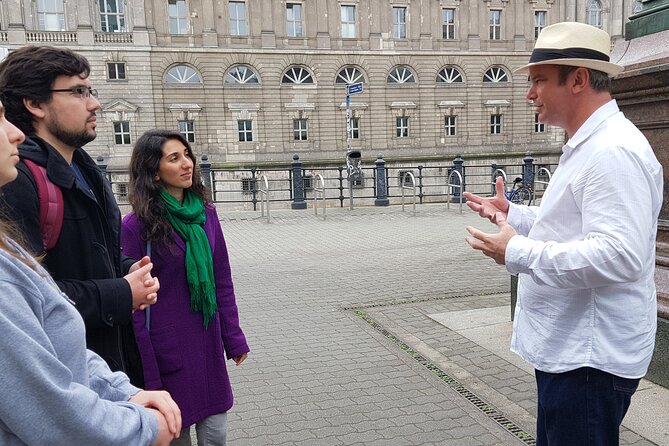
The meeting point is Espresso House Alea 101, at Rathausstraße 6, near Alexanderplatz Station. The tour begins at 11:00 am. Alexanderplatz is a practical starting area for a walk through central Berlin, and the station makes the meeting point convenient to reach by public transport.
The first stop is Alexanderplatz itself. The focus here is on streets and buildings that have vanished, an idea that sets up the tour’s central theme: Berlin is a city whose physical form has repeatedly changed. The stop lasts about 15 minutes, so expect a guided introduction rather than an extended visit to a single site.
This is a useful place to begin because it asks you to look beyond what is immediately in front of you. A square can be busy and familiar-looking, but a historian can help you imagine the urban fabric that no longer exists and consider how later decisions reshaped the area. You will get more from this section if you listen for the connections between what is visible now and what has disappeared.
The quiet impact of Franziskaner Klosterkirche
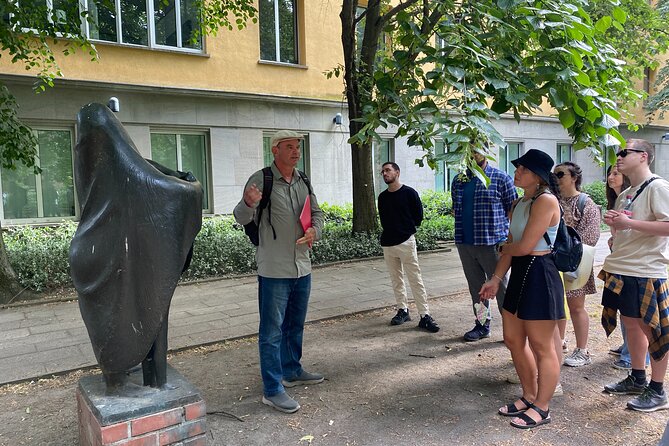
Next comes Franziskaner Klosterkirche, described as Berlin’s only medieval romantic ruin. The wording points to an unusual sight: a church ruin that makes the city’s earlier history tangible without requiring a long detour or an indoor visit.
The stop is about 15 minutes. That is enough time for a guide to introduce the site and explain why it matters, but not necessarily enough for a leisurely exploration. If you like architectural detail, you may want to return on your own after the tour or allow extra time nearby. The admission ticket is listed as free.
A ruin can be especially effective in Berlin because it makes loss and change visible. Here, you are not just hearing that the city has been altered; you are standing beside a surviving fragment of its medieval past. Sean’s historical framing should help you place that fragment in the wider story, rather than treating it as a picturesque stop on a checklist.
St. Mary’s Church and medieval Berlin
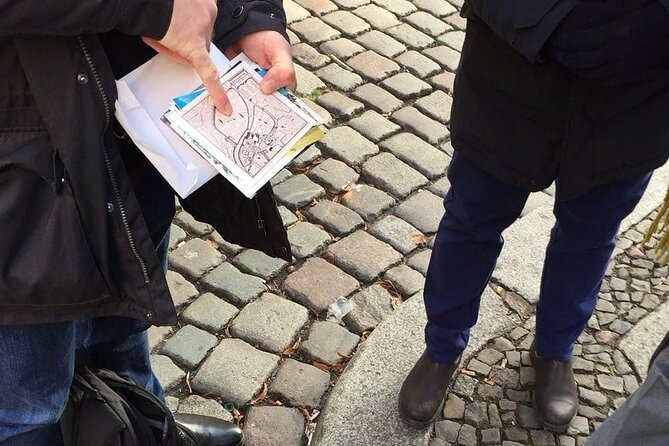
St. Mary’s Church, or Marienkirche, is the next listed stop. It is identified as an important church from medieval times, giving the walk another chance to connect the city’s present-day centre with its older roots.
The stop lasts around 15 minutes. That short window makes this more of an exterior-focused historical introduction than a deep visit. The supplied details do not promise entry into the church, so if going inside is important to you, check the arrangements before booking or plan to visit separately.
I like the contrast this stop adds to the route. Franziskaner Klosterkirche is presented as a ruin; St. Mary’s is a major church with a continuing place in the city. Seeing both in one walk lets you compare different ways the past remains part of modern Berlin. It also gives Sean room to explain the contradictions that make the city compelling, an aspect that has been singled out as part of his way of guiding.
Same city, a different kind of day:
- Discover Berlin Half-Day Walking Tour
★ 5.0 · 9,624 reviews - Berlin: Hop-on Hop-off Bus Tour with Live Commentary
★ 4.3 · 8,579 reviews - Berlin: Government District around the Reichstag Guided Tour
★ 4.7 · 8,447 reviews - Berlin: Reichstag, Plenary Chamber, Cupola & Government Tour
★ 4.6 · 8,422 reviews
Nikolaiviertel: old Berlin, rebuilt
The final named stop is Nikolaiviertel, described as Berlin’s reconstructed medieval quarter. The tour uses a pointed nickname for it, calling it a medieval Disneyland. That label is a reminder to approach the area with curiosity and a little skepticism: it is not simply an untouched medieval neighbourhood.
The quarter is still useful for understanding how Berlin chooses to present its past. A reconstruction can preserve the appearance of an older setting while also reflecting the period and priorities in which it was rebuilt. That tension is exactly the kind of historical question this tour seems ready to explore. Sean’s approach, which brings together old and new Berlin and draws attention to irony and contradiction, should make this stop more interesting than a quick stroll through quaint-looking streets.
You will spend about 15 minutes here, so treat the visit as an introduction, not a full exploration of every lane or building. The tour ends at Berlin Cathedral, at Am Lustgarten. That gives you a clear endpoint in central Berlin and leaves you well placed to continue sightseeing, though the walk itself does not include a cathedral visit.
What a historian adds to the walk
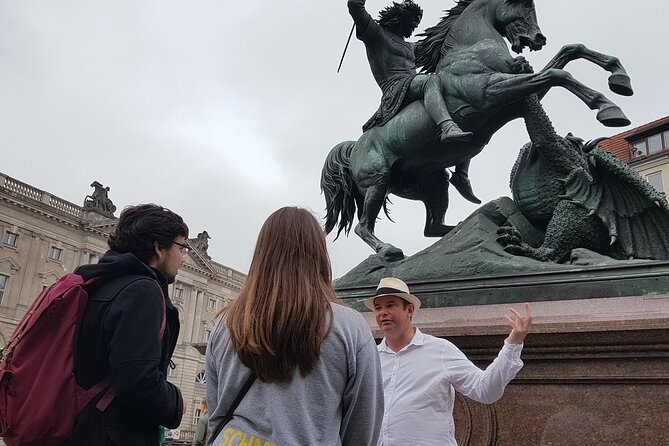
The strongest reason to choose this experience is the guide. Sean Stewart is identified as a professional historian, and the most distinctive detail about his style is that he helps you interpret Berlin rather than simply point out photo stops. The city’s history is often about movement: streets and buildings vanish, new plans take their place, and old features are reworked or remembered in different ways.
That perspective can help you notice details you might otherwise pass by. One account of the tour describes Berlin as a city of moving chess pieces, an apt image for a place repeatedly reshaped by historical forces. Another useful quality is Sean’s familiarity with courtyards and less obvious corners of the city. The exact detours are not specified, so do not book expecting a guaranteed hidden-courtyard route, but his local range may bring a few less familiar angles into the walk.
Sean has also been known to ask whether you have visited Berlin before and what you want to see. That can make the tour more relevant if you have already covered the best-known sights. It is not a promise of a fully customized itinerary, but it suggests that you can tell him what you have seen and what interests you. If you have a particular historical question, ask early, while the group is still small and the route has begun.
Is $23 good value for two hours?
At $23, the price is reasonable for a small-group guided walk led by a professional historian. You are paying for interpretation and a route that links several sites, not for admission to attractions or a meal. The listed stops have free admission, and food and drinks are not included.
The group limit of eight is a meaningful part of the value. A small group can make it easier to hear the guide and ask questions than a large walking tour. It also suits a route built around explaining details in public spaces, where there may not be a formal display or exhibit to do the storytelling for you.
Two hours is long enough to gain a useful orientation without taking over your day. It is also short enough that the route cannot give every era equal attention. If you want a detailed study of medieval Berlin, the Wall, or the city’s later political history, this is a starting point rather than a substitute for focused visits. You can use the walk to decide which subjects deserve more of your time.
Practical details before you book
The tour starts at 11:00 am at Espresso House Alea 101, Rathausstraße 6, and ends at Berlin Cathedral, Am Lustgarten. The listed duration is approximately two hours. The walk is in English, and most people can participate. Service animals are allowed, and the activity is near public transportation.
The ticket is mobile, which means you can keep your booking on your phone. Confirmation is provided at booking. The tour requires good weather, and it also requires a minimum number of participants. If poor weather or an unmet minimum leads to cancellation, you will be offered another date or a full refund.
You can cancel for a full refund up to 24 hours before the start time. Cancellations made less than 24 hours before the tour are not refunded, and changes within that period are not accepted. Those rules matter if your Berlin plans are still shifting, so check the local start time when calculating the deadline.
Who should book this Berlin walk?
I would choose this tour if you want a compact introduction to central Berlin from someone who can explain how the city’s past and present overlap. It particularly suits history-minded visitors, first-time visitors who want context before exploring independently, and returning visitors who have already seen the main sights and want a different way to look at the city.
It may be less suitable if you want a long, slow visit inside each church or a tour devoted to one period alone. The short stops and wide historical span mean you will get a series of well-placed introductions rather than exhaustive coverage. If that is what you want, the pace and format are a good fit.
My booking advice: choose this walk for Sean’s historian’s perspective and the chance to see familiar central Berlin as a layered, changing place. At $23, with a maximum of eight people and a clear two-hour route, it offers solid value if you want ideas and context to carry into the rest of your stay. Just leave time afterward to revisit any stop that catches your interest.
FAQ
How long is The Old Berlin Tour?
The tour lasts approximately two hours.
What time does the tour start?
The start time is 11:00 am.
Where does the tour begin?
Meet at Espresso House Alea 101, Rathausstraße 6, 10178 Berlin.
Where does the tour end?
The tour ends at Berlin Cathedral, Am Lustgarten, 10178 Berlin.
What is the price?
The listed price is $23.
Which stops are included?
The named stops are Alexanderplatz, Franziskaner Klosterkirche, St. Mary’s Church and Nikolaiviertel.
Is the tour in English?
Yes. The tour has an English-speaking guide.
How many people can join?
The maximum group size is eight people.
Can I cancel for a full refund?
Yes, if you cancel at least 24 hours before the experience starts. Cancellations made less than 24 hours before the start time are not refunded.
Newest tours in Berlin
- Berlin: guided canoe | kayaktour★ 4.1 · 7 reviews
- Understanding Kreuzberg: The roots of local (sub)culture★ 4.9 · 11 reviews
- Where It All Began: Berlin’s Queer & Trans History Tour★ 4.9 · 6 reviews
- Warnemünde Shore Excursion: Private Sachsenhausen and Berlin Tour★ 5.0 · 12 reviews
- Ultimate E-Bike Tour of Berlin with Beer Garden Stop★ 5.0 · 4 reviews
- Potsdam Highlights – Private sightseeing tour by minibus★ 5.0 · 3 reviews
- Private Potsdam City Tour in an authentic vintage van★ 5.0 · 14 reviews
- Transfer from Berlin Schönefeld Airport (SXF) to Berlin city Hotels – ROUND TRIP★ 4.0 · 3 reviews
Berlin Tours, compared.
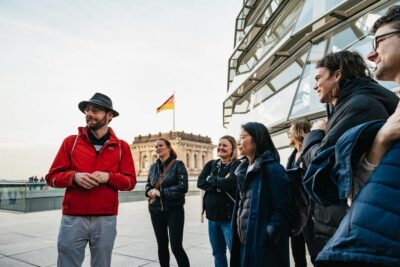
Reichstag, Dome and Government District Guided Tour
Read our review →
1-Hour City Tour by Boat with Guaranteed Seating
Read our review →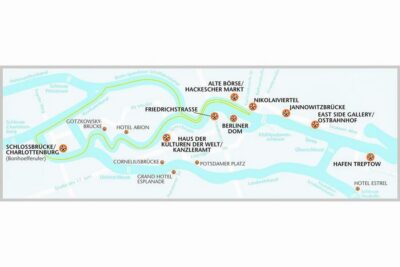


Reichstag, Plenary Chamber, Cupola & Government Tour
Read our review →