
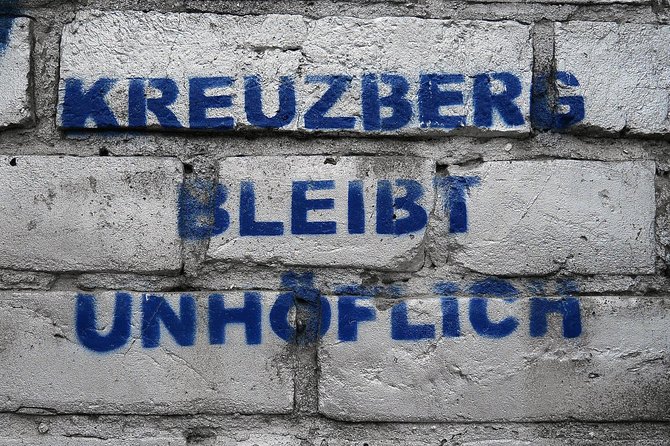
Reviewed · BERLIN KREUZBERG TOURS
Kreuzberg Walking Tour: Immigrants, Artists & Hipsters
Kreuzberg makes more sense when you know what came before the cool shops and street art. This three-hour tour connects the district’s Cold War-era isolation with its present-day mix of artists, Turkish businesses, markets and new riverside plans. It is a good way to see more than the postcard version of Berlin.
I like the small-group format, which gives you room to ask questions, and the focus on local history told on the streets where it happened. Guides Peter and Ronan have been praised for their personal approach, thoughtful answers and useful tips for the rest of a Berlin visit.
One thing to weigh: $153.85 per person is a substantial price for a three-hour tour, and public transport and any food or drinks are extra. You are paying for a specialist guide and a focused look at one neighborhood, not for an all-inclusive outing.
What to know before you go
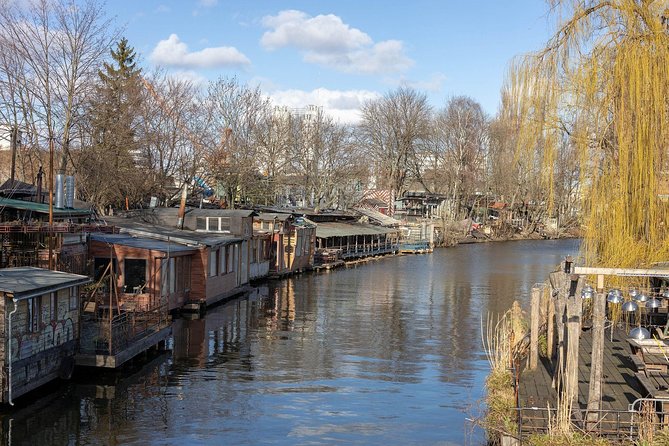
- Oberbaum Bridge sets the scene: The tour begins with a walk over one of Berlin’s best-known bridges before heading into Kreuzberg.
- SO36 has a complicated past: Your guide explains how this once-marginal district changed after the fall of the Berlin Wall.
- Street art is part of the story: Graffiti and creative uses of abandoned spaces help explain Kreuzberg’s identity.
- Turkish markets bring the tour to the table: Markthalle 9 and colorful markets offer a chance to see local food culture. Snacks are not included unless specified.
- Choose walking or cycling: A bike option covers more ground within the district, but rental costs an additional €10 per person.
- Expect some public transport: A few stops are too far apart to reach on foot, so you will use local transit during the tour.
From Oberbaum Bridge into Kreuzberg
The meeting point is Schlesische Str. 18, in the district. From there, the tour starts with a stroll across Oberbaum Bridge, a striking link between Kreuzberg and Friedrichshain. It is a useful first stop: the bridge gives you a sense of the city’s divided past and the neighborhoods now connected by everyday life.
The bridge is more than a scenic opening. It helps frame the central theme of the tour: Berlin’s boundaries have shifted, but the city’s past remains visible in its streets and buildings. Your guide can give that history a local scale, rather than leaving it as a string of dates and famous landmarks.
The tour is offered on foot or by bike. Walking lets you take the neighborhood at a slower pace and stop to look closely at street details. A bike covers more ground, though it stays within Kreuzberg. Bike rental is optional and costs €10 per person, so factor that into the price if you choose that version.
More walking tours in Berlin:
- Discover Berlin Half-Day Walking Tour
★ 5.0 · 9,624 reviews - Berlin: Third Reich and Cold War 2 Hour Walking Tour
★ 4.9 · 6,830 reviews - Berlin: Discover Berlin Walking Tour
★ 4.9 · 5,998 reviews
SO36 and the district’s Cold War years
In SO36, your guide introduces Kreuzberg’s rougher history and explains how the neighborhood became a Cold War-era no-go zone. The tour looks at how its position near the Wall shaped daily life, and how that past still affects the way people talk about the district today.
This context matters because Kreuzberg’s current reputation can make its earlier story easy to miss. The neighborhood was not simply waiting to become fashionable. It was shaped by division, isolation and rapid changes after 1989. The tour helps you understand why artists and musicians were drawn here, and why residents’ relationship with change is not always simple.
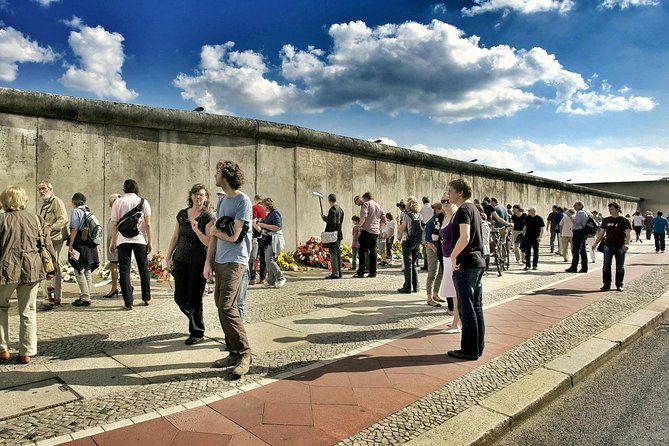
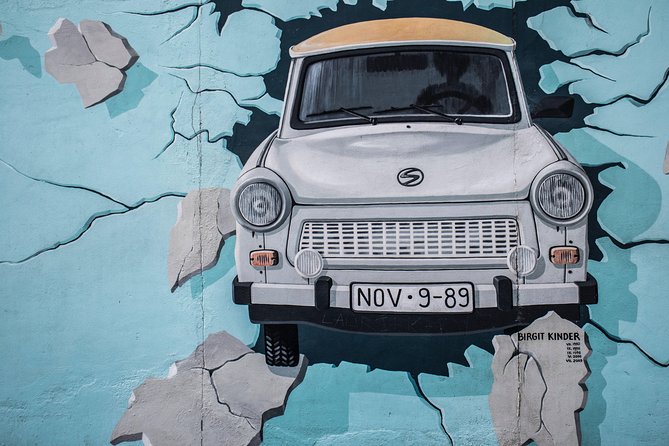
The walk also passes remains of the Berlin Wall. These traces are a reminder that the city’s history is not confined to a museum or memorial. You encounter it as part of a working neighborhood, with shops and ordinary streets around it. That contrast is one of the tour’s strengths.
Your guide can also explain the role of rock musicians who spent time in Kreuzberg during the Cold War. The appeal is not celebrity trivia for its own sake. It gives you another way to picture the neighborhood’s alternative culture, and the reasons it attracted people looking for a different Berlin.
Street art, empty lots and Görlitzer Park
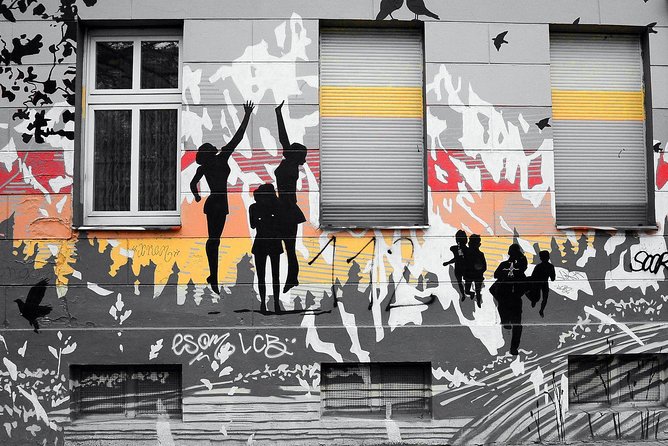
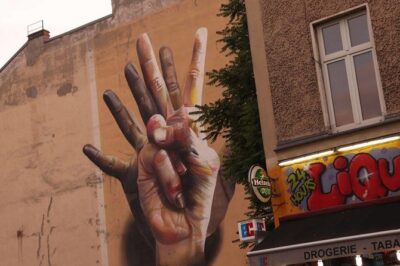
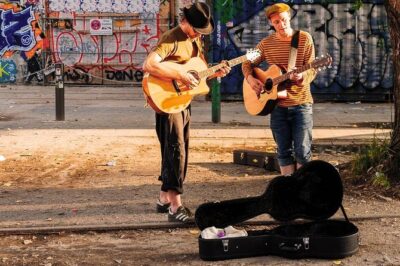
Kreuzberg’s street art is treated as more than decoration. Graffiti has a part in the district’s visual identity and its public conversation, and your guide explains why it matters here. Look closely as you walk: the marks on walls and the uses of open or abandoned spaces can tell you as much about local attitudes as a formal exhibit.
The tour also explores creative uses of abandoned buildings and plots of land. These places help show how Kreuzberg has changed, and why development remains a sensitive subject. The guide’s art-history background is especially useful here, giving you a framework for reading the neighborhood without pretending that every painted wall has one simple meaning.
Görlitzer Park offers a change of pace. It is a graceful green space within the district, and a chance to pause between stretches of urban history and street life. The tour description does not promise a long rest stop, so think of it as part of the route rather than a dedicated park visit.
The balance between formal landmarks and everyday places is what makes this tour appealing. You are not just ticking off famous Berlin sites. You are learning how a neighborhood’s history shows up in public space, art and the ways people use buildings and land.
Markthalle 9 and Kreuzberg’s Turkish food culture
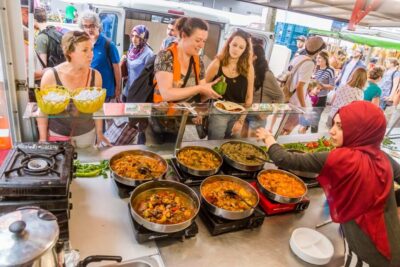
Markthalle 9, a market hall around 120 years old, gives the tour a practical look at food and neighborhood commerce. You will also pass Turkish shops and colorful markets filled with flowers, spices and prepared food. This part of Kreuzberg shows how migration has shaped the district’s daily character, not just its history.
There may be a chance to sample food such as gözleme, a flatbread filled with spinach and cheese and then fried. Food and drinks are not included unless specifically stated, so bring money if you want to try something. The tour does not promise a meal or a set tasting menu. Treat any snack as an optional purchase, not part of the ticket.
I like that the food stops are tied to the neighborhood rather than presented as a separate tasting experience. You see the shops and market stalls as part of local life, and get a sense of how Turkish culture is present in Kreuzberg’s streets. If food is a main reason you are booking, remember that the tour is primarily a history and culture walk, with food as one part of the picture.
More Kreuzberg tours in Berlin:
- Kreuzberg: Culinary Food Tour
★ 4.5 · 770 reviews - Berlin: Kreuzberg Guided Walking Evening Tour
★ 4.7 · 555 reviews - Berlin: Alternative Bike Tour of Kreuzberg & Friedrichshain
★ 4.7 · 548 reviews - Berlin: 2.5-Hour Walking Tour through Kreuzberg 61
★ 4.9 · 525 reviews
Riverside plans and a neighborhood still in motion
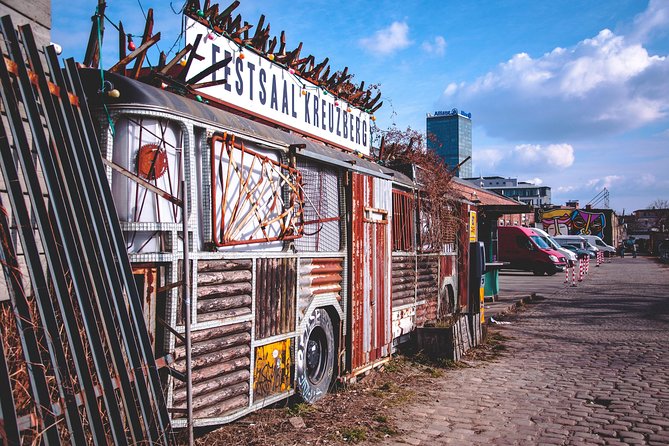
The tour concludes with a discussion of controversial plans for riverside development. This is a useful ending because it brings the story into the present. Kreuzberg’s identity is not frozen in its Cold War past or its later reputation as an artists’ district. New plans raise questions about who benefits from change and what kind of neighborhood residents want.
That topic may make the tour feel less like a neat historical timeline and more like a conversation. One guide, Ronan, has been praised for being patient, answering questions and encouraging discussion. Peter has also been noted for sharing an insider view and offering recommendations for the rest of a Berlin stay. These are good qualities for a tour whose subject is still contested.
The stated end point is simply Berlin, and the exact route may vary. One tour has concluded at the Friedrichshain-Kreuzberg Museum, which made a fitting final stop, but do not assume that is included every time. If you want to visit the museum, check the planned finish with the operator.
What the small group and price mean
The tour costs $153.85 per person, a high price for three hours if you judge it only by time or distance covered. Its value is in the specialist focus: an art historian guide, a small-group setting and a neighborhood story that is hard to piece together from a quick walk on your own. If you want a guide who can connect street art, migration, Cold War history and current development debates, that focus may justify the cost.
The group-size information is not entirely consistent. The tour is described as a small group with a maximum of six, while the booking information also gives a maximum of eight per booking and a maximum of ten travelers for the activity. Confirm the expected group size before you pay if a very small group is important to you.
Public transport is needed a few times because some key sites are too far apart to walk between. The fare is not listed as included, and hotel pickup and drop-off are not provided. Food and drinks are also extra unless specified. These costs are modest compared with the ticket price, but they do mean the headline amount is not the full outing cost.
The tour is offered in English, and most people can participate. Children must be accompanied by an adult. Confirmation is provided at booking, and free cancellation is available up to 24 hours before the start time. Changes made less than 24 hours before the start are not accepted, and a late cancellation is not refunded.
Who will get the most from this tour

This is a strong choice if you have already seen Berlin’s central sights and want to understand a neighborhood rather than collect another set of landmarks. It also suits first-time visitors who want to explore beyond the tourist center, as well as Berlin residents who are curious about Kreuzberg’s changing identity. One person who had lived in Berlin for three years still found the tour gave them new ways to understand the district.
You will get more from it if you like asking questions and hearing several sides of a story. The subjects include migration, street art, redevelopment and local memory, so the best experience is not necessarily a quick march from stop to stop. Wear clothes suitable for being outside for about three hours, especially if you choose the walking version. A previous tour continued through cold and rain, but bad weather can make a long neighborhood walk less comfortable.
If you want a private, food-focused outing or a tour that includes transport and tastings, this is not that. If you want a thoughtful guide-led introduction to Kreuzberg, with history connected to present-day streets, it is a more compelling fit.
Should you book the Kreuzberg Walking Tour?
Book it if you want a personal, discussion-friendly look at Kreuzberg and are willing to pay for an expert guide rather than a checklist of sights. The strongest reasons are the small-group approach, the district’s layered history and the chance to connect markets, street art and development debates in one walk.
Skip it if your budget is tight, you mainly want included food, or you prefer a tour with a fixed, fully specified route and group size. Before booking, ask whether the outing will be on foot or by bike, how many people are expected, and whether the route will finish at the museum. That small bit of planning can help you decide if the price and pace suit your day.
FAQ
How long is the tour?
It lasts approximately three hours.
Is the tour offered in English?
Yes. English is the listed language.
Where does the tour start?
It starts at Schlesische Str. 18, 10997 Berlin, Germany.
Does the tour end at the Friedrichshain-Kreuzberg Museum?
The stated end point is Berlin. One tour ended at the Friedrichshain-Kreuzberg Museum, but that is not specified as the standard finish.
Can I take the tour by bike?
Yes. A bicycle version is offered and covers more ground within Kreuzberg. Bike rental is optional and costs €10 per person.
Are public transport costs included?
No. You will need to use public transport a few times, and the fare is not listed as included.
Are food and drinks included?
Food and drinks are not included unless specified. You can buy food at markets, including items such as spinach and cheese gözleme.
How many people are in the group?
The tour is described as a small group with a maximum of six, but the booking information also lists a maximum of eight per booking and ten travelers for the activity. Confirm the expected group size before booking.
Can I cancel for a refund?
You can cancel for a full refund up to 24 hours before the experience starts. Cancellations made later are not refunded, and changes made less than 24 hours before the start are not accepted.
Newest tours in Berlin
- Berlin: guided canoe | kayaktour★ 4.1 · 7 reviews
- Understanding Kreuzberg: The roots of local (sub)culture★ 4.9 · 11 reviews
- Where It All Began: Berlin’s Queer & Trans History Tour★ 4.9 · 6 reviews
- Warnemünde Shore Excursion: Private Sachsenhausen and Berlin Tour★ 5.0 · 12 reviews
- Ultimate E-Bike Tour of Berlin with Beer Garden Stop★ 5.0 · 4 reviews
- Potsdam Highlights – Private sightseeing tour by minibus★ 5.0 · 3 reviews
- Private Potsdam City Tour in an authentic vintage van★ 5.0 · 14 reviews
- Transfer from Berlin Schönefeld Airport (SXF) to Berlin city Hotels – ROUND TRIP★ 4.0 · 3 reviews
Berlin Kreuzberg Tours, compared.
Alternative Bike Tour of Kreuzberg & Friedrichshain
Read our review →
Berlin Off-the-Beaten-Path Walking Tour: Kreuzberg, Mitte and Friedrichshain
Read our review →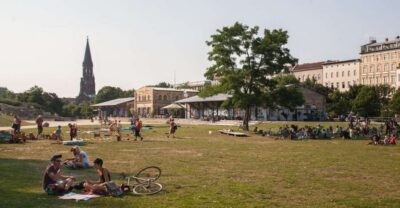
Kreuzberg Berlin: Off the Beaten Track PRIVATE Walking Tour
Read our review →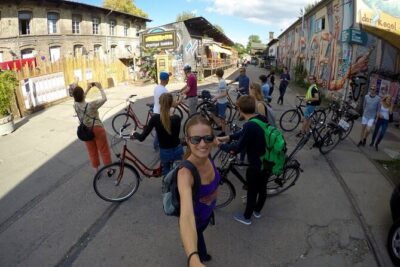
Experience the Alternative Kreuzberg on a Bike Tour
Read our review →Browse the lists this tour appears in