
Reviewed · BERLIN NIGHTLIFE TOURS
Get In: The Ultimate Berlin Club Tour
Berlin’s clubs are more than places to dance. They have been meeting points for queer communities, punk rebels, techno pioneers and people pushing back against exclusion. This 3.5-hour tour connects those stories across the city, from SchwuZ to Berghain and RAW-Gelände.
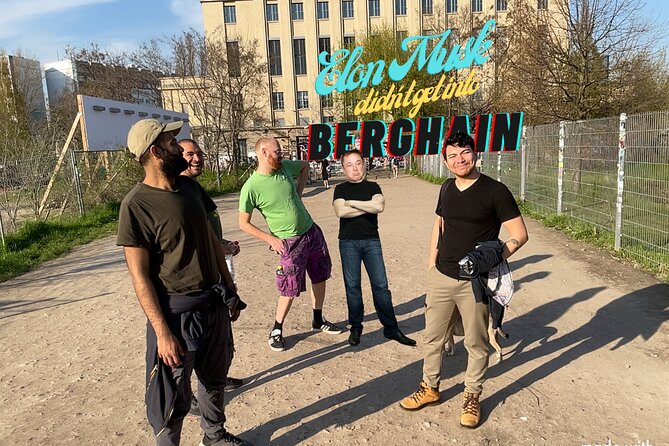
I like two things in particular: the route treats club culture as part of Berlin’s social and political history, not just a guide to late-night venues, and the small group, capped at 10, gives the guide room to keep the conversation lively. Photos, video, audio and augmented reality add a visual layer to the stories.
One practical catch: you need your own public transport ticket, and the tour’s exclusive behind-the-scenes club access is subject to availability. It also starts at 11:30 am, so this is a daytime introduction, not a night out with entry to every club.
At a glance
- Nine stops connect distinct scenes: queer nightlife, West Berlin punk, techno, reggae and alternative culture all have a place on the route.
- The guide uses more than a running commentary: expect 200-plus photos, videos, quotes and audio clips, along with augmented reality features.
- SchwuZ is the only stop with an included admission ticket: access behind the scenes at a world-famous club depends on availability.
- The group is limited to 10 people: that makes it easier to ask questions and talk through the history as you go.
- The route ends near Warschauer Straße: bring a public transport ticket for the tour, and plan your onward trip from RAW-Gelände.
Berlin club culture, told through its communities
The route makes a case for looking beyond the club door. Berlin nightlife is tied to the city’s divisions and reunification, but also to the people who made clubs into places for art, community and political expression. You hear how queer venues, punk clubs and techno spaces developed in different circumstances, then see how their concerns overlap.
That breadth is the tour’s real value. If you only want tips on which club to visit tonight, it may feel like a lot of history. If you want to understand why a venue matters to the neighborhood around it, the conversations about activism, identity, music and gentrification give you a better starting point.
Guide Jeff is named often in feedback for making dense material engaging rather than lecture-like. The comments also point to the way the group can become part of the experience: a story about a club’s past may prompt discussion among people with different perspectives. The guide’s screen-based material gives those conversations something concrete to build on.
More nights out in Berlin:
- Berlin: Pub Crawl with Shots and VIP Club Entry
★ 4.9 · 710 reviews - Quatsch Comedy Club Berlin: Die Live Show Entry Ticket
★ 4.7 · 634 reviews - Original Pub Crawl Berlin
★ 3.5 · 198 reviews
SchwuZ opens with queer history
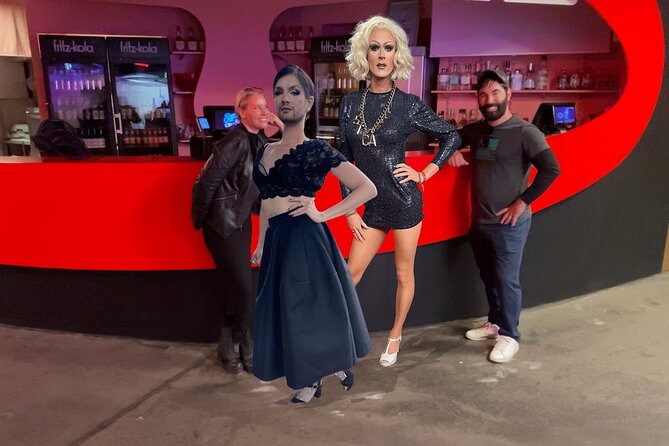
The tour starts at SchwuZ, an iconic LGBTQ+ club, with about 20 minutes devoted to its history and the wider roots of Berlin nightlife. The story reaches back to the 1970s, when trans pioneer Romy Haag helped change the city’s nightclub scene. You also hear how the Berlin Wall shaped nightlife and how gay clubs such as Metropol helped lay ground for the techno movement that followed.
SchwuZ’s connection to activism, including during the AIDS crisis, adds important context. The club is not presented simply as a relic of a past era: it remains a cultural center for Berlin’s LGBTQ+ community. This opening helps establish a theme that runs through the tour: nightlife can offer a place to gather, but it can also be a place to organize and be visible.
SchwuZ is the one stop with an included admission ticket. That does not mean the tour is a full night at the club, and the description does not promise that you will stay for an event. Think of it as an introduction to a venue and its place in the city’s history.
SO36 links punk to protest
At SO36, the focus shifts to West Berlin in the 1970s. About 20 minutes cover the economic hardship that helped shape the local scene, and the club’s role as a home for punk, feminism and counterculture. David Bowie and Iggy Pop enter the story, but so do the local communities that gave the venue its lasting character.
SO36 also reflects the changing makeup of Kreuzberg. Its role in Berlin’s Turkish community and its later events, including Kreuzberg CSD and Mad & Disabled Pride, show how a club can keep adapting while remaining a space for solidarity. This is a particularly useful stop if you think of punk only as a music style. Here, the story includes who had room to speak, gather and challenge the mainstream.
The visit is brief, so expect an outside look and a focused account rather than a long stay inside. The value is in connecting a familiar name to the neighborhood and movements around it.
Tresor and the afterlife of industrial space
Tresor brings the tour into Berlin techno’s post-Wall chapter. This world-famous club sits in a former GDR power plant, part of a wider story about abandoned buildings becoming venues after the fall of the Berlin Wall. In roughly 15 minutes, the guide explains how Tresor became a symbol of the city’s techno movement.
One detail matters beyond Berlin: Detroit’s Black techno DJs helped shape the sound and culture that traveled across the Atlantic and changed the global music scene. That connection gives the stop a wider frame. Berlin techno did not appear in isolation; it grew through exchange between scenes and artists.
The short time here means you will get a compact history, not a club night or a full tour of the building. If Tresor is on your must-see list, this stop can help you understand its significance, but it is not a substitute for checking the venue’s own event and access details.
Same city, a different kind of day:
- Berlin: Reichstag, Dome and Government District Guided Tour
★ 4.7 · 18,288 reviews - Berlin: 1-Hour City Tour by Boat with Guaranteed Seating
★ 4.3 · 16,993 reviews - Berlin: Boat Tour Along the River Spree
★ 4.4 · 11,252 reviews - Discover Berlin Half-Day Walking Tour
★ 5.0 · 9,624 reviews
KitKatClub and the politics of expression
At KitKatClub, the tour considers freedom, sexuality and identity. Its story is connected to Berlin’s cabaret culture in the 1920s, while its present-day reputation comes from provocative parties and a willingness to challenge convention. About 15 minutes are set aside for this stop.
The useful point is not simply that the club is daring. The discussion places it within a city where nightlife can give people room to explore identity and expression outside ordinary social rules. That makes KitKat a natural link to the tour’s broader account of queer history and club spaces as places where norms can be questioned.
The tour does not promise entry to a party, and the stop is short. If you are curious about the venue, use the introduction to decide whether to research its current rules and events separately.
Club Commission explains why clubs need advocates
A 10-minute stop with Club Commission e.V. turns attention from individual venues to the organization working to preserve Berlin’s club culture. The discussion covers clubs as safer spaces for marginalized groups and as centers for activism, including protests against the far-right AfD and support for LGBTQ+ rights.
This is a helpful pause in a route full of famous names. It asks what happens when a club’s cultural value is larger than its commercial function, and who speaks for these spaces when they face pressure. The Club Commission’s work connects music venues to policy and civic life.
You will not get a full account of every campaign in ten minutes. Still, the stop makes the tour’s argument clearer: protecting nightlife is also about protecting places for creative work and public expression.
Kater Blau and Holzmarkt face gentrification
At Kater Blau and Holzmarkt, the focus moves to the struggle to preserve alternative spaces as development and commercial interests reshape Berlin. The stop is only about five minutes, so it works as a concise introduction to the issue rather than a long exploration of the site.
The subject is especially relevant if you arrive expecting Berlin’s underground culture to be permanent. Clubs and creative spaces depend on places to operate, and rising pressure on urban space can threaten the conditions that let them grow. The conversation asks how venues can retain an independent character while the city around them changes.
This is one of the quicker stops, and the route covers a lot of ground in 3.5 hours. Its value comes from the connection to a larger citywide question, not from time spent inside a venue.
YAAM brings reggae and community into the story
At YAAM, the tour highlights the Black Caribbean community’s influence on Berlin music, especially reggae. The club has served as a place for cultural exchange and community building, with initiatives focused on tolerance and youth empowerment. Its advocacy for refugees and other marginalized groups adds another example of nightlife working beyond entertainment.
The stop lasts about five minutes, but it broadens the route’s musical range. Berlin club culture is not one sound, one neighborhood or one audience. YAAM’s place in the story helps keep techno from becoming the only lens through which you view the city’s music.
If you are most interested in a particular genre or community, this short visit can help you identify a venue to learn more about later. It is an introduction, not an in-depth program at the club.
Berghain’s rules reflect its wider ethos

Berghain gets about 20 minutes. The tour covers its history in a former bunker, its growth into one of the world’s best-known techno clubs and its strict no-photo policy. That rule is more than a practical restriction: it helps create anonymity on the dance floor, a central part of the club’s appeal.
The discussion also explores inclusion, sexual expression and gender identity, including ideas associated with thinkers Judith Butler and Michel Foucault. That may sound academic, but it gives you a framework for understanding why Berghain is often discussed as more than a music venue. Its reputation rests partly on how it shapes a particular social space.
The tour is not a promise of entry. One practical tip shared in the tour’s feedback is that Sunday morning may give you a better chance of getting into Berghain. Treat that as a suggestion, not a guarantee: door decisions are never assured, so check the club’s current information and plan a backup.
RAW-Gelände ends the route among changing venues
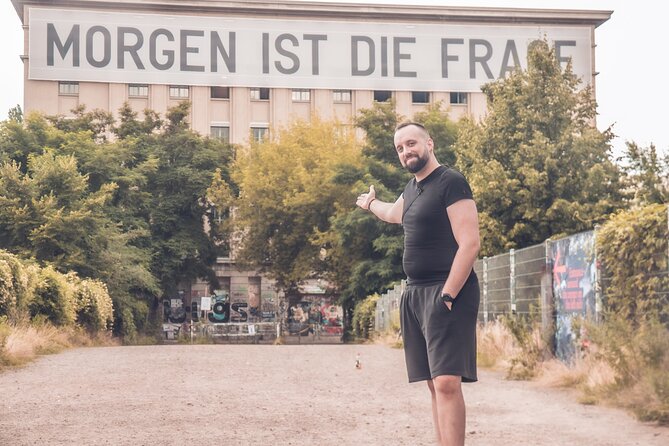
The final stop is RAW-Gelände, near Warschauer Straße, a site with clubs and cultural venues including Suicide Circus, Haubentaucher and Astra Kulturhaus. The area has played a major role in Berlin’s alternative culture, but it also faces the pressures of gentrification. The tour discusses losses such as Watergate and Grießmühle, along with the challenges facing ://aboutblank.
In about 10 minutes, the guide also connects RAW to Berlin’s long history of open-air raves and the ways these events helped reclaim techno culture. It is a fitting finish: the story comes back to the tension between a scene’s ability to create new spaces and the forces that can later threaten them.
The tour ends near the Warschauer Straße train stop. You finish in a part of the city where you can continue exploring, but the experience does not include a club night or a recommendation that any one venue will be open or admitting people at a particular time.
What the augmented reality adds
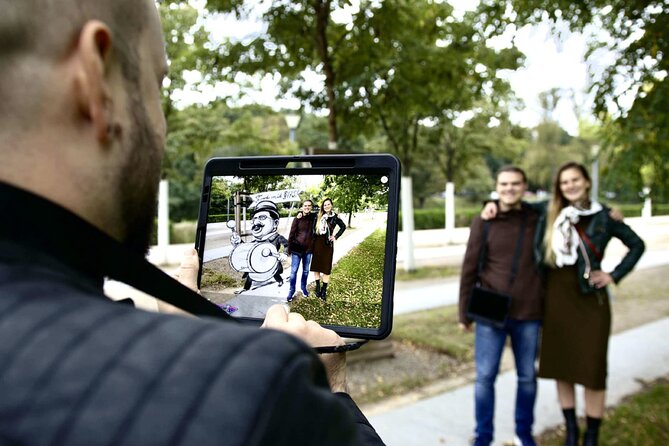
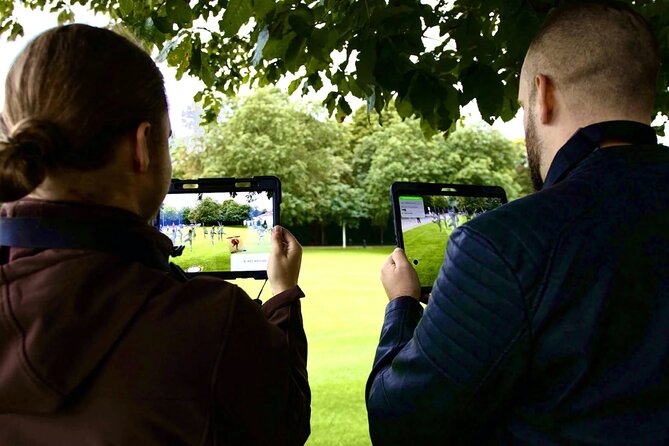
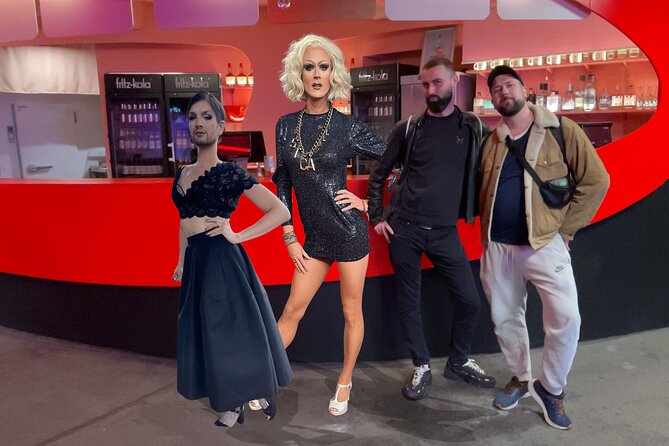
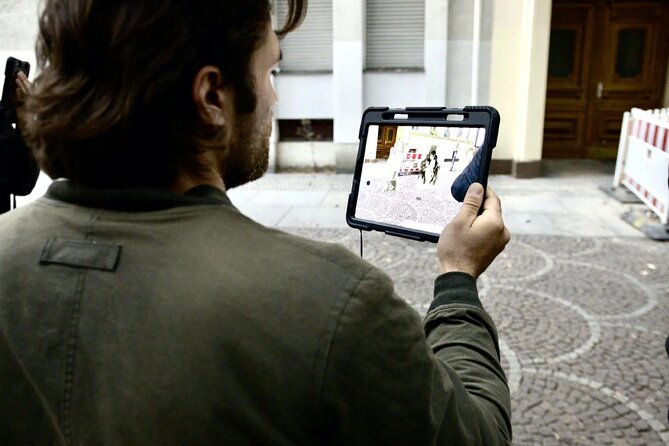
The tour includes more than 200 photos, videos, quotes and audio clips, plus augmented reality segments and Mixies, personalized photos with AR elements. Feedback about the iPad presentation points to historical footage, quizzes and interactive material as useful additions to the guide’s explanations.
I can see why this format suits a subject where buildings and scenes have changed over time. A photo or video can help you picture what a venue or movement looked like when a story took place. The technology is a supplement, though, not the main event. The strongest parts remain the guide’s explanations and the links between music, politics and community.
The AR features may appeal if you like visual, participatory tours. If you prefer a simple walk and conversation, the screen elements may feel less essential. You can still get value from the route’s stories, but the multimedia is a central part of how this tour presents them.
Is $81.98 good value?
At $81.98 per person, this costs more than a basic neighborhood walk. You are paying for a specialized, small-group account of Berlin nightlife, an expert guide, multimedia material and the possibility of exclusive behind-the-scenes access at a world-famous club. That access is subject to availability, so do not base the purchase on a guaranteed private visit.
The value is strongest if you want context that would be hard to assemble by hopping between clubs on your own. The route connects nine places and several movements, while the cap of 10 gives you a better chance to ask questions. The tour’s 4.9 rating and 96 percent recommendation figure are strong, though the total is based on 28 ratings, so treat the numbers as a useful signal rather than a promise.
There is one operational caution worth keeping in mind. A guide once reported that a cancellation email did not reach a participant, leaving them waiting at the meeting point before they obtained a refund. The guide said illness had prompted the cancellation. This appears to be an isolated problem, but I would check your messages before leaving and make sure you have the meeting details handy.
Who should book this club tour?
Book it if you are curious about Berlin beyond the dance floor, especially if queer history, punk, techno, activism or the politics of urban change interest you. It also suits first-time clubbers who want a better sense of what different venues represent before choosing where to go at night. People who have already visited some of these sites can still learn something new from the historical connections and visual material.
It is less suited to anyone expecting a night of dancing, guaranteed entry to famous clubs or a long visit inside every venue. The tour is a guided introduction with short stops, not a pub crawl. At roughly 3.5 hours, it asks you to spend a substantial part of the day walking or moving between locations, so bring a valid public transport ticket and dress for the weather.
The advertised start is 11:30 am at SchwuZ, Rollbergstraße 26. The route ends at RAW-Gelände, Revaler Straße 99, close to Warschauer Straße. The group is limited to 10, service animals are allowed, and most people can participate. Book this for the stories and the city context, then choose your own club night afterward.
FAQ
How long does the tour last?
It lasts about 3 hours and 30 minutes.
Where does the tour start?
It starts at SchwuZ, Rollbergstraße 26, 12053 Berlin.
What time does it begin?
The listed start time is 11:30 am.
Where does the tour end?
It ends at RAW-Gelände, Revaler Straße 99, 10245 Berlin, near the Warschauer Straße train stop.
How many people can join?
The maximum group size is 10 people.
Do I need a public transport ticket?
Yes. Public transport is not included, and you need to bring a ticket to join the tour.
Is club entry included?
An admission ticket is included for the SchwuZ stop. Exclusive behind-the-scenes access to a world-famous club is subject to availability. The tour does not promise entry to every venue.
What is included in the tour?
The tour includes an expert guide, more than 200 photos, videos, quotes and audio clips, augmented reality, and Mixies, personalized photos with AR elements.
Can I cancel for a refund?
You can cancel at least 24 hours before the start time for a full refund. Cancellations or changes made less than 24 hours before the start are not accepted. If poor weather or too few bookings cause the tour to be canceled, you will be offered another date or a full refund.
Newest tours in Berlin
- Berlin: guided canoe | kayaktour★ 4.1 · 7 reviews
- Understanding Kreuzberg: The roots of local (sub)culture★ 4.9 · 11 reviews
- Where It All Began: Berlin’s Queer & Trans History Tour★ 4.9 · 6 reviews
- Warnemünde Shore Excursion: Private Sachsenhausen and Berlin Tour★ 5.0 · 12 reviews
- Ultimate E-Bike Tour of Berlin with Beer Garden Stop★ 5.0 · 4 reviews
- Potsdam Highlights – Private sightseeing tour by minibus★ 5.0 · 3 reviews
- Private Potsdam City Tour in an authentic vintage van★ 5.0 · 14 reviews
- Transfer from Berlin Schönefeld Airport (SXF) to Berlin city Hotels – ROUND TRIP★ 4.0 · 3 reviews
Berlin Nightlife Tours, compared.

Quatsch Comedy Club Berlin: Die Live Show Entry Ticket
Read our review →
Bar & Party Tour with Free Shots & VIP Club Access
Read our review →

Exclusive Bar-Hopping Tour with Signature Drinks
Read our review →
Browse the lists this tour appears in