
Reviewed · BERLIN BUS TOURS
Berlin: Sightseeing Tour in Classic Volkswagen T1 Samba Bus
Berlin’s big sights take on a different feel from the 21 windows of a 1965 Volkswagen T1 Samba bus. In two hours, you pass from the museums of the old center to the Brandenburg Gate, the Wall, and the TV Tower, while a guide links the buildings to nearly 800 years of city history.
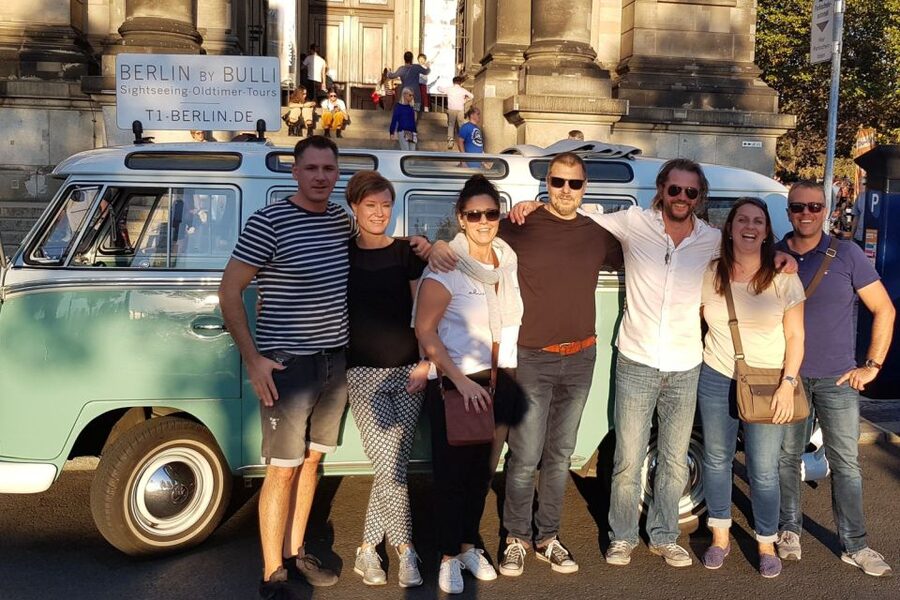
I like two things especially: the small group of no more than seven makes conversation and questions easier than on a large coach, and the photo booklet lets you compare selected places with how they looked in the past. The bus itself is part of the pleasure: a lovingly maintained vintage vehicle, warm when needed, and a conversation starter as it winds through town.
The trade-off is that this is a moving overview, not a stop-and-explore visit. Almost every sight is passed from the bus, so you will need to return on your own to enter museums, walk the memorial grounds, or spend time at the landmarks.
- A 1965 Samba bus with 21 windows gives the route a memorable, close-up feel.
- Around 45 places in two hours offer a quick map of Berlin’s old center, West Berlin, and government quarter.
- Live English or German commentary adds local detail, though the tour may use more than one language.
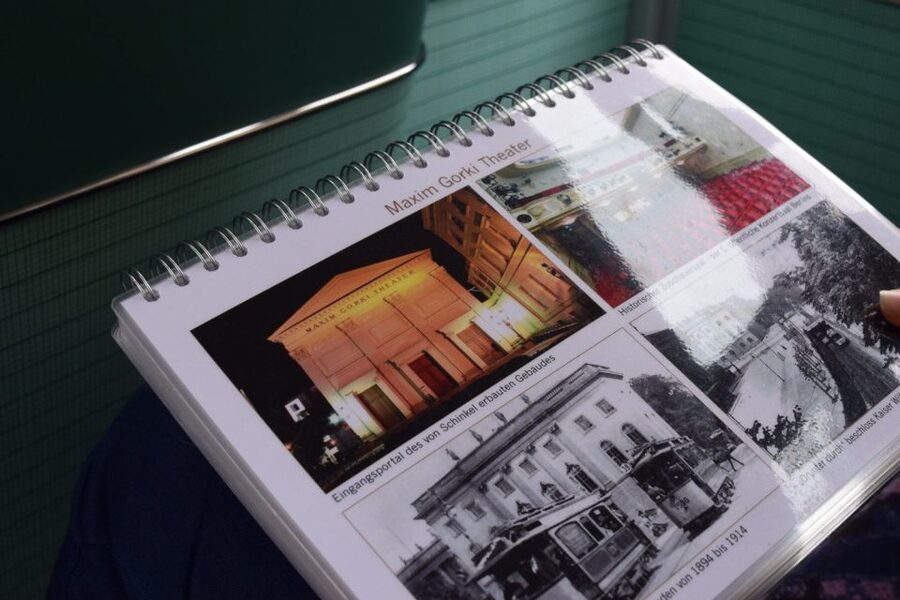
- A photo booklet helps show how selected buildings and locations once appeared.
- Side streets are part of the plan, giving you a glimpse beyond the main avenues.
- At $51 per person, the value rests on the personal guide, unusual transport, and broad coverage, rather than time spent at each stop.
A small bus for a very large city

The appeal is easy to understand: Berlin is spread out, and its most famous sights sit across several districts. This two-hour circuit turns that geography into a clear first look, without asking you to navigate public transport between every landmark. You ride in a classic split-window VW, hear live commentary, and see the city unfold in a compact sequence.
The group is capped at seven, a big difference from a standard sightseeing coach. You can ask questions, and the guide can shape the commentary around the group. Past guides have included Rajko and Michael, both singled out for warmth, humor, and strong command of Berlin’s past. Guide assignments can change, so don’t book expecting a particular person.
The route is designed for coverage, not an exhaustive visit to every site. You pass museums, memorials, government buildings, shopping streets, and major squares, but the bus does not provide time to get out at each one. Think of it as a guided orientation with a vintage-vehicle bonus.
From Museum Island to Unter den Linden
The tour begins at Berlin Cathedral and moves through Lustgarten and Museum Island. From the bus, you pass the Alte Nationalgalerie, Neues Museum, Pergamon Museum, and Bode Museum, along with other cultural landmarks. This is a concentrated introduction to one of Berlin’s most recognizable clusters of museums and historic buildings.
You also pass the German Historical Museum, Neue Wache, Crown Prince’s Palace, Humboldt University, and the State Opera. The sequence helps connect Berlin’s cultural institutions with the formal avenue of Unter den Linden. The guide’s commentary and photo booklet are useful here: a building’s facade may look impressive on its own, but a comparison image can make its earlier appearance easier to picture.
At Bebelplatz and along Unter den Linden, the city’s layers come quickly. You will see more than you can absorb in detail during a single pass. If a museum or building catches your eye, note its name and plan a separate visit rather than expecting to study it from the bus.
More bus tours in Berlin:
- Berlin: Hop-on Hop-off Bus Tour with Live Commentary
★ 4.3 · 8,579 reviews - Berlin: City Sightseeing Hop-On Hop-Off Bus Tour
★ 4.1 · 4,233 reviews - Berlin: Hop-On Hop-Off Sightseeing Bus with Boat Options
★ 4.3 · 4,012 reviews
Brandenburg Gate and the government quarter
The route reaches Pariser Platz and the Brandenburg Gate, then continues past the Reichstag, government district, Federal Chancellery, and Berlin Central Station. This gives you a useful look at Berlin as a present-day capital as well as a city of older monuments. You see official buildings and contemporary infrastructure in the same stretch.
The Brandenburg Gate is a highlight, but it is a pass-by, not a visit. You will not have time here to walk around the square or take a close look at the structure. The advantage is that the bus keeps moving, giving you a broader view of central Berlin in a short window.
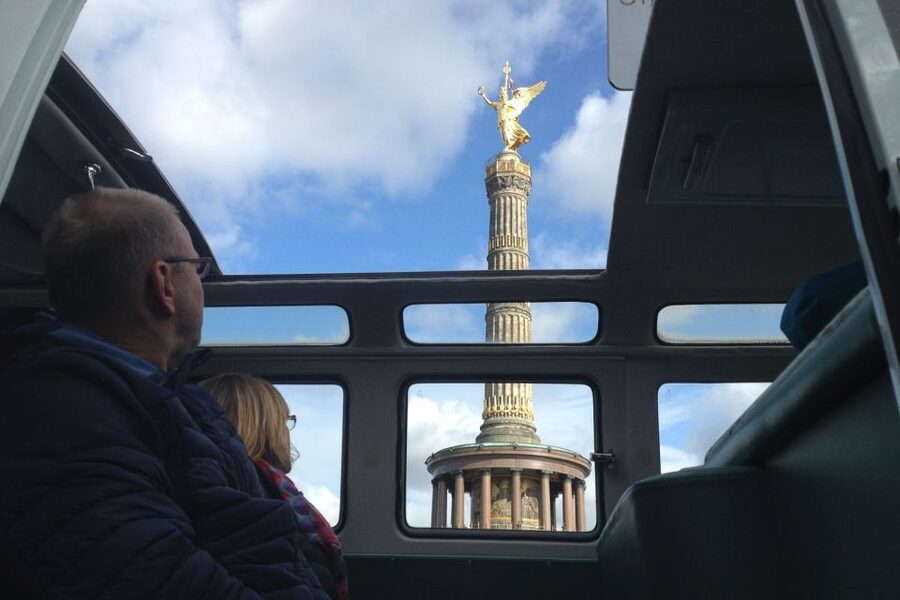
The tour then goes by Bellevue Palace, the Victory Column, and the Berlin Zoo. The guide can help explain how these landmarks fit into the city, while the photo booklet adds another way to compare past and present. Since there are no planned stops in the route details, don’t count on getting out for photographs.
West Berlin by way of Savignyplatz and Ku’damm
After the government quarter, the bus heads toward Theater des Westens, Savignyplatz, and Kurfürstendamm. This part of the drive shifts the mood from monumental central Berlin to familiar streets, shops, and neighborhood landmarks. You pass Kaiser Wilhelm Memorial Church and KaDeWe, then continue toward the embassy district and the Berliner Philharmonie.
For a first-time visitor, the westward sweep matters because Berlin is not one compact old town. The tour helps you see how the center, western shopping district, and government area relate to one another. The route also passes Kulturforum and Potsdamer Platz, offering a quick contrast between cultural institutions and a modern city hub.
The limitation is the same throughout: seeing a place from a moving bus is not a substitute for walking it. Kurfürstendamm and KaDeWe, for example, are better explored on foot if shopping or architecture is your priority. Use this portion to decide what deserves a return visit.
The Wall, Checkpoint Charlie, and Berlin’s difficult past
The bus passes Potsdamer Platz and a section of the Berlin Wall, then follows Niederkirchner Straße and the site of Anhalter Bahnhof. It also goes by the Holocaust Memorial, Friedrichstraße, and Checkpoint Charlie. These locations carry some of the tour’s most weighty history, and the guide’s narration is central to making the connections clear.
The photo booklet is especially relevant on a route like this. It gives you a visual reference for selected places, helping you picture how the city looked at earlier points in its history. It is not a substitute for a museum or a long visit at a memorial, but it can make a brief view more legible.
The Holocaust Memorial is passed rather than explored on foot, so allow time to return if you want to walk through it. The same goes for Checkpoint Charlie and the Wall. The quick drive-by is best treated as a preview, not a complete account of Berlin’s twentieth-century history.
Same city, a different kind of day:
- Berlin: Reichstag, Dome and Government District Guided Tour
★ 4.7 · 18,288 reviews - Berlin: 1-Hour City Tour by Boat with Guaranteed Seating
★ 4.3 · 16,993 reviews - Berlin: Boat Tour Along the River Spree
★ 4.4 · 11,252 reviews - Discover Berlin Half-Day Walking Tour
★ 5.0 · 9,624 reviews
Gendarmenmarkt, the palace, and the return to the Cathedral

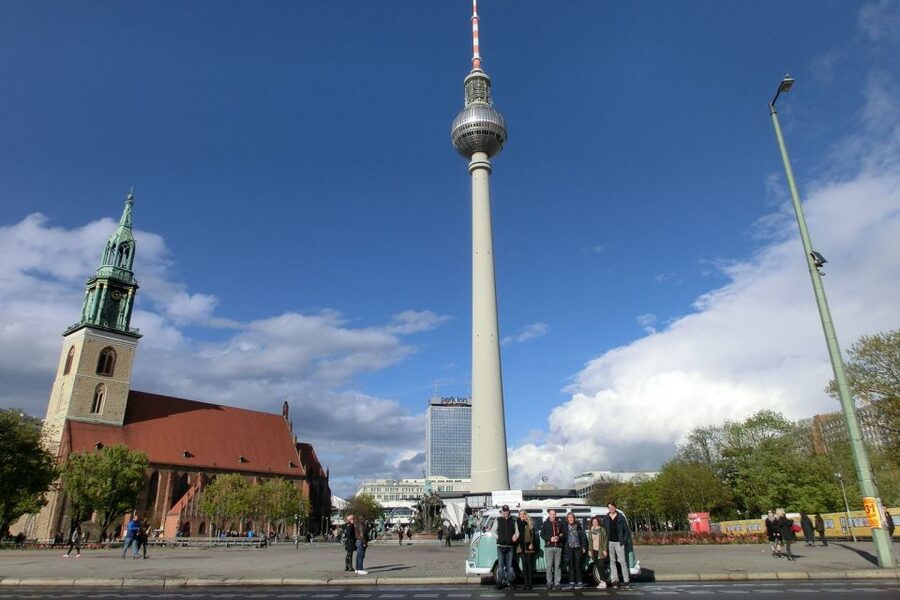
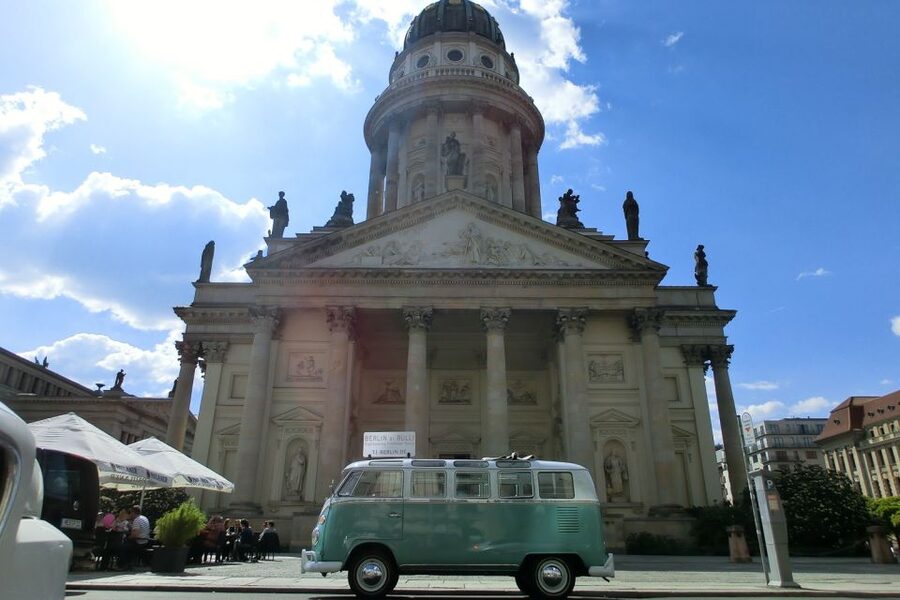
The final section passes Gendarmenmarkt, Berlin Palace, Jungfern Bridge, and Galgenhaus before reaching Rotes Rathaus, the TV Tower, Neptune Fountain, and St. Mary’s Church. It brings the circuit back toward the Cathedral, completing a broad loop through central Berlin.
This final run offers another mix of architectural styles and city eras. The TV Tower is one of the route’s most recognizable modern landmarks, while the nearby historic sights return you to the older core. Because the stops follow in quick succession, it helps to listen for names and landmarks rather than trying to memorize every building at once.
The route lists roughly 45 places, but that number can sound more thorough than the experience really is. You see a wide range of Berlin, not 45 separate visits. The two-hour format is a strength for orientation and a limit for detail.
What the vintage bus adds
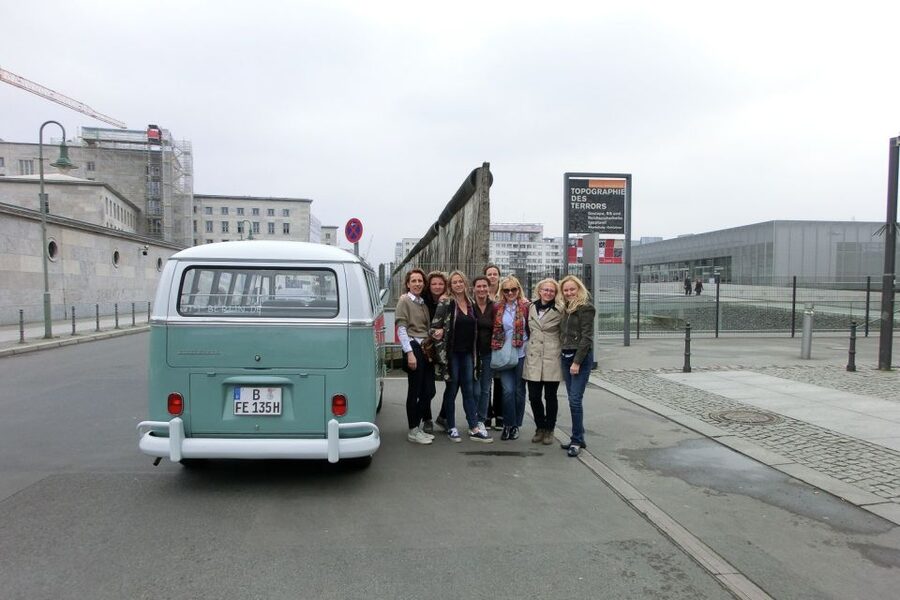
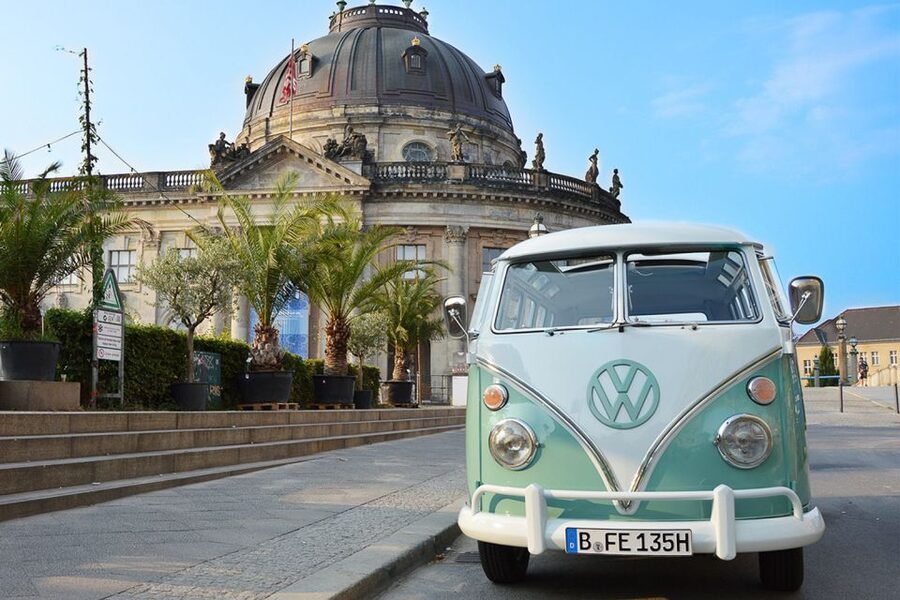
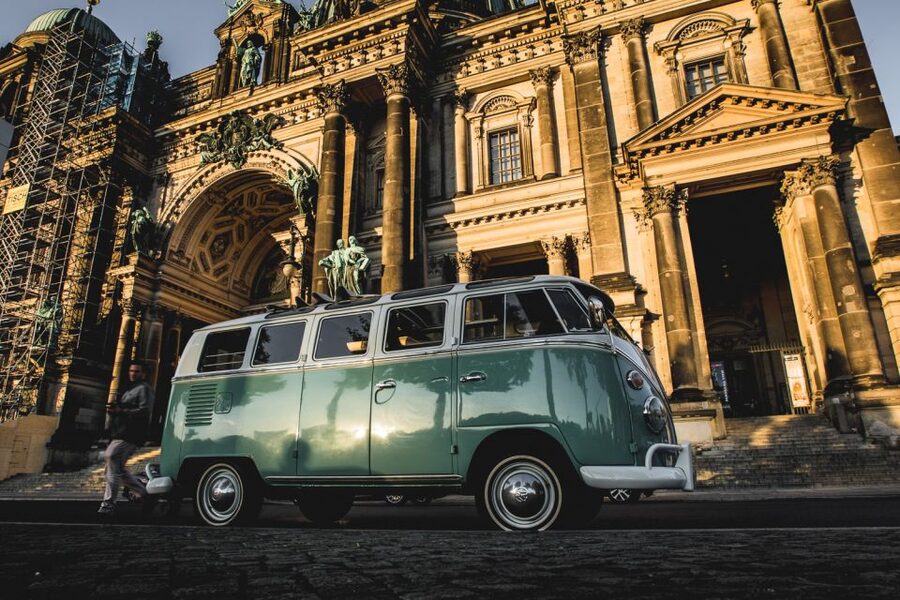
The T1 is more than a prop. Its compact size and 21 windows create a more personal way to view the streets than a large coach, and its distinctive shape draws smiles from people outside as it passes. The vehicle is described as restored and well maintained, and several past riders have found it surprisingly comfortable.
Comfort depends partly on the weather and your own needs. Heating is provided when necessary, and the bus has been used successfully in cold winter conditions. In warm weather, an older vehicle may feel hot; one past rider noted that the heat could not be adjusted, so this is worth considering if you are sensitive to warmth.
The small group also makes the guide’s narration easier to follow and the ride feel less anonymous. The guide drives while giving live commentary, so there is a balance between hearing the story and watching the street. The tour may be conducted in more than one language, which can slow the pace of the narration.
Is $51 good value?
At $51 per person, this is not the cheapest way to see Berlin. You are paying for more than transport, though: the vintage Samba bus, a live guide, a small group, and a route that spans a lot of ground in two hours. The compact format is particularly useful if you have limited time or want a clear overview before setting out on your own.
The value depends on what you want. If you prefer to get off often, enter attractions, or spend time at memorials, a walking tour or self-guided day may suit you better. If you want to see many districts without organizing each connection, and enjoy hearing context as you go, the price is easier to justify.
The rating is 4.9 from 993 reviews, and transport has received especially high marks. The strongest praise centers on the bus, the guides’ historical storytelling, and the amount of ground covered. That pattern matches the tour’s design: it works best when you value the ride and narration as much as the sightseeing.
Practical details before you book
The tour lasts two hours and starts and ends at Berlin Cathedral. Commentary is offered in English or German, but the experience may use more than one language. If you need a single-language tour, check before booking rather than assuming every departure is monolingual.
The activity is listed as wheelchair accessible, but non-folding wheelchairs are not allowed. It is not suitable for people with epilepsy, people with a cold, or people over 275 pounds (125 kilograms). Intoxication and glass objects are also prohibited. These are specific restrictions, so consider them carefully before reserving.
You can cancel up to 24 hours in advance for a full refund, and a reserve-now, pay-later option is available. Starting times vary, so check availability for your dates.
Who will enjoy this ride most?
I’d put this near the start of a Berlin stay. It can give you a useful mental map, identify places you want to revisit, and introduce the city’s history before you begin exploring on foot. Some people take it later in their trip and use the narration to add context to sights they have already seen, but the orientation benefit is strongest early.
It suits couples, families, and anyone who likes historic vehicles or wants an engaging alternative to a large sightseeing bus. A family of six may even find the group limit gives them the bus to themselves, depending on the booking. It is less suited to visitors who need frequent stops, want to enter museums on the tour, or are uncomfortable in a small, older vehicle.
Should you book the VW Samba tour?
Book it if you want an easy, personal overview of Berlin, enjoy vintage transport, and are happy to see most sights from the road. The guide and photo booklet add real value, especially for a first visit, and the route takes in far more than the central landmarks.
Skip it if your priority is walking through monuments, spending time inside museums, or stopping for photographs at each major sight. For everyone else, this is a memorable way to get your bearings, with the sensible plan of choosing a few places to explore properly afterward.
FAQ
Where does the tour start and finish?
It starts and ends at Berlin Cathedral.
How long is the sightseeing tour?
The tour lasts two hours.
How many people can join?
The small group is limited to seven participants.
What languages are available?
Live commentary is offered in English and German. The tour may be conducted in more than one language.
Does the tour stop at the landmarks?
The listed route passes the sights from the bus. It is a sightseeing drive rather than a series of visits on foot.
What is included in the price?
Transportation in the Volkswagen T1 Samba bus, a driver-guide, live commentary, a photo booklet, and heating when necessary are included.
Is the bus wheelchair accessible?
The activity is listed as wheelchair accessible, but non-folding wheelchairs are not allowed.
Who is the tour not suitable for?
It is not suitable for people with epilepsy, people with a cold, or people over 275 pounds (125 kilograms).
Can I cancel for a refund?
You can cancel up to 24 hours in advance for a full refund.
Newest tours in Berlin
- Berlin: guided canoe | kayaktour★ 4.1 · 7 reviews
- Understanding Kreuzberg: The roots of local (sub)culture★ 4.9 · 11 reviews
- Where It All Began: Berlin’s Queer & Trans History Tour★ 4.9 · 6 reviews
- Warnemünde Shore Excursion: Private Sachsenhausen and Berlin Tour★ 5.0 · 12 reviews
- Ultimate E-Bike Tour of Berlin with Beer Garden Stop★ 5.0 · 4 reviews
- Potsdam Highlights – Private sightseeing tour by minibus★ 5.0 · 3 reviews
- Private Potsdam City Tour in an authentic vintage van★ 5.0 · 14 reviews
- Transfer from Berlin Schönefeld Airport (SXF) to Berlin city Hotels – ROUND TRIP★ 4.0 · 3 reviews
Berlin Bus Tours, compared.


Hop-On Hop-Off Sightseeing Bus with Boat Options
Read our review →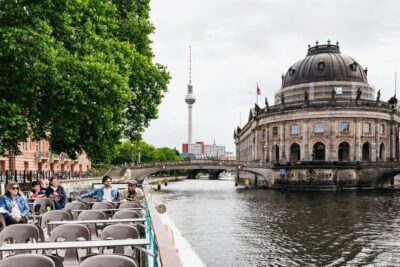

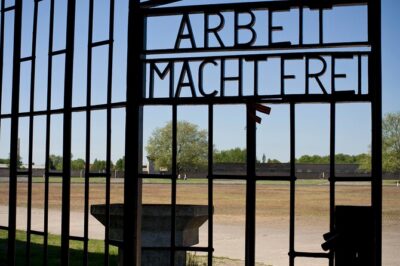
Sachsenhausen Concentration Camp Bus Tour in English from Berlin
Read our review →
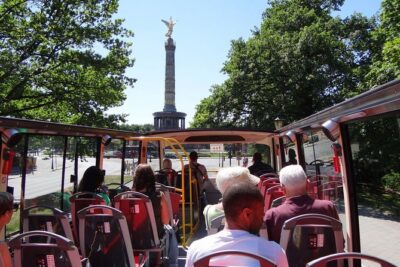
Berlin City Hop-on Hop-off Tour with Optional Cruise
Read our review →Browse the lists this tour appears in