
Reviewed · BERLIN WALL TOURS
Berlin Wall: City Tour of Divided Germany
Berlin’s old border makes most sense when you follow it through the city, not just look at a piece of concrete. This two-hour tour connects Friedrichstrasse station, the Brandenburg Gate, Potsdamer Platz and Checkpoint Charlie, showing how division cut through places people used every day.
I like two things in particular: the route ties well-known landmarks to the border that once ran past them, and the guides have earned praise for personal stories and a focused, intensive style. Names reported for guides include Stefan and Stephan, though you should not assume either will lead your departure.
One consideration: the tour is in German only, and the price covers the city tour, not a stated admission to any attraction. You’ll also want comfortable shoes; the itinerary follows several stops across central Berlin, and two hours can feel brisk.
Key points before you book
- Start at the Palace of Tears: Meet at its single entrance, in front of Friedrichstrasse station.
- See the border in the city’s layout: The route links the Spree, government district, Brandenburg Gate and Potsdamer Platz.
- Hear about daily life and individual fates: The tour focuses on how the division shaped ordinary routines as well as the city itself.
- Finish with major Wall landmarks: The itinerary includes a long surviving stretch of the Wall and Checkpoint Charlie.
- Plan for German and walking: The tour language is German, and comfortable shoes are recommended.
- Allow two hours: One past tour ran an hour longer, but that is not a standard duration to count on.
Reading Berlin’s border from Friedrichstrasse
The meeting point is the entrance to the Tränenpalast, or Palace of Tears, outside Friedrichstrasse station on Reichstagufer. It is a fitting place to start: the station was a key border crossing during the Cold War, and the tour frames it as the single border station of its kind. The building’s name hints at the human side of a boundary that reached well beyond checkpoints and maps.
Starting here gives you a useful question to carry through the walk: what did division mean for people trying to get across town, meet family or carry on with ordinary life? The tour is built around that everyday scale. Rather than treating the Wall as a stand-alone monument, it traces the boundary through places where transport, government, memorials and public space meet.
The Palace of Tears has only one entrance, so the meeting point is straightforward to identify. Still, arrive with enough time to find the entrance and gather before the start. The experience includes a city tour, but no separate attraction admission is listed as included.
The experience is in German. That matters more here than it might on a tour focused mainly on views: the promised value is in the guide’s explanations and stories. If you do not understand German, you may miss much of the context that connects each site to life in divided Berlin.
More Berlin Wall tours in Berlin:
- Skip-the-Line: Berlin Wall Museum at Checkpoint Charlie
★ 4.1 · 2,041 reviews - Berlin: East Side Gallery Spree Cruise in a Solar Catamaran
★ 4.0 · 1,039 reviews - Cold War, Berlin Wall, Spies and the East Side Gallery
★ 5.0 · 1,024 reviews
Following the Spree into the government district
From Friedrichstrasse, the route follows the Spree toward the parliament and government district. Some government buildings stood along the former border strip, making this stretch a reminder that the division did not neatly avoid the city’s most important institutions. A walk through the area puts the border into a working urban setting rather than isolating it as a relic.
I like this part of the itinerary because it helps you see how much the old line shaped the city’s geography. A border can sound abstract when described in a book. Here, the route connects it to actual buildings and streets, and to the fact that the line passed through a district central to public life.
The Spree also gives the walk a change of pace from station and street scenes. You are still following a history tour, not taking a river cruise, so the value is in how the guide explains the surrounding places. Listen for the links between the border zone and the city’s later government district; that connection helps make the route feel coherent.
Brandenburg Gate, once divided ground
The Brandenburg Gate is the tour’s most instantly recognizable stop, but its meaning here is not simply architectural. The border ran at the gate, turning a familiar city landmark into a symbol of division and of Berlin’s fate. Seeing it in that context changes the way you read the space around it.
This stop works well as a pivot in the story. The tour begins with a crossing point and then follows the border toward a monument that represents the split on a citywide scale. The guide can connect the broad political story to the places you are standing in, which is more useful than treating the gate as a photo stop alone.
Expect other people around a famous central landmark, and give yourself a moment to take in the setting before moving on. The experience is limited to two hours, so the guide will need to keep the group moving. If you want a long, unhurried visit at every stop, this compact format may not be the right fit.
The Holocaust Memorial and the former death strip
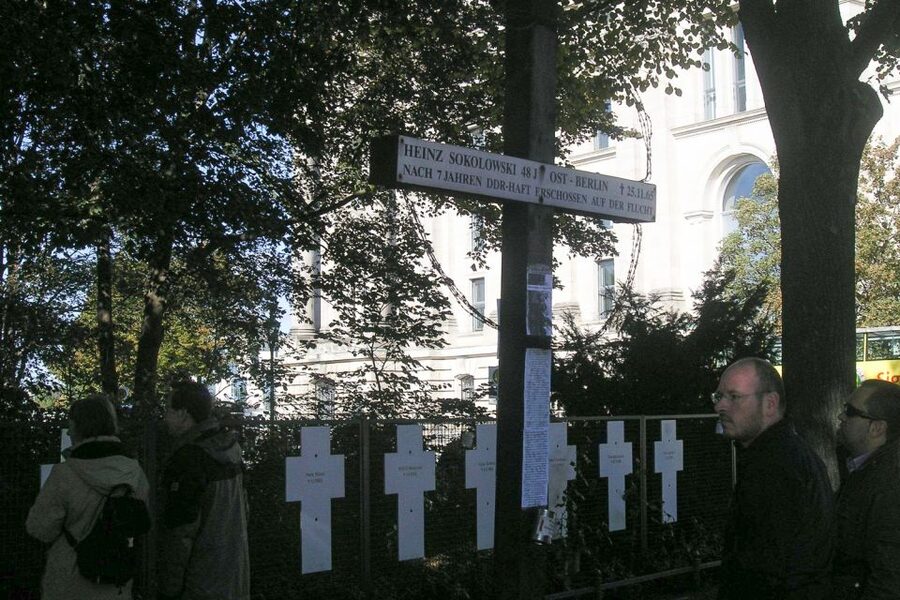
From the Brandenburg Gate, the route goes to the Holocaust Memorial, located at the former death strip. That pairing calls for care: the memorial commemorates the murdered Jews of Europe, while the tour also places the site within the geography of Berlin’s division. The two histories are distinct, and the value of the stop is in understanding the ground beneath your feet without flattening either story.
The former death strip is a stark reminder that the border was not just a line separating political systems. It created a controlled zone with serious consequences for anyone trying to cross. The itinerary’s attention to the fate of Berlin’s people gives this section a human focus, rather than leaving the Wall as a military or architectural subject.
This is likely one of the tour’s more reflective moments. A group walk can help make the larger geography clear, but it cannot replace a longer visit to the memorial. If the memorial is important to you, consider allowing separate time to explore it at your own pace.
More city tours in Berlin:
- Berlin: 1-Hour City Tour by Boat with Guaranteed Seating
★ 4.3 · 16,993 reviews - Berlin: City Sightseeing Hop-On Hop-Off Bus Tour
★ 4.1 · 4,233 reviews - Potsdam: City and Castles Tour
★ 4.7 · 3,721 reviews - Berlin: 1-Hour City Sightseeing Cruise
★ 4.4 · 2,210 reviews
Potsdamer Platz and the divided city’s visible seam
Potsdamer Platz offers another way to read the old division. The tour points out that the split is especially visible in the former Tiergarten Triangle. Rather than simply naming a major square, the guide uses the area to show how the city’s separation left a mark on its shape and development.
This is a useful contrast with the Brandenburg Gate. The gate is a powerful symbol; Potsdamer Platz makes the division legible in the arrangement of the city. You can connect the border story to a place that now functions as a prominent urban hub, and consider how the same ground carried a very different meaning when the city was split.
The tour’s route gives you a quick overview rather than an extended study of each neighbourhood. That is a fair trade for a two-hour experience: you get a connected outline of central Berlin’s border history, then can return to the places that catch your interest. Take note of the locations you may want to revisit.
A surviving Wall stretch and Checkpoint Charlie
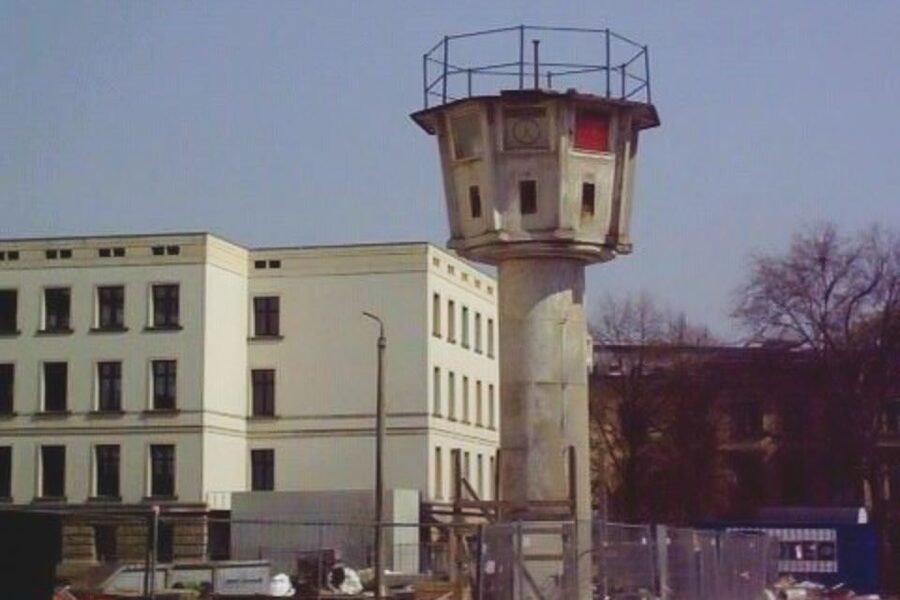
The itinerary includes the longest remaining stretch of the Wall, followed by the world-famous Checkpoint Charlie. The surviving section gives you a direct encounter with the physical barrier. Its length helps convey scale in a way a small fragment cannot, though the tour’s value lies just as much in the explanation of what the Wall meant to people on either side.
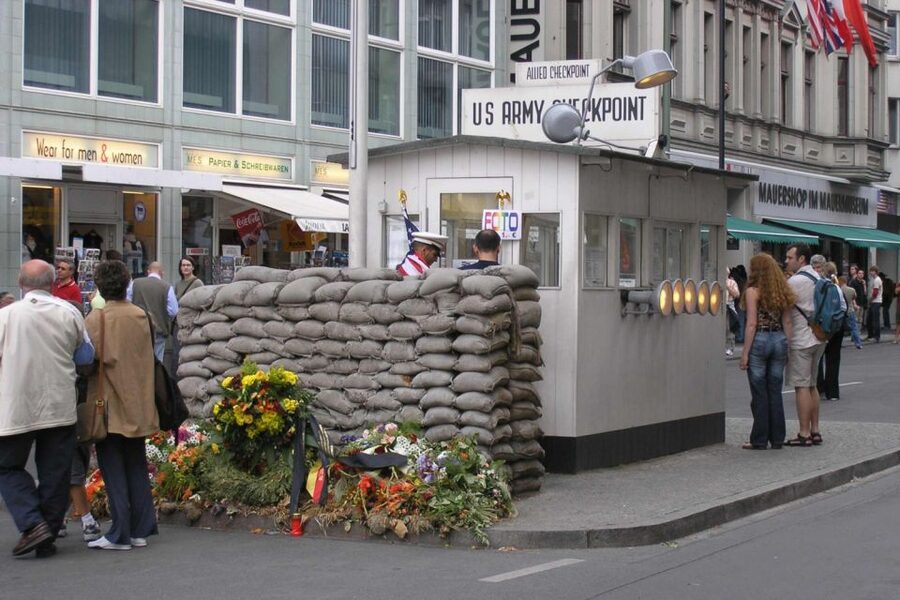
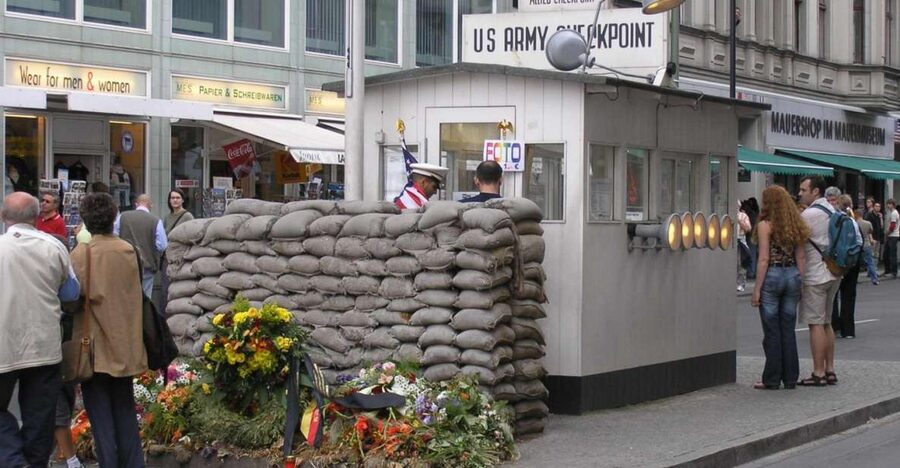
Checkpoint Charlie is one of the best-known names associated with Berlin’s division. It makes a fitting final stop because it brings the route back to the mechanics of crossing and control. The tour’s earlier stops have already shown how the border touched stations, government buildings, memorial ground and a major city square; here, the checkpoint gives that story a clear focal point.
Fame has a downside: a famous site can feel more like a landmark to tick off than a place with a difficult past. The guide’s account is what can put it back in context. The strongest moments of this tour seem to come from personal detail, so use this stop to ask yourself how the checkpoint fits the broader story you have heard along the way.
What the guides add to a two-hour tour
The most praised feature of the experience is the quality of the guiding, especially personal accounts and information that is not easy to pick up from a quick look at the sites. Past tours have been led by guides named Stefan and Stephan. The spellings vary, and neither name is a promise about who will be assigned to your tour.
One past participant described a small group and an especially intensive walk, with the guide extending it by an hour. That is encouraging if you value an engaged, story-led outing, but do not plan your day around an extension. The stated duration is two hours, and the group size is not guaranteed.
The best way to get value from the guide is to think beyond dates and famous names. Pay attention to how the border changed ordinary routines, how the city’s geography reflected the split, and how individual lives intersected with the larger political story. This is the difference between seeing several landmarks and understanding why they belong together.
Is $21 good value?
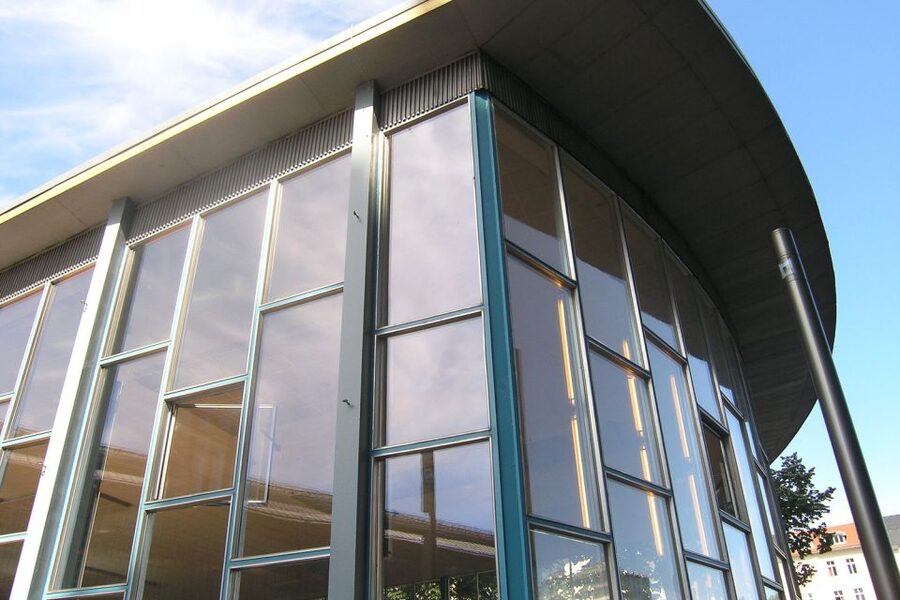
At $21 per person, the tour is a modestly priced way to connect several major sites in central Berlin with the history of division. You are paying for a guided city tour lasting two hours, not for a ticketed attraction or a full-day programme. The value is strongest if you want a compact overview and a guide to help interpret places you may otherwise pass without understanding.
The route covers a lot in a short time: Friedrichstrasse station, the Spree and government district, Brandenburg Gate, the Holocaust Memorial, Potsdamer Platz, the surviving Wall and Checkpoint Charlie. That breadth makes the tour a practical first introduction. It also means there is limited time to linger at each location, so think of it as a connected orientation rather than an exhaustive history course.
The rating is high, and the most consistently praised qualities are informative guiding, personal stories and an intensive experience. Those qualities matter because the itinerary itself is made up of public places. You are not buying access to a special interior; you are buying the context that helps the streets and landmarks make sense.
The tour also offers free cancellation up to 24 hours in advance and a reserve-now, pay-later option. Those terms make it easier to keep plans flexible, though they do not change the tour’s language or two-hour format.
Who should book this Berlin Wall tour?
I’d choose this tour if you want to understand how the Wall shaped central Berlin and prefer stories tied to actual streets and landmarks. It suits anyone with an interest in the Cold War, divided cities or the human cost of borders, especially if you have only a short window for a guided introduction.
It is also a good match if you enjoy a brisk route with several linked stops. Comfortable shoes are a sensible choice, and you should be ready to spend the full tour listening in German. If you want an English-language guide, a private visit, a guaranteed small group or long time at each site, those details are not offered here.
Book it if German works for you and you want a compact, personal account of divided Berlin. Skip it if you need English commentary or prefer to explore each landmark at length. Either way, the route gives you a practical set of places to revisit with a sharper sense of what the city’s former border meant.
FAQ
Where does the tour meet?
Meet at the entrance of the Tränenpalast, in front of Friedrichstrasse station on Reichstagufer, 10117 Berlin. The Palace of Tears has only one entrance.
What language is the tour in?
The live tour guide speaks German. No other tour language is specified.
How long is the tour?
The stated duration is two hours. One past tour ran an hour longer, but you should plan around the two-hour schedule.
What places are included on the route?
The route includes Friedrichstrasse station, the Spree and government district, Brandenburg Gate, the Holocaust Memorial at the former death strip, Potsdamer Platz, a long remaining stretch of the Wall and Checkpoint Charlie.
What should I bring?
Comfortable shoes are recommended.
Can I cancel or pay later?
You can cancel up to 24 hours in advance for a full refund. A reserve-now, pay-later option is also available.
Newest tours in Berlin
- Berlin: guided canoe | kayaktour★ 4.1 · 7 reviews
- Understanding Kreuzberg: The roots of local (sub)culture★ 4.9 · 11 reviews
- Where It All Began: Berlin’s Queer & Trans History Tour★ 4.9 · 6 reviews
- Warnemünde Shore Excursion: Private Sachsenhausen and Berlin Tour★ 5.0 · 12 reviews
- Ultimate E-Bike Tour of Berlin with Beer Garden Stop★ 5.0 · 4 reviews
- Potsdam Highlights – Private sightseeing tour by minibus★ 5.0 · 3 reviews
- Private Potsdam City Tour in an authentic vintage van★ 5.0 · 14 reviews
- Transfer from Berlin Schönefeld Airport (SXF) to Berlin city Hotels – ROUND TRIP★ 4.0 · 3 reviews
Berlin Wall Tours, compared.
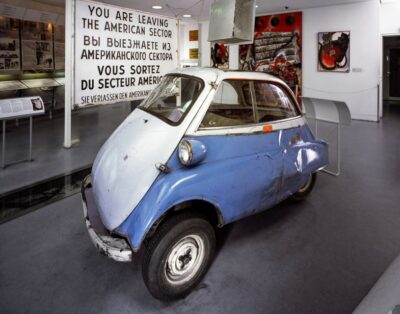
Skip-the-Line: Berlin Wall Museum at Checkpoint Charlie
Read our review →
East Side Gallery Spree Cruise in a Solar Catamaran
Read our review →
Cold War, Berlin Wall, Spies and the East Side Gallery
Read our review →
Guided Bike Tour of the Berlin Wall and Third Reich
Read our review →
Browse the lists this tour appears in