
Reviewed · BERLIN RICKSHAW TOURS
Individual City Tour – Rickshaw Sightseeing in Berlin
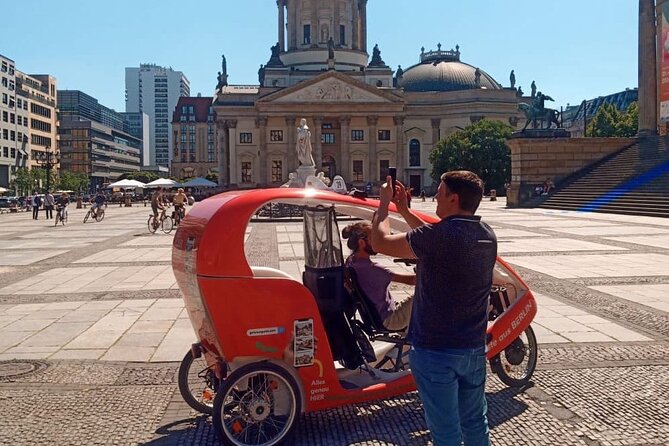
Berlin’s big sights are spread across a city shaped by centuries of change, and a private rickshaw can connect them without asking you to cover every mile on foot. Your guide pedals through central streets and tucked-away courtyards, bringing you close to places a bus can only pass at a distance.
I like two things in particular: you can tailor the route to your interests, and the small rickshaw can reach spots that larger vehicles cannot. Guides such as Leo have also helped families, older visitors and people with sore knees see a lot without a long walk.
The trade-off is that this is an overview, not a deep visit to each landmark. Most stops are brief, the ride lasts about one to three hours, and Berlin’s weather can feel sharp when you’re sitting still, though a warm blanket is provided in cold weather.
At a glance
- A private ride for your party: No other group shares the rickshaw.
- A broad central Berlin route: The listed sights include Alexanderplatz, Checkpoint Charlie, the Tiergarten and Brandenburg Gate.
- Flexible pacing: Ask to adapt the route, pause for photos or focus on the places that matter most to you.
- A useful option for limited mobility: You can see many central sights without walking between them, and one solo rider with a walker was accommodated.
- Cold-weather help: A warm blanket is included; some rides have also had hot water bottles, but those are not specified as a standard inclusion.
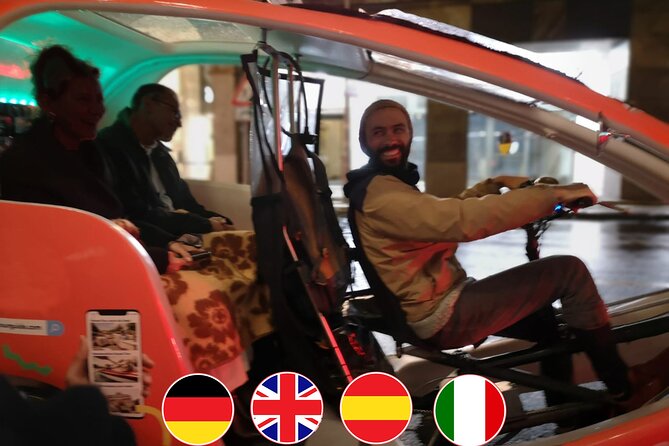
- A guide-led experience: English is offered, and music is available on request.
Berlin by rickshaw: a moving introduction
This private tour is best understood as a city orientation on wheels. In roughly one to three hours, you can link major landmarks and historic districts while your guide explains what you’re seeing. It’s a practical first-day choice: get a sense of where things are, note the places you want to revisit, then spend more time inside the sights that catch your interest.
The rickshaw is not just a small taxi. It can use cycle lanes and reach narrow or pedestrian-friendly areas where a car or bus may not go. That closeness is part of the appeal: you can roll up near a building, hear an explanation, take a photo, and carry on without the long approaches that come with larger group tours.
The experience is private, so you can ask questions without trying to catch a guide’s words over a crowd. The route is also flexible, which matters in a city where a visitor interested in the Cold War may want a different emphasis from someone drawn to courtyards, parks or architecture.
More bus tours in Berlin:
- Berlin: Hop-on Hop-off Bus Tour with Live Commentary
★ 4.3 · 8,579 reviews - Berlin: City Sightseeing Hop-On Hop-Off Bus Tour
★ 4.1 · 4,233 reviews - Berlin: Hop-On Hop-Off Sightseeing Bus with Boat Options
★ 4.3 · 4,012 reviews
From Alexanderplatz to the old city
The meeting point is the World Time Clock on Alexanderplatz, an easy-to-recognize starting place and a fitting introduction to Berlin’s layers. The square has roots near the city’s medieval edge and later became a central gathering place in East Berlin. The clock remains a popular meeting point for locals and visitors alike.
A short stop at Nikolaiviertel shifts the scene from broad modern square to the area identified as Berlin’s oldest settlement site. The quarter was nearly destroyed during the Second World War and rebuilt for the city’s 750th anniversary. Five minutes is enough to hear that outline and get a look around, but not enough to explore the area at length.
Next, Museum Island brings together major cultural landmarks commissioned by Prussian kings. It has been a UNESCO World Heritage site since 1999, and the Berlin Cathedral and new Berlin Palace are nearby. The tour’s stop does not include admission, so treat this as an outside introduction, not a museum visit. If you want to see the collections, plan separate time.
The Hackesche Höfe offer a different kind of stop: a series of enclosed courtyards in the old Spandauer Vorstadt district. Their mix of Jugendstil facades and smaller backyards makes them a good example of the city’s intimate side. A rickshaw’s size helps here, though five minutes gives you only a taste. Ask your guide whether you can spend longer if these courtyards are high on your list.
Cold War crossings and difficult chapters
At the Palace of Tears, the former exit hall at Friedrichstraße station, the story turns to the divided city. You can still walk through the old control counters, an unusually direct way to picture how a routine station crossing became a border experience. The brief visit is an introduction; allow extra time separately if you want a fuller museum visit.
Bebelplatz carries another kind of weight. It is a handsome cultural square, but an empty library memorializes the Nazi book burning of May 10, 1933. The contrast between the elegant setting and the event it recalls makes this a place where a guide’s explanation adds real value. The scheduled stop is short, so take a moment to look for the memorial rather than treating the square as just another photo stop.
Gendarmenmarkt is one of central Berlin’s grand civic spaces, framed by a concert hall and churches with prominent towers. It gives you a quick lesson in the city’s formal architectural side. The square can be admired from outside during the ride; the tour does not include entry to its buildings.
Checkpoint Charlie is a familiar name from Cold War history, but the site is more than a photo opportunity. It marks a former border crossing and recalls both the division of Berlin and dangerous escape attempts. Expect a short stop, not an extended museum visit. If this period is a priority, use the ride to get oriented, then return for a closer look.
The Topography of Terror adds a stark physical reminder of the Nazi era. A long surviving section of the Berlin Wall remains here in its original state, beside a site that helps explain the machinery of persecution and terror. The rickshaw stop can introduce the location, but a five-minute pause cannot do justice to the material on site. Save time to explore on foot if you want more than the outline.
Potsdamer Platz, parkland and the Victory Column
Potsdamer Platz shows how sharply Berlin can change from one block to the next. Once a major traffic hub, it was broken apart by the city’s division; today, its modern buildings signal a very different chapter. Older traces remain less obvious, which makes the guide’s commentary useful. You’ll see the contrast from the street, though the short stop leaves little time to hunt for architectural details.
The longest stretch of the ride is through the Tiergarten, Berlin’s green central park. The route takes about 30 minutes and passes sights including bridges, the Federal President’s office, the House of World Cultures, the Carillon and the Soviet Memorial. This longer passage is a welcome change from quick landmark stops: you get a sense of the park’s scale and a glimpse of Berlin’s quieter side.
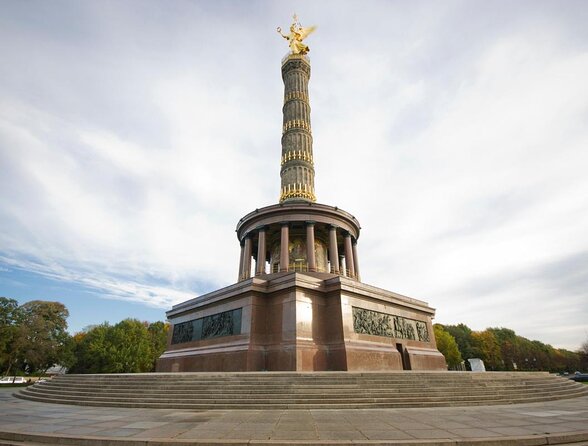
The Victory Column rises within the park, crowned by the gilded Victoria figure. It commemorates three Prussian victories, while its association with the Love Parade gives it a more recent popular identity. From nearby, you can pick out details such as the gilded cannons. Admission is not included, so climbing the column is not part of the standard ride.
Bellevue Palace, the German president’s official residence since 1994, adds a look at the present-day state to a route full of earlier political chapters. It began as a prince’s residence. The stop is an exterior introduction, with no palace admission included.
More rickshaw tours in Berlin:
- Berlin: Private Guided E-Rickshaw Tour
★ 4.9 · 157 reviews - Berlin Express: Private 1-Hour E-Rickshaw Ride
★ 5.0 · 116 reviews - Rickshaw Tours Berlin – Groups of up to 16 people with several rickshaws
★ 4.0 · 97 reviews - Rickshaw Sightseeing City Tours Berlin – Rikscha Tours
★ 4.0 · 55 reviews
The government quarter and Brandenburg Gate

The government district, built around the year 2000 beside the Spreebogen, brings the tour into contemporary Berlin. The historic Reichstag building sits within this newer political quarter, making the contrast between old and new particularly clear. The short stop helps you see the setting and understand its place in the city; it is not a visit inside the Reichstag.
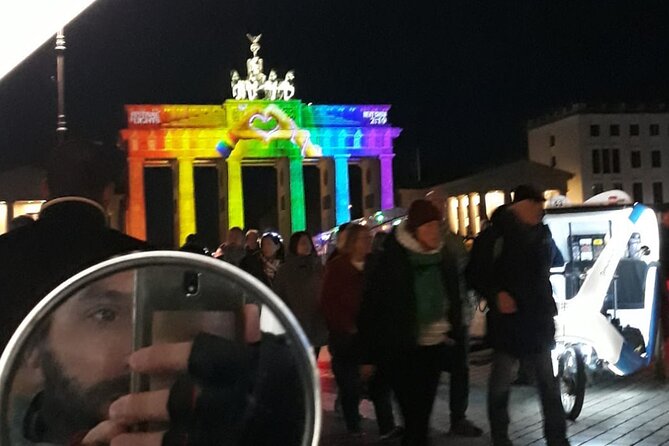
Brandenburg Gate is the natural finale. Once the surviving city gate at the end of Unter den Linden, it became a symbol of Berlin’s division and later of unity. Today it is one of Germany’s best-known national symbols. A rickshaw can bring you close, but the area deserves a little time on foot if you want photographs or a better look at the details.
The listed route gives each of these central landmarks about five minutes, with the Tiergarten receiving a longer passage. That timing makes sense for an overview, but it is worth being clear about expectations: this is a moving history lesson, not a succession of full site visits. Your guide can adjust the route, so tell them early if you would rather linger in a district or skip a stop.
What the price gets you
The listed price is $53.21 per person. For that, you get a private tour, an expert English-speaking guide, and a route that can be personalized. The value is strongest if you want context and efficient transport between sights, or if walking long distances is difficult. You’re paying for the guide’s time and a more personal way to move through the city, not for museum admissions.
Three stops specifically note that admission is not included: Museum Island, the Victory Column and Bellevue Palace. Drinks can be ordered separately. The warm blanket is included in cold weather, and music can be played on request.
Hotel pickup is free within 2 km of Museum Island. Pickup farther away costs €5 per additional kilometer. The standard meeting point is the World Time Clock at Alexanderplatz, and the tour ends back there unless pickup arrangements apply.
The duration ranges from one to three hours, so confirm the length you want when arranging your ride. The average booking lead time is 36 days, a useful planning signal if you have a particular date in mind, though it is not a guarantee of availability. Free cancellation is available up to 24 hours before the start time.
Comfort, pace and who will like it
A rickshaw makes a strong case for anyone who wants to see more without walking from landmark to landmark. The ride has worked well for people with bad knees, a guest using a walker, families with young children, and groups spanning several generations. If mobility is a concern, contact the operator ahead of time to discuss your needs rather than assuming every arrangement will suit every rider.
Cold weather deserves thought. Sitting still can feel colder than walking, and the tour runs in winter conditions. A blanket is provided, and some rides have included hot water bottles, but the hot bottles are not listed as a guaranteed feature. Dress warmly even if you expect the blanket to help.
The rickshaw is also a good fit for history-minded visitors who like to ask questions. Guides Leo and Jakob are named in accounts of the experience, with Leo especially noted for adapting routes, sharing historical photographs and adjusting explanations to a teenager’s interests. Guide availability may vary, so do not book on the assumption that a particular person will lead your ride.
The tour’s 5.0 rating from 120 reviews and 100 percent recommendation figure are encouraging, but your own experience will depend on the route, weather and guide. The recurring strengths are clear: personal attention, informative explanations, convenient access to central sights, and the ability to stop for photos. The main limitation is equally clear: many landmarks get only a brief look.
Should you book this Berlin rickshaw tour?
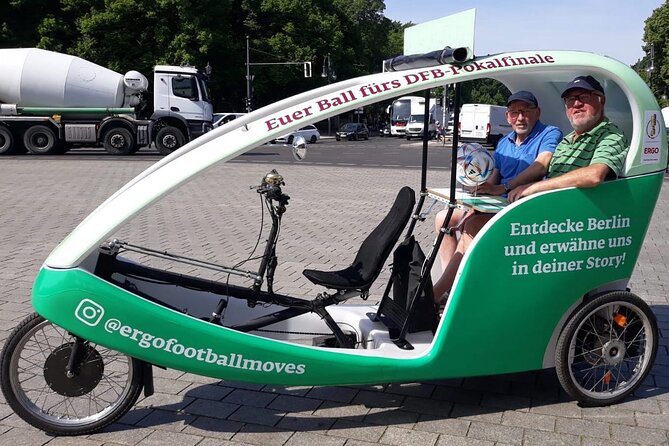
Book it if you want a private, flexible overview of central Berlin, prefer not to walk long distances, or want a guide to connect landmarks with the city’s history. It’s especially useful early in a stay, when you can use the ride to decide which places deserve a longer visit.
Skip it if your main goal is to spend substantial time inside museums or monuments, or if you want a slow, detailed visit to every stop. In that case, use the rickshaw for orientation and plan separate time on foot. For a compact and personal introduction, though, this is a practical way to see Berlin’s many chapters without wearing out your shoes.
FAQ
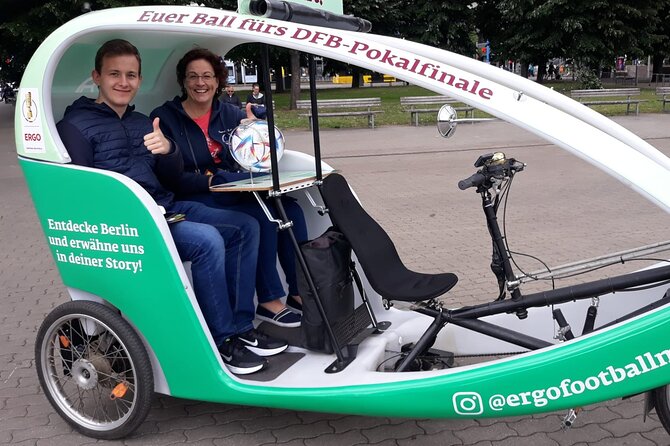
How long is the rickshaw tour?
The tour lasts approximately one to three hours. The length depends on the arrangement you choose.
Is the tour private?
Yes. Only your party takes part in the private activity.
Where does the tour start and end?
The standard meeting point is the World Time Clock at Alexanderplatz. The activity ends back at the meeting point.
Is hotel pickup available?
Yes. Pickup from hotels or other locations within 2 km of Museum Island is free. Each additional kilometer is charged at €5.
Is the tour offered in English?
Yes. English is one of the languages offered.
Are museum or monument admissions included?
No. Admission is not included for Museum Island, the Victory Column or Bellevue Palace. The ride provides an introduction to these places from the route.
Is anything provided for cold weather?
A warm blanket is provided in cold weather. Hot water bottles have been available on some rides, but they are not listed as a standard inclusion.
Can I cancel for a refund?
You can cancel at least 24 hours before the start time for a full refund. Cancellations made less than 24 hours before the start time are not refunded.
Newest tours in Berlin
- Berlin: guided canoe | kayaktour★ 4.1 · 7 reviews
- Understanding Kreuzberg: The roots of local (sub)culture★ 4.9 · 11 reviews
- Where It All Began: Berlin’s Queer & Trans History Tour★ 4.9 · 6 reviews
- Warnemünde Shore Excursion: Private Sachsenhausen and Berlin Tour★ 5.0 · 12 reviews
- Ultimate E-Bike Tour of Berlin with Beer Garden Stop★ 5.0 · 4 reviews
- Potsdam Highlights – Private sightseeing tour by minibus★ 5.0 · 3 reviews
- Private Potsdam City Tour in an authentic vintage van★ 5.0 · 14 reviews
- Transfer from Berlin Schönefeld Airport (SXF) to Berlin city Hotels – ROUND TRIP★ 4.0 · 3 reviews
Berlin Rickshaw Tours, compared.

Rickshaw Tours Berlin – Groups of up to 16 people with several rickshaws
Read our review →
One Up to 3 Rickshaws(6 GUESTS)-Taylor Made Rickshaw Berlin Tour
Read our review →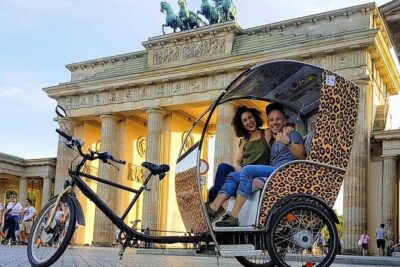
Berlin Rickshaw Tours Historical & Photo City Tour 120min – Sightseeing
Read our review →
Daily First Rickshaw promotion in Combi Vehicle public Group 90€
Read our review →Browse the lists this tour appears in